2026. 6. 28. · 08:16
Your hangover cure can backfire. Here's the safe morning-after plan.
A practical guide to hangover self-care: how alcohol actually creates the symptoms, why painkillers and sleep aids deserve a label check, what helps the next morning, and which signs mean it is time to get real help.
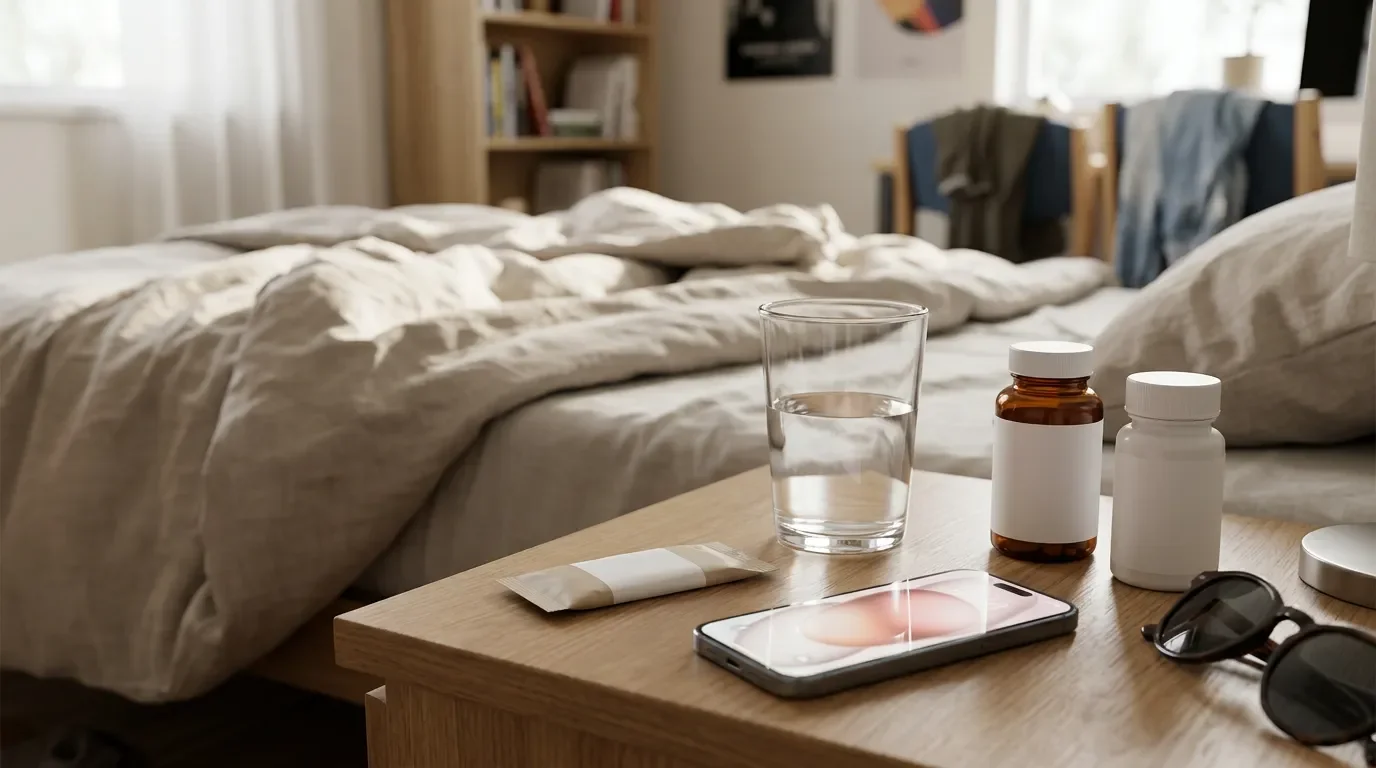
The part nobody posts: the morning-after medicine math
A hangover is not just dehydration wearing sunglasses. NIAAA describes it as a cluster of symptoms after drinking too much, including fatigue, thirst, headache, nausea, stomach pain, anxiety, irritability, sweating, and higher blood pressure. The causes stack up: mild dehydration, broken sleep, stomach irritation, inflammation, acetaldehyde buildup, and a mini-withdrawal effect as the buzz wears off. 1
That matters because the obvious fix, grabbing whatever painkiller or sleep aid is nearby, can create the real problem. NIAAA says there is no proven hangover cure besides time; coffee, showers, and "hair of the dog" do not make your brain recover faster. 1
This is not a "never drink" lecture. It is the label-checking plan for the morning after, when your head hurts and your decision-making is not exactly elite.
First: do not stack acetaminophen by accident
Acetaminophen is the pain-and-fever drug in Tylenol, but it also hides inside more than 600 prescription and over-the-counter medicines, including many cold, cough, and flu products. 2 The FDA says adults and children 12 and older should not take more than 4,000 mg total in 24 hours across all acetaminophen-containing products. 3
The trap is not usually one dramatic handful of pills. It is two normal-looking products that both contain the same active ingredient: a cold medicine, then a headache medicine, then maybe a prescription pain pill after dental work. FDA's basic rule is simple: do not use more than one acetaminophen-containing product at a time unless a health professional tells you to. 3
Alcohol adds another reason to slow down. FDA warns that severe liver damage may occur if someone has three or more alcoholic drinks per day while using acetaminophen. 3 NIAAA's medication-interaction guide is even more cautious for real life: the FDA asks health professionals to advise patients not to drink alcohol when taking medicines that contain acetaminophen. 4
So before taking anything, turn the bottle over and look for acetaminophen, APAP, paracetamol, or shortened label versions like Acetam. If you are too foggy to do that, wait or ask someone sober to read it with you.
The painkiller cheat sheet
| What you might reach for | Why it can backfire after drinking | Safer move |
|---|---|---|
| Acetaminophen / paracetamol | Too much can cause liver failure and death, and alcohol raises the concern around liver toxicity. <cite index="3" title="Acetaminophen " url=" FDA | https://www.fda.gov/drugs/information-drug-class/acetaminophen-information" /> |
| Ibuprofen, naproxen, aspirin | NIAAA says NSAIDs are linked with gastrointestinal bleeding on their own, and combining them with alcohol significantly increases that risk. <cite index="4" title="Alcohol-Medication Interactions: Potentially Dangerous Mixes " url=" NIAAA | https://www.niaaa.nih.gov/health-professionals-communities/core-resource-on-alcohol/alcohol-medication-interactions-potentially-dangerous-mixes" /> |
| Sleep aids, anti-anxiety meds, opioids, or sedating antihistamines | Alcohol plus sedating drugs can increase overdose risk. NIAAA specifically flags opioids, benzodiazepines, sleep aids, and even over-the-counter antihistamines as risky combinations. <cite index="5" title="Understanding the Dangers of Alcohol Overdose " url=" NIAAA | https://www.niaaa.nih.gov/publications/brochures-and-fact-sheets/understanding-dangers-of-alcohol-overdose" /> |
What actually helps the next morning
Start boring. Boring is the point.
- Sip fluids. Alcohol increases urination and fluid loss, which likely contributes to thirst, fatigue, and headache. 1 Water is fine. An electrolyte drink is fine if you like it, but NIAAA notes that research has not found electrolyte disruption to match hangover severity in most people. 1
- Eat something low-drama. Your stomach lining may already be irritated because alcohol can increase acid release and cause nausea or stomach discomfort. 1 Toast, soup, bananas, rice, eggs, or whatever bland food you can tolerate beats a giant greasy meal if your stomach is not ready.
- Sleep if you can. Alcohol can make you fall asleep faster, but it fragments sleep and can make you wake earlier, so the tiredness is real. 1
- Do not drive just because you are "only hungover." NIAAA says attention, decision-making, and muscle coordination can still be impaired during a hangover. 1 If you feel shaky, foggy, nauseated, or sleep-deprived, you are not at your best.
When it is not just a hangover
A normal hangover is miserable. Alcohol overdose is dangerous. NIAAA says overdose symptoms include mental confusion, trouble staying conscious, vomiting, seizures, trouble breathing, slow heart rate, clammy skin, dulled responses, very low body temperature, bluish skin color, or paleness. 5
Call emergency services if someone cannot stay awake, has slow or irregular breathing, has a seizure, looks blue or very pale, keeps vomiting while barely responsive, or seems dangerously confused. NIAAA says not to wait for every symptom, and not to rely on coffee, cold showers, or walking it off. 5
Acetaminophen overdose has its own problem: symptoms can take days to show up, and early signs like nausea, vomiting, abdominal pain, confusion, or jaundice can be mistaken for something else. 2 If you think you doubled up or crossed the dose limit, do not wait for symptoms to prove it.
Before the next night out
A standard drink in the U.S. contains 0.6 fluid ounces, or 14 grams, of pure alcohol. NIAAA says binge drinking usually means five or more drinks for a male, or four or more drinks for a female, in about two hours. 5 CDC uses the same four/five-drink binge-drinking cutoffs when describing excessive alcohol use. 6
Those numbers are not a personal challenge. They are a warning light. Body size, food, speed, medications, tolerance, and sleep all change how hard alcohol hits. If you want the least dramatic version of tomorrow morning, set the boring stuff up before you go out: water near the bed, food in the fridge, a ride plan, and no mystery medicine combos waiting on the nightstand.
참고 출처
- 1Hangovers
- 2Don't Overuse Acetaminophen
- 3Acetaminophen
- 4Alcohol-Medication Interactions: Potentially Dangerous Mixes
- 5Understanding the Dangers of Alcohol Overdose
- 6Alcohol Use and Your Health
이 콘텐츠를 둘러싼 관점이나 맥락을 계속 보강해 보세요.