
The metal box needed a grinder
A ranked weekly customs-curio roundup led by 2.5 tonnes of cannabis resin welded into metal machine bases, five live turtles hidden in socks, rare plants and wildlife from Operation SAMA III, rope-spool shabu, gold waist chains, live birds, and counterfeit electronics.

The strangest customs case of the week needed an angle grinder. French customs officers at Le Havre, a major port on France's northern coast, found 2,562 kilograms of cannabis resin sealed inside welded metal caissons in a container declared as machine tools. The load had come from Senegal, was headed for Libya, and was transiting through Le Havre; French customs valued the resin at about €20.5 million. 1
That set the pattern for the strongest cases below. The ranking favors three things: an object strange enough to remember, a concealment method specific enough to picture, and a public source clear enough to keep the story bounded.
1. Cannabis resin welded into machine bases
The Le Havre case wins on pure effort. The resin was not tucked under a seat, taped to a body, or hidden in a suitcase lining. French customs said the drugs were sealed in welded compartments inside metal machine-base caissons, and officers had to cut into the metal for several hours to remove the packages. 1
The tactic was industrial camouflage. A container of machine tools already looks like something that belongs in a port, and a heavy metal base is a plausible place for weight, density, and awkward geometry. The hiding place did not ask inspectors to miss a bag. It asked them to believe the object was solid.
French customs also said the seizure was more than six times the amount of cannabis resin seized by maritime route in France during all of 2025. 1 That comparison is what makes the case more than a good hiding-place story: the disguise carried a very large shipment through a channel where this drug category had not been a dominant maritime find.
2. Five live turtles wrapped, socked, and boxed
Hong Kong Customs seized five live turtles of suspected scheduled endangered species at Shenzhen Bay Control Point on July 11. The turtles were wrapped in plastic bags, placed inside socks, and then hidden in a carton box on an incoming lorry; the estimated market value was about HK$50,000. 2
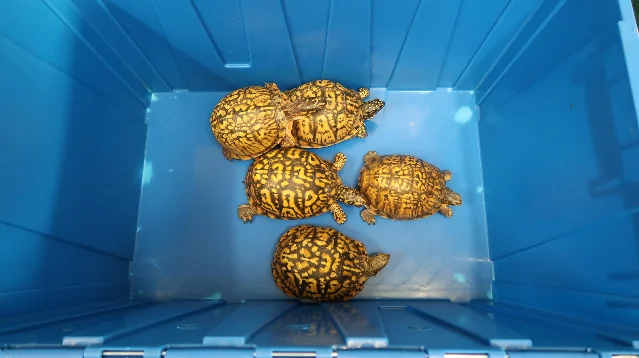
The tactic had a grim household logic: plastic to contain the animal, socks to break up the visible shape, a carton box to make the package look like ordinary cargo. The Hong Kong Agriculture, Fisheries and Conservation Department took over the case, and the government release said the animals were suspected species protected under the Protection of Endangered Species of Animals and Plants Ordinance. 2
This ranks high because live-animal concealment changes the stakes. The smuggling method has to hide the animal and keep it alive long enough to be sold. Socks are a small object in normal life; in this case, they became a transport layer for suspected endangered wildlife.
3. A wildlife operation finds orchids, tortoises, and a fraudulent plant exporter
Operation SAMA III, led by the United Nations Office on Drugs and Crime and the World Customs Organization, reported 164 seizures across 12 African countries in an announcement published on July 6. UNODC said 66% of the seizures involved CITES-listed species, including orchids, radiated tortoises, and African chameleons. 3
The rare-plant case is the one that sticks. Mozambique intercepted more than 450 kilograms of live plants, including CITES-listed species, from a fraudulent company that was trying to export them. 3
The concealment here was corporate rather than theatrical. A company and export paperwork can do what a false-bottom suitcase does at smaller scale: create a normal-looking story around an abnormal cargo. UNODC also cited Madagascar seizures involving a ring-tailed lemur in checked luggage and radiated tortoises routed through Addis Ababa toward Hanoi. 3
The operation matters for this list because it widens the week beyond airport oddities. Wildlife smuggling can look like a passenger with an animal in a bag, but it can also look like a formal export chain with a company name attached.
4. Shabu packed into the cores of rope spools
The Philippines Bureau of Customs said BOC-NAIA intercepted an inbound parcel declared as "Plastics and Ropes" at an international cargo facility in the NAIA complex on July 8. A 100% physical examination found 2,102 grams of suspected methamphetamine hydrochloride, locally known as shabu, concealed inside multiple rope spools; the standard value was ₱14,293,600. 4
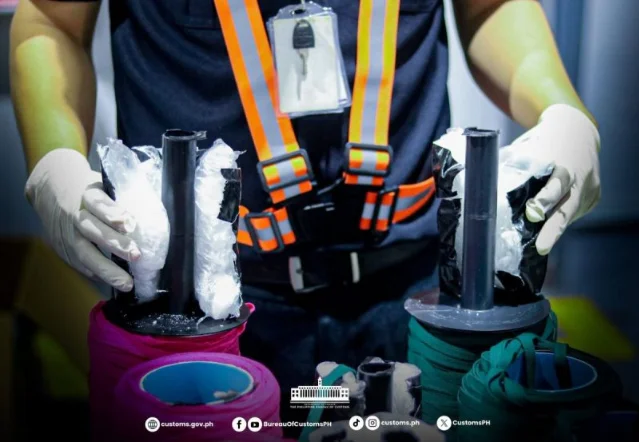
The trick was to turn the spool itself into packaging. Rope is already wound around a core, so a hidden center does not necessarily disturb the outside shape. The declaration was broad enough to make the shipment sound boring, and the concealment depended on inspectors accepting the object as a roll of material rather than opening the center.
This is the drug case that made the ranking because the hiding method competes with the wildlife and gold cases. Ordinary luggage cannabis did not clear that bar this week; rope spools did.
5. Two kilograms of gold worn as waist chains
Mumbai Airport Customs arrested Singapore national F.A. Ahamed on July 9 after officers found two 24-karat crude gold chains weighing 2,000 grams and valued at about ₹2.47 crore concealed around his waist under clothing. The Free Press Journal reported that he had passed through the green channel without declaration and admitted he was carrying the gold for monetary consideration. 5
The tactic sits between disguise and body concealment. Gold chains can be jewellery, but two kilograms of crude 24-karat chains worn at the waist is not a normal travel accessory. The method relied on the body as a moving compartment and on the green channel as a declaration bet.
The case also shows why gold keeps appearing in airport seizures. It can be melted, reshaped, worn, pasted, painted, or built into personal objects. Here, the form was almost too honest: gold as chain, chain as belt, belt as undeclared cargo.
6. Two protected live birds in a backpack
Hong Kong Customs said it intercepted a 46-year-old local woman at the Lok Ma Chau Spur Line Control Point arrival hall on July 9 and found two live birds of suspected scheduled endangered species in her backpack. The estimated market value was about HK$5,000, and the Agriculture, Fisheries and Conservation Department confirmed that the birds were CITES Appendix species. 6
The tactic was not complex, which is why it ranks below the turtles. A backpack is the most personal kind of container a traveler carries, and that is the point. It can make a small live-animal shipment look like a private object until inspection changes the category.
For a general reader, the memorable detail is the mismatch between value and risk. The official estimate was HK$5,000, while the government release cited maximum penalties under Hong Kong's endangered-species law of HK$10 million and 10 years' imprisonment. 6 The possible punishment reflects the protected status of the species, not the small market value of the two birds.
7. Fake phones behind an online trading company
Hong Kong Customs shut down an online trading company after a July 7 operation at an office unit in Hung Hom found about 5,400 suspected counterfeit goods, including mobile phones and other electronic devices, with an estimated market value of about HK$6 million. Two foreign men and one foreign woman, aged 35 to 46, were arrested after a trademark owner filed a report. 7
The hiding method was commercial presentation. Counterfeit electronics do not need a secret compartment if the seller can make the goods look like normal inventory moving through an online business. The trick is not to hide the object from sight. It is to hide the object's identity.
This ranks below the animals and metalwork because the physical scene is less strange. Still, 5,400 suspected fake devices in one office is the kind of counterfeit case that works because the front end looks like retail while the back end depends on trademark confusion.
Also in the sweep
India's Directorate of Revenue Intelligence intercepted an Indonesian woman at Mumbai CSMI Airport on July 4 and found four foreign-marked gold bars weighing 4 kilograms inside her trousers; Deccan Chronicle reported the value at about ₹6 crore. 8 Ahmedabad Customs also reported 729 grams of undeclared gold jewellery, valued at ₹98.78 lakh, concealed in a passenger's handbag and under her garments after an Abu Dhabi-IndiGo arrival. 9
The Philippines Bureau of Customs said it seized nine containers from China at the Manila International Container Port after shipments declared as cartons, accessories, packaging bags, kitchenware, underwear, hangers, shoeboxes, and shoes were found to contain vape kits, disposable vape devices, cartridges, and other vape products valued at ₱136,924,250. 10 CBP reported more than $29 million in FIFA-related counterfeit goods seized in fiscal year 2026, calculated by manufacturer's suggested retail price, in a July 7 World Cup security update. 11
At Macau International Airport, customs officers found 560,000 traditional cigarettes, 130,000 e-cigarettes, and 10 injection medicines in the carry-on luggage of 20 mainland Chinese passengers on flights from Japan in a case reported during the window; the Macau Post Daily reported a retail value of about 760,000 patacas. 12 In Hong Kong, customs found 390,000 suspected illicit cigarettes and 15,000 alternative smoking products in two light goods vehicles at an open-air car park in Ma On Shan on July 7, with an estimated value of about HK$1.78 million. 13
Across the week, the pattern was the same wager placed on better containers: metal that looked structural, socks that looked disposable, rope that looked solid, jewellery that looked personal, and paperwork that made living things look like export goods.
Cover image: French customs cutting into a metal caisson during the Le Havre cannabis resin seizure, via Direction Générale des Douanes et Droits Indirects.
참고 출처
- 1Saisie de 2,5 tonnes de résine de cannabis scellées dans des caissons métalliques
- 2Hong Kong Customs seizes live turtles of suspected scheduled endangered species
- 3Operation SAMA III results in 164 seizures of wildlife and other contraband across 12 countries in Africa
- 4BOC Intercepts ₱14.29 Million Worth of Suspected Shabu Concealed in Rope Shipment
- 5Mumbai Airport Customs Arrest Singapore National, Seize ₹2.47 Crore Gold In Smuggling Case At CSMIA
- 6Hong Kong Customs seizes illegally imported live birds of suspected scheduled endangered species
- 7Hong Kong Customs shuts down trading company selling counterfeit mobile phones and other electronic devices online
- 8DRI Seizes Rs 6 Crore Worth of Gold at Mumbai Airport, Woman Arrested
- 9Gujarat: Woman held at Ahmedabad Airport with 729g of gold valued at nearly 99 lakh
- 10BOC Seizes ₱137M Worth of Smuggled Vape Products at MICP
- 11CBP scores big for America during FIFA World Cup 2026™
- 12Customs seizes 690,000 cigarettes at Macau Int'l Airport
- 13Hong Kong Customs detects suspected illicit cigarette and alternative smoking product storage and distribution case in Ma On Shan
관련 콘텐츠
- 로그인하면 댓글을 작성할 수 있습니다.