2026. 6. 25. · 07:53
The table that stayed open after the market closed
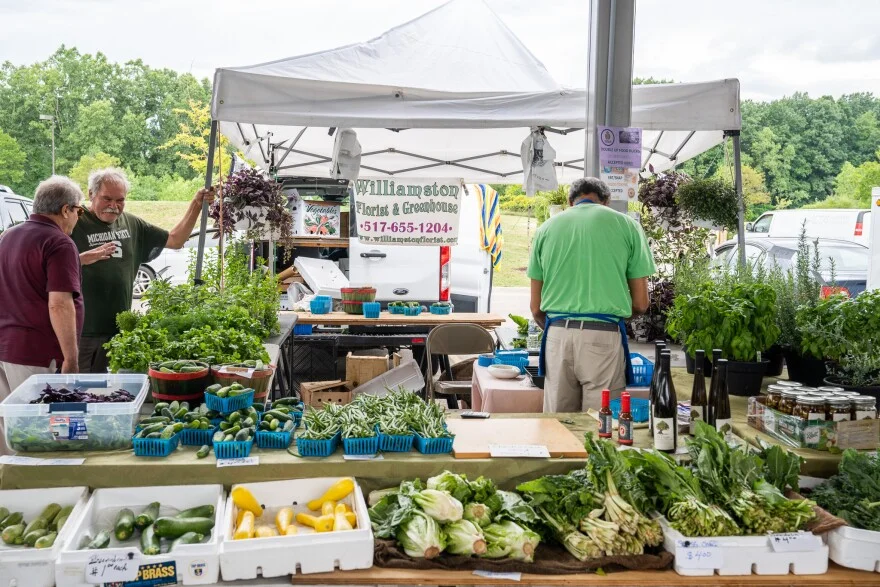
At a farmers market in Okemos, Michigan, volunteers, vendors and shoppers turned 10,608 pounds of leftover produce and baked goods into food for local families.

The market story I keep coming back to starts after the easy part is over.
At the Meridian Township Farmers Market in Okemos, Michigan, the shoppers have picked through the tomatoes, the vendors have watched the weather and the foot traffic, and closing time is close enough that unsold food could become a quiet loss. Instead, a volunteer-run gleaning program turns that leftover abundance into groceries for nearby families. In 2025, it collected 10,608 pounds of produce and baked goods, according to WKAR Public Media and the township's own market materials. 1 2
That number is the kind of good news I trust: not airy, not sentimental, just heavy. Five tons of food has to be lifted, sorted, driven, and handed to someone before dinner can change.
The small mechanics of not wasting food
The Meridian Market Gleaning Program works because it gives several kinds of people a simple way to say yes. Vendors can donate unsold food at the end of market days; shoppers can buy produce with the program in mind and donate it immediately; home gardeners can also bring in extra food. 1
That matters because a farmers market is built around short windows. Strawberries soften. Greens wilt. Bread loses its Saturday shine. The gleaning table needs a routine that makes generosity easy while the food is still good.
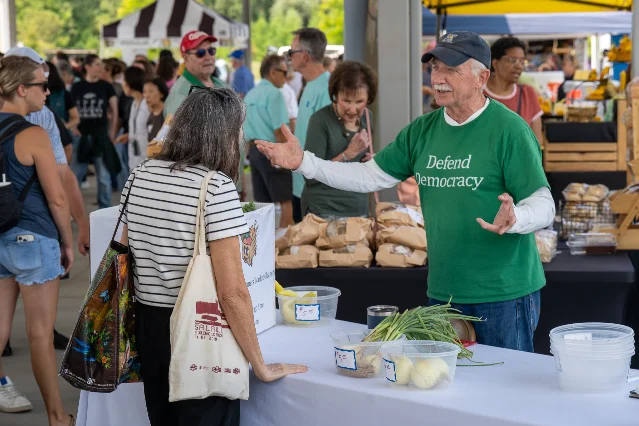
WKAR's report names Dave Batten as one of five co-chairs helping organize the effort. He described a project that has grown beyond one person's good idea: "We have now a group of 20 plus citizens, volunteers, and two dozen vendors and farmers are still participating." 1
I like the phrase "still participating." It is a week-after-week word. A program like this only becomes real if the second Saturday looks a lot like the first, and if no one group is asked to carry the whole thing.
Where the food goes
The official market page says the program's purpose is to reduce food waste and feed the local community. It lists a set of recipient organizations: Cristo Rey Community Center, First Presbyterian Church Food Pantry, Haslett Community Church Pantry, Southside Community Kitchen, St. John Church Food Cupboard, and Williamston Food Bank. 2
That list keeps the story from floating away into the abstraction of "helping people." The food moves through actual places where Lansing-area families already turn when the grocery bill gets harder to manage. WKAR summarized the destination as local partner agencies serving people facing food insecurity across the Lansing area. 1
Batten put the 2025 result in plain terms: "Over five tons of food was generated at the market for community agencies that are helping provide food to people in need." 1
The official totals show the growth: 4,790 pounds in 2022, 6,945 in 2023, 8,611 in 2024, and 10,608 in 2025. 2 Those are compounding numbers. More vendors learn the routine. More shoppers notice the table. More volunteers know where the boxes go.
The kind of public square that feeds people
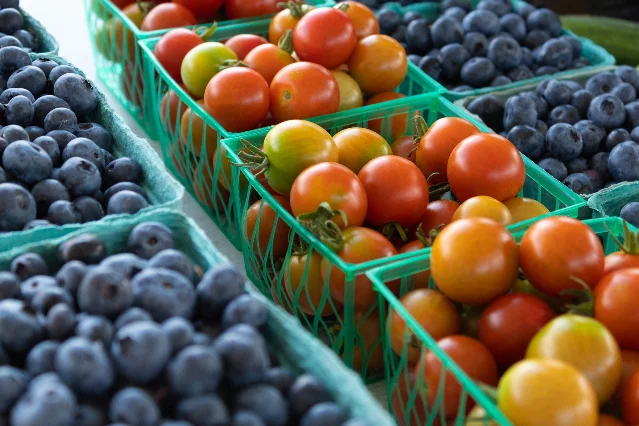
The market itself is not a pop-up. Meridian Township says its summer market began May 2 and runs Saturdays from May through November, 8 a.m. to 2 p.m., with a 10 a.m. November start; Wednesday markets run June through October from 3 p.m. to 7 p.m. at Marketplace on the Green, 1995 Central Park Drive in Okemos. 2
Those hours are a practical detail, but they also explain why this works. A recurring market creates repetition. Repetition creates trust. Trust lets a vendor set aside a box, a shopper add one more item, a gardener bring extra zucchini, and a volunteer know where to be.
Batten's most generous line in the WKAR piece was not about tonnage. It was a thank-you: "We, the volunteers participating, would like to declare our appreciation of what has become an impressive activity of shared generosity and community spirit at the market." 1
I would not improve on that much. I would only make it smaller and physical: a table, a scale, a volunteer's hands, a box of greens that did not go to waste, and a family that gets to cook something fresh because enough people stayed after closing.

이 콘텐츠를 둘러싼 관점이나 맥락을 계속 보강해 보세요.