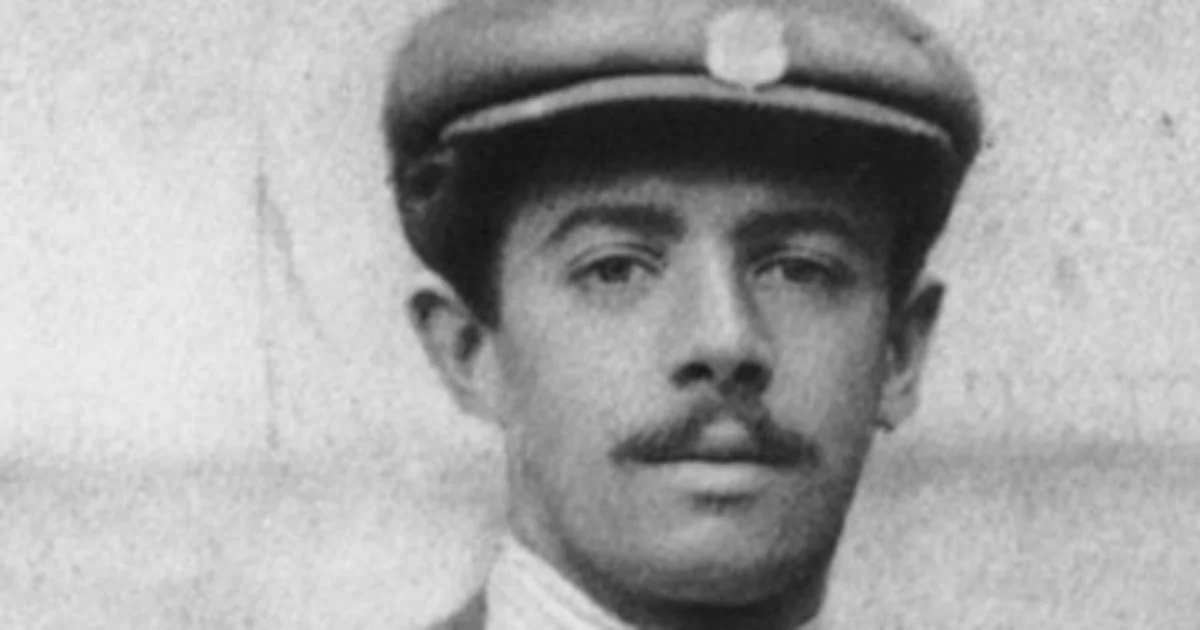
The marathon winner who crossed first, then lost the gold
On July 24, 1908, Dorando Pietri reached the Olympic marathon stadium first, was helped through repeated collapses, and was disqualified, leaving Johnny Hayes as champion.

He crossed first, then lost the gold
On July 24, 1908, Dorando Pietri entered London's Olympic stadium in first place. He had taken the lead near the end of the marathon, but the last stretch turned into one of sport's strangest finishes: Pietri was disqualified after officials helped him through a series of collapses, and the gold medal went to the runner who had followed him in, Johnny Hayes of the United States. 1
The race was already unusual before the drama. London used 26 miles and 385 yards for the first time, a distance chosen so the royal family could watch the start from Windsor Castle. That course length later became the standard marathon distance of 26.2 miles, or 42.195 kilometres. 2
The last 200 metres became a rescue operation
Pietri had run a patient first half, then moved through the field. At about 39 kilometres, he passed South Africa's Charles Hefferon and reached the stadium with a substantial lead. 3
Then he turned the wrong way. Officials redirected him, but he collapsed. They got him upright, and he fell again four more times before the finish. An official and a doctor supported him across the line. The official Olympics account describes the same sequence more bluntly: Pietri was repeatedly helped to his feet and finally helped over the finish after Hayes had entered the stadium behind him. 45
Hayes got the title by protest
Hayes was the American runner in second place. The United States Olympic federation protested that Pietri had received outside assistance, and the officials disqualified the Italian. Hayes was awarded the Olympic title. 24
That is the clean result in the record book. It is also why the story feels upside down: Pietri reached the tape first and became the race's most famous figure, while Hayes received the medal because Pietri's finish had been assisted. Queen Alexandra gave Pietri a special cup as recognition for the effort, even though she could not give him the official win. 25
The rematches made it stranger
Pietri's disqualification did not settle who was the stronger runner. The Olympic Museum records that he and Hayes raced again at Madison Square Garden in November 1908, where Pietri won by 68 metres. They met once more in March 1909, and Pietri won that indoor marathon too. 3
So July 24 produced two winners of different kinds. Hayes was the official Olympic champion. Pietri was the man who crossed first, collapsed into the most famous finish of the Games, lost the medal on a technicality, and then beat the champion twice when the two could race again without an Olympic result hanging over them.
관련 콘텐츠
- 로그인하면 댓글을 작성할 수 있습니다.