The king hidden in the charters
Wikipedia’s July 11, 2026 Featured Article turns Meurig ab Arthfael into a vivid case study in medieval evidence: a Welsh king reconstructed through disputed territory, suspect Llandaff charters, family notices, and two possible death dates.

Wikipedia's Featured Article for July 11, 2026 is Meurig ab Arthfael, an article about a ninth-century ruler in south-east Wales whose biography is built from uncertain borders, difficult charters, and a sourcebook that historians cannot simply trust. 1 2
Meurig ab Arthfael, also recorded as Mouric, ruled around 848 to around 874. He was a king in south-east Wales, but the article's first problem is deceptively basic: historians disagree over whether he ruled Glywysing with authority across south-east Wales, or only the smaller kingdom of Gwent. 2 That uncertainty gives the piece its shape. This is not a neat royal life with a birth, reign, wars, and death. It is a lesson in how much history can rest on a few names in damaged records.
The full article in one read
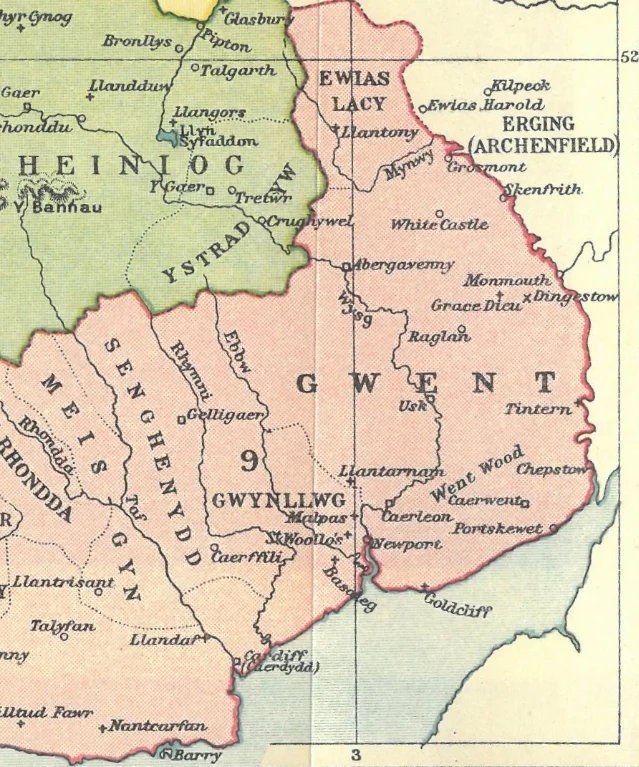
The article starts by placing Meurig inside a political map that had already shifted before he appears. In the seventh century, Gwent was a single kingdom covering south-east Wales; by the ninth century, historians disagree over whether old Gwent had split between higher-status Glywysing in the west and a smaller Gwent in the east, or whether the old kingdom had mostly continued under the name Glywysing. 2 Thomas Charles-Edwards, a historian of early medieval Wales, reads Glywysing as the higher kingship. Wendy Davies, whose work reshaped study of the Llandaff charters, argues that old Gwent may have remained one kingdom under a new name, though she also allows for junior kings in the smaller Gwent. 2 Patrick Sims-Williams, a scholar of medieval Welsh sources, leaves both readings open and says they "may amount to the same thing." 2
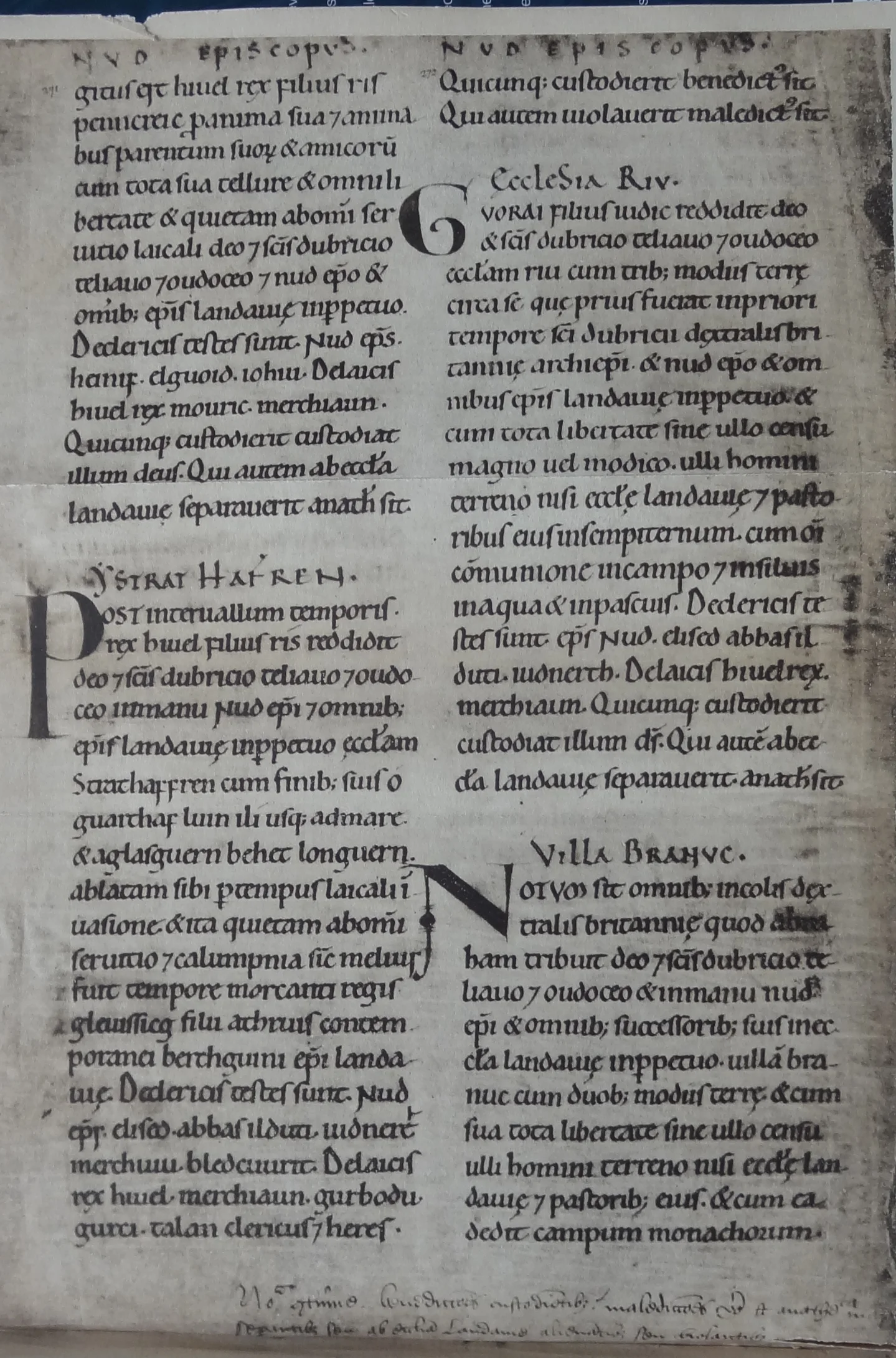
The main evidence for Meurig comes from the twelfth-century Book of Llandaff, which records charters in which he granted land to bishops or guaranteed grants made by others. 2 The source is awkward from the start. Much of the Book of Llandaff is fraudulent, and historians once dismissed it heavily, but work since Davies's 1970s studies has led scholars to treat some charters as genuine in whole or in part. 2 The problem is not only forgery. The charters are undated, several men named Meurig appear in the material, and it is not always clear which Meurig a record means. 2
That is why the article keeps returning to confirmation points. Asser, the ninth-century biographer of Alfred the Great, wrote in 893 of "Brochfael and Ffernfael (sons of Meurig and kings of Gwent)." 2 Charter 199bii also names Meurig's sons as witnesses to a grant by King Meurig. 2 Together, those notices do not answer every question, but they anchor Meurig and his sons in the ninth-century political world.
Davies dates Meurig's reign to about 848 to about 874. 2 His predecessor was probably Ithel ab Athrwys, a second cousin who was killed in battle in 848 and was apparently the last of his line. 2 A Harleian genealogy, an Old Welsh genealogy preserved in the Harleian Library, identifies Meurig as a son of Arthfael ap Rhys. 2 The Welsh name element "ab" means "son of," so the name itself places him as Meurig, son of Arthfael. 2
The article's most concrete episode comes from charters 169b and 170, dated around 850. These charters state that Meurig ordered all churches to be released from obligations to laymen. 2 Davies reads the Llandaff material as giving an "impression of lawlessness and of the arbitrary use of royal power by those who held it," but she treats Meurig as one of the few kings in the charters who tried to protect church property from lay control. 2 The attempt did not fully work, because kings continued transferring ownership of churches in the tenth and eleventh centuries. 2
Other charters show Meurig as a ruler involved in land, churches, bishops, and guarantees. In 868, one charter records him surrendering the church at Tryleg to Bishop Cerennyr. 2 Two charters around 850 record lay grants to Bishop Grecielis with Meurig's guarantee: Fauu gave the church of Cilpedec, now Kilpeck, with its land, and Cuinncum returned Cum Mouric, perhaps Little Dewchurch, to the bishop. 2 Charter 74 says that around 860 Meurig consented to Britcon and Iliwg granting Lann Mocha, now St Maughans, to the church of Dyfrig, while another version says he guaranteed a grant of Lann Bocha to Bishop Grecielis. The article does not force a solution: "it is not clear which version is genuine." 2
The family story is just as guarded. Meurig's sons Brochfael ap Meurig and Ffernfael ap Meurig were kings of Gwent, while their cousin Hywel ap Rhys was king of Glywysing. 2 Charles-Edwards suggests that Meurig and his brother Rhys ab Arthfael may have ruled Glywysing in succession, but Sims-Williams argues that the only charter placing Meurig in Glywysing may have had Meurig's name inserted later, leaving him with no power outside Gwent. 2 That disagreement matters because it changes Meurig's rank. In one reading, he is a wider south-east Welsh ruler. In the other, he is a more local Gwent king whose sons held an inferior status under their Glywysing cousin.
The article ends with another unresolved point: the death date. The Annales Cambriae, a Welsh annalistic source, records deaths of kings called Meurig in 849 and 874. 2 Charles-Edwards thinks Meurig ab Arthfael may be the Meurig who died in 849, Peter Bartrum records his death in 874, Davies argues that the witness sequence in the charters points to 874 rather than 849, and Sims-Williams lists both dates as alternatives. 2 Even Meurig's dynasty fades in uncertainty. A possible line through Gwriad ap Brochfael is disputed, and Davies states that the royal line from Meurig appears to have ended with Brochfael in the early tenth century. 2
Details that make the article stick
The first memorable detail is the source problem. A partially fraudulent twelfth-century book is still the main source for a ninth-century king. 2 That sounds like a contradiction, but the article shows the historian's actual job: reject what fails, keep what can be reappraised, and mark the remaining uncertainty plainly.
The second detail is Meurig's church order. Around 850, charters 169b and 170 say he freed all churches from obligations to laymen. 2 In plain terms, the article presents him as a king trying to limit secular claims over ecclesiastical property in a world where royal power could be arbitrary.
The third detail is Asser's independent witness. Asser's 893 biography of Alfred the Great names Brochfael and Ffernfael as sons of Meurig and kings of Gwent. 2 For a ruler whose life comes mainly through disputed charters, that outside notice matters.
The fourth detail is the map. Meurig's political importance depends on whether Gwent and Glywysing are treated as separate layers of authority or as different names around one changing kingdom. 2 A reader does not need to memorize the geography to feel the force of the problem: if the kingdom's shape is debated, the king's status is debated too.
The fifth detail is the double death date. Two Meurigs die in the annals, one in 849 and one in 874, and the article leaves the disagreement visible. 2 That restraint is the point. A good encyclopedia article can be most useful when it refuses a false certainty.
The lines worth keeping
The territorial dispute has one compact phrase: Sims-Williams says the two readings of Gwent and Glywysing "may amount to the same thing." 2 It is a small sentence, but it captures the article's whole mood. The categories matter, and they may still blur at the edge.
Davies's phrase about the Llandaff material is sharper: an "impression of lawlessness and of the arbitrary use of royal power by those who held it." 2 That line explains why Meurig's church order stands out. He is interesting because the evidence places him inside a rough political world and then shows him trying, at least in the charters, to restrain part of it.
The most honest line in the article may be the simplest one: "it is not clear which version is genuine." 2 That sentence appears in the charter discussion, but it could serve as a warning label for much of the surviving record.
What to remember
Meurig ab Arthfael works because it turns obscurity into method. The article is about a king, but it is also about the discipline needed to write about a king when the evidence is late, damaged, disputed, and still useful. 2
The takeaway is simple: Meurig matters less because he left a dramatic life story than because his article shows history being assembled in public. A few charters, an independent notice from Asser, a debated map of south-east Wales, and two possible death dates are enough to recover a ruler, but not enough to make him tidy.
Today's selection is Wikipedia's Featured Article for July 11, 2026: Meurig ab Arthfael, selected by Wikipedia's editorial community. 1
Cover image: folio from the Book of Llandaff, shown in Wikipedia's Meurig ab Arthfael article. 2
관련 콘텐츠
- 로그인하면 댓글을 작성할 수 있습니다.