35 New Species Named in 24 Hours: May 14–15, 2026
In a 24-hour window on May 14–15, 2026, taxonomists formally registered 35 new species across arthropods, marine invertebrates, cave fish, fungi, and plants — drawn from Zootaxa, MycoKeys, and WoRMS. Twenty species covered in depth with locality, describer, morphology, and IUCN status.
In the 24-hour window spanning May 14–15, 2026, taxonomists formally registered 35 new species, 3 new genera, and 1 new family in global biodiversity databases — sourced from Zootaxa volumes 5810/1 and 5810/2 1 2, MycoKeys volume 132 3, and the WoRMS (World Register of Marine Species) RSS feed. The haul runs from a moss-like creature discovered in the world's deepest ocean trenches and published in Science, to a freshwater fish tucked inside a karst cave in southern China, to a sauropod dinosaur unearthed from a Cretaceous formation in Thailand. None of the newly described species has yet been assessed for the IUCN Red List; as newly named taxa, all carry a status of Not Evaluated.
What follows is a field-guide-style rundown organised by major group, with a complete roster table at the end.
Animals — arthropods and other invertebrates
A millipede named nearly a century late
Armeniophyllum pollex Vagalinski, Borissov, Evsyukov, Zabiyaka & Sadyrin, 2026 4
Taxonomy: Arthropoda → Diplopoda → Julida → Julidae → Armeniophyllum
The genus Armeniophyllum was established by Lohmander in 1932 with a single species (A. dissectum) from the Caucasus, then essentially ignored. Boyan Vagalinski at the Institute of Biodiversity and Ecosystem Research, Bulgarian Academy of Sciences, along with colleagues at Don State Technical University in Russia, now brings the genus count to two. The new species was found in the Georgian part of the Lesser Caucasus, and is distinguished from A. dissectum by differences in gonopod shape and external morphology. Notably, both male and female specimens received formal "cybertypes" — type designations backed by micro-CT scans rather than traditional pin-mounted holotypes — and the paper delivers the first genetic sequences (16S rRNA and 28S rRNA) for the genus, placing Armeniophyllum as sister to tribe Leucogeorgiini within Julidae. Nearly 94 years between species two and species one.
Locality: Georgian Lesser Caucasus | IUCN: Not Evaluated
A mygalomorph spider named after pulque
Euagrus pulque Valdez-Mondragón, Velasco & Bueno-Villegas, 2026 5
Taxonomy: Arthropoda → Arachnida → Araneae → Mygalomorphae → Euagridae → Euagrus
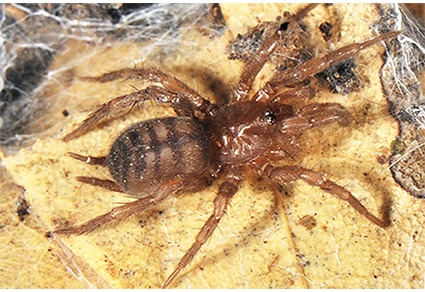
Alejandro Valdez-Mondragón (CIBNOR, La Paz), Héctor Vicente Salinas Velasco, and Julián Bueno-Villegas (Universidad Autónoma del Estado de Hidalgo) described both sexes of this new funnel-web spider from temperate pine-oak forests in Tlaxcala and Hidalgo, Mexico. The species epithet references pulque, the fermented agave beverage native to the region. Euagrus pulque is sympatric with E. gus at La Malinche National Park in Tlaxcala. Mexico now harbours 17 of the genus's 23 known species — the highest diversity of any country for Euagrus.
Locality: Pine-oak forests, Tlaxcala and Hidalgo, Mexico | IUCN: Not Evaluated
Four cellar spiders and a new genus from Brazilian drylands
Kambiwa itacarambi, K. maracas, Sertana capivara, S. sagarana — Huber & Carvalho, 2026 6
Taxonomy: Arthropoda → Arachnida → Araneae → Pholcidae
Bernhard Huber and a co-author revised the cellar spider genus Kambiwa and simultaneously erected Sertana gen. nov. — a new genus whose type species is S. capivara — to accommodate cellar spiders from the Caatinga and Cerrado biomes of Brazil (states of Minas Gerais, Bahia, and Piauí). The study is notable for pairing traditional morphological descriptions with modelled range-shift projections under climate change scenarios.
Locality: Caatinga and Cerrado, Brazil | IUCN: Not Evaluated
Two damselflies pried out of a familiar species complex
Pseudagrion crenatum and Pseudagrion pirata — Seehausen & Marinov, 2026 7
Taxonomy: Arthropoda → Insecta → Odonata → Zygoptera → Coenagrionidae → Pseudagrion
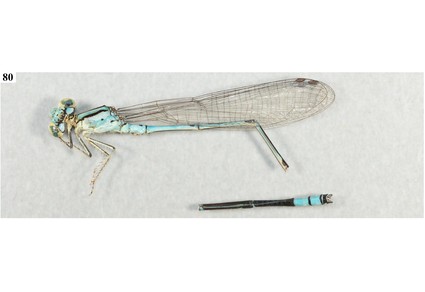
Malte Seehausen (Zoologisches Museum der CAU zu Kiel, Germany) and Milen Marinov (National Museum of Natural History, Bulgarian Academy of Sciences) revisited the "blue-group" of Pseudagrion damselflies allied to the widespread P. microcephalum and found two distinct species hiding in the complex. P. crenatum's holotype male was collected in October 1915 at Caboolture, Queensland, Australia, by R.J. Tillyard; it sat in Frankfurt's Senckenberg Museum for over a century before receiving a formal name. P. pirata comes from Montayupan Falls, Cebu Island, Philippines, collected in January 1992, with its holotype deposited at Naturalis Biodiversity Centre Leiden. The revision also restricts the range of P. microcephalum itself to India, Pakistan, Nepal, Bangladesh, and Sri Lanka.
Localities: Queensland, Australia; Cebu Island, Philippines | IUCN: Not Evaluated
A gall wasp that took 130 years to find company
Buffingtonella buffingtoni Nastasi, 2026 8
Taxonomy: Arthropoda → Insecta → Hymenoptera → Cynipidae → Ceroptresini → Buffingtonella
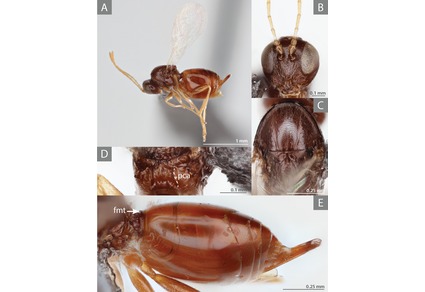
The genus Buffingtonella had been monotypic since its type species, B. polita (Ashmead), was described in 1896 — 130 years of solitude. Louis F. Nastasi at the University of Iowa broke that streak by describing B. buffingtoni from material held at the Mississippi Entomological Collection, Mississippi State University. The species is suspected to be an inquiline — a guest organism that lives inside the gall structures made by another species — associated with galls produced by Polystepha gall midges (Diptera: Cecidomyiidae), though the host association has not been confirmed experimentally.
Locality: Mississippi, USA | IUCN: Not Evaluated
A two-toned moth from Brazil's triple biome border
Rolepa variabilis Orlandin, Carneiro & Casagrande, 2026 9
Taxonomy: Arthropoda → Insecta → Lepidoptera → Bombycoidea → Phiditiidae → Rolepa
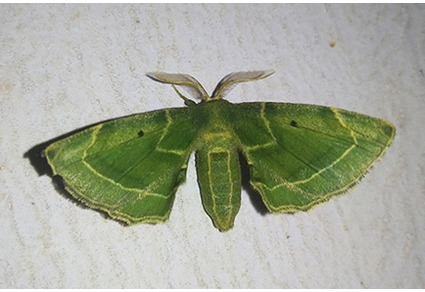
Elton Orlandin, Eduardo Carneiro, and Mirna Martins Casagrande of the Laboratório de Estudos de Lepidoptera Neotropical, Universidade Federal do Paraná, described Rolepa variabilis from the Atlantic Forest, Caatinga, and Cerrado biomes of Brazil. The epithet variabilis signals a conspicuous biological feature: the species shows both green and brown adult phenotypes, a polyphenism uncommon in the small family Phiditiidae (25 species, 5 genera). It differs from the only other Rolepa species, R. delineata, in forewing shape (triangular vs. elongated), a quadrangular rather than horn-shaped costa projection on the male valvae, the presence of finger-like socii, and smaller vesica spicules. The authors note that the monophyly of Phiditiidae genera remains untested — this paper is intended as a first step toward a systematic review.
Locality: Atlantic Forest / Caatinga / Cerrado, Brazil | IUCN: Not Evaluated
Animals — marine and aquatic
Five bristle worms from the Chilean oxygen minimum zone
Dodecamastus branchiphorus, Leiochrides chilensis, Mediomastus concepcionensis, Notomastus carlvilhelmi, Notomastus friedrichi — Bick & Zettler, 2026 10
Taxonomy: Annelida → Polychaeta → Capitellida → Capitellidae
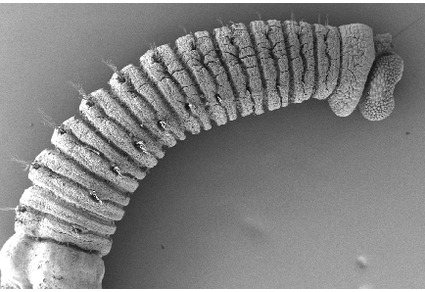
Andreas Bick (Universität Rostock) and Michael L. Zettler (Leibniz Institute for Baltic Sea Research, Warnemünde) collected all five species in January 2023 during a single cruise of the German research vessel SONNE along an oxygen gradient off the coast of Chile at 36°S, from shallow shelf depths of 56 m down to 912 m. The five species span four genera of the family Capitellidae, a group of marine bristle worms that thrive in soft sediments. One stands out: Notomastus carlvilhelmi was found to contain a tanaidacean manca larva — the juvenile dispersal stage of a small crustacean — inside its abdomen — an incidental find that raises questions about whether the worm was acting as an unintentional host. Bick and Zettler also re-validate Mediomastus branchiferus Hartmann-Schröder, 1962, previously listed as taxon inquirendum (a name of uncertain standing). The authors discuss how several features used to separate Capitellidae genera vary even within single specimens, pointing to ongoing instability in the family's classification.
Locality: Coastal Chile, 36°S, 56–912 m depth | IUCN: Not Evaluated (all five)
A double-barred pipefish from Australia's northern shelf
Festucalex bifasciatus Yuki & Motomura, 2026 11
Taxonomy: Chordata → Actinopterygii → Syngnathiformes → Syngnathidae → Festucalex
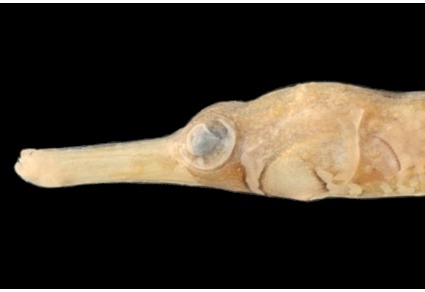
Daijiro Yuki and Hiroyuki Motomura of Kagoshima University Museum described this new pipefish from eight specimens (89.8–152.8 mm standard length) dredged from 9 to 81 m depth off Western Australia and Queensland. The species is identified by a distinctive pair of white bars on the opercle — visible in life and persisting as pale bars in preserved material — along with knobbed principal tail ridges shared only with the closely related F. cinctus, and a snout length that runs 46.4–52.6% of head length. Standard meristic counts: 19–20 trunk rings, 34–38 tail rings, 24–28 dorsal-fin rays, 12–15 pectoral-fin rays.
Locality: Northern Australia (Western Australia and Queensland), 9–81 m | IUCN: Not Evaluated
A sesame-themed nudibranch from Taiwan
Thecacera sesama H.-Y. Chan & C.-L. Lee, 2026 12
Taxonomy: Mollusca → Gastropoda → Heterobranchia → Nudipleura → Doridida → Polyceridae → Thecacera
Chan, Lee, and four co-authors described this sea slug from a single shallow-water site off the Northern Coastal Highway in Ruifang District, New Taipei City, Taiwan, at 23 m depth. The holotype (ASIZM0001725) was identified through morphology combined with phylogenetic analyses of 16S rDNA and COI barcodes, published in ZooKeys 1279: 269–284 12. WoRMS logged the registration on May 14, 2026.
Locality: Ruifang District, New Taipei City, Taiwan, 23 m | IUCN: Not Evaluated
A new bryozoan family from the deepest ocean trenches
Pierrella fendouzhei Song, Gordon, Waeschenbach, Schwaha & Peng, 2026 — + new family Pierrellidae 13
Taxonomy: Bryozoa → Gymnolaemata → Ctenostomatida → Pierrellidae (fam. nov.) → Pierrella
This species and its accompanying new family were published in Science 392(6799): 749–754 13, in a paper reporting protist-dominated hard-substrate faunas from the deepest oceanic trenches. Bryozoa (moss animals) are sessile colonial invertebrates; most families occupy shallow to mid-depth reefs. The family Pierrellidae is named to accommodate P. fendouzhei, found at full-trench depth — pushing the known bathymetric range of ctenostome bryozoans further down than previously documented. WoRMS registered the entry on May 15, 2026.
Locality: Deep ocean trenches | IUCN: Not Evaluated
Animals — freshwater, cave, and fossil species
A cave fish from the Yangtze's karst underground
Oreonectes weii Luo, Ling, Cao, Zhou & Huang, 2026 14
Taxonomy: Chordata → Actinopterygii → Cypriniformes → Nemacheilidae → Oreonectes
Luo, Ling, Cao, Zhou and Huang described this eyeless stone loach — known in Chinese as 魏氏岭鳅 (Wèi-shì Lǐngqiū; "Wei's ridge loach") — from a karst cave system in the Yangtze River Basin, published in Zoosystematics and Evolution 14. The study incorporates monsoon-driven evolutionary diversification analysis, placing the new species within the broader context of how southern China's cave fish fauna has been shaped by seasonal hydrology. The genus Oreonectes is restricted to East and Southeast Asian karst regions.
Locality: Yangtze River Basin karst caves, southern China | IUCN: Not Evaluated
A midge with a complete mitochondrial genome on day one
Pseudosmittia hongjiannaoensis Liu, 2026 15
Taxonomy: Arthropoda → Insecta → Diptera → Chironomidae → Orthocladiinae → Pseudosmittia
Jiaxin Nie, Chunmian Liu, and colleagues at Tianjin Normal University described this non-biting midge from Hongjiannao National Nature Reserve in Shaanxi, a wetland that supports the relict gull (Larus relictus, Critically Endangered). The description is unusual in going beyond morphology: the authors assembled a complete 15,837 bp mitochondrial genome and performed COI DNA barcoding, obtaining a minimum interspecific K2P distance of 15.1% to the nearest Pseudosmittia congener (mean 23.0%), well above the standard 2–3% threshold used in insect species delimitation. Morphologically, the species is diagnosed by a unique inferior volsella shape and the absence of an anal point.
Locality: Hongjiannao National Nature Reserve, Shaanxi, China | IUCN: Not Evaluated
Thailand's first named sauropod
Nagatitan chaiyaphumensis Sethapanichsakul, Khansubha, Manitkoon, Hanta, Mannion & Upchurch, 2026 16
Taxonomy: Chordata → Reptilia → Dinosauria → Saurischia → Sauropodomorpha → Titanosauriformes → Euhelopodidae → Nagatitan
Sethapanichsakul and five co-authors named this sauropod dinosaur from the Khok Kruat Formation of Chaiyaphum Province, Thailand — the first formally described sauropod from that Lower Cretaceous formation. The genus name Nagatitan references the Naga, a serpentine mythological figure in Thai culture, combined with the Latin titan for giant. The species epithet, chaiyaphumensis, records the province of discovery. The finding extends the known diversity of somphospondylans — an advanced group of titanosauriform sauropods characterised by spongy vertebral bone — in Southeast Asia, a region where sauropod diversity remains less thoroughly documented than in China or South America.
Locality: Chaiyaphum Province, Thailand (Khok Kruat Formation, Lower Cretaceous) | IUCN: Extinct (fossil)
Fungi
Two new Yunnan entomopathogens — one kills insects, one kills fungi
Pleurocordyceps luopingensis and Pseudometarhizium cangyuanense — Hong Yu, Z.H. Liu, H. Wang, X.Y. Liu et al., 2026 17
Taxonomy: P. luopingensis: Ascomycota → Sordariomycetes → Hypocreales → Polycephalomycetaceae → Pleurocordyceps
Taxonomy: P. cangyuanense: Ascomycota → Sordariomycetes → Hypocreales → Clavicipitaceae → Pseudometarhizium
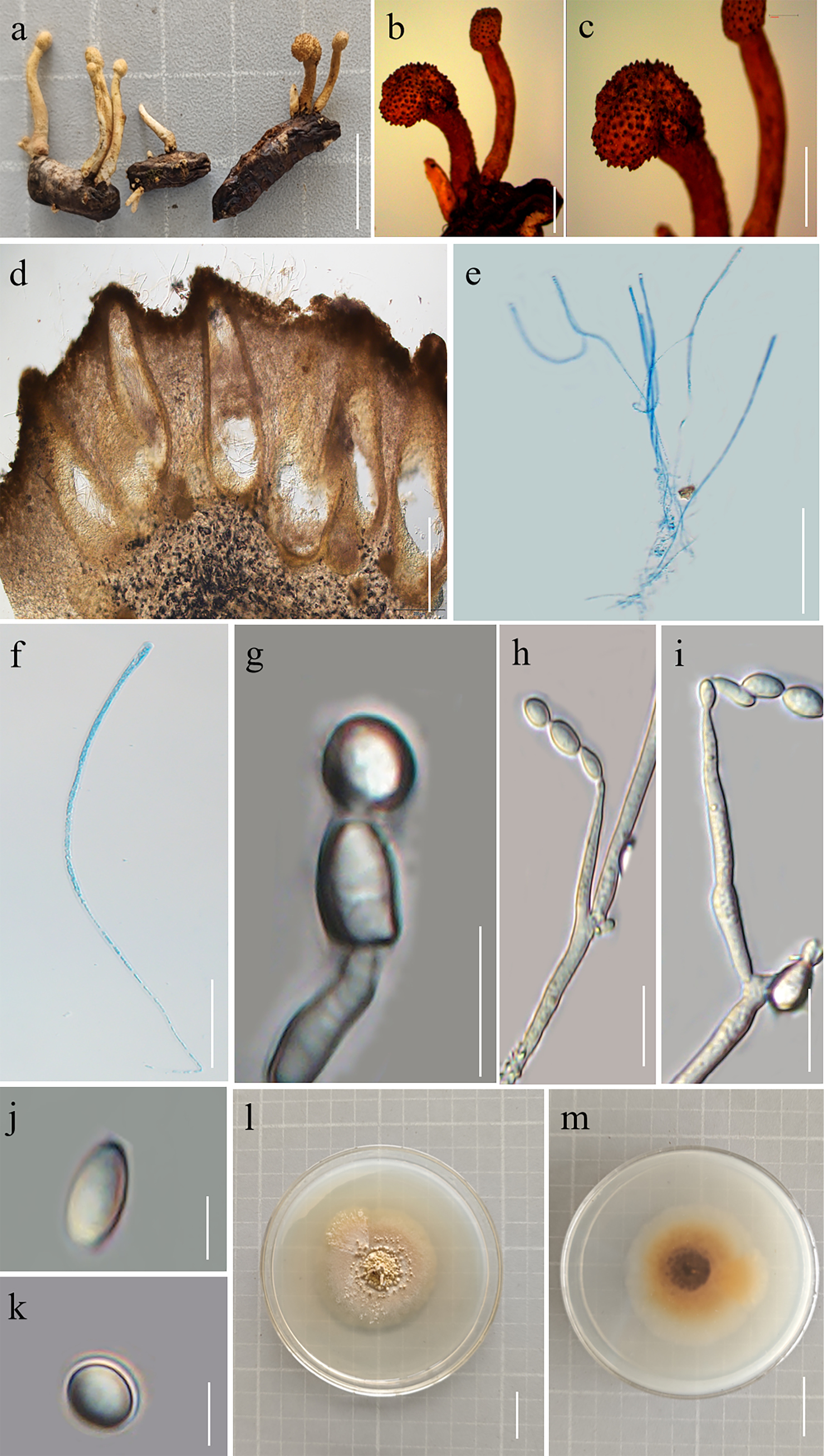
Published together in MycoKeys 132: 147–172 17 by researchers at Yunnan Minzu University (Kunming) and Yunnan University, these two species have interlocking ecological roles.
Pleurocordyceps luopingensis is an entomopathogenic fungus — it kills insects. Collected on July 13, 2025, at 1,545.5 m elevation in Luoping County, Yunnan (25°15′24″N, 104°42′12″E), it parasitises adult Hemiptera. Its sexual morph produces light-yellow to pale-yellow cylindrical stromata (2.1–15.2 mm long) with obpyriform, immersed perithecia; the asexual morph grows off-white to grey leathery colonies on PDA after 54 days at 25°C, forming khaki-coloured umbrella-shaped synnemata. It differs from the only comparable species, P. yunnanensis, by lighter stromata colouration and oval (rather than differently shaped) α-conidia.
Pseudometarhizium cangyuanense parasitises not insects but another fungus — specifically an Ophiocordyceps species — making it a mycoparasite (a fungus that infects fungi). Collected on August 13, 2025, at 1,483.9 m in Cangyuan County, Yunnan (23°13′48″N, 99°18′00″E), it is only the third known species in the genus Pseudometarhizium, which was established to accommodate taxa that differ phylogenetically from Metarhizium despite superficial similarity. Authors Hong Yu et al. noted these findings "enrich the known diversity of entomopathogenic fungi in China" and help clarify phylogenetic relationships within Polycephalomycetaceae and Clavicipitaceae. 17
Localities: Luoping County and Cangyuan County, Yunnan, China | IUCN: Not Evaluated (both)
Two cuboid-spored mushrooms from Zhejiang's mixed forests
Entoloma fucatum and Entoloma pseudobrunneosquamulosum — Yan, Xu & Wang, 2026 18
Taxonomy: Basidiomycota → Agaricomycetes → Agaricales → Entolomataceae → Entoloma subg. Cubospora
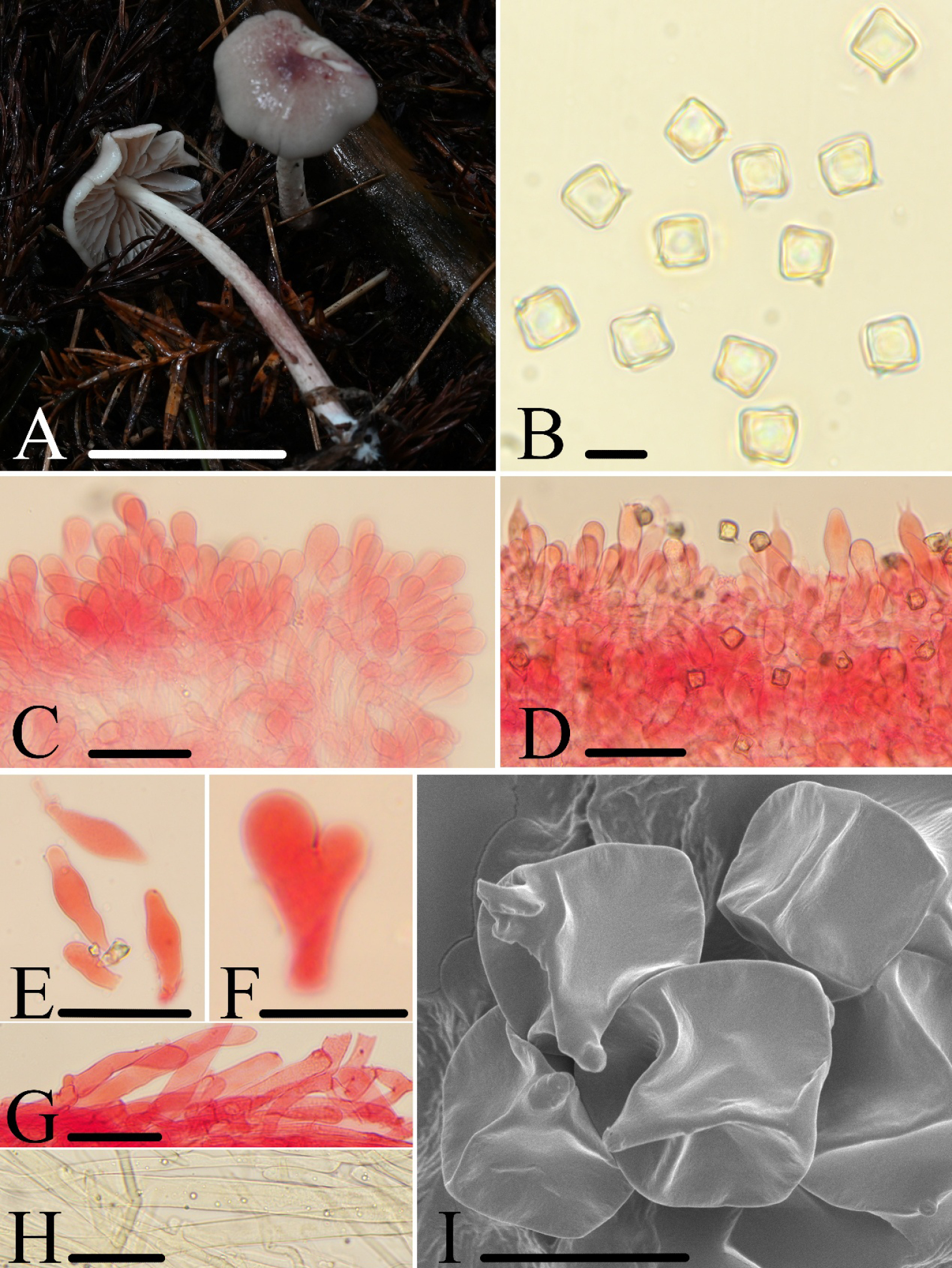
Yu-Qin Xu, Hui Zeng, Sheng-Nan Wang, and Jun-Qing Yan of Jiangxi Agricultural University and Fujian Academy of Agricultural Sciences described both species from Lishui City, Zhejiang Province — where both were found scattered on soil in mixed coniferous-broad-leaved forest dominated by Cupressaceae 18. Both belong to subgenus Cubospora, defined by isodiametric, thick-walled, cuboid basidiospores with Q = 1.0 — a spore shape that strikes anyone accustomed to the elongated spores common in most gilled fungi.
Entoloma fucatum (Latin fucatum = "painted" or "cosmetic-like") has a campanulate to convex cap 11–26 mm wide, with a striking greyish-ruby to dark ruby centre that lightens toward the margin; it is hygrophanous (fading as it dries). Its unique combination within subg. Cubospora is a reddish hygrophanous pileus with both cheilocystidia (clustered on gill edges, 22.0–61.5 μm long) and pleurocystidia (scattered on gill faces, 24.0–61.0 μm).
Entoloma pseudobrunneosquamulosum — named for its morphological resemblance to E. brunneosquamulosum — is larger (cap 26–40 mm), reddish-brown, and covered in hairy scales. Phylogenetically it clusters with E. caribaeum but differs in having a brown, non-striate cap and the presence of pleurocystidia, which E. caribaeum lacks. Xu et al. remarked that subgenus Cubospora "is relatively abundant in subtropical regions," and suggested that multiple named lineages may contain cryptic undescribed species. 18
Localities: Liandu District and Qingtian County, Lishui, Zhejiang, China | IUCN: Not Evaluated (both)
Plants
A new fern from Guangdong's subtropical hills
Leptochilus yangjiangensis F. G. Wang, Y. Huang & H. J. Zhou, 2026 19
Taxonomy: Plantae → Polypodiopsida → Polypodiales → Polypodiaceae → Leptochilus
F. G. Wang, Y. Huang, H. J. Zhou, and several co-authors described this new fern from Yangjiang, Guangdong Province, southern China, distinguishing it from related Leptochilus species by frond and soral characteristics. The description was published in Phytotaxa and reported via the novataxa aggregator on May 15, 2026.
Locality: Yangjiang, Guangdong, China | IUCN: Not Evaluated
A Gesneriaceae wildflower from China's Nanling Mountains
Oreocharis nanlingensis X.Z. Shi & Li H. Yang, 2026 20
Taxonomy: Plantae → Magnoliopsida → Lamiales → Gesneriaceae → Oreocharis
X.Z. Shi, Li H. Yang, and co-authors described this species from the Nanling (南岭) mountain range in southern China, using an integrated approach combining morphological characters with molecular phylogenetic evidence. The paper, published in Ecology and Evolution (DOI: 10.1002/ece3.73380) 20, also resolved two synonyms within Oreocharis — a genus in the African violet family (Gesneriaceae) that is particularly rich in Chinese subtropical forests. The species carries a Chinese common name: 南岭马铃苣苔 (Nánlǐng mǎlíng jùtái).
Locality: Nanling region, southern China | IUCN: Not Evaluated
Full roster: all species registered May 14–15, 2026
The table below lists every new species, genus, and family documented in this monitoring window. Entries without a formally extractable binomial (two spider species locked behind subscription PDFs) are noted accordingly.
| Scientific name | Group | Locality | Describer(s) | Published in |
|---|---|---|---|---|
| Armeniophyllum pollex | Diplopoda (millipede) | Georgia (Lesser Caucasus) | Vagalinski et al. | Zootaxa 5810(2) |
| Limnospila krokha | Diptera (fly) | Russia | Sorokina | Zootaxa 5810(2) |
| Limnospila vikhrevi | Diptera (fly) | Russia | Sorokina | Zootaxa 5810(2) |
| Rolepa variabilis | Lepidoptera (moth) | Brazil | Orlandin et al. | Zootaxa 5810(2) |
| Hemeroscopus jinjuensis ‡ | Odonata fossil | South Korea (Cretaceous) | Wei, Nam & Liu | Zootaxa 5810(2) |
| Semiremotus concavus † | Hemiptera (leafhopper) | Guizhou, China | Yao, Yu & Yang | Zootaxa 5810(2) |
| Buffingtonella buffingtoni | Hymenoptera (gall wasp) | Mississippi, USA | Nastasi | Zootaxa 5810(2) |
| Pseudagrion crenatum | Odonata (damselfly) | Queensland, Australia | Seehausen & Marinov | Zootaxa 5810(1) |
| Pseudagrion pirata | Odonata (damselfly) | Cebu Island, Philippines | Seehausen & Marinov | Zootaxa 5810(1) |
| Dodecamastus branchiphorus | Polychaeta (bristle worm) | Coastal Chile | Bick & Zettler | Zootaxa 5810(1) |
| Leiochrides chilensis | Polychaeta | Coastal Chile | Bick & Zettler | Zootaxa 5810(1) |
| Mediomastus concepcionensis | Polychaeta | Coastal Chile | Bick & Zettler | Zootaxa 5810(1) |
| Notomastus carlvilhelmi | Polychaeta | Coastal Chile | Bick & Zettler | Zootaxa 5810(1) |
| Notomastus friedrichi | Polychaeta | Coastal Chile | Bick & Zettler | Zootaxa 5810(1) |
| Compsoctena kushabhadrae | Lepidoptera (moth) | India | Rayhan et al. | Zootaxa 5810(1) |
| Compsoctena kamaraji | Lepidoptera (moth) | India | Rayhan et al. | Zootaxa 5810(1) |
| Compsoctena faridahsani | Lepidoptera (moth) | Bangladesh | Rayhan et al. | Zootaxa 5810(1) |
| Euagrus pulque | Araneae (spider) | Mexico | Valdez-Mondragón et al. | Zootaxa 5810(1) |
| Pseudosmittia hongjiannaoensis | Diptera (midge) | Shaanxi, China | Liu et al. | Zootaxa 5810(1) |
| Loricatheridion sp. † ★ | Araneae (cobweb spider) | Hubei, China | Fang, Liu & Hu | Zootaxa 5810(1) |
| Festucalex bifasciatus | Teleostei (pipefish) | N. Australia | Yuki & Motomura | Zootaxa 5810(1) |
| Myrmecium sp. ★ | Araneae (ant-mimicking spider) | Ecuador | Peñaherrera-R. et al. | Zootaxa 5810(1) |
| Pleurocordyceps luopingensis | Fungi (Ascomycota) | Yunnan, China | Hong Yu et al. | MycoKeys 132 |
| Pseudometarhizium cangyuanense | Fungi (Ascomycota) | Yunnan, China | Hong Yu et al. | MycoKeys 132 |
| Entoloma fucatum | Fungi (Basidiomycota) | Zhejiang, China | Yan, Xu & Wang | MycoKeys 132 |
| Entoloma pseudobrunneosquamulosum | Fungi (Basidiomycota) | Zhejiang, China | Yan, Xu & Wang | MycoKeys 132 |
| Thecacera sesama | Mollusca (nudibranch) | Taiwan, 23 m | Chan & Lee et al. | ZooKeys 1279 |
| Pierrella fendouzhei †† | Bryozoa | Deep ocean trenches | Song et al. | Science 392 |
| Electroma spinosa | Mollusca (bivalve) | Gulf of Mexico | Córdova-Cárdenas & Urbano | Ciencia y Mar 30(89) |
| Lepidophthalmus yaima | Crustacea (ghost shrimp) | Ryukyu Islands, Japan | Komai | Crustacean Research 55 |
| Leptochilus yangjiangensis | Plantae (fern) | Guangdong, China | Wang, Huang & Zhou | Phytotaxa |
| Oreocharis nanlingensis | Plantae (Gesneriaceae) | Nanling, China | Shi & Yang | Ecology and Evolution |
| Nagatitan chaiyaphumensis ‡ | Reptilia (sauropod) | Thailand (Cretaceous) | Sethapanichsakul et al. | — |
| Oreonectes weii | Teleostei (cave fish) | Yangtze Basin, China | Luo et al. | Zse 102 |
| Kambiwa itacarambi / K. maracas / Sertana capivara / S. sagarana | Araneae (cellar spiders) | Brazil | Huber & Carvalho | — |
† New genus also established alongside new species.
†† New family Pierrellidae also established.
‡ Fossil species (extinct).
★ Species binomial names locked behind subscription PDFs; genera confirmed.
Conservation status: Not Evaluated (IUCN) for all newly described extant species; Not Applicable for fossil taxa.
Cover image: AI-generated composite illustration (field-guide aesthetic). Individual species photographs used within this article are from their respective Zootaxa and MycoKeys publication pages.
참고 출처
- 1Zootaxa Vol. 5810 No. 1 (May 14, 2026)
- 2Zootaxa Vol. 5810 No. 2 (May 15, 2026)
- 3MycoKeys 132 — Pensoft Publishers
- 4First data on the millipede genus Armeniophyllum after almost a century — Zootaxa
- 5A new species of the mygalomorph spider genus Euagrus from central Mexico — Zootaxa
- 6Revision of Kambiwa and description of Sertana gen. nov. (Araneae: Pholcidae) — novataxa
- 7Pseudagrion microcephalum — sifting through a putative familiar species — Zootaxa
- 8Description of the second known species of Buffingtonella (Hymenoptera: Cynipidae) — Zootaxa
- 9A new species of Rolepa (Lepidoptera: Phiditiidae) — Zootaxa
- 10Five new species of Capitellidae from the coast of Chile — Zootaxa
- 11Festucalex bifasciatus, a new pipefish from northern Australia — Zootaxa
- 12Thecacera sesama — WoRMS
- 13Pierrella fendouzhei — WoRMS
- 14Oreonectes weii — novataxa
- 15A new species of Pseudosmittia from Hongjiannao National Nature Reserve — Zootaxa
- 16Nagatitan chaiyaphumensis — novataxa
- 17Pleurocordyceps luopingensis and Pseudometarhizium cangyuanense — MycoKeys 132
- 18Two new Entoloma subgenus Cubospora from subtropical East China — MycoKeys 132
- 19Leptochilus yangjiangensis — novataxa
- 20Oreocharis nanlingensis — novataxa
이 콘텐츠를 둘러싼 관점이나 맥락을 계속 보강해 보세요.