Khanna Vote Tracker — Inaugural Issue (Apr 30 – May 14, 2026)
The inaugural issue opens with a recess note, then tracks Khanna's 11 roll-call votes across the nearest active floor days — with impact breakdowns for tech workers, immigrants, healthcare recipients, California voters, and AI founders.
A note on timing: The House was in a district work period from May 4 through May 11, 2026 — the Congressional Record for both May 4 and May 7 states explicitly: "There were no Yea and Nay votes, and there were no Recorded votes." 1 2 Because there were no floor votes to track, this inaugural issue covers the nearest active voting sessions on either side of the recess: April 30 (Roll Calls 154–155) and May 12–14 (Roll Calls 156–173). Starting with the next issue, coverage will strictly follow the Monday-to-Monday rolling window.
Vote snapshot: Apr 30 – May 14, 2026
Ro Khanna (D-CA-17, representing Silicon Valley's core — Cupertino, Santa Clara, Sunnyvale, Fremont) 3 cast or missed 20 roll call votes across these three active legislative days. The table below covers the eight votes with direct relevance to the five target groups tracked by this newsletter: tech workers, immigrants, healthcare recipients, California voters, and AI founders.
| Roll Call | Date | Bill | Khanna | Outcome | Groups affected |
|---|---|---|---|---|---|
| RC 154 | Apr 30 | H.R. 7567 Farm Bill | Nay | Passed 224–200 | Healthcare/food, immigrants, CA voters |
| RC 155 | Apr 30 | S. 4465 FISA Extension | Nay | Passed 261–111 | Tech workers, AI founders, immigrants |
| RC 156 | May 12 | H.R. 2071 Save Our Shrimpers | Not Voting | Passed 391–18 | No direct impact on target groups |
| RC 157 | May 12 | H.R. 2853 CORCA | Not Voting | Passed 348–60 | Immigrants, tech workers |
| RC 162 | May 13 | H.Res. 1252 Law Enforcement Memorial | Yea | Passed 418–2 | Non-binding; no direct impact |
| RC 165 | May 13 | H.Con.Res. 96 Support for Law Enforcement | Nay | Passed 243–173 | Non-binding; police accountability signal |
| RC 167 | May 13 | H.Res. 1259 China detainees | Yea | Passed 414–0 | Immigrants, diaspora communities |
| RC 169 | May 14 | H.R. 6260 Violent Offenders Act | Nay | Passed 243–179 | Immigrants, low-income communities |
| RC 170 | May 14 | H.Con.Res. 75 Iran War Powers | Yea | Failed | California voters, national security |
| RC 171 | May 14 | H.R. 5625 Cashless Bail Reporting | Nay | Passed | Immigrants, low-income communities |
| RC 173 | May 14 | H.R. 8365 Monitor Accountability Act | Nay | Passed 219–204 | California voters, immigrants |
Khanna also voted Yea on the final passage of H.R. 1346 (RC 164, May 13), the Nationwide Consumer and Fuel Retailer Choice Act, which allows year-round nationwide sale of E15 gasoline (blended with up to 15% ethanol) — typically 10 to 30 cents per gallon cheaper than regular fuel. 4 California voters who commute long distances stand to benefit from the lower price at the pump.
Farm Bill: Khanna votes with 93% of Democrats against a Republican agriculture overhaul
H.R. 7567, the Farm, Food, and National Security Act of 2026, passed the House on April 30 along nearly pure party lines — 224 Yea, 200 Nay. 5 Khanna voted Nay, in line with 197 of 211 Democrats (93.4% of voting members). Only 14 Democrats crossed to support the bill; all 210 Republicans present voted Yea.
What it does: The bill restructures the five-year federal farm policy framework — the Farm Bill — under Republican priorities. Democrats widely opposed it, arguing it cuts nutrition assistance programs like SNAP (the Supplemental Nutrition Assistance Program, the main federal food benefits program for low-income households) while extending commodity subsidies that primarily benefit large agribusinesses.
Who it affects:
- Healthcare recipients and low-income Californians: If SNAP benefits are reduced under this framework, the impact is direct — California has roughly 5.5 million SNAP recipients. Any cuts to food assistance hit healthcare recipients disproportionately, since food insecurity is a recognized driver of chronic disease and hospital utilization.
- Immigrants: Federal SNAP rules already restrict access for many immigrant households. The Republican bill's version of the Farm Bill does not expand those eligibility windows; advocates argued it may narrow them further.
- California voters broadly: California's agricultural sector — the largest in the country by output — would operate under this policy framework. Whether the bill's commodity support structure benefits or harms the state's farmers depends heavily on the specific crop provisions, which remain under Senate review. 5
FISA renewal: Khanna breaks with half the Democratic caucus on surveillance extension
S. 4465, the FISA Amendments Act Extension, renews Section 702 of the Foreign Intelligence Surveillance Act (FISA) — the legal authority under which the NSA and FBI collect digital communications of foreign nationals without a warrant, including communications with Americans. The bill passed 261–111, meeting the two-thirds threshold required under the suspension of rules. 6
Khanna voted Nay — against the narrow majority of his own party. The Democratic caucus split nearly down the middle on this one: 94 Yea, 85 Nay (52.5% Yea). Republicans provided the decisive votes, with 167 voting Yea and only 26 opposed. Khanna's Nay puts him in a civil-liberties bloc that included Alexandria Ocasio-Cortez, Rashida Tlaib, and Ayanna Pressley.
What it does: Section 702 authorizes surveillance of foreigners abroad, but the collected data regularly includes the communications of Americans who contact those individuals. Critics call this "backdoor surveillance" and argue it operates as a workaround to the Fourth Amendment's warrant requirement. Renewing the authority without reform extends that practice.
Who it affects:
- Tech workers and AI founders: Companies headquartered in Khanna's district — including AMD, Intel, and numerous AI startups — operate under Section 702 compliance obligations. A renewal without reform means continued legal exposure for companies that process or store data connected to foreign nationals. The surveillance apparatus has historically intersected with intellectual property investigations targeting tech firms. Khanna's Nay reflects a longstanding position: he has opposed clean reauthorizations of Section 702 for years.
- Immigrants: Foreign nationals living in the US communicate with family, employers, and friends abroad continuously. Those communications remain subject to Section 702 collection. The renewal without a warrant requirement for searches of American-connected data means immigrant communities continue to face warrantless exposure.
Two missed votes on May 12: a co-sponsored crime bill and a shrimping subsidy
Khanna was recorded as Not Voting on both roll calls held May 12. 7 8 His career missed-vote rate stands at 0.8% (41 of 4,932 roll calls through May 2026). 3 The most likely explanation: Khanna was in Philadelphia on May 11 for a town hall with Pennsylvania congressional candidate Chris Rabb — the event ran from 11:30 a.m. to 1:00 p.m. at Preah Buddha Rangsey Temple in South Philly, and Rabb had announced on Instagram nine days earlier: "Big news: Congressman Ro Khanna is coming to Philly on Monday!" 9 Philadelphia is roughly 140 miles from Washington — about two hours by train. Khanna filed no "Had I been present" statement in the Congressional Record and offered no public explanation for either absence as of May 15. 10
H.R. 2071, Save Our Shrimpers Act (RC 156) — Passed 391–18: Amends federal fisheries law to provide financial relief to domestic shrimping operations affected by foreign competition. Ninety-one percent of Democrats voted Yea. This bill has no direct bearing on the five target groups.
H.R. 2853, Combating Organized Retail Crime Act of 2025 (CORCA) (RC 157) — Passed 348–60: The more notable miss. Khanna was a co-sponsor of this bill. 8 CORCA expands federal enforcement against organized retail theft rings — broadening the scope of interstate stolen property charges, making them predicate offenses for federal money laundering prosecutions, and creating a DHS coordination center for retail and supply chain crime enforcement. 11 Sixty Democrats voted Nay — significantly more opposition than the 17 who voted against the Save Our Shrimpers Act. According to reporting by Daily Kos, a number of Democrats who had initially co-sponsored the bill withdrew support after discovering language that expanded DHS authority to collect civilian data for retail crime enforcement purposes — a provision critics characterized as an ICE surveillance expansion. 12 Khanna and Rep. Dan Goldman chose to sit out rather than vote against a bill they had co-sponsored.
Who CORCA affects:
- Immigrants: The DHS data collection center created by CORCA centralizes civilian retail transaction data across federal agencies. Immigrant communities — particularly undocumented individuals who use prepaid cards and gift cards — face elevated exposure under a provision that extends the federal money laundering statute to cover general-use prepaid cards, gift certificates, and store gift cards. 11
- Tech workers: The DHS coordination center could generate new data-sharing requirements for tech and retail platforms that process payment transactions. The extent of those requirements depends on implementing regulations not yet written.
May 13–14 legislative sprint: six votes that matter
Khanna returned to the floor on May 13 and voted on 12 roll calls across the two-day session. Six of those were substantive bills with direct relevance to this newsletter's tracked groups.
Law enforcement resolutions: Khanna splits the ticket
On May 13, the House voted on two law enforcement measures on the same day. Khanna handled them differently.
H.Res. 1252 (RC 162), the Resolution Memorializing Law Enforcement Officers Killed in the Line of Duty, is a non-binding simple resolution that expresses congressional condolences to families of fallen officers and calls for officers to receive adequate equipment and training. 13 It passed 418–2. Khanna voted Yea. The two Nay votes were outliers in what was otherwise a unanimous gesture of condolence — the resolution carries no legal weight.
H.Con.Res. 96 (RC 165), the concurrent resolution Expressing Support for Law Enforcement Officers, passed 243–173 with 3 members voting Present. 14 Khanna voted Nay alongside most of the progressive bloc. This resolution, also non-binding, is more politically charged than the memorial — it functions as a partisan statement of support for law enforcement in the context of ongoing debates about police accountability, consent decrees, and qualified immunity. Voting Nay on this while voting Yea on the bipartisan memorial is a consistent signal: Khanna supports honoring individual officers while declining to endorse the Republican framing of blanket "law enforcement support" that critics argue forecloses accountability discussions.
No direct statutory impact on any target group from either resolution.
China detainees: unanimous support across the aisle
H.Res. 1259 (RC 167) calls on the President to seek the release of five individuals detained by China: Pastor Jin Mingri, Pastor Gao Quanfu and his wife Pang Yu, Dr. Gulshan Abbas, and media executive Jimmy Lai. 15 Passed 414–0. Khanna voted Yea.
Who it affects: Immigrant communities from China, Hong Kong, and Muslim-majority regions in western China (Dr. Gulshan Abbas is a Uyghur-American whose sister was imprisoned in Xinjiang) have organized for years around these cases. The resolution is non-binding but puts Congress formally on record ahead of any U.S.–China diplomatic engagement.
Bail funds targeted as "insurance companies": a vote that hits immigrants hard
H.R. 6260, the Keeping Violent Offenders Off Our Streets Act of 2025 (RC 169, final passage), passed 243–179. 16 Khanna voted Nay.
Despite its title, the most consequential provision of this bill has nothing to do with criminal sentencing. The bill redefines the federal statutory term "business of insurance" to include the posting of monetary bail, criminal bail bonds, and federal immigration bail bonds. 16 Once bail posting is classified as insurance, organizations that post cash bond for defendants — including charitable bail funds — become subject to federal insurance fraud statutes and state insurance commission regulation.
Who it affects:
- Immigrants: Federal immigration bail bonds are explicitly named in the bill's new definition. Nonprofit organizations that post bond to secure the release of immigrants detained by ICE — often the only mechanism through which low-income detainees can be freed while their cases are pending — would face federal criminal liability for activities they currently perform without restriction. The CRS summary explicitly identifies charitable bail funds as entities affected by the redefinition. 16 For Khanna's district, which has one of the largest Indian, Chinese, and Southeast Asian immigrant populations in the country, this provision has practical stakes.
- Healthcare recipients and low-income Californians: Charitable bail funds serve a broad population — not just immigrants. Any organization that posts bond for defendants who cannot afford it would now operate under the threat of federal insurance fraud charges. Incarcerating people before trial who would otherwise be released directly affects employment, housing stability, and healthcare continuity.
Also on May 14, Khanna voted Nay on H.R. 5625, the Cashless Bail Reporting Act (RC 171), which passed. That bill directs the Attorney General to publish a public list of every state and local government that allows cashless or unsecured bail. 17 Critics argue the list functions as a political targeting document — a public ledger of jurisdictions to pressure or litigate against for using non-cash bail. Khanna's Nay is consistent with his opposition to H.R. 6260.
Consent decree monitors restricted: a check on law enforcement oversight
H.R. 8365, the Monitor Accountability Act (RC 173), passed 219–204 — the narrowest margin of the week. 18 Khanna voted Nay.
Monitors are independent officials appointed under civil settlement agreements or consent decrees to oversee corrective reforms — most commonly in cases where courts have found that a police department or jail system has engaged in unconstitutional practices. The bill places new conditions on appointing monitors: a public comment period before appointment, a cap of one appointment at a time per individual, a five-year term limit, public accounting of fees, and fee caps. 18
Who it affects:
- California voters: Several California jurisdictions — including the Los Angeles County jail system and the San Francisco Sheriff's Office — operate under federal consent decrees with active monitors. The restrictions in H.R. 8365 could limit monitor effectiveness and tenure, potentially slowing court-ordered reforms.
- Immigrants: Many consent decrees directly involve conditions of confinement in facilities that also hold immigration detainees. Weakening monitor authority in those facilities removes a layer of oversight over conditions that affect detained immigrants.
Iran War Powers: Khanna votes to pull back from Iran conflict
H.Con.Res. 75 (RC 170) directed the President to remove U.S. forces from hostilities against Iran under section 5(c) of the War Powers Resolution — a reference to the military campaign against Iran that began February 28, 2026. The resolution failed; Khanna voted Yea. 19
This is not a vote with direct statutory effect on any of the five target groups, but it is among the clearest expressions of Khanna's foreign policy positioning this session: he voted to invoke war powers authority to end the Iran campaign and, one day earlier on May 14, posted on X that he supports Rashida Tlaib's Lebanon War Powers Resolution. 20 "I support @RashidaTlaib War Powers Resolution to stop any US involvement in the war in Lebanon. 2,896 Lebanese have been killed, and Israel is striking even Beirut. 1.2 million have been displaced. We need a vote next week," Khanna wrote.
콘텐츠 카드를 불러오는 중…
Off-floor: what Khanna said this week
On China trade: As Ranking Member of the House Select Committee on China (the standing committee tracking the U.S.–China strategic competition), Khanna appeared on NPR on May 11 to respond to President Trump's visit to Beijing. Speaking from an Ohio farm tour where he had met with 60 soybean farmers worried about unsold crops, he said: "The president needs to insist that they do. He said he was going to get a better deal for American farmers, but he has not." 21 He flagged rare earth minerals and critical metals as leverage China currently holds: "He does not have much leverage. I mean, China is holding us hostage because of rare earths and critical minerals." That position has direct relevance for AI founders and tech workers: rare earths are essential to semiconductor manufacturing, and any deal that fails to address Chinese dominance in that supply chain affects the long-term cost and availability of chips.
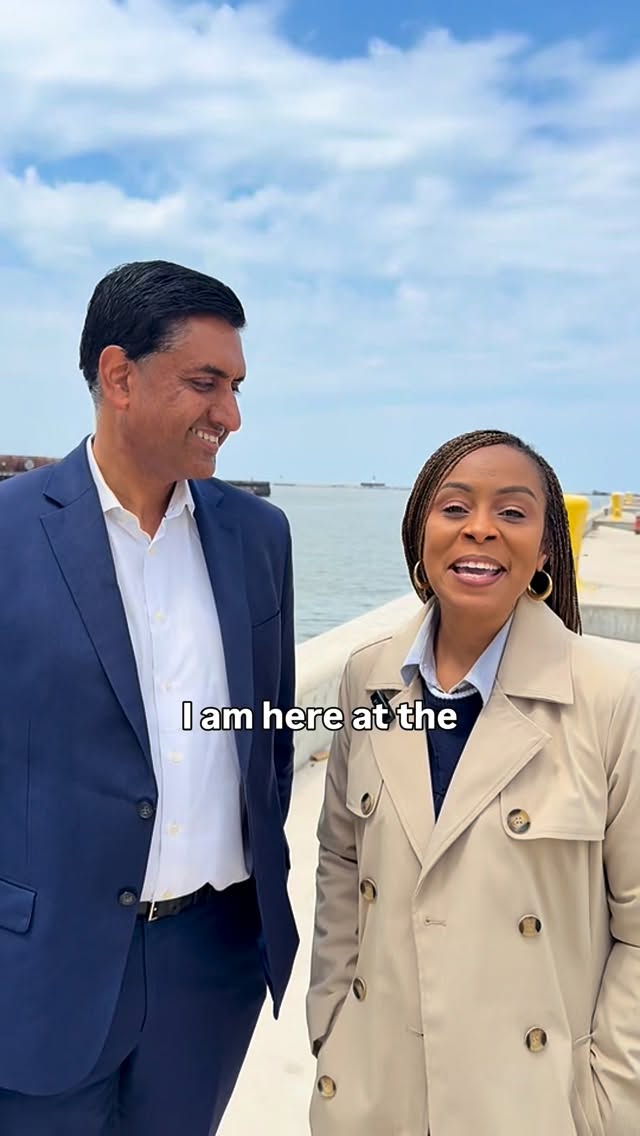
He also visited the Port of Cleveland on May 9 with Rep. Shontel Brown (D-OH) to meet with port, shipyard, and maritime labor representatives on manufacturing and job creation — another stop on what appears to be a broader Midwest outreach around trade and industrial policy.
On the Supreme Court: Responding to two rulings that the Supreme Court issued allowing Southern states to eliminate majority-Black congressional districts, Khanna told CNN on May 12 that the Court had become "a morally bankrupt Court." 22 He posted a video on Instagram the following day with the caption: "SCOTUS has attacked Black political rights." 23 The rulings substantially weaken the Voting Rights Act. California voters in districts with significant Black and minority populations face the downstream risk of Republican-drawn maps modeled on the newly permitted Southern precedents.
On Howard Lutnick and the Epstein files: On May 6, Khanna appeared before the House Oversight Committee during testimony by Commerce Secretary Howard Lutnick (the cabinet official overseeing trade and economic policy) regarding the Epstein investigation. Khanna had co-authored the Epstein Files Transparency Act with Rep. Thomas Massie (R-KY), signed into law by Trump in November 2025. On Lutnick's performance, Khanna said: "It was really embarrassing. He was asked very straightforward questions about whether he regretted misleading the American people." 24 By May 14, Khanna told reporters that the committee had the votes to compel Lutnick's public testimony. 25
Cover photo: Ro Khanna speaking at Stanford University, February 20, 2026. Photo by Anders Eidesvik, Wikimedia Commons, CC BY-SA 4.0.
참고 출처
- 1Congressional Record Vol. 172, No. 77 — Daily Digest, May 4, 2026
- 2Congressional Record Vol. 172, No. 78 — Daily Digest, May 7, 2026
- 3GovTrack: Rep. Ro Khanna Legislative Profile
- 4H.R. 1346 – Nationwide Consumer and Fuel Retailer Choice Act, Congress.gov
- 5GovTrack: H.R. 7567 House Vote #154, April 30, 2026
- 6GovTrack: S. 4465 FISA Extension House Vote #155, April 30, 2026
- 7GovTrack: H.R. 2071 Save Our Shrimpers Act, House Vote #156, May 12, 2026
- 8GovTrack: H.R. 2853 Combating Organized Retail Crime Act, House Vote #157, May 12, 2026
- 9Chris Rabb on Instagram: Khanna Philly town hall announcement, May 9, 2026
- 10Congressional Record Vol. 172, No. 80 — House Section (May 12, 2026)
- 11H.R. 2853 – Combating Organized Retail Crime Act, Congress.gov
- 12Daily Kos: "Homeland Security finds a new sneaky way to steal your data," May 13, 2026
- 13H.Res. 1252 – Memorial Resolution for Law Enforcement, Congress.gov
- 14H.Con.Res. 96 – Expressing Support for Law Enforcement, Congress.gov
- 15H.Res. 1259 – Urging Release of Detainees, Congress.gov
- 16H.R. 6260 – Keeping Violent Offenders Off Our Streets Act, Congress.gov
- 17H.R. 5625 – Cashless Bail Reporting Act, Congress.gov
- 18H.R. 8365 – Monitor Accountability Act, Congress.gov
- 19H.Con.Res. 75 – Iran War Powers Resolution, Congress.gov
- 20@RoKhanna on X: Lebanon War Powers Resolution tweet, May 14, 2026
- 21NPR: Rep. Ro Khanna on Trump's visit to China, May 11, 2026
- 22CNN: Democrats are going there on attacking the Supreme Court, May 12, 2026
- 23@reprokhanna on Instagram: SCOTUS ruling video, May 14, 2026
- 24The Hill: Khanna says Trump would fire Lutnick over Epstein answers, May 6, 2026
- 25The Guardian live blog: Khanna on Lutnick testimony, May 14, 2026
이 콘텐츠를 둘러싼 관점이나 맥락을 계속 보강해 보세요.