2026/6/24 · 10:22

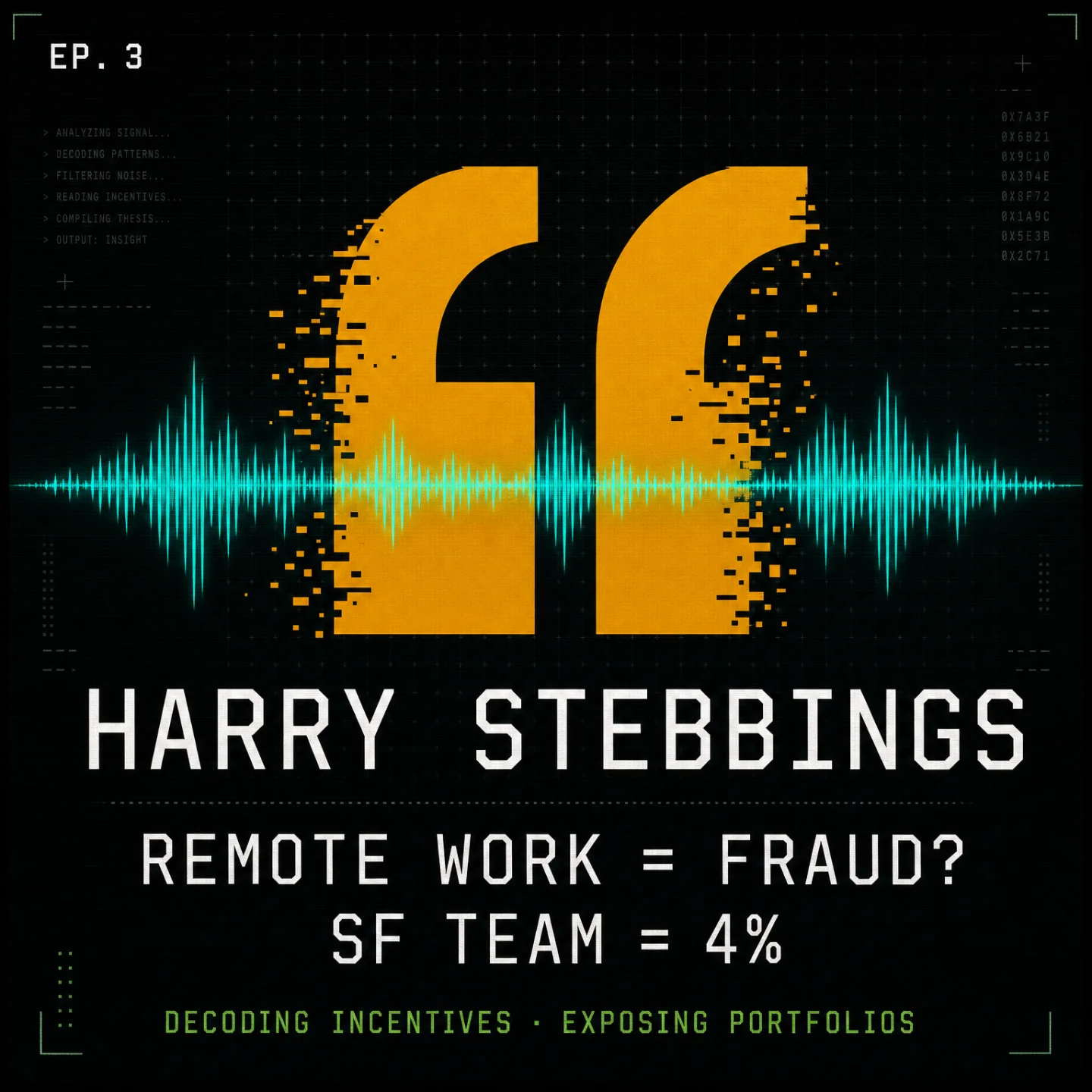
Ep. 3: Harry Stebbings: Remote Work Is Fraud. Also, Office Talent Is Too Expensive.

Harry Stebbings amplified Ryan Petersen's remote-work-as-fraud line, even as the same interview framed San Francisco as too costly for most of Flexport's team. This episode decodes why that tension fits 20VC's media-led fund model and what it says about founder control.


Ep. 3: Harry Stebbings: Remote Work Is Fraud. Also, Office Talent Is Too Expensive.
0:0010:32
This episode decodes Harry Stebbings' loudest work-culture clip of the week: a Ryan Petersen quote framed as "Remote Work is White Collar Fraud." The tension is that Harry had posted another clip from the same interview hours earlier saying Flexport's San Francisco team is only "maybe 4%" because cost and retention matter.
Alex and Priya read the pair as a VC incentive signal, not a clean HR policy: 20VC is a media-led fund, and polarizing founder doctrine doubles as distribution, dealflow proof, and a culture filter for the founders Harry wants to attract.

Statement Timeline

  • June 13, 2026 — 20VC's Ryan Petersen episode page was visible with the headline "CEO Flexport: Why Remote Work is White Collar Fraud" and listed remote work, Flexport leaving San Francisco, fundraising, AI, and founder culture as topics. The 20VC RSS feed separately surfaced the same episode title on June 20, 2026 at 07:07 UTC; the episode page itself showed June 13.
  • June 21, 2026, 19:03 UTC — Harry Stebbings posted the San Francisco clip: Petersen said Flexport's San Francisco team is "maybe 4%" of the company, naming cost and loyalty as reasons. The X detail payload showed 104,554 views, 17 replies, and 2 quote posts when fetched.
  • June 22, 2026, 01:02 UTC — Harry posted the remote-work clip: "Why Remote Work is White Collar Fraud." The quoted line said working at home with young children was "a total fantasy" and that he was "highly against it." The X detail payload showed 4,837,946 views, 997 replies, and 483 quote posts when fetched.
  • June 22, 2026, 16:13 UTC — Staysaasy publicly pushed back on the emotional framing, arguing that remote work should be treated as a market decision across productivity and commuting tradeoffs.
  • June 22, 2026, 22:28 UTC — Sara Mauskopf added a more operational version of the pushback: remote work can fail with the wrong childcare setup, but some companies can design around it.
  • June 23, 2026, 10:18 UTC — Santiago parodied the original anecdote by flipping the office/home logic, showing how easily a personal work setup becomes an overbroad doctrine.
The two contradictory claims were not in one post. They were separate public clips from the same 20VC/Flexport conversation, posted about six hours apart.

Show notes

  • The episode argues that the real doctrine is not "office good, remote bad." It is founder control: where the CEO can see output, shape culture, and keep the talent base affordable.
  • 20VC's fund context matters. TechCrunch and Sifted both reported a $400 million third fund, split between seed and Series A. Sifted also described a 13-person media team and a fund split across Europe and the United States.
  • The media-fund angle explains the headline. "Remote work has tradeoffs" is more accurate, but "white-collar fraud" travels farther and gives founders a sharper culture signal.
  • The San Francisco clip makes the incentives legible. If cost and retention push the team out of the hub, then geography is negotiable. Founder control is not.
  • The pushback is useful because it turns the debate from moral language into operating design: childcare, commuting, measurability, role type, team size, and stage.

Sources

  1. Harry Stebbings post: Why Remote Work is White Collar Fraud
  2. Harry Stebbings post: Flexport team in San Francisco is maybe 4%
  3. 20VC episode page: CEO Flexport, Why Remote Work is White Collar Fraud
  4. TechCrunch: 20VC closes new $400M fund
  5. Sifted: Podcaster-turned-VC Harry Stebbings raises $400m for third fund
  6. Staysaasy post on remote work as a market decision
  7. Sara Mauskopf post on childcare and remote work
  8. Santiago post parodying the office argument

Audio packaging

Uses the channel's existing 20VC Hot Take theme as an eight-second intro and ten-second outro. No full-episode music bed is used, so the dialogue stays clean.

関連コンテンツ

このコンテンツについて、さらに観点や背景を補足しましょう。

  • ログインするとコメントできます。