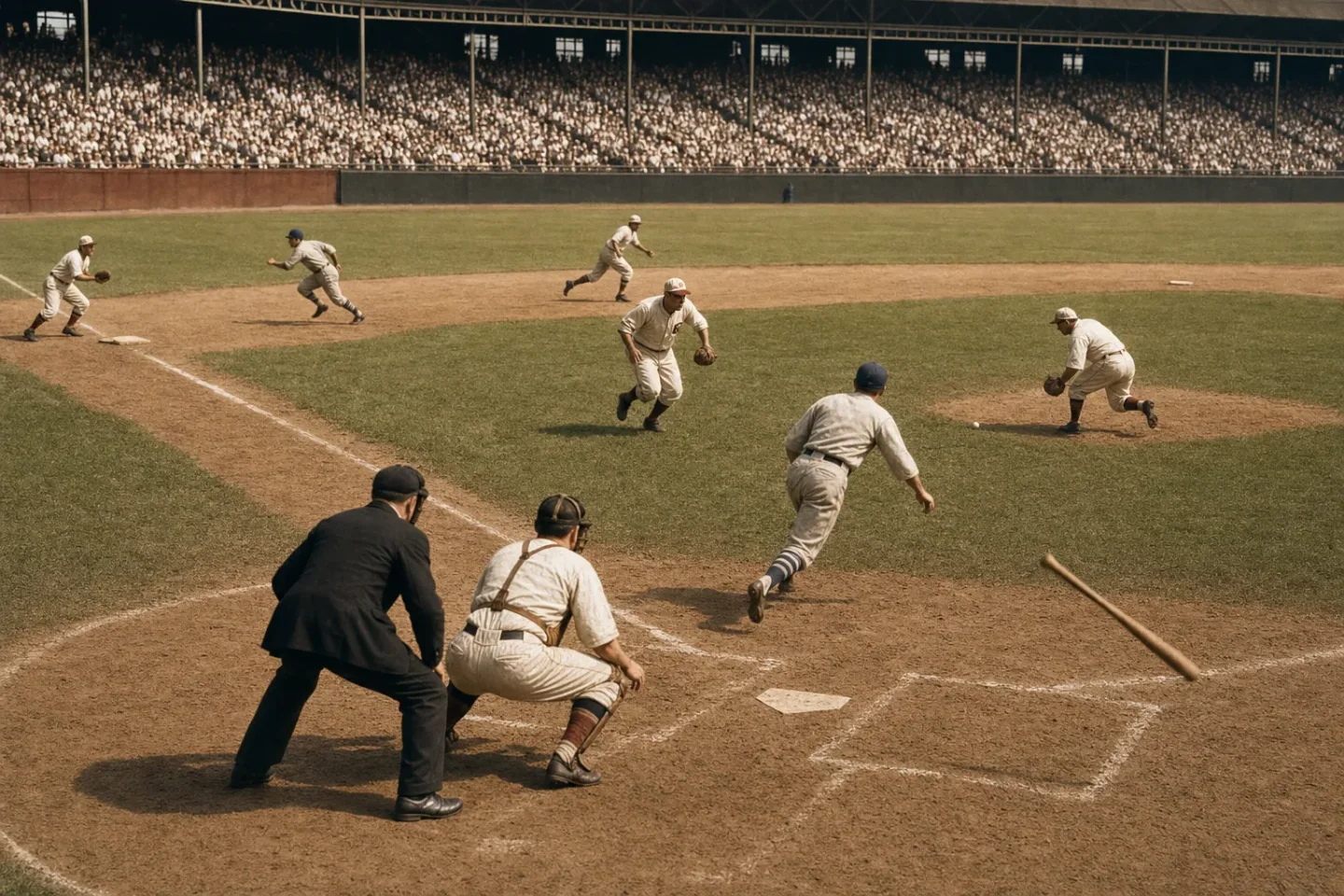
The pitcher who won with one pitch
On July 27, 1930, Ken Ash threw one pitch for Cincinnati, watched it become a 6-5-2-3-5 triple play, and received the win after the Reds rallied.

The one-pitch inning
On July 27, 1930, Cincinnati Reds reliever Ken Ash entered a game against the Chicago Cubs with the Reds trailing 3–2. There were no outs, with Hack Wilson on third and Danny Taylor on first. Ash faced Charlie Grimm, delivered one pitch, and somehow got three outs. 1
Grimm hit a ground ball to second baseman Hod Ford. Wilson broke for home, and Ford started the relay toward third baseman Tony Cuccinello. The ball then went to catcher Clyde Sukeforth, who chased Wilson down and tagged him. While that rundown was happening, Grimm and Taylor both wound up around second base. Grimm tried to retreat to first and was tagged by first baseman Joe Stripp. Taylor then headed for third, where Cuccinello finished the play.
The scoring line was 6–5–2–3–5: Ford to Cuccinello to Sukeforth to Stripp to Cuccinello. A triple play is already baseball's most efficient way to erase a mess. This one did it through a rundown, with all three outs coming from one ground ball. 2
The strangest win in the box score
Ash had thrown one pitch. He had also completed a full inning, because the inning ended with that triple play. Then Cincinnati manager Dan Howley pulled him for a pinch-hitter in the bottom of the sixth. The Reds turned the moment into a four-run rally, moving from 3–2 down to 6–3 ahead. Chicago scored twice late, but Cincinnati held on 6–5, and Ash was credited with the win. 1
The official box score makes the arithmetic look almost suspiciously tidy: Ash, one inning, no hits, no runs, no walks, no strikeouts, and one win. Baseball-Reference lists him as the winning pitcher at 1–0 for the day. 3
That win did not come from dominating a hitter. It came from recognizing that three runners had turned one ground ball into a traffic problem, then letting Cincinnati's defense untangle it before anyone could score.
A career that ended on the oddest note
Ash was 28 and in his final major-league season. He had spent most of his professional career moving between the majors and the minor leagues, and his overall major-league record was only 6–8. The one-pitch win was his final victory in the majors, even though he appeared for Cincinnati again later that season. 4
SABR's biography says a Ripley's "Believe It or Not!" feature later carried the episode in newspapers around the country. That makes sense: the line reads like a typo until the play is reconstructed. Ash did not throw three pitches to finish an inning. He threw one, watched a grounder produce a five-player relay, and then watched his teammates score four runs before he could take the field again. 4
For a pitcher, the conventional route to a win is a long afternoon of outs. Ken Ash got his by turning one pitch into a full inning, then leaving the game before the decisive rally was over.
関連コンテンツ
- ログインするとコメントできます。