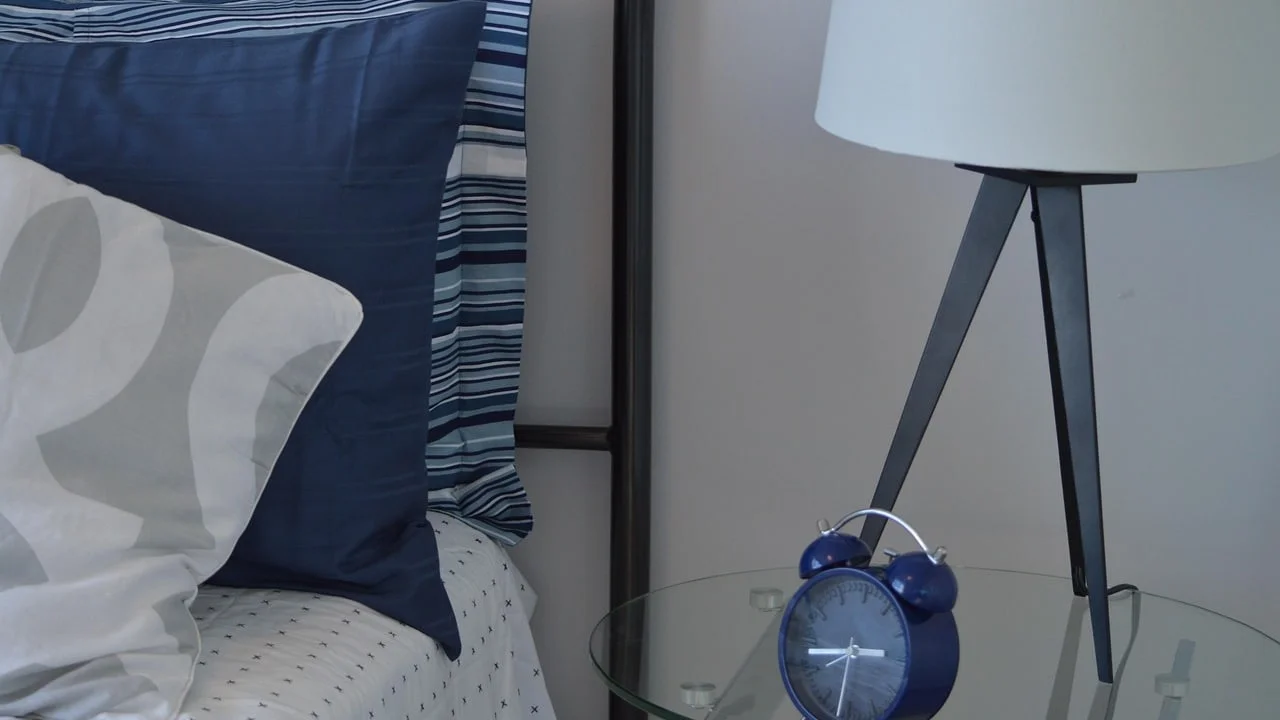
Your nightstand is not a junk drawer: 7 free fixes
A no-buy bedside-table reset with seven practical fixes for clearing the surface, sorting the drawer, moving work and tech out of reach, and keeping only the items that help your evening routine.

If your bedside table is carrying receipts, half-finished books, loose hair ties, a laptop, and last night’s water glass, it has stopped being a nightstand. It is now a tiny junk drawer next to your head. Professional organizer Shaniece Jones warns that a nightstand should support rest, reflection, or relaxation, not act as a drop-all zone. 1
Here is the no-buy reset: seven fixes, all small enough to do with what you already own.
1. Empty the whole thing, not just the top
- Take everything off the surface.
- Empty the drawer, shelf, cubby, and the floor immediately beside the table.
- Make three piles: trash or recycling, relocate, and keep.
- Wipe the surface before anything goes back.
Why it works: clearing every zone at once stops the drawer from becoming the hiding place for the mess you just removed from the top. In one Apartment Therapy bedside-table reset, the organizer started by removing everything, wiping the table, and sorting items by discard, relocate, and return. 2
Common mistake: do not start by buying bins. If the table is full because too many things live there, containers just make the clutter more permanent.
2. Write a bedtime reach list before you put anything back
- List what you actually reach for between getting into bed and getting up.
- Keep that list short: water, one current book, lip balm, tissues, glasses, earplugs, an alarm, or a small notebook.
- Put only those items back on or inside the nightstand.
- Move every other useful item to the room where you use it.
Why it works: Jones recommends thinking through the evening routine first, then keeping only the items that support that routine. 1 Apartment Therapy’s organizer Caroline Solomon makes the same point in a stricter way: keep the bedside table minimal and use it for items that bring calm, not random leftovers. 3
Common mistake: copying someone else’s perfect nightstand. If you read with glasses, your glasses belong there. If you never journal in bed, the blank notebook is just decorative clutter.
3. Move work, errands, and scroll traps out of arm’s reach
- Remove bills, forms, receipts, work notes, and paperwork from the table.
- Put them in a single action folder, tray, or desk spot outside the bedroom.
- If your phone causes late-night scrolling, charge it across the room or just outside the bedroom.
- Keep a non-phone alarm only if you already own one. Otherwise, put the phone far enough away that you must stand up to stop it.
Why it works: Good Housekeeping’s bedroom decluttering guide recommends keeping bills and life admin outside the bedroom, because they keep your mind in task mode. It also recommends a screen-free bedroom or, at minimum, a phone curfew before sleep. 4
Common mistake: moving prescribed medicine just to make the table look clean. If a doctor told you to keep medication by the bed, keep it there, but give it one fixed spot instead of letting it mix with coins, receipts, and cables.
4. Use the “didn’t know” test on the drawer
- Open the drawer and pull out one item at a time.
- Ask: “Did I know this was here?”
- If the answer is no, decide whether it belongs somewhere else, can be donated, or can be tossed.
- If you keep it, put it with similar items elsewhere in the home.
Why it works: the “didn’t know” rule gives you permission to release or relocate items you forgot you owned. In Apartment Therapy’s nightstand test, hidden books were moved back to the main bookcase, which freed bedside storage without requiring a dramatic purge. 5
Common mistake: treating the rule as “throw away everything surprising.” Sometimes the right move is relocation. A library book belongs with books, not wedged behind lip balm.
5. Give tiny things a tray, dish, or cup
- Find one small tray, saucer, bowl, teacup, jar lid, or shallow box you already own.
- Use it for the tiny things you truly need nearby: rings, lip balm, hair ties, earplugs, or one charging adapter.
- Keep one category per container if possible.
- When the container is full, remove something before adding more.
Why it works: small loose items make a clean surface look messy fast. Good Housekeeping UK recommends trays or small ceramic dishes for items such as jewelry, hair grips, remotes, lotions, or other bedside odds and ends. 4 The Apartment Therapy bedside-table reset used small baskets and a shallow tray to turn loose items into clear categories. 2
Common mistake: letting the tray become a second junk drawer. A tray is a boundary, not a dumping permit.
6. Set a one-book limit unless you are actively rotating
- Keep the book you are reading now on the table.
- Move finished books back to a shelf, donation bag, or library-return spot.
- Put “maybe next” books somewhere else, even if that is just a stack on a bookshelf.
- If magazines pile up, tear out the page you need or take a photo, then recycle the issue.
Why it works: books and magazines become unfinished-business piles when they stay beside the bed indefinitely. Good Housekeeping UK recommends keeping only one or two current reads in the bedroom and returning or passing on the rest. 4
Common mistake: making the nightstand your guilt shelf. If a book has been “next” for six months, it is probably not next.
7. Add a weekly two-minute reset
- Pick one repeatable trigger: Sunday evening, sheet-changing day, or trash day.
- Remove empty glasses, tissues, snack wrappers, receipts, and anything that migrated from another room.
- Put the keepers back in their assigned spots.
- Once a month, empty the drawer again and repeat the “didn’t know” test.
Why it works: Jones recommends a weekly nightstand check-in and a deeper monthly or every-other-month declutter, depending on how chaotic the week has been. 1 Solomon also recommends clearing newspapers, empty glasses, and tissues from the nightstand each day. 3
Common mistake: waiting until the drawer jams. A nightstand is small enough that maintenance should feel boring, not heroic.
The five-minute version
If you only have five minutes tonight, do this:
- Throw away or recycle obvious trash.
- Take dishes and cups to the kitchen.
- Move paperwork to a desk or action folder.
- Put every tiny loose item into one dish.
- Leave only what tomorrow-you will actually reach for.
The win is not a magazine-perfect bedroom. The win is waking up next to a surface that knows its job.
関連コンテンツ
- ログインするとコメントできます。
More from this channel
- Your password list is not a security plan: 7 free fixes
- Your bathroom counter is not a supply closet: 7 free fixes
- Your downloads folder is not an archive: 7 free fixes
- Your spice cabinet is not a museum: 7 free fixes
- Your camera roll is not a storage unit: 7 free fixes
- Your kitchen trash can is not self-deodorizing: 7 free fixes
- Your carry-on is not a closet: 7 free fixes
- Your mail pile is not a filing system: 7 free fixes