2026/6/15 · 12:12
Your groceries are going bad for the wrong reasons — 7 storage fixes
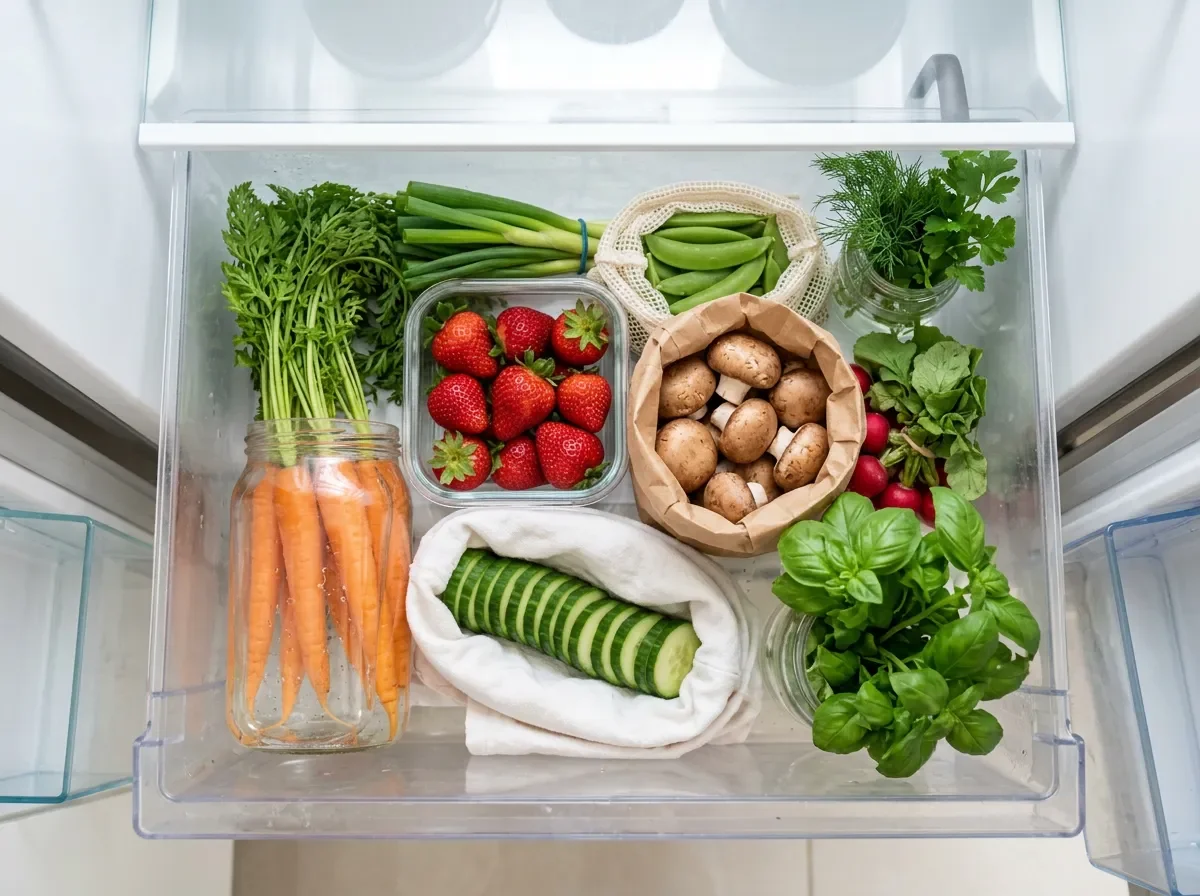
Seven free, step-by-step food storage hacks that cover the most common waste culprits: herbs treated like a bouquet, carrots in a cold water bath, mushrooms in a paper bag, cucumbers in paper-towel wraps, what should never go in the fridge, a FIFO pantry rotation, and freezing in meal-sized portions. Each hack includes why it works and honest caveats.

Most grocery waste happens before cooking — not because of bad intentions, but because of the wrong storage spots. Carrots go limp in the crisper. Basil turns black in the fridge bag. Mushrooms go slimy in their plastic tray. These seven hacks cost nothing and take under two minutes each; the payoff is produce that actually lasts.
1. Treat fresh herbs like a bouquet of flowers
What to do:
- Trim the bottom half-inch off the stems at a diagonal.
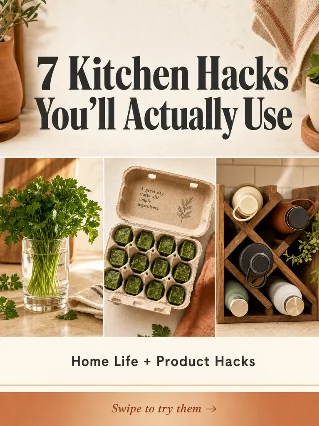
- Stand the bunch in a small glass or jar with about an inch of water in the bottom — just enough to cover the stems, not the leaves.
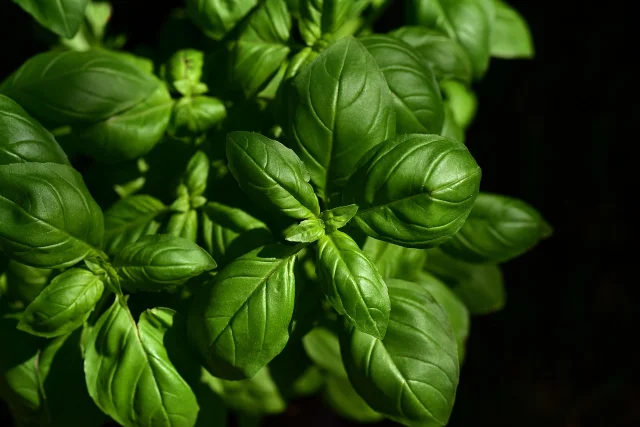
- For basil specifically, leave it uncovered on a sunny-ish counter away from direct heat. For parsley, cilantro, and chives, loosely drape a plastic bag over the top and keep them at room temperature.
- Change the water every two or three days.
Why it works: Cut herbs are still alive. Depriving them of water causes the stems to seal and the leaves to collapse. Standing them in water lets them drink continuously, the same way cut flowers do. A tested comparison across seven basil storage methods found the countertop bouquet method kept basil fresh for 12+ days, while the standard crisper-bag method lasted just two. 1
Caveat: Basil is cold-sensitive; the fridge will turn it black within a day or two regardless of how it's stored. Keep basil at room temperature — that's not a hack, it's just what basil needs. For other cold-tolerant herbs (parsley, cilantro, thyme), the same bouquet method in the fridge with a bag draped over it works well.
2. Store carrots in a cold water bath
What to do:
- Snap or cut off the leafy green tops and set them aside (carrot tops are edible; use them like parsley in pesto or salads).
- Place the bare carrots upright in a tall container or jar filled with cold water.
- Seal or cover and refrigerate.
- Replace the water when it starts to look cloudy — usually every four to five days.
Why it works: Carrots lose moisture quickly in standard refrigerator air, causing the limpness you've probably experienced. Submerging them in water keeps the cells hydrated from the outside in. Stored this way, whole carrots can stay crisp for up to three months. 2
Caveat: Don't store the greens with the carrot roots — the tops draw moisture out of the root, leaving you with exactly the limpness you were trying to avoid. Store them separately in a bag if you want to use them. Baby carrots work the same way: submerge them in water and they'll stay snappy rather than developing that chalky white coating.
3. Switch mushrooms to a paper bag
What to do:
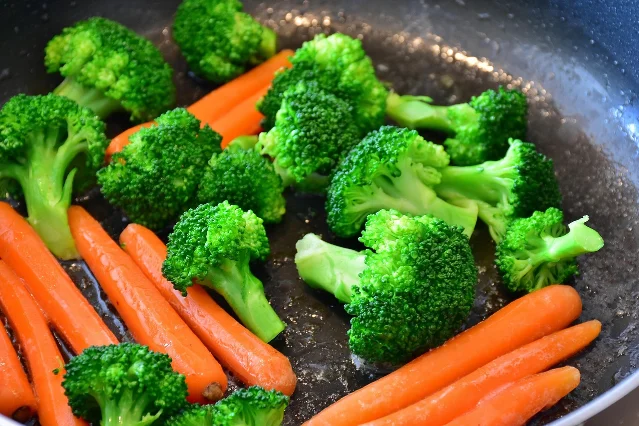
- When you get home, remove mushrooms from their store packaging entirely.
- Line a brown paper bag (the kind from a grocery or sandwich shop) with a single paper towel.
- Lay the mushrooms in loosely — don't stack or press them down.
- Fold the top of the bag down once to close and place on the bottom shelf of the fridge (not the crisper drawer).
Why it works: Mushrooms have an unusually high water content, and plastic packaging traps moisture against their surfaces, speeding up decay. The paper bag creates airflow while the paper towel wicks away surface moisture. This extends freshness from the typical 3–4 days to up to 10 days. 3
Caveat: The crisper drawer is designed to maintain high humidity — great for leafy greens, bad for mushrooms. The bottom fridge shelf is lower in humidity and keeps the bags stable. If you only have a day or two before you'll use them, the original plastic packaging is fine as-is; it's designed to breathe for short-term transit.
4. Wrap cucumbers in paper towels before bagging
What to do:
- Keep cucumbers unwashed and dry before storing.
- Wrap each cucumber individually in a dry paper towel — one towel per cucumber.
- Place the wrapped cucumbers in a zip-top bag and seal it.
- Store on a refrigerator shelf (not the door, not the crisper).
Why it works: Cucumbers suffer from something called chilling injury when exposed to temperatures below 50°F for too long — accelerated decay, pitting, and wateriness. 4 The paper towel buffers the cold and absorbs any condensation, while the sealed bag keeps humidity around the skin. In a nine-method test, this approach kept all cucumber varieties fresh for more than two weeks, compared with just seven days unwrapped.
Caveat: This matters most for English and Persian cucumbers, which have thinner skins and are more prone to pitting. The thick-skinned conventional cucumber is slightly more forgiving. If you see pitting or soft ends developing before your target date, that's chilling injury accelerating — move the cucumber to the door (the warmest spot) or use it the same day.
5. Stop refrigerating things that don't belong there
What to do:
- Move these items out of your fridge right now: whole potatoes, whole onions, garlic, bananas (unless fully ripe and you want to pause ripening), unripe avocados, and whole tomatoes.
- Store potatoes in a cool, dark place in a paper bag or breathable bin.
- Store onions and garlic in a basket or mesh bag at room temperature away from the potatoes (they emit ethylene gas that makes potatoes sprout faster when stored together).
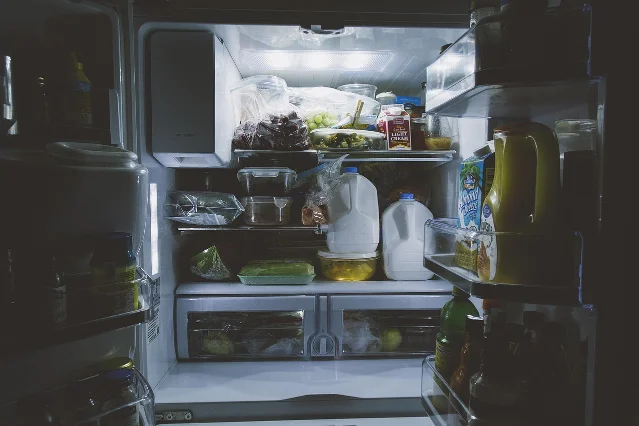
- Set your fridge temperature to 37–38°F (3°C or below) — above that, the cold zone disappears and foods spoil faster.
Why it works: Refrigerating cold-sensitive produce causes texture and flavor damage. Potatoes convert starch to sugar in cold temperatures. Tomatoes lose their cellular structure, turning mealy. Bananas and avocados won't ripen properly below 50°F. Moving them out frees up fridge space for what actually needs to be cold — and setting the right fridge temperature means everything else lasts longer. 5 6
Caveat: Once a tomato is cut or an avocado is halved, the rules change — those go in the fridge right away. Ripe bananas can go into the freezer if you want to use them later for baking; the skin will blacken but the flesh is fine.
6. Run your pantry on FIFO — first in, first out
What to do:
- When you unpack new groceries, pull existing pantry items forward first.
- Place the newly purchased items behind the older ones.
- Do this every time — cans, boxes, bags, jars, all of it.
- Optional: stick a small strip of masking tape on any item that's been open for more than a week and write the date you opened it.
Why it works: FIFO (first in, first out) is standard food-safety practice in restaurants for a simple reason: it makes the oldest item the one you always reach for first. Without it, new items get grabbed from the front while older ones push to the back and expire unnoticed. The tape-and-date trick serves the same purpose for open packages — once you see a date, you cook with it before buying more. 5
Caveat: FIFO only works if you actually rotate every time. The most common failure is doing a big rotation after a major shop and then skipping it on smaller top-up trips. Treat every grocery run, even a single-item one, as a rotation moment.
7. Freeze in meal-sized portions, not bulk blocks
What to do:
- Before freezing meat, cheese, broth, cooked grains, or leftover sauces, divide into single-meal portions rather than one large block.
- For ground meat or chicken, flatten each portion in a zip-top freezer bag before sealing — this removes air and means portions thaw in under 30 minutes in cold water.
- For liquids (broth, soups, sauces), freeze in silicone ice cube trays first, then transfer the frozen cubes into a freezer bag. One cube typically equals about 2 tablespoons.
- Label each bag with the contents and date before it goes in.
Why it works: Freezing in bulk forces you to thaw and re-handle more than you need, which leads to refreezing and waste. Portioning before freezing means you pull exactly what the meal requires — nothing extra thaws and sits. The flattening technique doubles as a space-saver: flat bags stack like books and thaw faster because surface area is maximized against water or air. 7
Caveat: Labels are non-negotiable. Every item in your freezer looks the same after a few weeks, and "mystery meat" almost always gets thrown out. A permanent marker and a strip of masking tape take five seconds per bag.
参考ソース
- 1The best way to store basil — The Kitchn
- 2The best way to store carrots — The Kitchn
- 3How to keep mushrooms fresh for over a week — The Kitchn
- 4How to store cucumbers: 9-method test — The Kitchn
- 5How to keep food fresh longer — AARP
- 6Food storage hacks — Good Housekeeping
- 7Pro organizer freezer tips — The Kitchn
このコンテンツについて、さらに観点や背景を補足しましょう。