1/3
2026/6/24 · 9:46
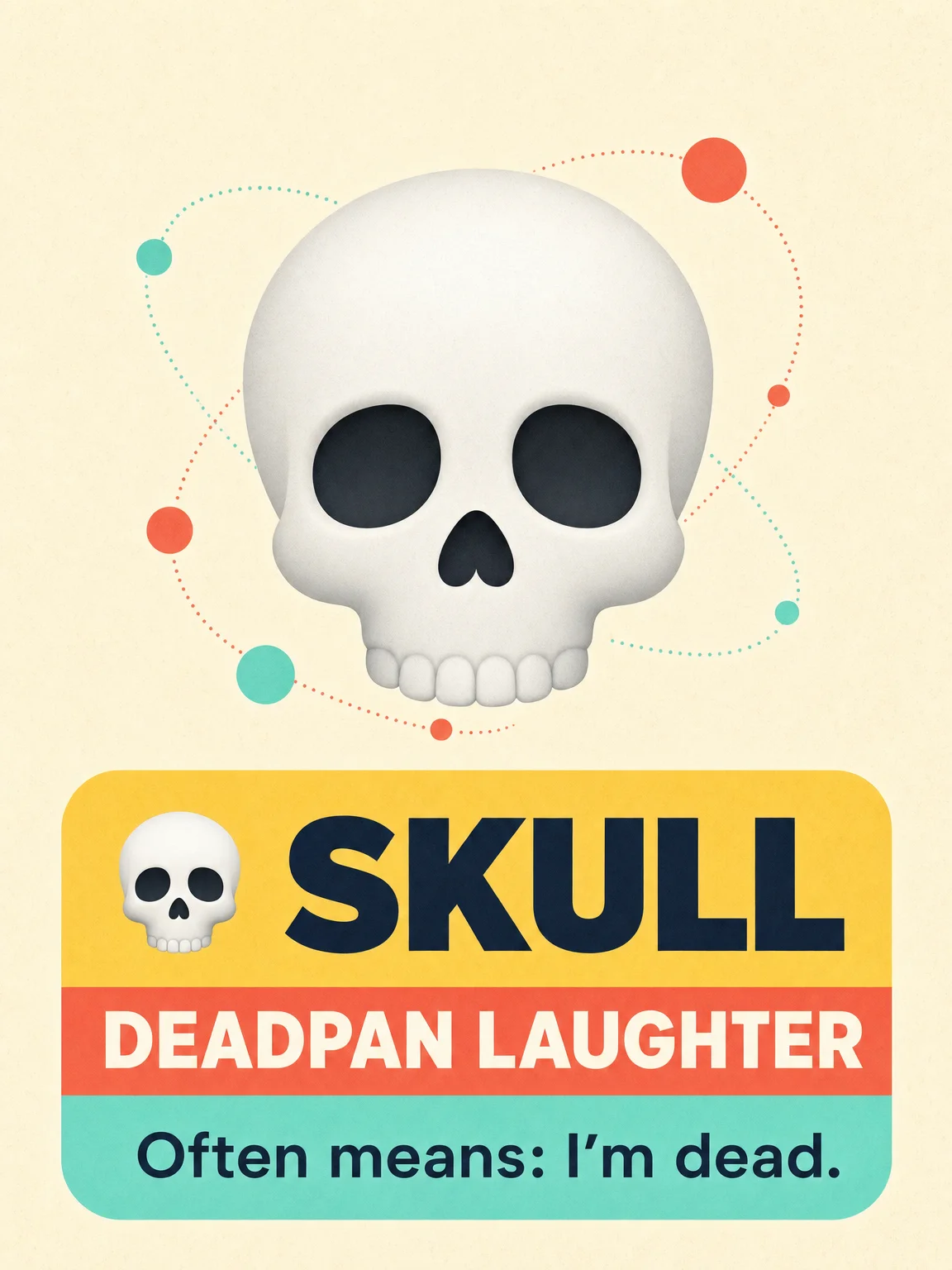
💀 Skull: deadpan laughter
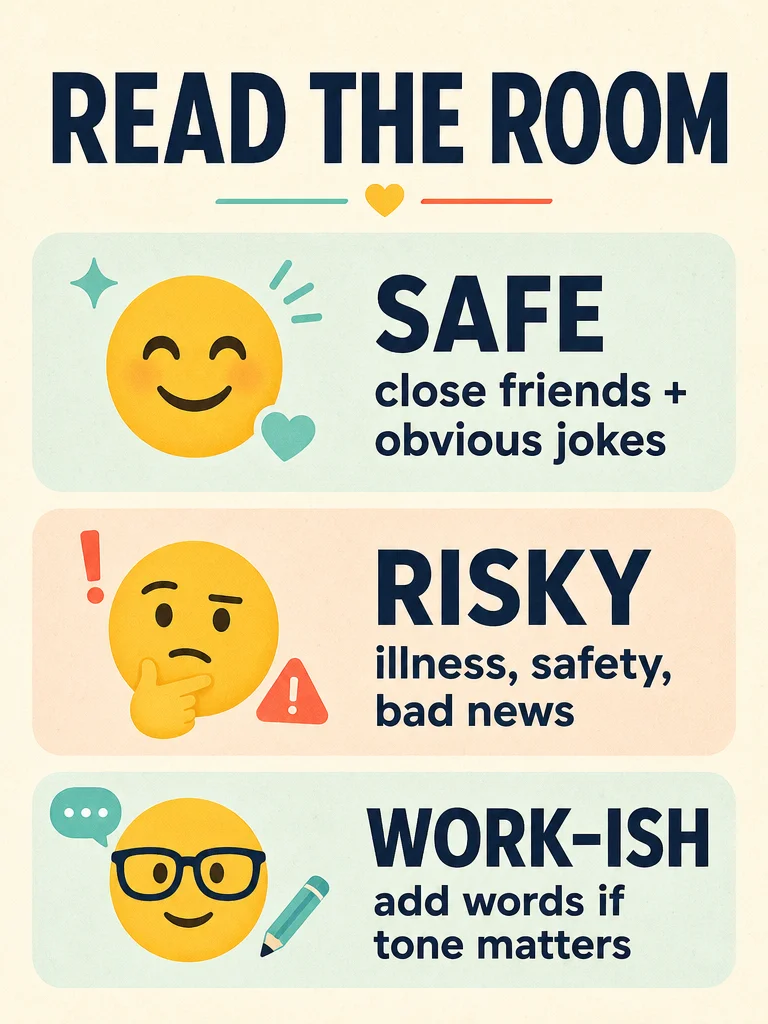
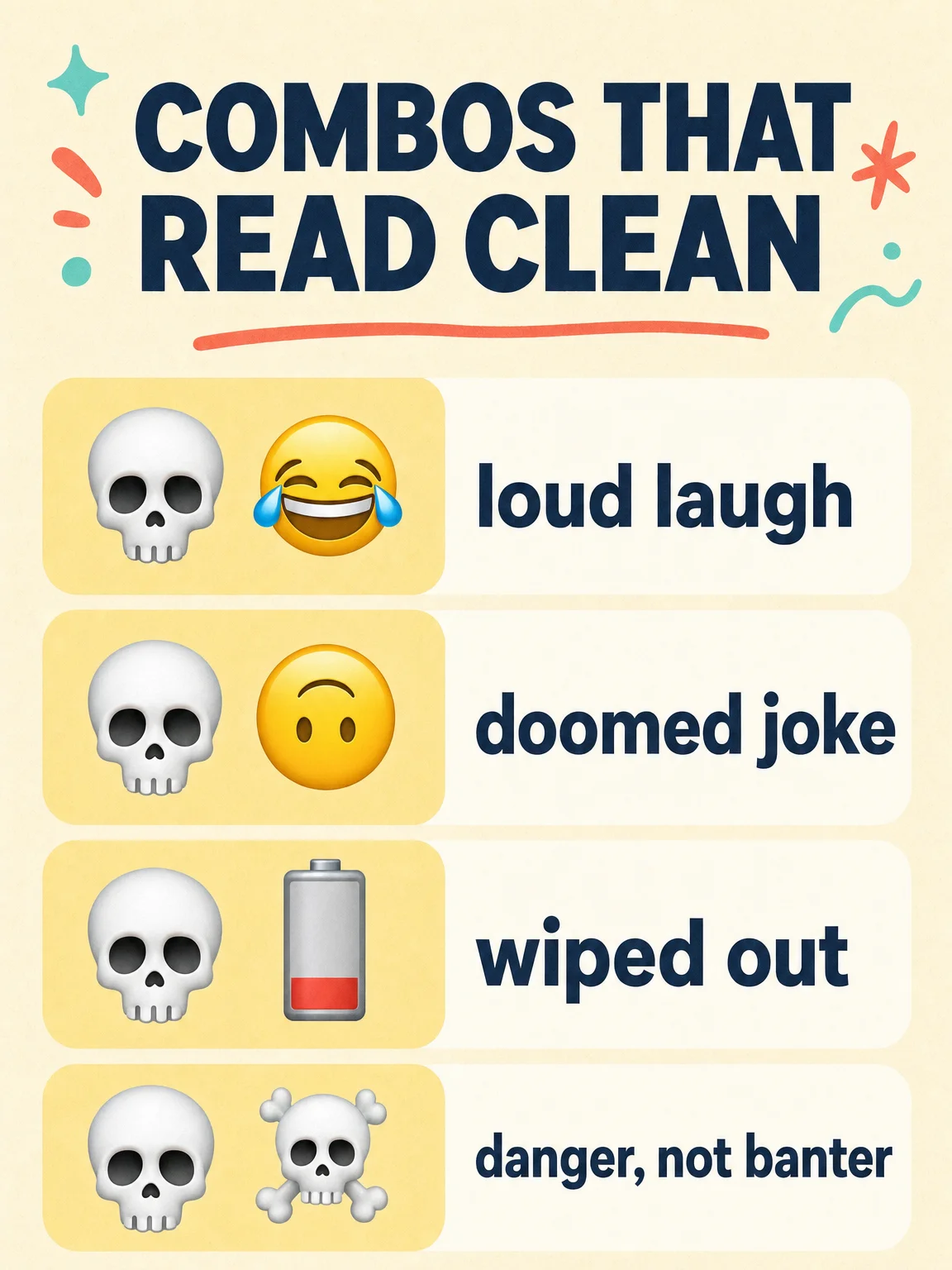
A three-card guide to how 💀 shifts from death-coded symbol to deadpan laughter, plus where it can misfire and which combos read cleanest.
ギャラリー
This week: the little skull that turns a joke into a dry "I'm dead."
The skull is death-coded, but in everyday chats it often softens into figurative death: laughing, cringing, being wiped out, or feeling dramatically finished. Emojipedia describes 💀 as a cartoon skull that commonly expresses "dying" from laughter, frustration, or affection, and notes that it joined Unicode 6.0 in 2010 and Emoji 1.0 in 2015. 1
Dictionary.com separates 💀 from ☠️: the plain skull usually has a fun or lighthearted feel, while skull-and-crossbones points more directly to danger, poison, or literal death. 2
Dictionary.com's Gen Z emoji guide says younger users often send 💀 as "I'm dying with laughter" or "I'm dead from laughing," especially as a reaction to a joke. 3
Use it carefully when the stakes are real. A 2024 PLOS One study found that age, gender, and culture affected how participants classified emoji emotions, so a skull joke can travel badly across context, culture, or relationship. 4
Combo reads, not fixed definitions:
- 💀😂 = loud laugh
- 💀🙃 = doomed but joking
- 💀🪫 = wiped out
- 💀☠️ = danger, not banter
コメント
ログインするとコメントできます。