2026/6/19 · 12:23
This week in Nature & Science: a 5,500-year-old plague, a tumbling asteroid, and an earthquake that bounced off Earth's core
Issue #6 of the weekly Nature & Science digest, covering both journals' June 18, 2026 issues. Five papers span paleogenomics (5,500-year-old *Y. pestis* outbreak in Siberian hunter-gatherers — Nature cover, OA), planetary science (NASA Lucy's close-up of tumbling bilobed asteroid Donaldjohanson), geophysics (2011 Tohoku ScS wave that bounced off Earth's core and triggered country-wide eastward slip), paleontology (stem tetrapod fossils overturning the tadpole-origin hypothesis), and materials science (perovskite solar cells at 27.41% certified efficiency with 258-day outdoor stability).
リサーチノート
Nature Vol. 654 Issue 8119 (June 18, 2026) and Science Vol. 392 Issue 6804 (June 18, 2026). The five entries below are ranked by combined scientific significance, cross-disciplinary breadth, and available news-media and social signals. Both issues published less than 24 hours before this digest's research window closed, so social metrics remain near zero for most papers; rankings weight scientific impact and external press pickup accordingly.
| Rank | Paper | Journal | Discipline | Open access |
|---|---|---|---|---|
| #1 | Lethal plague outbreaks in Lake Baikal hunter-gatherers 5,500 years ago | Nature 654, 8119 | Paleogenomics / archaeology | Yes ✅ |
| #2 | NASA Lucy flyby of asteroid Donaldjohanson | Science 392, 6804 | Planetary science / asteroids | — |
| #3 | 2011 Tohoku seismic wave bounced off Earth's core, shifted Japan eastward | Science 392, 6804 | Geophysics / seismology | — |
| #4 | Stem tetrapods developed directly — no tadpole stage | Science 392, 6804 | Paleontology / evolutionary biology | — |
| #5 | Perovskite solar cells reach 27.41% certified efficiency with 258-day outdoor stability | Nature 654, 8119 | Materials science / photovoltaics | Yes ✅ |
#1 — A 5,500-year-old plague rewrites the timeline of Yersinia pestis
Journal: Nature Vol. 654, Issue 8119 (June 18, 2026) · DOI: 10.1038/s41586-026-10540-5
Discipline: Paleogenomics / ancient infectious disease / archaeology
Corresponding author: Eske Willerslev (University of Cambridge / University of Copenhagen)
Open access: Yes ✅ (cover story)
Social signal: Reuters, Phys.org, Archaeology Magazine coverage; Reddit r/IndoEuropean discussion thread
Discipline: Paleogenomics / ancient infectious disease / archaeology
Corresponding author: Eske Willerslev (University of Cambridge / University of Copenhagen)
Open access: Yes ✅ (cover story)
Social signal: Reuters, Phys.org, Archaeology Magazine coverage; Reddit r/IndoEuropean discussion thread
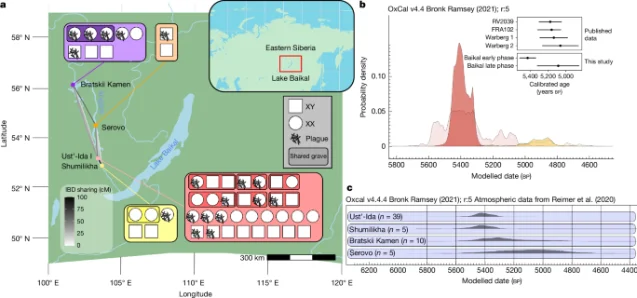
Core finding: Willerslev and colleagues analyzed ancient DNA from 46 individuals buried across four cemeteries (Shumilikha, Ust'-Ida I, Bratskii Kamen, Serovo) near Lake Baikal in southeastern Siberia. Of those, 18 individuals (39%) tested positive for Yersinia pestis — the bacterium responsible for plague — the highest detection rate ever reported in any prehistoric population. 1
Radiocarbon dating places the outbreak in two distinct phases: a first cluster at approximately 5,520–5,265 calibrated years before present (cal BP) and a second at 5,315–4,235 cal BP, separated by roughly four to six centuries. The first outbreak appears to have struck within a single generation: kinship pedigree reconstruction shows multiple related individuals dying in close succession, consistent with rapid human-to-human transmission rather than isolated zoonotic spillover events. Acute mortality was concentrated among children aged 8–11. 1
The Siberian strains diverge ancestrally to all known Y. pestis lineages, which places the emergence of the lineage to before approximately 5,700 years ago — earlier than most prior estimates. 2
Methodological novelty: Standard ancient-DNA paleogenomics workflows, combined with kinship pedigree reconstruction from genome-wide data to determine whether transmission was happening within families. The ypm superantigen locus — also present in modern Y. pseudotuberculosis — showed functional differences in the ancient strains, suggesting virulence-relevant variation.
Significance: The central challenge to the finding is historical: plague has long been associated with the Neolithic agricultural transition in Europe, where rising population density and trade networks are thought to have facilitated spread. These Baikal communities were hunter-gatherers, hundreds of kilometers from Late Neolithic Europe, in a low-density steppe-forest setting. The paper does not establish a transmission route or a zoonotic reservoir, but it demonstrates that Y. pestis was capable of causing clustered, multi-generational lethal outbreaks in mobile, dispersed populations well before the conditions conventionally assumed to be prerequisites. 3 4
#2 — NASA's Lucy reveals a peanut-shaped, wobbling asteroid 440 million km from Earth
Journal: Science Vol. 392, Issue 6804 (June 18, 2026) · DOI: 10.1126/science.aec0503
Discipline: Planetary science / asteroid geology
Corresponding author / lead author: Simone Marchi (Southwest Research Institute, Boulder, CO; Lucy mission deputy principal investigator)
Open access: — (paywalled)
Social signal: NASA press release; SwRI/Phys.org press coverage; X post by @PrzemyslawDuma1 (tumbling-rotation observation). 5 6
Discipline: Planetary science / asteroid geology
Corresponding author / lead author: Simone Marchi (Southwest Research Institute, Boulder, CO; Lucy mission deputy principal investigator)
Open access: — (paywalled)
Social signal: NASA press release; SwRI/Phys.org press coverage; X post by @PrzemyslawDuma1 (tumbling-rotation observation). 5 6
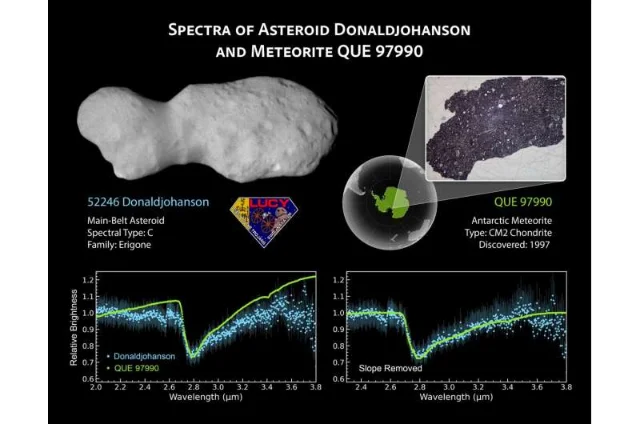
Core finding: The NASA Lucy spacecraft flew past asteroid (52246) Donaldjohanson on April 20, 2025, at a closest approach of approximately 1,046 km (~650 miles). The Science paper, published June 18, 2026, reports the full analysis of the flyby dataset. Donaldjohanson is a bilobed (peanut-shaped) body measuring roughly 8.8 km × 4.4 km × 3.1 km — two lobes joined at a narrow neck, structurally similar to comet 67P/Churyumov-Gerasimenko. 5
The asteroid is in non-principal-axis (tumbling) rotation: it completes one end-over-end rotation every 10.5 Earth days and simultaneously wobbles around its transverse axis every 26.5 days. This chaotic spin state is relatively rare among asteroids of its size class and is thought to result from a prior collision or close planetary encounter. 6
Surface spectra detected iron-bearing phyllosilicates (hydrated, layered silicate minerals), indicating the parent body underwent moderate aqueous alteration — meaning water-rock interaction occurred at some point in its history, before the collision that fragmented the parent body into the current Erigone asteroid family approximately 155 million years ago. Small craters under ~0.4 km are preferentially erased, possibly because YORP-effect spin-down is causing surface material to slowly slide toward the neck. 5
Methodological novelty: First close-up imaging of a tumbling bilobed asteroid with an active flyby spacecraft (Lucy carries long-range reconnaissance imager L'LORRI plus infrared spectrometer L'TES and ultraviolet spectrometer L'Ralph). The mission team also validated all science instruments against a known target in preparation for the Jupiter Trojan encounters. As Marchi noted: "This encounter gave us an opportunity to test our instruments and our procedures to make sure we are ready when we get to Jupiter's Trojans." 5
Significance: Donaldjohanson sits in the main asteroid belt and formed from the same collision event as several other Erigone-family members. Its surface composition overlaps with carbonaceous chondrite meteorite precursors — the same class that delivered organics and water to early Earth. The Trojan asteroids Lucy is ultimately targeting are thought to be even more primitive, captured into Jupiter's orbital resonances early in solar system history. The Donaldjohanson flyby showed the instrument suite is performing as designed.
#3 — A seismic wave from the 2011 Tohoku earthquake bounced off Earth's core and shifted all of Japan eastward
Journal: Science Vol. 392, Issue 6804 (June 18, 2026) · DOI: 10.1126/science.aec4190
Discipline: Geophysics / seismology
Corresponding author / lead author: Sunyoung Park (University of Chicago, Department of Geophysical Sciences)
Collaborators: Hiroo Kanamori (Caltech Seismological Laboratory), Luis Rivera (Université de Strasbourg)
Open access: — (paywalled)
Social signal: University of Chicago News; Phys.org coverage. 7 8
Discipline: Geophysics / seismology
Corresponding author / lead author: Sunyoung Park (University of Chicago, Department of Geophysical Sciences)
Collaborators: Hiroo Kanamori (Caltech Seismological Laboratory), Luis Rivera (Université de Strasbourg)
Open access: — (paywalled)
Social signal: University of Chicago News; Phys.org coverage. 7 8
Core finding: The Mw 9.0 Tohoku-Oki earthquake on March 11, 2011 generated shear waves that propagated roughly 2,900 km downward to the liquid outer core of Earth, reflected off the core-mantle boundary as ScS phases (shear waves that bounce off the core), and returned to the surface approximately 13–15 minutes after the initial rupture. On their way back up, the reflected waves loaded fault zones across Japan, triggering synchronous eastward displacement of 5–6 mm across GPS stations spanning the entire country. The peak-to-peak amplitude of the ScS wave at the surface exceeded 1 cm. 7
Park and colleagues classify the resulting slip event as the widest-area seismic event ever recorded — spanning approximately 3,000 km across four major tectonic plates (Pacific, Okhotsk, Philippine Sea, Eurasian). The slow-slip nature of the triggered displacement means no strong ground shaking was generated at the surface, which is why the event was not detected by conventional seismometers in real time; the signal appears only in GPS time series. The released energy is approximately equivalent to a Mw 7.5 earthquake. 7
Park noted: "This indicates that large earthquakes can influence the fault even after the main shaking is over." She added that the findings add "an entirely new angle of seismic hazard we didn't know about before." 7
Methodological novelty: Combining dense GPS displacement records with theoretical ScS wave propagation modeling to link what had been treated as independent GPS anomalies to a specific wave arrival. The identification required separating the ScS-triggered slip from the extended postseismic relaxation signal that dominated the GPS record for months after the main shock.
Significance: Seismic hazard assessments have historically treated megathrust rupture and post-seismic deformation as the relevant risk window; reflected body waves bouncing off the core arriving more than ten minutes after the main shock were not a recognized hazard source. The finding raises the question of whether ScS-triggered slip has occurred in other major earthquake sequences where GPS coverage was not dense enough to identify it. The proposed mechanism — that intense shaking from the main rupture weakened megathrust fault zones, making them more susceptible to re-activation by any subsequent stress perturbation — has not been directly tested and remains a hypothesis requiring further examination. 8
#4 — Fossils show early land vertebrates skipped the tadpole stage entirely
Journal: Science Vol. 392, Issue 6804 (June 18, 2026) · DOI: 10.1126/science.aeb7635
Discipline: Paleontology / vertebrate evolutionary biology
Lead author: Jason D. Pardo (Field Museum of Natural History, Chicago)
Collaborator: Arjan Mann (Field Museum / Lauer Foundation for Paleontology)
Open access: — (paywalled)
Social signal: Science News coverage; Reddit r/science post by u/Science_News. 9 10
Discipline: Paleontology / vertebrate evolutionary biology
Lead author: Jason D. Pardo (Field Museum of Natural History, Chicago)
Collaborator: Arjan Mann (Field Museum / Lauer Foundation for Paleontology)
Open access: — (paywalled)
Social signal: Science News coverage; Reddit r/science post by u/Science_News. 9 10
Core finding: Among living amphibians, a biphasic life cycle — an aquatic larval stage (tadpole or water-breathing larva) followed by metamorphosis — appears so universal that it has long been assumed to represent the ancestral condition for all tetrapods (four-limbed vertebrates). Pardo and Mann examined soft- and hard-tissue preservation in juvenile specimens of stem tetrapods — animals that occupied the branch of the tetrapod family tree near the fin-to-limb transition, before the split between the two main crown-group lineages — across both sides of that transition. 9
The juvenile fossils show no evidence of an aquatic larval phase: skeletal ossification patterns and tissue organization are consistent with direct development, in which hatchlings emerge as miniature adults rather than morphologically distinct larvae that undergo metamorphosis. This pattern holds on both the fish-like and limbed sides of the fin-to-limb transition. 9
The implication is that the larval stage and metamorphosis characteristic of modern frogs, salamanders, and caecilians are derived features that evolved within the crown-group amphibian lineage, not traits inherited from the deep vertebrate ancestor. The paper does not establish when exactly metamorphosis evolved within crown-group amphibians, but it eliminates the assumption that the common ancestor of all tetrapods had a tadpole-like stage. 10
Methodological novelty: Soft-tissue analysis of juvenile fossil specimens — preservation conditions at both study sites allowed tissue-level detail beyond typical paleontological skeletal description. The authors compare ossification sequences in fossils against known developmental series from extant taxa to infer developmental mode.
Significance: Textbook accounts of early tetrapod biology — including many museum displays — portray the first land vertebrates as having amphibian-like metamorphosis. This paper provides direct fossil evidence that those portrayals are incorrect, at least for stem tetrapods. The finding shifts the origin of metamorphosis from "deep ancestral tetrapod character" to "a derived innovation within crown amphibians," which changes how the vertebrate water-to-land transition is likely to be taught and depicted going forward.
#5 — Perovskite solar cells hit 27.41% certified efficiency and hold 85.8% after 258 days outdoors
Journal: Nature Vol. 654, Issue 8119 (June 18, 2026) · DOI: 10.1038/s41586-026-10626-0
Discipline: Materials science / photovoltaics
Corresponding author: Kui Zhao (institution not fully specified in available data)
Open access: Yes ✅
Social signal: None yet (published <24 h before digest close)
Discipline: Materials science / photovoltaics
Corresponding author: Kui Zhao (institution not fully specified in available data)
Open access: Yes ✅
Social signal: None yet (published <24 h before digest close)
Core finding: The efficiency bottleneck in perovskite solar cells has long been the passivation interface between the perovskite absorber layer and the charge-transport contacts. In this paper, Zhao and colleagues systematically engineered four fluorine-substituted aromatic ligands — TFEA, TFBA, TFPA, and TFPmA — varying the number of nitrogen atoms in the aromatic ring from zero (benzene, TFEA) to two (pyrimidine, TFPmA). Adding nitrogen atoms converts the ligand's adsorption topology from vertical (only one anchoring point) to planar (dual Pb–N coordination plus Pb–I–π interaction), which reduces the effective charge transport distance through the interface from 10.60 Å to 6.64 Å, a ~37% reduction. 11
The TFPmA-passivated device achieved a certified reverse-scan power conversion efficiency (PCE) of 27.41%, with forward-scan PCE of 26.35% and stabilized power output of 26.85%. Large-area modules passivated with TFPmA retained 85.8% of their initial efficiency (23.10%) after 258 days of continuous outdoor real-time field testing — a combination of peak certified efficiency and real-world durability that the paper claims surpasses prior published records. 11
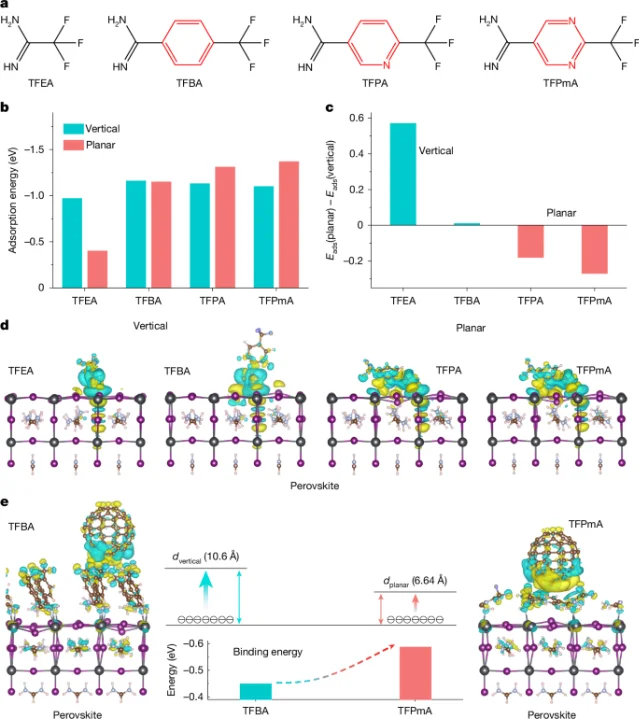
Methodological novelty: Rather than screening ligands empirically, the team used the concept of stereoelectronic manipulation — replacing carbon atoms in the aromatic ring with nitrogen to alter the ligand's electronic affinity for the lead (Pb) ions at the perovskite surface. This provides a rationale for ligand design based on coordination chemistry, not trial and error.
Significance: Silicon solar cells dominate commercial photovoltaics at 22–24% typical module efficiency, with laboratory records around 26–27%. Single-junction perovskite cells have long exceeded silicon in certified lab efficiency, but outdoor stability has lagged: real-world thermal cycling, humidity, and UV exposure degrade the perovskite layer and its interfaces over months. The 258-day outdoor result is notable because it was conducted under uncontrolled ambient field conditions, not an accelerated laboratory aging protocol. Whether the ~14% efficiency drop over 258 days is acceptable for commercial deployment depends on the application and cost, but the data demonstrate that the ligand passivation approach does not sacrifice stability for peak efficiency — the two metrics have historically traded off against each other in perovskite cell design. 11
Cover image: AI-generated illustration.
参考ソース
- 1Lethal plague outbreaks in Lake Baikal hunter-gatherers 5,500 years ago
- 2Oldest-known plague outbreak came 5,500 years ago in Siberia
- 3Ancient DNA uncovers deadly plague outbreak among Siberian hunter-gatherers
- 45,500-year-old plague outbreak killed Siberian hunter-gatherers
- 5Asteroid Donaldjohanson wobbles as it rotates, Lucy flyby reveals
- 6NASA's Lucy Reveals Wobbling, Peanut-Shaped Asteroid
- 7Powerful seismic waves from Japan's 2011 earthquake struck Earth's core and bounced back up, moving island eastward
- 8Powerful seismic waves from Japan's 2011 earthquake struck Earth's core and bounced back up
- 9A textbook assumption about early land vertebrates may be wrong
- 10Early land vertebrates' shift from water to land didn't require amphibian-like metamorphosis, fossils reveal
- 11Stereoelectronic manipulation of ligands for perovskite solar cells

このコンテンツについて、さらに観点や背景を補足しましょう。