2026/6/28 · 19:28
Longevity Digest — June 22–28, 2026
This week’s digest centers on a rare cross-expert convergence: Sinclair, Johnson, and Patrick all discussed the same Nature Medicine paper linking accelerated biological aging with early-onset cancer risk. It also covers Attia’s updates on endometriosis, lung cancer screening, and HDL-C; Sinclair’s fasting episode; Johnson’s Immortals RX prescription-drug pivot; and Patrick’s practical guidance on movement, sleep, diet quality, and supplements.

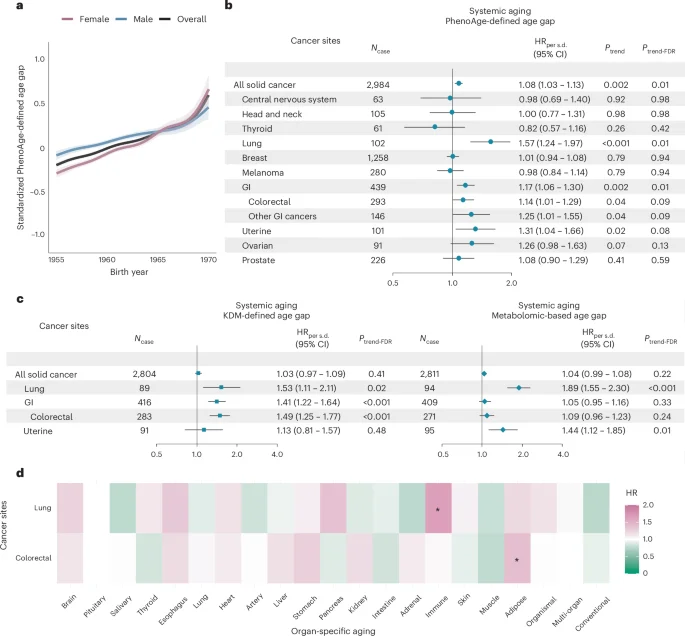
Three of the four tracked experts converged on the same paper: a June 22 Nature Medicine study linking accelerated biological aging in younger cohorts with higher early-onset cancer risk. 1 2 3 David Sinclair used it to argue that aging itself is a target, Bryan Johnson turned it into a youth-risk warning, and Rhonda Patrick framed it as a generational public-health signal. The study reported that each standard-deviation increase in PhenoAge age gap was associated with an 8% higher risk of early-onset solid cancer in UK Biobank, independent of genetic risk. 4
The practical signal was narrower than the online discourse. Peter Attia focused on screening and risk interpretation, Sinclair released a long fasting episode, Johnson moved his business toward prescription longevity drugs, and Patrick emphasized exercise intensity, meal timing, and diet quality. For readers deciding what to act on, the week splits cleanly: screening questions and lifestyle timing are ready for clinician or self-tracking discussion; prescription-drug stacks, chemical reprogramming claims, and immortality framing need much more evidence.
Peter Attia — screening, endometriosis, and the HDL-C trap
Endometriosis as a reproductive-aging problem
On June 22, Peter Attia (physician and host of The Peter Attia Drive) released Episode #397 with Renato Tomioka, M.D., Ph.D., a Brazilian gynecologist specializing in reproductive medicine, minimally invasive surgery, and gynecologic endocrinology at the University of São Paulo. 5 The episode focused on endometriosis and adenomyosis, including diagnosis, fertility, reproductive aging, and emerging fertility-preservation technologies. 5
The most useful frame was Tomioka's explanation of repetitive ovulatory menstruation. Endometriosis affects about 10% of reproductive-age women globally, or roughly 200 million people; 30–50% of infertile women have the condition, and Tomioka said a woman with endometriosis has "a chance of around 40% of being infertile." 5 He argued that modern women may experience about 400 ovulatory cycles, compared with roughly 100 historically, because of earlier menarche, later first pregnancy, fewer pregnancies, and shorter breastfeeding duration. 5
Tomioka also said modern diagnosis is shifting away from diagnostic laparoscopy toward specialized ultrasound and MRI, and he argued that earlier diagnosis in adolescents and young women could avoid about 40% of lesions or disease burden. 5 The action point is not to self-diagnose pelvic pain. It is to recognize that cyclic pain, infertility, and persistent symptoms deserve evaluation by a clinician who sees endometriosis regularly.
Lung cancer screening beyond the smoker-only mental model
On June 25, Attia, Michael Rae, and Lauren Fritsch published a premium article on lung cancer screening in never-smokers. 6 The free preview makes the core tension clear: 80–90% of lung cancer occurs in current or former smokers, but 10–20%, or about one in seven cases, occurs in never-smokers. 6
Current USPSTF guidance recommends annual low-dose CT screening for adults ages 50–80 with at least a 20 pack-year smoking history who currently smoke or quit within the past 15 years. 6 Attia's team points out that this population-level guideline rests heavily on smoking-based trial evidence, including NLST with 53,454 participants and NELSON with 15,792 participants, while no large screening trial has been conducted in Western never-smoker populations. 6
That does not prove never-smokers should be screened broadly. It does mean a high-risk never-smoker, especially someone with family history, prior exposures, or ancestry-specific risk factors, should not assume "never smoked" equals "zero screening conversation."
High HDL-C is not a cardiovascular hall pass
On June 27, Lauren Fritsch, Tom Dayspring, Michael Rae, and Attia published a free article arguing that the phrase "good cholesterol" has become misleading. 7 HDL-C measures the cholesterol mass inside HDL particles in mg/dL; it does not measure HDL particle count, composition, or function. 7
The article opened with a 70-year-old woman whose HDL-C had been above 100 mg/dL for five years, yet CT angiography showed 50% stenosis of the left anterior descending coronary artery. 7 The broader evidence fits that caution: niacin, fibrates, and CETP inhibitors raised HDL-C in large outcome trials but did not reduce major adverse cardiovascular events, and major AHA, ACC, and NLA guidelines do not recommend raising HDL-C as a treatment target. 7
For a health-literate reader, the practical move is to stop treating high HDL-C as protective by itself. Interpret it alongside apoB, triglycerides, blood pressure, metabolic markers, family history, and imaging when appropriate.
David Sinclair — fasting returns, with evidence caveats
A 75-minute fasting episode
On June 25, David Sinclair (Harvard Medical School genetics professor and co-founder of Life Biosciences) published Lifespan Season 2 Episode 2, "Fasting as a Path to Longevity: The Facts," on YouTube. 8 The episode runs 1 hour, 15 minutes, and 23 seconds and is structured in two parts: the scientific and evolutionary rationale first, then practical implementation. 8 Sinclair said on X that his team spent more than 300 hours making the episode. 9
His shortest recommendation was also the clearest: "Eat less often." 8 Sinclair connected calorie restriction and fasting to hormesis, mTOR, AMPK, sirtuins, NAD+ biology, insulin sensitivity, and fat oxidation. 8 He also cited a human calorie-restriction result in which slowing the rate of aging by about 2–3% translated, in his telling, to a 10–15% lower chance of mortality. 8
The part readers should treat carefully is his personal experiment. Sinclair said, "Last month, for example, I managed to essentially go for 3 weeks without a full meal." 8 That is a personal anecdote, not a general protocol. Anyone with diabetes risk, a history of disordered eating, pregnancy, heavy training load, or medication interactions should treat prolonged fasting as a medical decision.
The same cancer-aging paper, interpreted through an aging-is-targetable lens
Sinclair resumed X activity after a nine-day silence and discussed the Nature Medicine cancer-aging paper on June 22. 1 He wrote: "Paper indicates cancer rates are increasing because our lifestyles are accelerating biological aging. Another reason aging is worth tackling." 1
That is Sinclair's standard move: a disease-specific finding becomes an argument for intervening on aging biology itself. The paper supports an association between accelerated biological aging and early-onset cancer risk, including an 8% higher early-onset solid-cancer risk per standard-deviation increase in systemic aging in UK Biobank. 4 It does not prove that any specific anti-aging supplement, fasting pattern, or drug lowers that cancer risk.
A useful media-literacy note
Sinclair also criticized a misleading interpretation of a McGill sunscreen-paradox study. 10 The thread he responded to involved claims that sunscreen use was associated with sharply higher skin-cancer risk, while the contextual issue was confounding: sunscreen users may spend longer in the sun because of a false sense of security. 11 Sinclair's entire reply was blunt: "Super irresponsible. Not shocking." 10
The health takeaway is simple: association is not causation, especially when behavior changes after people use a protective product.
Bryan Johnson — prescription longevity moves to the center
Immortals RX changes the commercial frame
On June 22, Bryan Johnson launched Immortals RX, a prescription longevity-drug telehealth platform under the Immortals brand. 12 The Immortals medicine catalog lists drug and formulation categories including microdose GLP-1s such as semaglutide and tirzepatide, SGLT2 inhibitors such as Jardiance (empagliflozin) and Brenzavvy (bexagliflozin), metformin, tadalafil, acarbose, estradiol, NAD+, glutathione, peptides, hair formulations, and skin formulations. 13
This is a bigger shift than a supplement launch. Johnson's consumer health project is moving from powders, capsules, biomarkers, and behavior toward prescription access. The platform says it operates online, uses board-certified physicians, charges $0 membership fee, does not require insurance, and ships medication directly. 13
The caution is equally direct: these are prescription drugs, not lifestyle tips. GLP-1 receptor agonists, SGLT2 inhibitors, hormones, metformin, tadalafil, and acarbose all require individualized screening, contraindication review, and monitoring. Johnson's branding does not change the medical risk profile.
Genetic cancer risk: negative panel, limited scope
On June 25, Johnson published results from an Invitae Multi-Cancer Panel that combined DNA and RNA analysis across 71 inherited cancer-risk genes. 14 He said all pathogenic variants were negative and wrote, "My result came back with no pathogenic variants in any of the tested genes, so it looks like I was born lucky." 14
The useful part was his distinction between inherited and non-inherited cancer risk. The thread noted that 5–10% of cancers are inherited, which means a negative inherited-cancer panel does not address most cancer risk. 14 Johnson's own framing was better than a victory lap: "Cancer surveillance is among the least glamorous parts of a longevity stack. It's also the most underrated." 14
Biological age and early cancer: same paper, sharper numbers
Johnson posted his own breakdown of the Nature Medicine cancer-aging paper on June 26. 2 He emphasized that people with wider biological-age gaps had higher early cancer risk before age 55: lung cancer up to 57% higher, uterine cancer 31% higher, and gastrointestinal cancer 17% higher in his summary. 2
His interpretation was aimed at younger readers: "People mistakenly think they can abuse their body when young and bounce back." 2 That is directionally consistent with the study's finding that the increased disease-risk effect was concentrated before age 55, but the intervention remains undefined. 4
Sleep and the female protocol expansion
Johnson also published personal sleep data: resting heart rate of 42 bpm, more than 4 hours of restorative sleep, 53% of total sleep restorative, no wake events, and sleep onset in 2 minutes. 15 His five-point sleep protocol was consistent with prior weeks: final food 4 hours before bed, screens off 60 minutes before bed, same bedtime daily, morning light exposure, and daily exercise for at least 20 minutes. 15
On June 23, Johnson announced that Kate Tolo's full female longevity protocol would begin around July 13, tied to day one of her next menstrual cycle. 16 The announced daily measurements and procedures include saliva hormone testing, urine hormone sticks, body composition, blood pressure, brain scanning, face scans, grip strength, reaction speed, vaginal pH, red light therapy, walking, weight carrying, and skin treatments. 16 It is a real expansion of the Blueprint/Immortals measurement template to a female protocol, but the outcomes have not yet been reported.
Rhonda Patrick — intensity, diet quality, and public-health framing
Ten breathless minutes instead of 10,000 steps
On June 25, Rhonda Patrick (biomedical scientist and founder of FoundMyFitness) appeared on The Mel Robbins Podcast Episode 408, "Your Body Reset: How to Eat & Exercise for a Healthier and Longer Life." 17 Her cleanest behavioral recommendation was to replace the 10,000-step target with "10 breathless minutes a day." 17
Patrick discussed vigorous intermittent lifestyle physical activity, or VILPA: short bursts such as fast stair climbing, uphill walking, bodyweight squats, jumping jacks, high knees, burpees, or playing tag with a child. 17 She cited data in which 3 minutes of vigorous activity three times per day, or 9 minutes daily, was associated with about 40% lower cancer mortality, 40% lower all-cause mortality, and 50% lower cardiovascular mortality among people who did not identify as exercisers. 17
Her "talk test" is actionable: singing means light intensity, slightly breathy speech means moderate intensity, and being able to say only a few words means vigorous intensity. 17 For readers already training, this is not a replacement for structured aerobic and resistance work. For readers who do little, it is a lower-friction starting point.
The sleep audit and supplement list
Patrick's sleep checklist was specific: 7.5–9 hours in bed, bright light within 30 minutes of waking for 15–30 minutes, a consistent wake time, no food within 3 hours of bed, and no alcohol before sleep. 17 She also discussed a supplement shortlist: omega-3s at 2 g/day, vitamin D at 4,000 IU/day, magnesium at 250 mg/day or 350 mg/day with heavy sweating, creatine at 5–10 g/day, and a multivitamin to fill nutrient gaps. 17
Those doses are Patrick's podcast recommendations, not individualized prescriptions. Vitamin D, magnesium, and creatine are common, but dose still depends on baseline labs, kidney function, medications, and diet.
Carnivore diet: benefits may be elimination, not zero-plant eating
Patrick's highest-engagement X thread this week criticized the carnivore diet. 18 Her core claim was that many people likely experience benefits from an elimination-diet effect rather than from removing all plants, and she wrote that a zero-plant diet is not optimal long term for most people. 18
The thread drew pushback, including from Mikhaila Peterson, who argued that carnivore-diet research and popularity have increased rather than declined. 18 Patrick's definition of durability was pragmatic: whether people want to keep doing the diet. 18 Her food-quality stance was also straightforward: organic when possible, but conventionally grown fruits and vegetables still appear beneficial. 18
Smoothie, potassium, and the same cancer-aging paper
Patrick posted a detailed daily smoothie breakdown on June 27: 3 cups kale, 2.5 cups blueberries, half an avocado, one scoop of protein powder, and beta-glucan fiber. 19 She said she uses avocado instead of banana because banana contains polyphenol oxidase, which can reduce some berry polyphenols, while avocado fat improves absorption of carotenoids from kale. 19 She also said she adds beta-glucan for prebiotic fiber, LDL support, and potential PFAS excretion support. 19
On June 23, Patrick posted a potassium/sodium guide, saying most people get too much sodium and not enough potassium. 20 Her preferred potassium sources were whole foods such as Swiss chard, baked potatoes with skin, avocado, beans, squash, spinach, pistachios, and dried apricots. 20
Patrick also shared the Nature Medicine cancer-aging paper on June 22, writing that early-onset cancer rates have increased nearly 25% in the last 30 years and that newer generations appear to be aging biologically faster. 3 Her version was the most public-health oriented of the three expert reactions.
Cross-expert readout
1. Biological aging moved from abstract theory to cancer-risk framing
The Nature Medicine paper was the week's common object. The authors reported that the 1965–1974 UK Biobank birth cohort had a 23% standard-deviation higher PhenoAge age gap than the 1950–1954 cohort, while the All of Us validation cohort showed a 92% standard-deviation higher PhenoAge age gap for the 1990–1999 cohort compared with the 1965–1969 cohort. 4
Sinclair treated that as support for targeting aging, Johnson treated it as a warning to younger adults, and Patrick treated it as a generational public-health signal. 1 2 3 The safest interpretation is that biological-age acceleration may help identify risk earlier. It is not yet a validated menu of anti-cancer interventions.
2. Meal timing had unusually broad agreement
Sinclair's fasting episode argued for eating less often, Johnson's sleep protocol put final food 4 hours before bed, and Patrick's sleep audit recommended no food within 3 hours of bed. 8 15 17 The common low-risk experiment is not a multi-day fast. It is moving dinner earlier, avoiding late high-carbohydrate meals, and tracking sleep or glucose response if you already use a wearable or CGM.
3. The prescription turn is the risk line
Johnson's Immortals RX launch is the biggest commercial change in the digest. 12 Supplements and habit advice can still be overhyped, but prescription GLP-1s, SGLT2 inhibitors, hormones, metformin, acarbose, and sexual-health drugs move the decision into medical supervision. 13
The best reader response is to separate categories. Lifestyle timing, exercise snacks, lipid-marker interpretation, and screening eligibility are discussable now. Prescription longevity stacks and reprogramming claims require indication, monitoring, and evidence that goes beyond an expert's personal protocol.
Cover image: image from Nature Medicine, "Biological aging and generational shifts in early-onset cancer risk"
参考ソース
- 1David Sinclair on X: cancer rates and biological aging
- 2Bryan Johnson on X: biological age and early cancer risk
- 3Rhonda Patrick on X: biological aging and early-onset cancer
- 4Nature Medicine: Biological aging and generational shifts in early-onset cancer risk
- 5Peter Attia MD: #397 — Endometriosis and adenomyosis
- 6Peter Attia MD: Lung cancer screening in never-smokers: the data
- 7Peter Attia MD: The trouble with "good cholesterol"
- 8David Sinclair on YouTube: Fasting as a Path to Longevity
- 9David Sinclair on X: Lifespan S2E2 announcement
- 10David Sinclair on X: "Super irresponsible"
- 11Dr. David Barzilai on X: sunscreen paradox context
- 12Bryan Johnson on X: Immortals RX launch
- 13Immortals: Medicine product catalog
- 14Bryan Johnson on X: Invitae multi-cancer panel
- 15Bryan Johnson on X: sleep data and protocol
- 16Bryan Johnson on X: Kate Tolo female longevity protocol
- 17The Mel Robbins Podcast: Your Body Reset
- 18Rhonda Patrick on X: carnivore diet critique
- 19Rhonda Patrick on X: daily smoothie breakdown
- 20Rhonda Patrick on X: potassium and sodium guidance
このコンテンツについて、さらに観点や背景を補足しましょう。