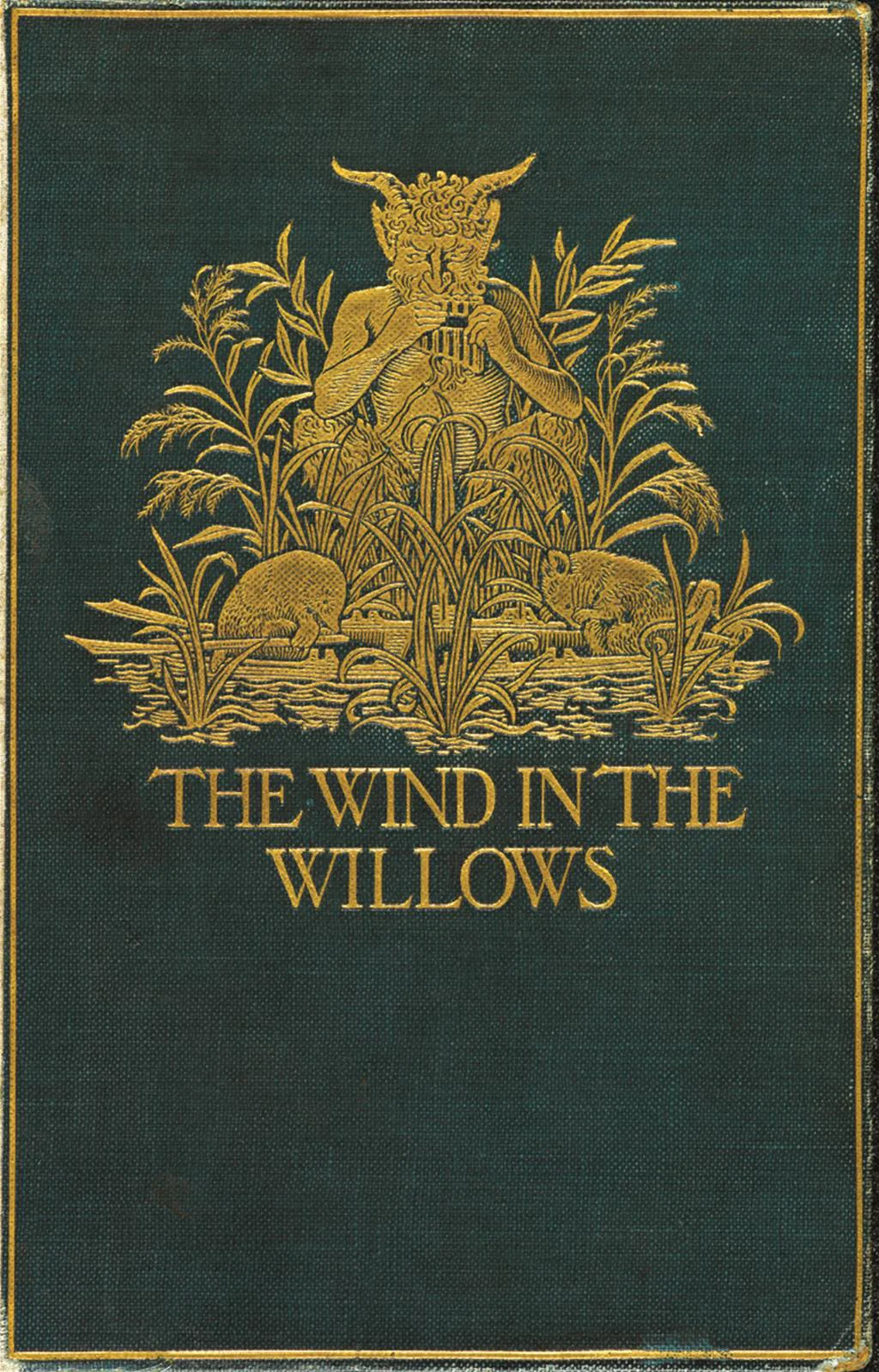
"Up we go!": Grahame lets spring interrupt the Mole
Kenneth Grahame turns a spring-cleaning escape into a study of how a season can break open a settled life.

The passage
Kenneth Grahame's The Wind in the Willows was published in 1908. Its first chapter, "The River Bank," begins before the river, before friendship, and even before the Mole has a name in the open air: it begins with a chore he can no longer bear. 1
The Mole had been working very hard all the morning, spring-cleaning his little home. First with brooms, then with dusters; then on ladders and steps and chairs, with a brush and a pail of whitewash; till he had dust in his throat and eyes, and splashes of whitewash all over his black fur, and an aching back and weary arms. Spring was moving in the air above and in the earth below and around him, penetrating even his dark and lowly little house with its spirit of divine discontent and longing. It was small wonder, then, that he suddenly flung down his brush on the floor, said "Bother!" and "O blow!" and also "Hang spring-cleaning!" and bolted out of the house without even waiting to put on his coat. Something up above was calling him imperiously, and he made for the steep little tunnel which answered in his case to the gravelled carriage-drive owned by animals whose residences are nearer to the sun and air. So he scraped and scratched and scrabbled and scrooged and then he scrooged again and scrabbled and scratched and scraped, working busily with his little paws and muttering to himself, "Up we go! Up we go!" till at last, pop! his snout came out into the sunlight, and he found himself rolling in the warm grass of a great meadow.Kenneth Grahame, "The River Bank," Chapter I of The Wind in the Willows (1908).
A few words to keep
- Cellarage appears just after this excerpt, when the Mole's underground life is contrasted with the open air. It means a cellar or group of cellars, and keeps his home pressed beneath the world he is suddenly entering.
- Carriage-drive is the private road leading up to a substantial house. The narrator translates the Mole's tunnel into the social geography of surface-dwellers, making his escape feel like a small act of class mobility as well as a change of habitat.
- "Divine discontent" gives spring a motive. "Divine" here suggests a force beyond the Mole's private will; discontent is not a character flaw but the season's restless pressure toward life.
How the escape gathers speed
Grahame makes the Mole leave by changing the sentence's physical machinery. The opening sentence is built from tasks: "First," "then," and "then" keep adding another implement, another surface, another ache. The work seems endless because the syntax keeps extending it. Then spring becomes an active presence, "moving" and "penetrating" the burrow, so that the Mole's impatience is not merely a failure of discipline. The outside world has entered his room.
Once he bolts, the prose stops explaining and starts pushing. "Scraped and scratched and scrabbled and scrooged" is a chain of near-duplicate verbs joined by repeated "and." The reader feels the paws working against the tunnel wall; the sound is effort rendered as rhythm. Grahame then lets the sentence pause for the little spoken refrain, "Up we go! Up we go!" before releasing it with the sudden, comic "pop!" The long sentence has been a tunnel of its own. Its clauses move downward into the Mole's cramped routine, gather force in repetition, and finally break into sunlight.
The passage still matters because it treats renewal as disruptive. Spring does not arrive as a pretty background. It interrupts a life that is orderly, private, and exhausting, and it asks whether a person can recognize an old routine as a confinement before that routine becomes a permanent identity.
A question to carry
What part of your life has begun to feel like "spring-cleaning," and what might you hear if you stopped long enough to notice what is calling from above?
関連コンテンツ
- ログインするとコメントできます。