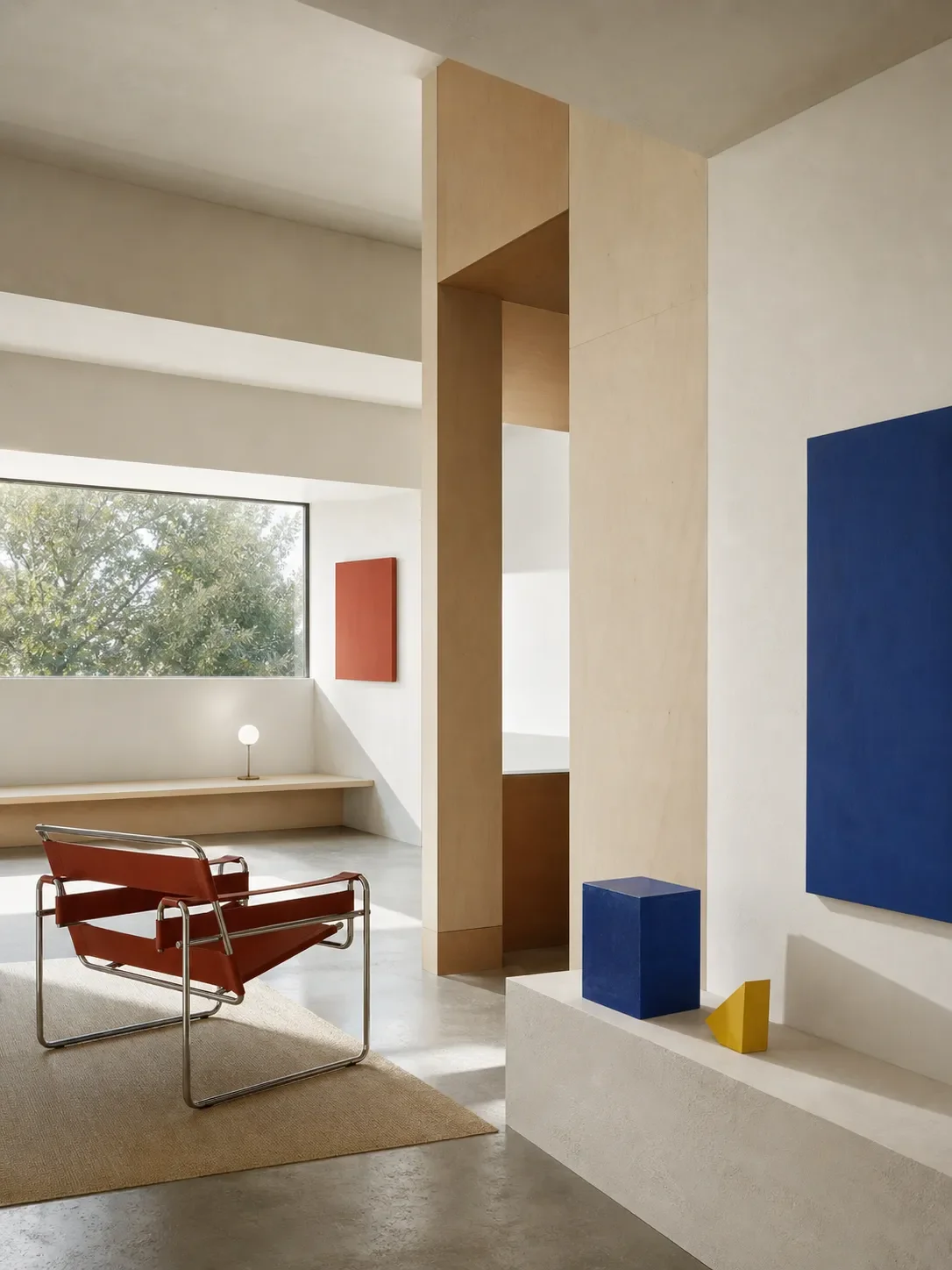
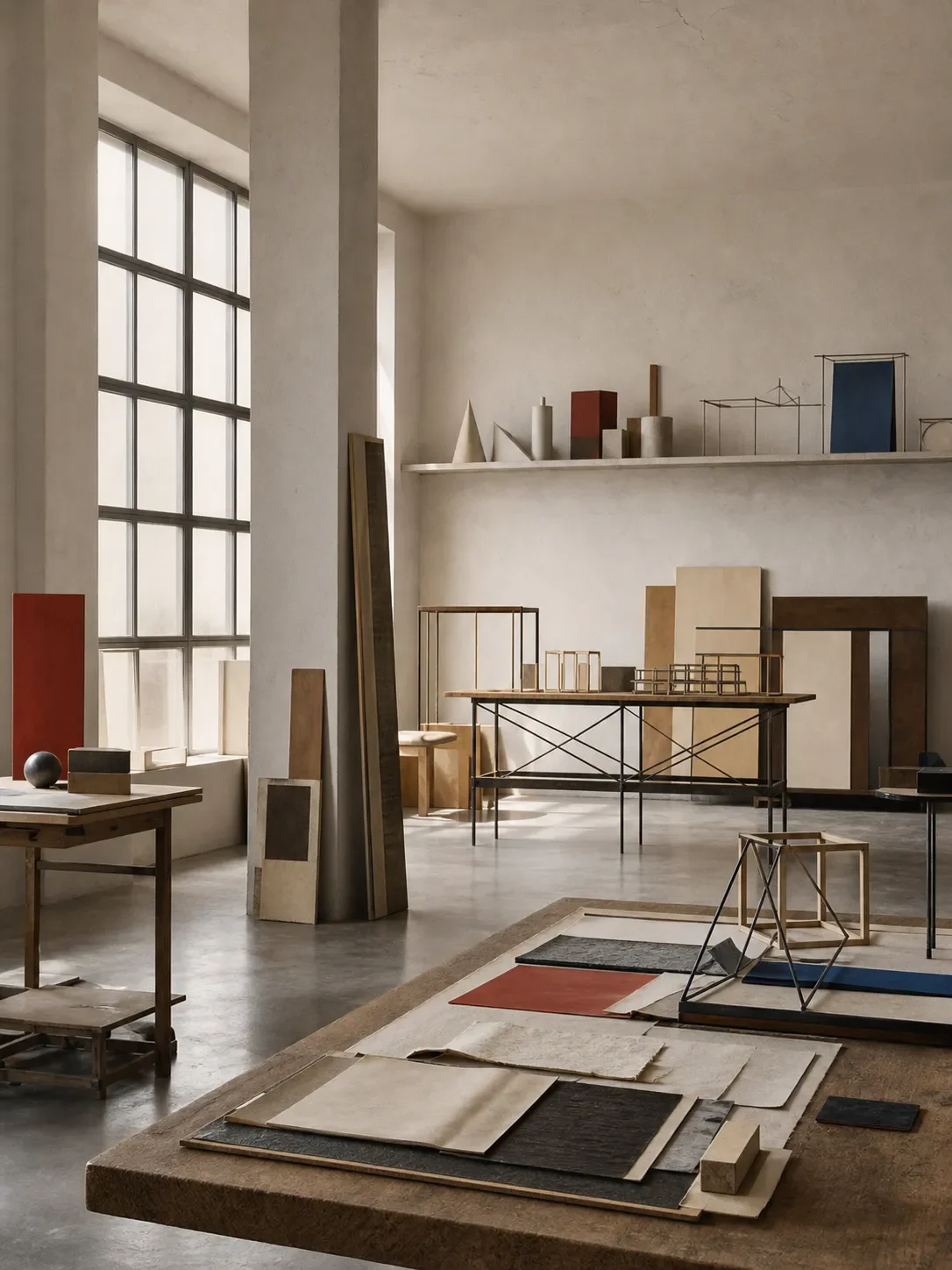
Bauhaus starts with structure: light, proportion, a limited palette, and materials allowed to show how they work.
Card 1: Mood
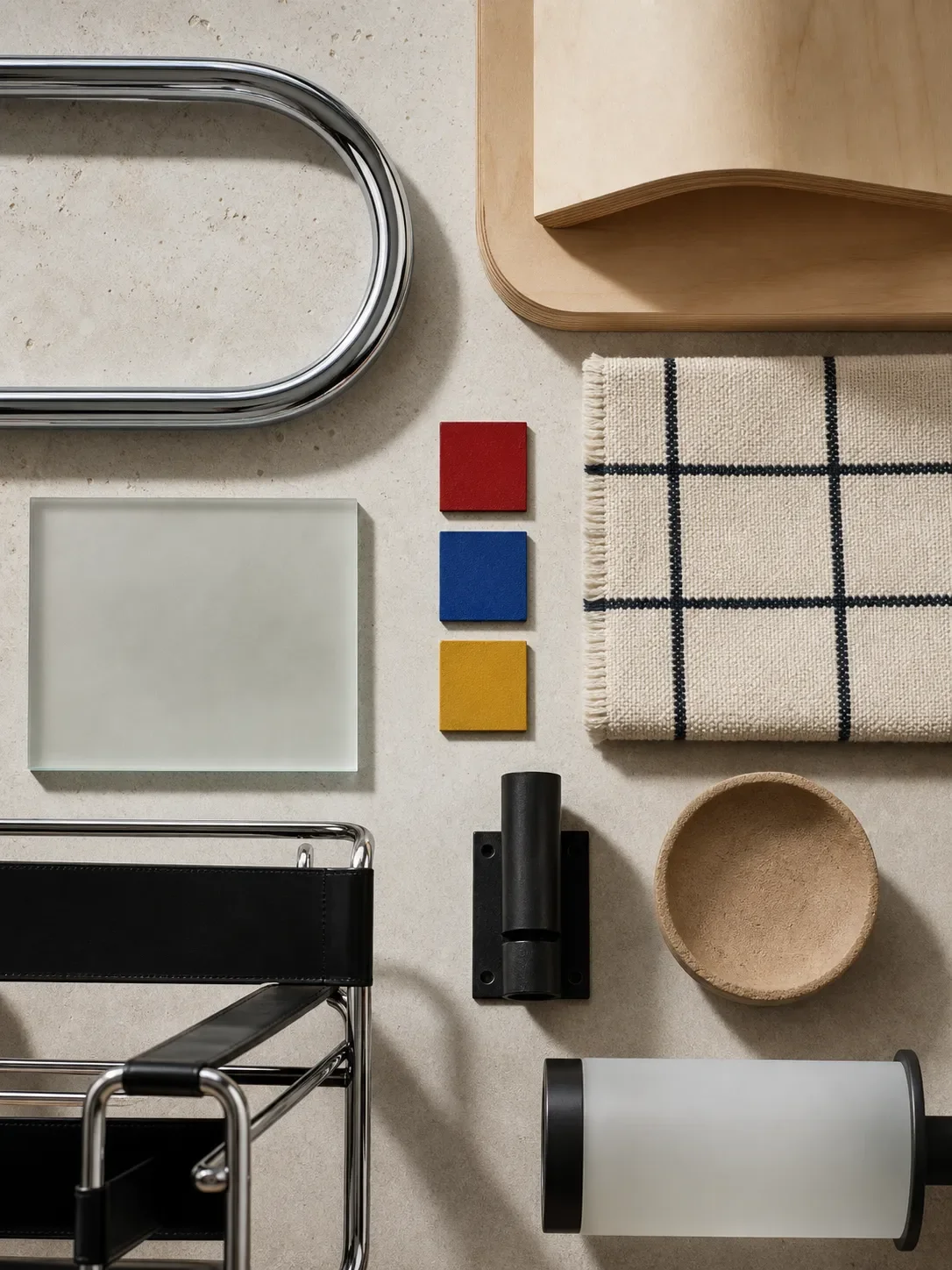
White planes, pale timber, tubular steel, and isolated primary colour make a room feel precise without making it cold.
Card 2: Origins
Walter Gropius founded Bauhaus in Weimar in 1919. The school moved to Dessau in 1925 and closed in 1933. UNESCO lists related sites in Weimar, Dessau, and Bernau as part of the movement's modernist legacy. 1 2
Card 3: Elements
The material language is spare but tactile: steel, glass, concrete, bent wood, woven textiles, simple ceramics, and geometric forms. The V&A links Bauhaus-era modernism to open interiors, reduced ornament, and construction in steel, concrete, and glass. 3
Card 4: Modern use
A contemporary room can borrow the logic without turning the space into a period set: open circulation, strong daylight, built-in storage, calm surfaces, and one or two colour accents. The result is useful first, graphic second. 3
コメント
ログインするとコメントできます。