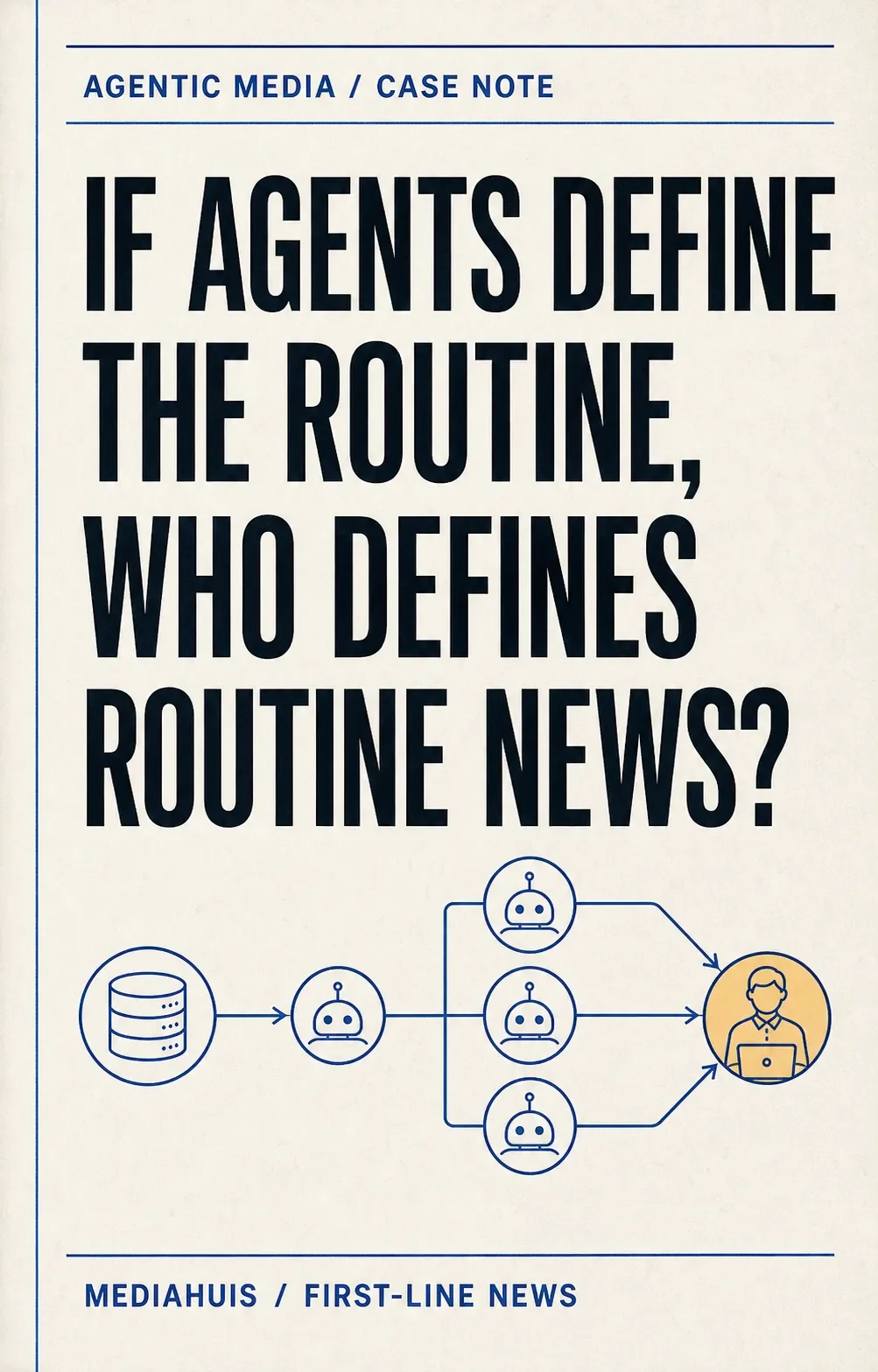
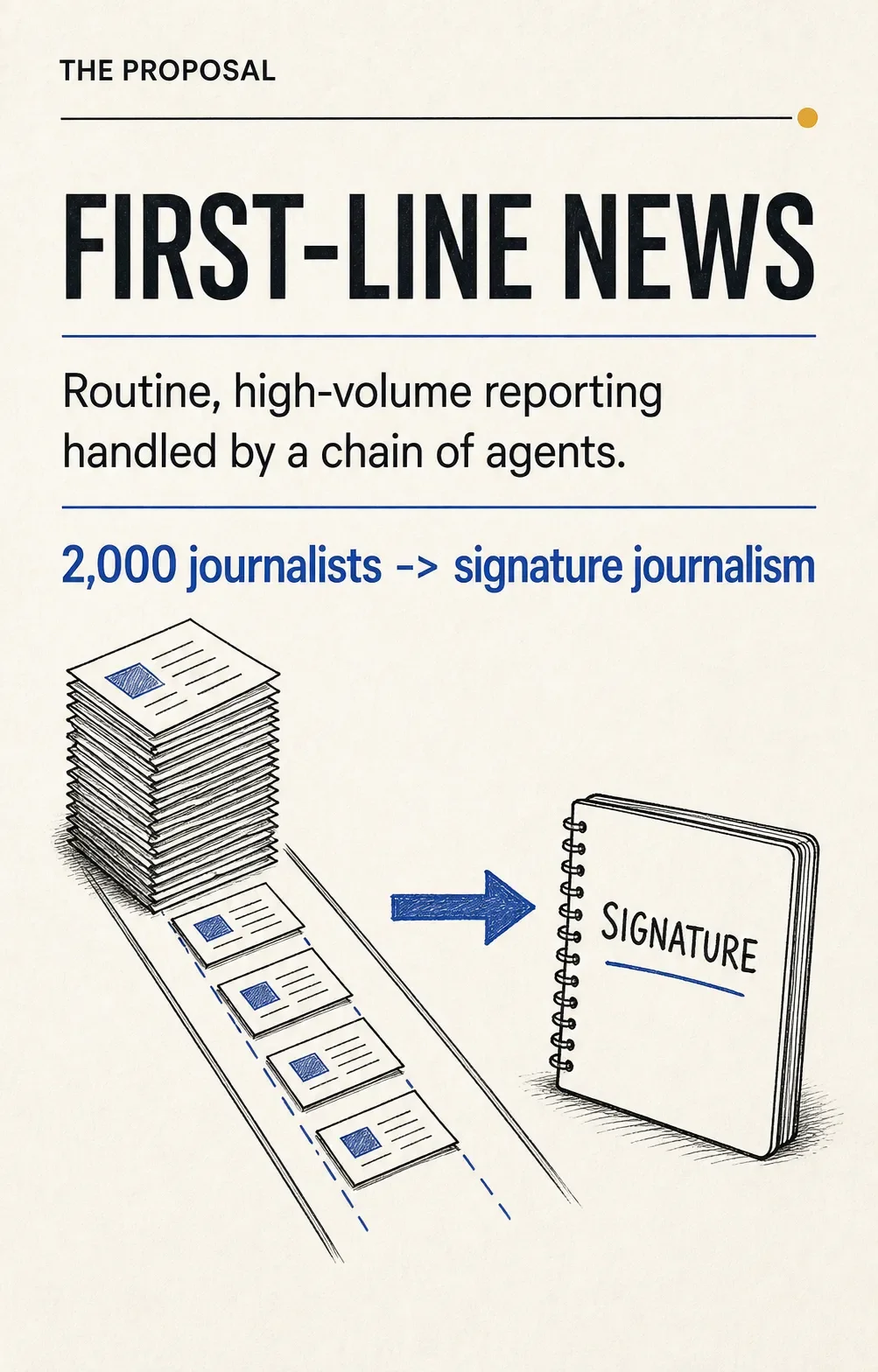
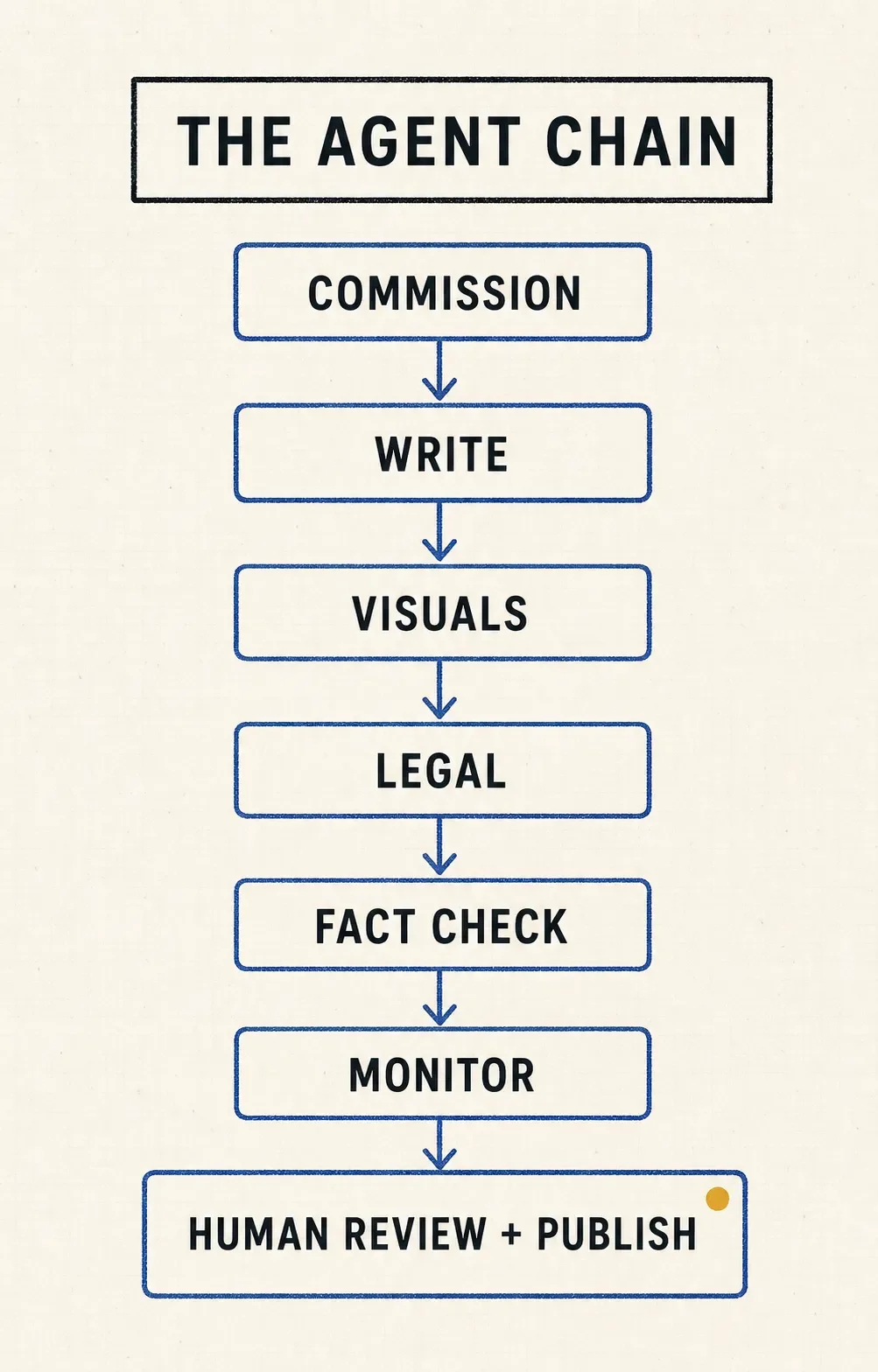

Mediahuis is testing a chain of AI agents for what it calls "first-line news": routine, high-volume reporting. A commissioning agent chooses what may matter to each brand, a writing agent drafts, other agents handle visuals, legal checks, fact checks, and monitoring, and a human reviews the finished story before publication. Press Gazette: Mediahuis plans to automate 'first-line news' with AI agents
The interesting editorial decision happens before the draft. The commissioning agent is asked what fits a brand and what has "public value". That turns the definition of routine news into part of the agentic system. Reuters Institute describes the project as a trial to fully produce breaking news with humans reviewing the final output. Reuters Institute: Digital News Report 2026, Netherlands
Mediahuis says the aim is to free its 2,000 journalists for "signature journalism". The open question is whether a final human check is enough when the source pool, commissioning rule, and escalation threshold have already shaped the story. FT Strategies: News in the Digital Age 2026
Where would you place the real editorial checkpoint: before the agent chooses the story, after it drafts, or only before publish?
コメント
ログインするとコメントできます。