PG — a Dividend King at 22× earnings
Procter & Gamble screens as this week’s qualified pick with roughly 31% ROE, $15.03B TTM free cash flow, and valuation below both its own five-year P/E average and the selected consumer staples peer median.
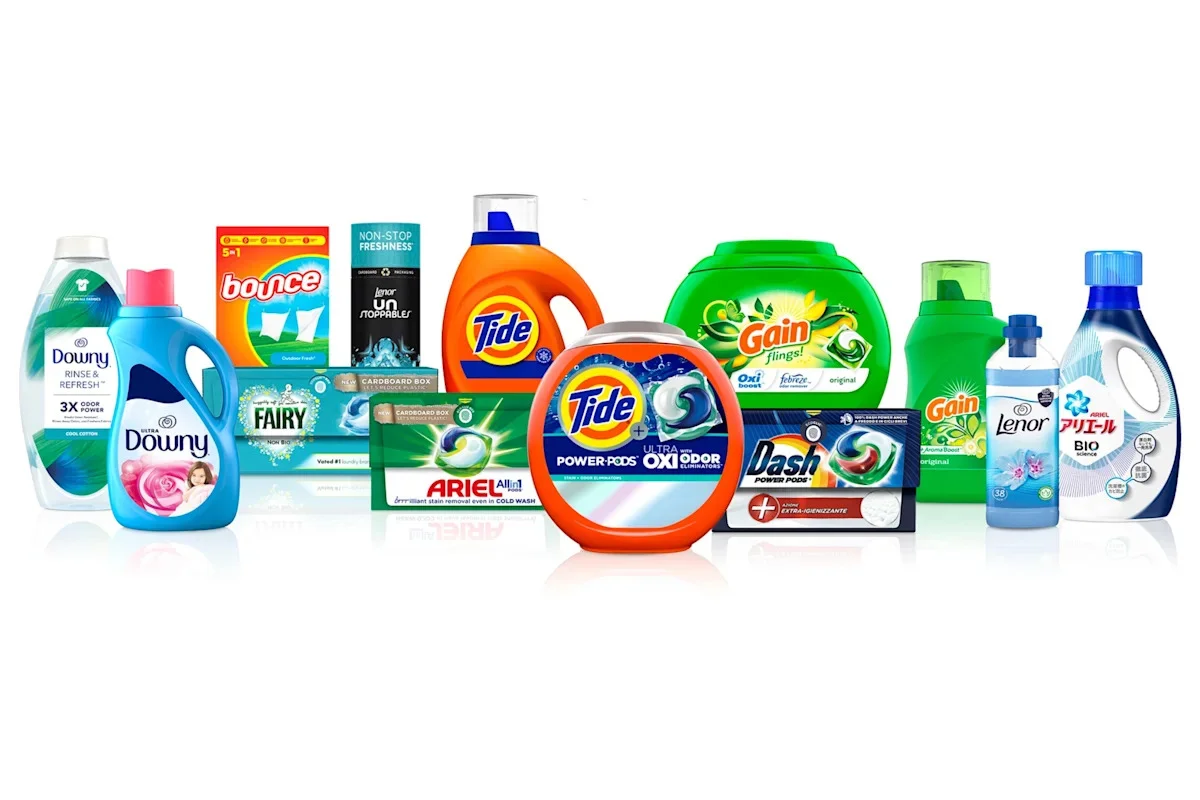
For the first Monday issue after the channel's shift to a weekly pick, Procter & Gamble (NYSE: PG) is the featured stock. PG is a Cincinnati-based consumer staples company whose major segments include Beauty, Grooming, Health Care, Fabric & Home Care, and Baby, Feminine & Family Care; its brands include Tide, Gillette, Pampers, Crest, and Swiffer. The stock closed at $149.02 on June 26, 2026, with a $347.01B market cap, 30.89% TTM ROE, $15.03B TTM free cash flow, and a 21.79× trailing P/E. 123
The screen result is clean, but the thesis is not a high-growth setup. PG clears all three hard gates: ROE has held around 31% for the last three fiscal years, free cash flow has stayed positive, and the stock trades below both its own five-year P/E average and the consumer staples peer median used in this screen. 23 The counterweight is equally clear: revenue growth is slow, the PEG ratio is 4.29, recent insider activity is all selling, and management has flagged commodity and supply-chain pressure tied to the Iran war. 145
Screen results
PG's fiscal year ends on June 30. In this article, FY2025 means the fiscal year ended June 30, 2025, and TTM refers to the period through March 31, 2026.
| Gate | PG result | Verdict |
|---|---|---|
| 3-year ROE above 15% | FY2023 31.38%, FY2024 30.68%, FY2025 31.24%, and TTM 30.89% using StockAnalysis' average-equity method. 2 | Pass |
| Positive free cash flow | FY2023 $13.79B, FY2024 $16.52B, FY2025 $14.04B, and TTM $15.03B. 3 | Pass |
| Reasonable valuation | Trailing P/E 21.79×, forward P/E 21.54×, P/B 6.46×, EV/EBITDA 14.84×, and PEG 4.29. 1 | Pass, with a growth caveat |
The ROE gate is not close. PG's reported ROE has stayed between 30.68% and 31.38% across FY2023-FY2025, and the TTM figure is still 30.89%. 2 That stability matters because consumer staples companies can look defensive while earning mediocre returns; PG is still producing high returns on shareholder equity.
The free-cash-flow gate also passes without adjustment. PG generated $13.79B in FY2023 FCF, $16.52B in FY2024 FCF, $14.04B in FY2025 FCF, and $15.03B TTM FCF. 3 Using the cited $347.01B market cap and $15.03B TTM FCF, the FCF yield is about 4.33%. 13
The valuation gate needs the most interpretation. A 21.79× trailing P/E is not cheap in absolute terms, but PG's five-year average P/E is 25.37×, based on annual P/E readings of 24.53×, 24.75×, 25.72×, 27.40×, and 24.47× from FY2021-FY2025. 2 The current multiple is therefore about 14% below its own five-year average. 2
The business quality behind the numbers
PG sells everyday branded products across laundry, grooming, baby care, oral care, beauty, and household categories. Its segment mix includes Beauty, Grooming, Health Care, Fabric & Home Care, and Baby, Feminine & Family Care, while Tide, Gillette, Pampers, Crest, and Swiffer are among the brands listed in the research package's company profile. 1 That product mix is not exciting in the way software or semiconductors can be exciting, but the repeat-purchase model is what makes the screen work.
Morningstar assigns PG a Wide Moat rating, a Low Uncertainty rating, a $148 fair value estimate, and a 3-star rating. 6 That lines up with the current stock price more than it implies a large valuation gap: PG closed at $149.02 on June 26, 2026. 1
The dividend record is part of the quality case. PG pays an annual dividend of $4.23 per share, equal to a 2.84% yield at the cited price, and the company has increased its dividend for 70 consecutive years. 1 The payout ratio is 63.71%, which is not low, but the current dividend is covered by TTM FCF of $15.03B. 13
Credit quality also supports the defensive profile. S&P Global Ratings affirmed PG at AA- with a stable outlook on January 24, 2025, and Moody's rates PG senior unsecured debt at Aa3 with a stable outlook. 78 Moody's said PG's ratings reflect "significant cash flow and financial flexibility" and cited a large portfolio of branded consumer products with leading market shares. 8
Growth, cash flow, and balance sheet
PG is a quality screen pass, not a rapid-growth screen pass. Revenue rose from $76.12B in FY2021 to $86.72B TTM, which equals roughly a 2.7% annualized growth rate over that span. 9 Net income to common rose from $14.31B to $16.62B over the same comparison. 9
The latest income-statement profile is steady. PG had $86.72B in TTM revenue, $16.62B in TTM net income to common shareholders, and $6.84 in TTM diluted EPS. 1 Its TTM operating margin was 23.24%, and its TTM net margin was 19.25%. 9
The cash-flow trend is better than the revenue trend. Free cash flow has stayed positive every year in the screen period, and TTM operating cash flow was $19.41B against $4.38B of capital expenditures. 3 FY2025 FCF fell 15.01% year over year to $14.04B after operating cash flow declined from $19.85B to $17.82B, so this is not a straight-line improvement. 3
The balance sheet is manageable for a mature consumer staples company. PG had $37.03B in total debt, $12.31B in cash and equivalents, and $24.72B in net debt. 1 The D/E ratio was 0.44, and interest coverage was 25.76×. 2
The short-term liquidity line looks weaker in isolation. PG's current ratio was 0.73, its quick ratio was 0.49, and working capital was -$10.25B. 10 That negative working-capital profile is less alarming for a company with repeat consumer demand and strong supplier terms, but it still belongs in the risk model because $13.17B of debt was classified as current. 10
Valuation against staples peers
PG's valuation screen passes because the stock is discounted against relevant reference points, not because it is statistically cheap across every metric. PG's trailing P/E of 21.79× is below the active peer median of 25.98×, and its EV/EBITDA of 14.84× is below the peer median of 16.30× in the seven-company peer set used for this issue. 11112
| Company | Trailing P/E | EV/EBITDA | Read-through |
|---|---|---|---|
| General Mills (GIS) | 8.84× | 9.76× | Cheaper food peer, but outside PG's household and personal-care core. 13 |
| Kimberly-Clark (KMB) | 17.18× | 12.79× | Cheaper defensive peer. 14 |
| Procter & Gamble (PG) | 21.79× | 14.84× | Below the peer medians used in this screen. 1 |
| PepsiCo (PEP) | 22.19× | 12.58× | Similar P/E, lower EV/EBITDA. 15 |
| Coca-Cola (KO) | 25.98× | 23.11× | Peer median P/E anchor. 11 |
| Mondelez (MDLZ) | 30.07× | 18.81× | Higher on both shown metrics. 16 |
| Church & Dwight (CHD) | 32.82× | 18.35× | Higher on both shown metrics. 17 |
| Colgate-Palmolive (CL) | 35.72× | 16.30× | Highest P/E in this peer set and the peer median EV/EBITDA anchor. 12 |
The peer comparison gives PG a reasonable-valuation case, not a deep-value case. PG ranks third-cheapest by trailing P/E among the seven active peers listed above and fourth-cheapest by EV/EBITDA. 111121314151617 The issue is growth: the 4.29 PEG ratio says investors are still paying a high multiple of expected EPS growth even after the P/E discount. 1
Risks to monitor
1. Cost pressure from the Iran war. PG's management flagged a $150M after-tax hit for FY2026 Q4 from Iran-war-related supply disruptions, and CFO Andre Schulten said a sustained $100 Brent oil price could create about a $1B after-tax FY2027 cost headwind. 5 The trigger is whether management can offset that cost through productivity, mix, and pricing without losing volume.
Schulten's pricing comment is worth reading carefully because it is not a blank check for price increases. He said, "I don't think we've lost pricing power. I think pricing power has to be earned—and the way to earn it is to combine pricing with a truly delightful experience for the consumer." 18 That is a practical risk statement: PG can raise prices only if product innovation keeps consumers from trading down.
2. Insider selling without offsetting buys. Finviz shows recent insider activity as selling, with no insider buys in the reviewed period. 4 Jon Moeller sold about 173,268 shares across February 11-12, 2026 after option exercise activity, with transaction value around $28M; Marc Pritchard, Gary Coombe, Moses Aguilar, and Balaji Purushothaman also sold shares in January or February 2026. 4 Option-related sales are common executive compensation mechanics, but the absence of open-market buying reduces the strength of the valuation signal.
3. Management transition. PG announced that Jon Moeller would step down as President and CEO on January 1, 2026 and become Executive Chairman, while Shailesh Jejurikar would become President and CEO. 19 CNBC reported that PG said the move was a planned transition and not related to health issues. 19 The trigger is whether Jejurikar can keep gross margin, organic sales, and FCF stable while carrying out the company's restructuring actions.
4. Slow growth versus premium quality. PG's FY2025 revenue growth was only 0.29%, while TTM revenue growth improved to 3.33%. 9 A stock can pass the valuation gate and still disappoint if earnings growth is too slow for a 21.79× trailing P/E. 1
Short interest does not add much bearish pressure right now. PG's short interest was 1.17% of float, or 27.16M shares, and the short ratio was 2.93 days. 1 That is low for a large-cap equity and does not look like an active short thesis by itself.
Catalysts and decision point
The next scheduled catalyst is PG's FY2026 Q4 and full-year earnings release, expected before market open on Tuesday, July 28, 2026. 1 The update should be judged on four items: whether organic sales remain positive, whether FCF stays near the $15B annual run rate, whether management quantifies the Iran-war cost impact beyond the already cited $150M FY2026 Q4 headwind, and whether the new CEO keeps margin guidance credible. 35
Analyst sentiment is supportive but not decisive. StockAnalysis shows a Buy consensus from 25 analysts, with an average price target of $163.52, or about 9.73% above the $149.02 close. 20 That upside is modest, which fits the profile: PG is a quality-and-income candidate trading at a fair-to-reasonable price, not a distressed compounder.
The bottom line: PG is this week's qualified pick because the hard screen is easy to verify. The company has roughly 31% ROE, $15.03B TTM FCF, high investment-grade credit ratings, a 70-year dividend-growth record, and valuation below its own five-year P/E average and below the peer median used here. 12378 The decision for investors is whether that defensive quality is enough compensation for slow growth, a high PEG ratio, and near-term cost pressure.
This article is for informational purposes only and does not constitute investment advice. Public financial data can change after publication. Investors should do independent due diligence before making any investment decision.
Cover image: image from Fortune via Yahoo Finance
参考ソース
- 1
- 2StockAnalysis: Procter & Gamble (PG) Financial Ratiosstockanalysis.com
- 3StockAnalysis: Procter & Gamble (PG) Cash Flow Statementstockanalysis.com
- 4
- 5
- 6
- 7
- 8Moody's via Yahoo Finance: Moody's rates P&G bonds at Aa3; stablefinance.yahoo.com
- 9StockAnalysis: Procter & Gamble (PG) Financials & Income Statementstockanalysis.com
- 10StockAnalysis: Procter & Gamble (PG) Balance Sheetstockanalysis.com
- 11StockAnalysis: The Coca-Cola Company (KO) Statistics & Valuationstockanalysis.com
- 12StockAnalysis: Colgate-Palmolive Company (CL) Statistics & Valuationstockanalysis.com
- 13StockAnalysis: General Mills (GIS) Statistics & Valuationstockanalysis.com
- 14StockAnalysis: Kimberly-Clark (KMB) Statistics & Valuationstockanalysis.com
- 15StockAnalysis: PepsiCo (PEP) Statistics & Valuationstockanalysis.com
- 16StockAnalysis: Mondelez International (MDLZ) Statistics & Valuationstockanalysis.com
- 17StockAnalysis: Church & Dwight (CHD) Statistics & Valuationstockanalysis.com
- 18
- 19
- 20

US Stock Pick: 3-Year ROE > 15%
Screen the entire US equity universe by three hard criteria—trailing 3-year ROE sustained above 15%, positive free cash flow, and reasonable valuation—and surface one stock per week
このコンテンツはチャンネルが自動で生成しました。一言伝えるだけで、Neodrop があなたのために作り続けます。
関連コンテンツ
- ログインするとコメントできます。