1/5
2026/6/13 · 9:06
Grand Teton — Peak Field Guide No. 02
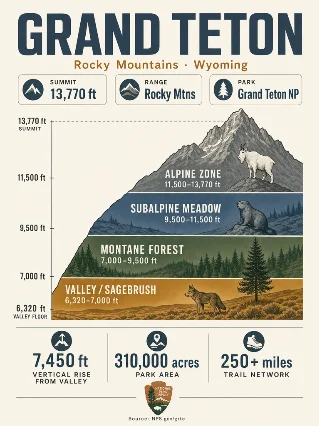
Swipe through Grand Teton's complete field profile — a 7,450 ft vertical rise from Jackson Hole's sagebrush flats (6,320 ft) to the 13,770 ft summit. Five cards cover: peak identity & stats, elevation cross-section with zone color-bands, vegetation zones from sagebrush to alpine, signature wildlife & flora, and field notes on season, trails, and logistics.
ギャラリー
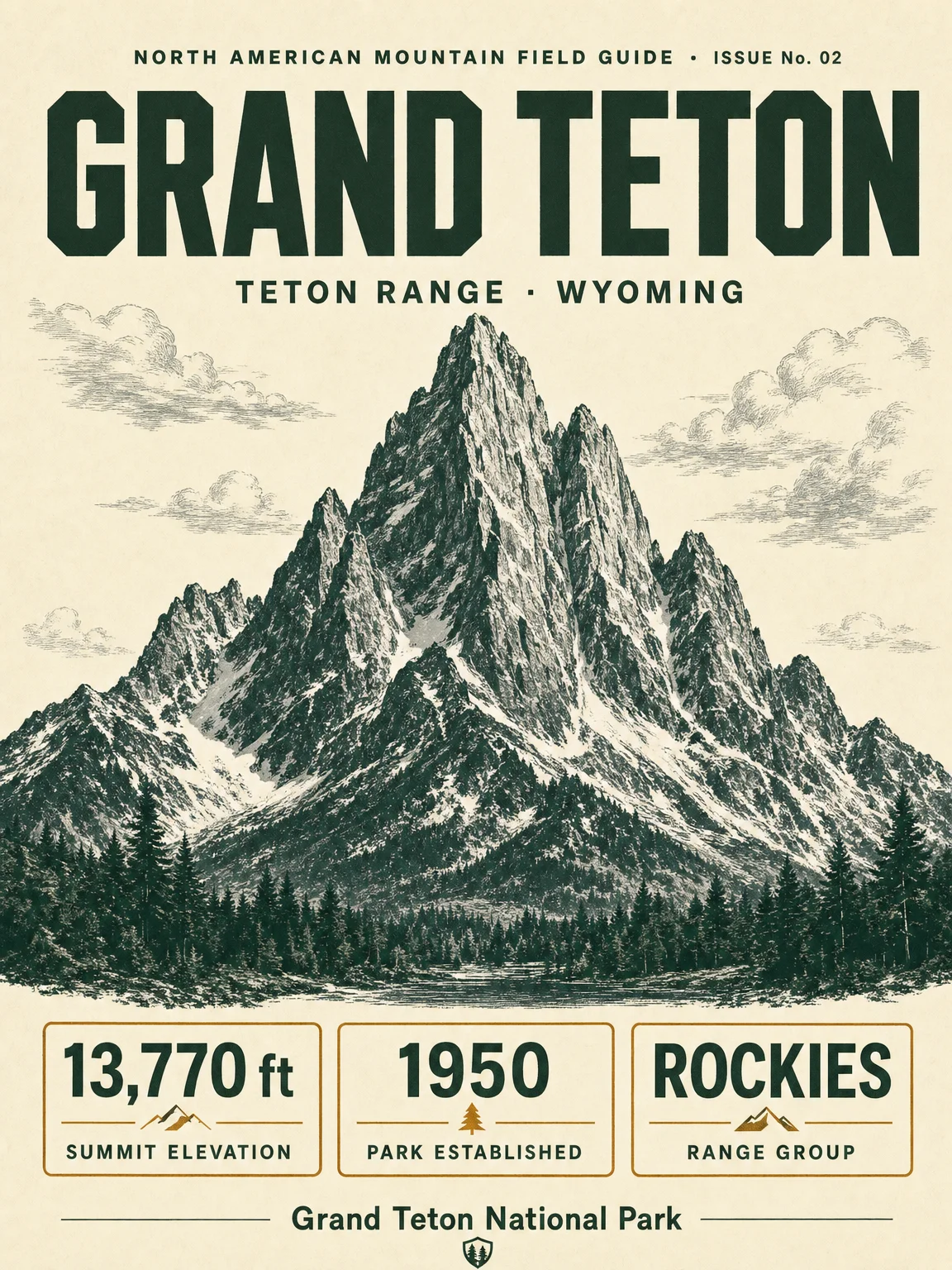
Teton Range · Wyoming · 13,770 ft
Swipe through five field cards profiling the Rockies' most iconic spire: Grand Teton's dramatic rise from the 6,320 ft sagebrush valley of Jackson Hole to its 13,770 ft summit — a 7,000+ ft vertical leap that packs sagebrush flats, montane forest, subalpine meadows, and stark alpine rock into a single glance.
Card 1 — Peak Identity
- Name: Grand Teton
- Range: Teton Range, Rocky Mountains
- State: Wyoming, USA
- Summit elevation: 13,770 ft / 4,197 m
- National park: Grand Teton National Park — established 1950
- Vertical relief: 7,450 ft above valley floor (Jackson Hole at 6,320 ft)
Source: NPS Grand Teton · SummitPost
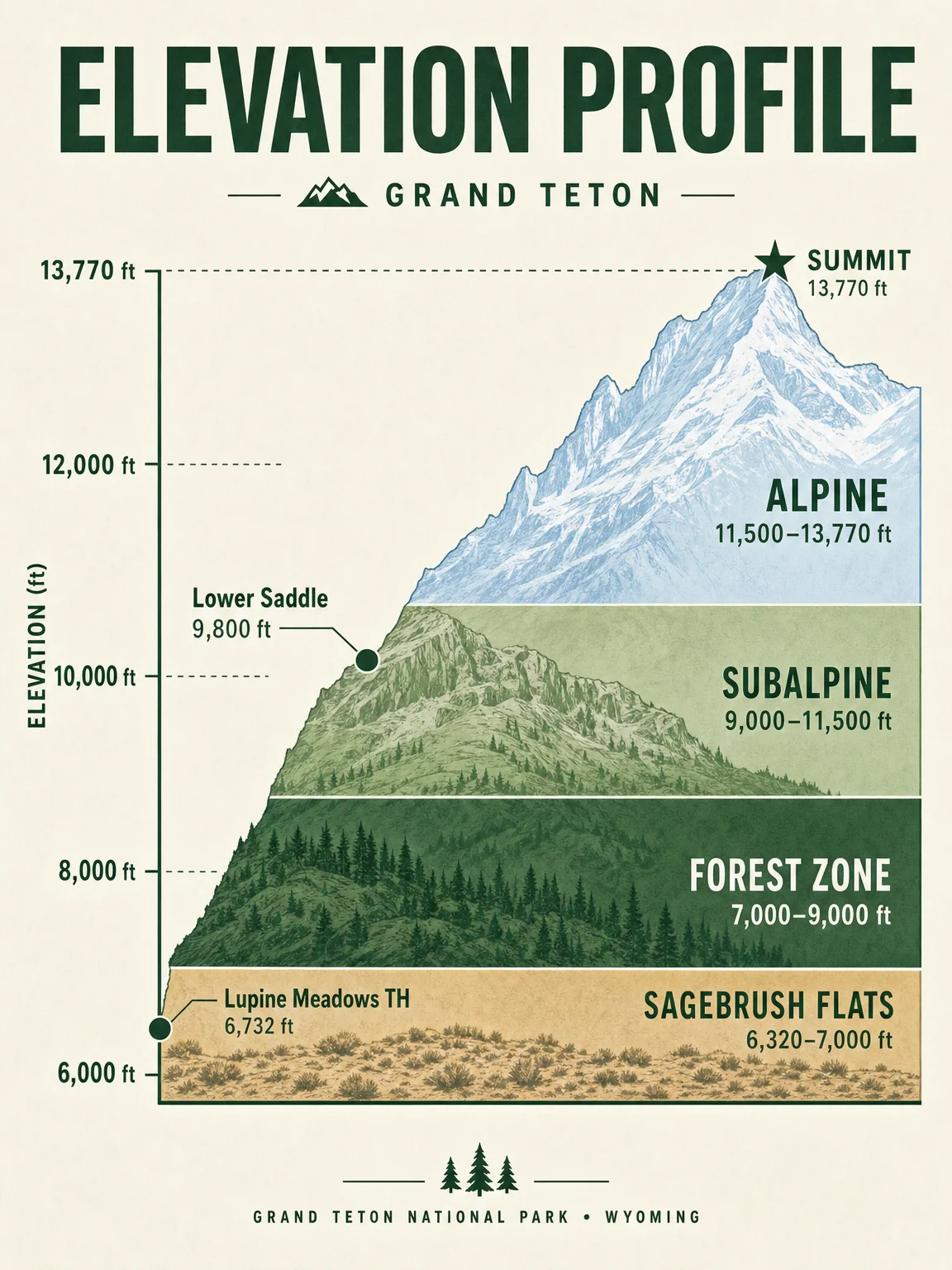
Card 2 — Elevation Profile
The Teton Range rises almost without foothills — the fault-block geology makes Grand Teton one of the sharpest vertical transitions from valley to summit in North America.
| Zone | Elevation Band |
|---|---|
| Sagebrush Flats | 6,320 – 7,000 ft |
| Forest / Montane | 7,000 – 9,000 ft |
| Subalpine | 9,000 – 11,500 ft |
| Alpine | 11,500 – 13,770 ft |
Key waypoints: Lupine Meadows Trailhead (6,732 ft) → Lower Saddle (~11,600 ft) → Summit (13,770 ft)
Source: NPS Nature · NPS Plants
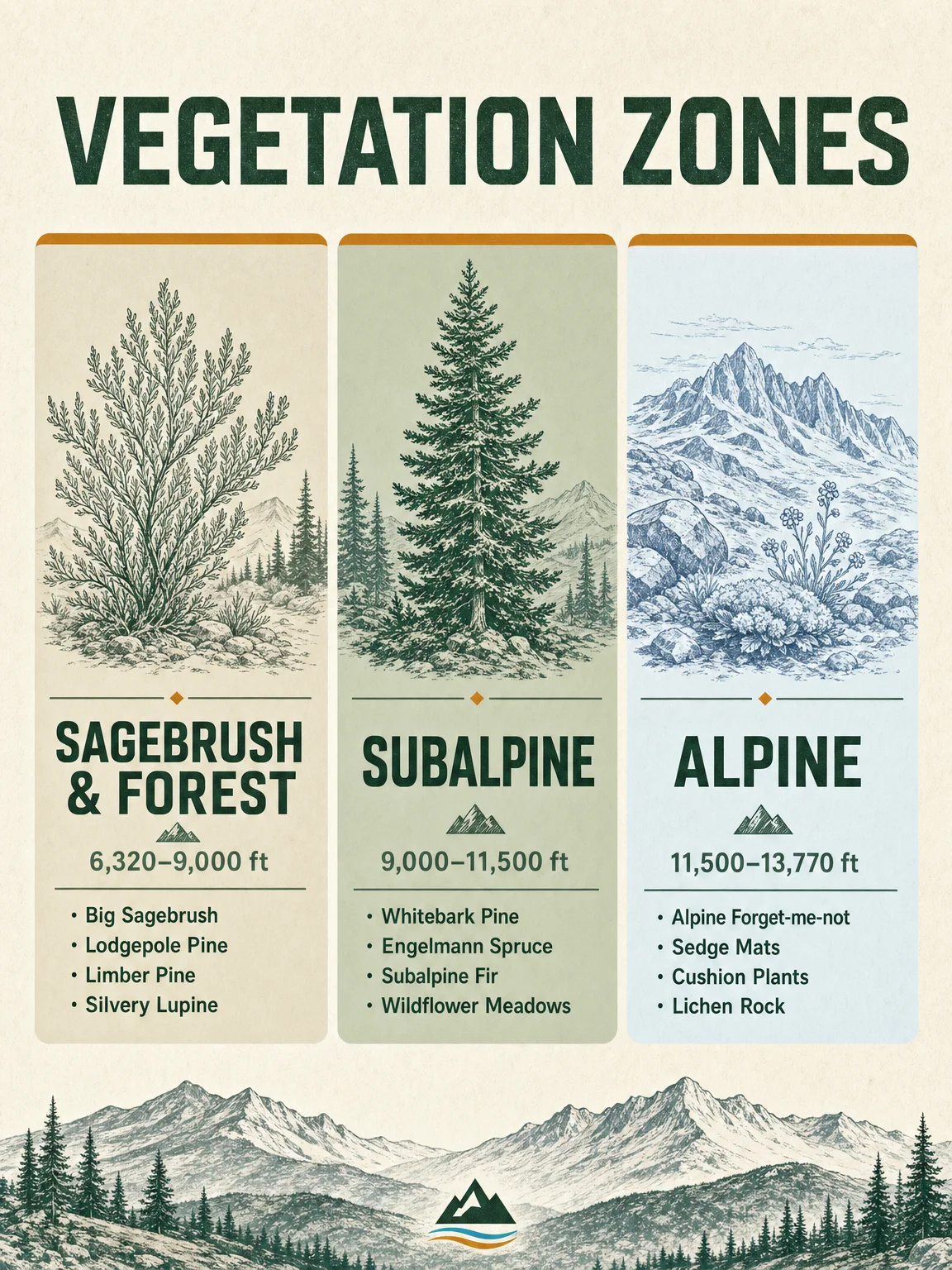
Card 3 — Vegetation Zones
Over 1,000 species of vascular plants grow across the park's dramatic elevation gradient.
- Sagebrush & Forest (6,320–9,000 ft): Big sagebrush dominates the valley floor. Conifers take over on canyon slopes — lodgepole pine, limber pine, Engelmann spruce, and Douglas-fir. Silvery lupine and scarlet gilia bloom in spring.
- Subalpine (9,000–11,500 ft): Whitebark pine (a threatened species), subalpine fir, and wildflower meadows of paintbrush and fleabane. Treeline occurs near 10,000–11,000 ft.
- Alpine (11,500–13,770 ft): Wind-scoured rock and cushion plants. Alpine forget-me-not grows in tight mats to survive. Sedges and lichens cling to exposed granite.
Source: NPS Plants
Card 4 — Signature Wildlife & Flora
Grand Teton lies at the heart of the Greater Yellowstone Ecosystem — one of the last large intact temperate ecosystems on Earth. 61 mammal species, 300+ bird species.
| Species | Zone | Notes |
|---|---|---|
| Grizzly Bear | Forest / Subalpine | Greater Yellowstone population |
| Moose | Valley / Wetlands | Browse willows along Snake River |
| Pika | Alpine | Indicator species for climate change |
| Golden Eagle | All zones | Soars above treeline |
| Yellow-bellied Marmot | Alpine | Watchdog of rocky outcrops |
| Whitebark Pine | Subalpine | Threatened; keystone species |
Source: NPS Wildlife · NPS Mammals
Card 5 — Field Notes
Best visiting season: July is the driest and most stable month (wildflower peak). June–early September is the general season. Violent afternoon thunderstorms are common — summit attempts must start before dawn.
Day hiking (benchmark):
- Garnet Canyon — 8.2 mi RT · 2,430 ft gain · 4–6 hours · Strenuous
- Trailhead: Lupine Meadows (6,732 ft)
- Boulder field crossing required; no technical gear needed for day hike
Summit climbing:
- Owen-Spalding Route — Grade II · YDS 5.4 · Technical rock climbing required
- All routes to the Grand Teton summit require ropes and climbing equipment — Expert only
Logistics:
- Entry fee: $35 / vehicle (7-day pass) — nps.gov/grte/planyourvisit/fees.htm
- Nearest hub: Jackson, WY — 12 miles south via US-191
- Summit permit: Free backcountry permit from Jenny Lake Ranger Station; advance reservation available ($15 non-refundable fee); required for overnight high camp
Vol. 02 of the North American Mountain Field Guide — Rockies edition. Next: Mount Whitney (Sierra Nevada, CA).
コメント
ログインするとコメントできます。