2026/6/17 · 0:20
SubQ's 12M-Token Claim, Agent Bricks, and Skillgate — AI Digest for June 16, 2026
Six items for builders today: Subquadratic claims near-perfect long-context retrieval up to 12M tokens with sparse attention; Databricks expands Agent Bricks into a fuller agent operations platform; Mitiga launches Skillgate to scan agent instruction files; Google ships Brazos liquid-to-air rack cooling; NVIDIA publishes Remix agent skills alongside RTX Remix 1.5; and Iroh reaches v1.0.0 as a Rust networking stack for dialing public keys instead of brittle IPs.

リサーチノート
Today’s useful signal is not one big model launch. It is the layer around models getting more serious: longer-context architectures, agent platforms, scanner tooling for agent instruction files, physical cooling for hotter AI racks, and a 1.0 release for a Rust networking stack that removes some peer-to-peer plumbing from application code.
Coverage note: this issue uses a June 15-16 publication window because several developer announcements landed after yesterday’s digest cut-off.
Quick scan
| Item | What changed | When to act | Builder takeaway |
|---|---|---|---|
| SubQ 1.1 Small | Subquadratic released a model card for a sparse-attention model that claims near-perfect retrieval up to 12M tokens and 64.5x less attention compute than dense attention at 1M tokens. 1 | Watch and test later | Treat it as a serious long-context claim, but not a plug-in replacement yet: access is still through design partners and the broader lineup is planned for later this year. |
| Databricks Agent Bricks | Databricks expanded Agent Bricks into a broader agent platform at DAIS 2026, saying more than 100,000 agents have been built and that the platform now processes over 1 quadrillion agent tokens per year. 2 | Medium-term planning | Agent infrastructure is moving from framework choice to operations: model routing, memory, sandboxing, governance, cost control, and trace analysis. |
| Mitiga Skillgate | Mitiga launched a free scanner for AI-agent skills, hooks, rules, MCP configs, AGENTS.md, CLAUDE.md, and related instruction files. 3 | Review this week | If your team lets agents read third-party repo instructions, scan those files before the agent loads them. Treat instruction files as code. |
| Google Brazos | Google announced Brazos, a rack-mounted closed-loop liquid-to-air cooling design for deploying liquid-cooled equipment in existing air-cooled data centers. 4 | Infrastructure watchlist | AI deployment is becoming a facilities problem too. The relevant number: 60 kW nominal thermal load per rack across three modular units. |
| NVIDIA RTX Remix 1.5 | NVIDIA shipped RTX Remix 1.5 and published Remix agent instruction files for AI-assisted modding workflows. 5 | Pattern to copy cautiously | Agent skills are spreading beyond general coding into domain-specific production workflows. That is useful, but it also increases the need for reviewable instructions. |
| Iroh 1.0 | The n0-computer team released Iroh v1.0.0, a Rust networking stack whose repo describes the goal as replacing brittle IP addressing with dialable keys. 6 | Try if P2P is on your roadmap | Good candidate to evaluate if you are building peer-to-peer sync, local-first apps, or agent tools that need direct device-to-device connectivity. |
SubQ 1.1 Small is a long-context claim worth testing
Subquadratic’s SubQ 1.1 Small model card is the most model-centric item today. The company says its Subquadratic Sparse Attention model scores 100% on needle-in-a-haystack retrieval at 1M and 2M tokens, 98% at 6M and 12M tokens, and 99.12% on RULER at 128K. 1 It also says that, at 1M tokens, the model uses 64.5x less compute than dense attention and runs 56x faster than FlashAttention-2 for a single attention layer. 1
The practical promise is obvious: whole codebases, contracts, filings, and document collections could be read directly instead of sliced into retrieval chunks. SubQ is pitching that direction, with use cases in financial analysis, legal work, and software engineering. 1
The caveat is access. SubQ says it is deploying with select design partners and plans a broader 2M-to-12M-token lineup later this year. 1 The company also says the benchmark results were independently verified by Appen, but builders still need real-repo and messy-document tests before changing a retrieval architecture around it. 1
Databricks is packaging the boring parts of agent production
Databricks framed Agent Bricks as a full developer platform for agents, not just an agent builder. It says the platform now covers model choice, data context, deployment, evaluation, memory, sandboxing, governance, cost control, and trace monitoring. 2 It also announced native support for Kimi and a partnership with SpaceX to make Grok models available on Databricks. 2
The interesting line is that Databricks supports multiple harnesses, including LangGraph, Agno, CrewAI, Claude Code SDK, and OpenAI Agent SDKs, and it also offers a managed version of Omnigent. 2 Databricks open-sourced Omnigent under Apache 2.0 on June 13 as a meta-harness for composing, controlling, and sharing sessions across agents such as Claude Code, Codex, Pi, and custom agents. 7
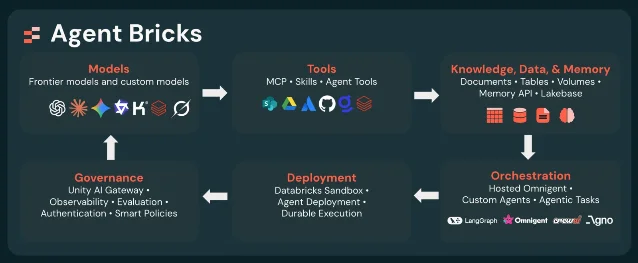
For builders outside large enterprises, the lesson is not "move everything to Databricks." The lesson is that agent apps now need the same non-glamorous systems every other production system needs: budgets, sandboxes, audit trails, data access policy, replayable traces, and a way to swap models without rewriting the whole app.
Skillgate turns agent instruction files into a scan target
Mitiga’s Skillgate launch is a useful counterweight to the agent-platform news. The company says Skillgate scans public GitHub repositories and instruction files for prompt injection, hook-based remote code execution, credential exfiltration, MCP poisoning, direct execution patterns, obfuscation, and credential exposure. 3
The underlying research is more important than the launch page. Mitiga says it scanned more than 50,000 AI instruction files across over 7,000 public repositories from April through June 2026 and found over 1,230 hardcoded API keys and tokens, attacker-controlled
ANTHROPIC_BASE_URL overrides, and risky agent configuration patterns. 8 Skillgate currently applies more than 80 detection rules across six technique families. 8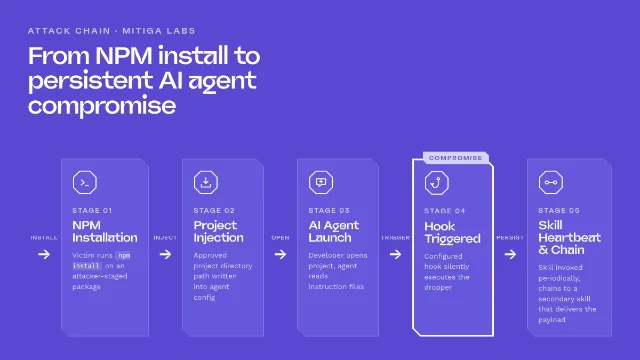
This is one of the clearer operational rules of the week: do not let coding agents ingest repo-level instructions as harmless markdown. Review
AGENTS.md, CLAUDE.md, hooks, MCP configs, and skill files in pull requests. If your workflow copies skills from blogs or marketplaces, scan them first.Google’s Brazos shows why AI infrastructure is not only about chips
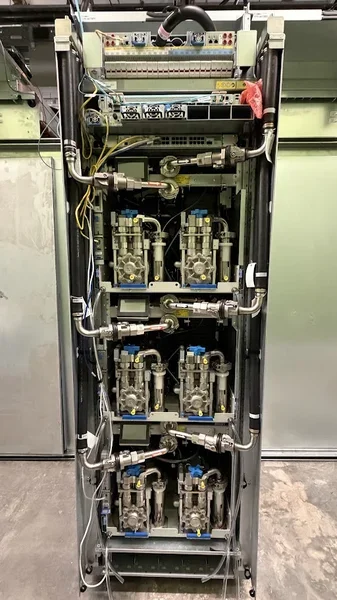
Google announced Brazos as a rack-mounted, closed-loop liquid-to-air cooling system for putting high-density, liquid-cooled equipment into existing air-cooled data centers. 4 Google says next-generation AI and HPC chips routinely exceed 1000 W thermal design power, and Brazos is meant to avoid full facility retrofits by allowing one-rack-at-a-time deployment. 4
The specs are concrete: three modular units, 60 kW nominal thermal load per rack, compatibility with deionized water or 25% propylene glycol, 40-60 V DC input, leak detection, pressure relief valves, and Modbus-over-TCP remote management. 4 Google says it will open-source the technical specifications, design principles, and visual assets through industry forums in the coming months. 4
This does not change your SDK choice tomorrow. It does explain why the economics of model serving keep changing under everyone’s feet. If hotter racks become easier to deploy in old facilities, capacity planning and regional inference availability may move faster than data center retrofits normally allow.
NVIDIA is turning modding steps into agent-readable skills
RTX Remix 1.5 shipped with smoother normals for captured legacy geometry, new RTX IO compression options, and improved viewport light controls. 5 NVIDIA says RTX IO integration reduced Portal with RTX from 25 GB to 17 GB and the Half-Life 2 RTX demo from 80 GB to 50 GB. 5
The agent angle is more broadly relevant than the modding use case. NVIDIA published RTX Remix Skills, which are text-based instruction files that give AI coding agents functional context for tasks such as feature branches, unit tests, and merge requests. 5 NVIDIA says community members have used agents with Remix Skills to automate compatibility checks and code generation, cutting some workflows from months to weeks, and that work has begun on previously unsupported titles such as Dark Souls, Dragon Age: Origins, and Titanfall 2. 5
That is a useful pattern: turn expert workflow steps into versioned agent instructions. The Skillgate section above is the warning label attached to the same pattern.
Iroh 1.0 is a practical open-source networking release
Iroh v1.0.0 landed on June 15 with the release title "Dial keys, not IPs." 6 The project describes itself as a modular networking stack in Rust where "IP addresses break" and applications dial keys instead. 9
The 1.0 release includes relay-related changes such as bearer-token access control without an external service, support for multiple hostnames with Let’s Encrypt TLS, updated 1.0 relay URLs, and several breaking dependency updates. 6
If you are building local-first collaboration, peer-to-peer sync, or agent tooling that needs to connect devices across messy networks, this is worth a test branch. It is not AI-specific, but the more agents run across laptops, sandboxes, private networks, and edge devices, the more boring network reachability becomes part of the AI developer stack.
What to do next
Start with the risk item. If your team uses agent instruction files, add them to review policy this week. The easiest useful rule: any change to
AGENTS.md, CLAUDE.md, skill files, hooks, MCP configs, or agent rules must be reviewed like executable code.For experimentation, put SubQ on the watchlist for independent long-context tests, and try Iroh 1.0 if peer-to-peer connectivity is part of your roadmap. For production planning, Databricks and Google are pointing at the same larger reality from different layers: AI systems are becoming stacks, not prompts. The stack now includes models, agent harnesses, policy, observability, data access, cooling, and networking.
参考ソース
- 1Subquadratic: Introducing SubQ 1.1 Small
- 2Databricks: Agent Bricks at Data + AI Summit 2026
- 3Mitiga Labs launches Skillgate
- 4Google Cloud: Introducing Brazos
- 5NVIDIA: RTX Remix 1.5 brings new packaging workflow and accessibility features
- 6GitHub: n0-computer/iroh releases
- 7Databricks: Introducing Omnigent
- 8Mitiga: AI Agent Supply-Chain Malware in Instruction Files
- 9GitHub: n0-computer/iroh repository
このコンテンツについて、さらに観点や背景を補足しましょう。