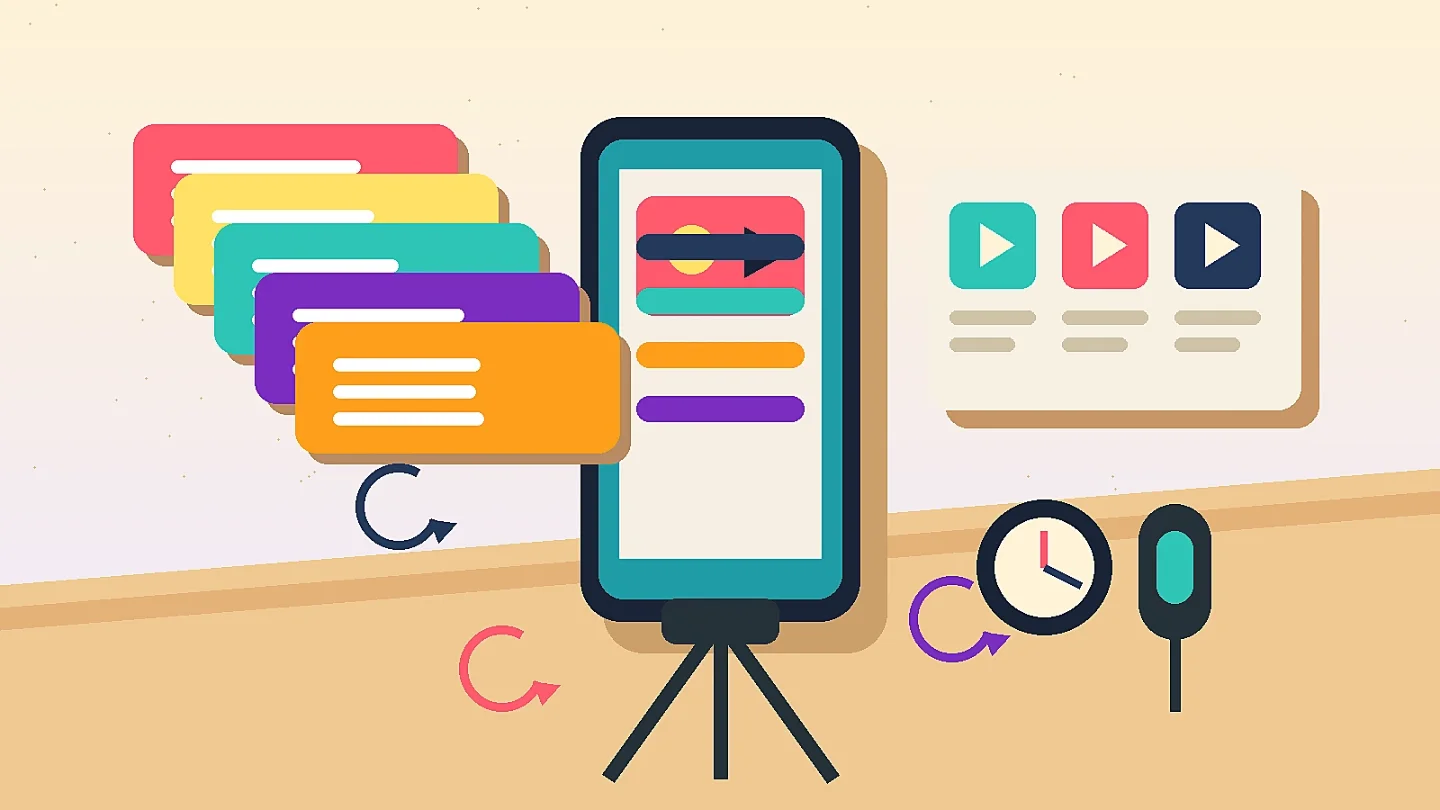
10 opening hooks for the AI-authenticity trend
A ready-to-shoot creator package for the AI-authenticity trend: 10 opening hooks, platform fit, a 60-second script outline, shot suggestions, pacing notes, and transition lines.

The strongest short-video angle right now is a contradiction: use AI to move faster, then make the first three seconds feel less polished.
TikTok's 2026 trend forecast frames the year around "Irreplaceable Instinct" and says passive consumption is giving way to active discovery, with people expecting value for the time they spend watching. The same forecast groups its signals around Reali-TEA, Curiosity Detours, and Emotional ROI, all of which point toward more human, specific, audience-aware creative. 1 Hootsuite's 2026 report lands on the same tension from the workflow side: AI tools are now table stakes, but over-edited social content is losing ground to natural pacing, visible imperfection, and a human touch. 2
So the topic to shoot this week is simple:
"I used AI to make this video faster. Then I had to add the human mess back in."
Use it for a creator-tip video, a behind-the-scenes edit, a brand social lesson, or a mini case study of your own workflow.
10 opening hooks for the same topic
| # | Hook type | Opening line to say | First shot | Best-fit platform | Why it fits |
|---|---|---|---|---|---|
| 1 | Suspense | "I almost deleted the AI version of this video. Then I added one mistake and it finally worked." | Selfie shot, finger hovering over delete, then a hard cut to the timeline. | TikTok | The line opens a loop and feels confessional, which suits TikTok's comment-led discovery. |
| 2 | Suspense | "Watch what happens when I remove the most polished part of this clip." | Split screen: polished version on the left, rougher version on the right. | Reels | Reels rewards quick visual contrast. The promise is visible before the viewer processes the words. |
| 3 | Pain-point | "If your AI scripts sound clean but nobody watches past second three, this is probably why." | Close-up of a perfect-looking script, then a bored face cutaway. | YouTube Shorts | Search-friendly phrasing catches creators looking for a practical fix to weak retention. |
| 4 | Pain-point | "Your hook is not too short. It is too smooth." | Jump cut from a sterile line to the same line said with a pause and a real reaction. | TikTok | The sentence is blunt enough to invite disagreement, stitches, or comments. |
| 5 | Counterintuitive | "The fix for AI content is not less AI. It is more you." | You on camera, AI draft blurred behind you, then you point back to yourself. | Reels | It is clean, saveable, and easy to overlay as on-screen text without crowding the frame. |
| 6 | Counterintuitive | "I stopped editing out the awkward pause, and the opening finally felt believable." | Hold a half-second pause on purpose before speaking. | TikTok | The hook demonstrates the idea instead of explaining it. |
| 7 | Result-first | "Here is the exact before-and-after that made this AI-assisted script feel human." | Timeline view with two clips labeled by color only, no readable text needed. | YouTube Shorts | It promises a clear teaching payoff and sets up a before-after structure. |
| 8 | Result-first | "In 20 seconds, I will turn a robotic script into something you can actually say on camera." | Timer starts, script card slides in, quick pen mark. | Reels | It has a clear save-and-repeat format for creators scrolling for tactics. |
| 9 | Story-driven | "Yesterday I let AI write my opener. My friend guessed it in one sentence." | Phone call or message reaction, then a cut to your face. | TikTok | A tiny social test gives the viewer a person to side with. |
| 10 | Story-driven | "I gave myself one rule: keep the AI draft, but add the part I would normally cut." | Notebook or edit screen, then a cut to the honest line spoken out loud. | Reels | The rule is simple enough to copy and works as a polished creator-process reel. |
The ready-to-shoot script structure
| Time | Shot | Spoken-word copy | Transition line | Pacing note |
|---|---|---|---|---|
| 0-3 sec | Use one hook from the table. Tight face shot or split screen. | Use the hook word for word. | "Here is the edit." | Do not warm up. Start mid-problem. |
| 3-8 sec | Show a blurred AI draft, a notes app, or a stack of script cards. | "This draft was technically fine. That was the problem." | "It had information, but no moment." | Keep the screen readable as a shape, not as text. The viewer should look at you. |
| 8-18 sec | Cut between the polished line and your real reaction to it. | "When every sentence sounds approved, the viewer has nothing to hold onto. No hesitation. No opinion. No reason to believe a person is inside it." | "So I added one human signal." | Use faster cuts here: 1-2 seconds per shot. |
| 18-34 sec | Show the fix on three cards: a confession, a specific detail, and a spoken sentence. | "My rule: keep the AI structure, then add one sentence I would actually say. A confession. A weird detail. A tiny doubt. Something that could only come from me." | "Now compare the two." | This is the teaching center. Slow down by about 10%. |
| 34-48 sec | Perform the before and after. | "Before: 'AI can improve your content workflow.' After: 'AI gave me a clean script, but I did not trust it until I put my own awkward first thought back in.'" | "That second line gives the viewer a person." | Make the before flat on purpose. Let the after sound conversational. |
| 48-60 sec | Back to face shot. Hold on the final line. | "Try this on your next script: ask AI for the clean version, then add the sentence you are a little embarrassed to say out loud. That is usually the hook." | "Save this before you polish the life out of the next one." | End with one action, not a generic follow request. |
Full spoken-word copy
"I almost deleted the AI version of this video. Then I added one mistake and it finally worked.
This draft was technically fine. That was the problem. It had information, but no moment.
When every sentence sounds approved, the viewer has nothing to hold onto. No hesitation. No opinion. No reason to believe a person is inside it.
So I kept the AI structure and added one human signal: a confession, a weird detail, or a sentence I would actually say.
Before: 'AI can improve your content workflow.'
After: 'AI gave me a clean script, but I did not trust it until I put my own awkward first thought back in.'
That second line gives the viewer a person.
Try this on your next script: ask AI for the clean version, then add the sentence you are a little embarrassed to say out loud. That is usually the hook."
Platform edits
TikTok
Keep the first take a little rough. Let the awkward pause stay in the hook. Ask a comment-friendly question at the end: "Which version would you keep?" This works best if the video feels like a quick discovery, not a tutorial slide deck.
Instagram Reels
Make the before-after visual. Use two color blocks, two takes, or two cuts of the same sentence. Keep captions tight and saveable: "AI draft" and "human pass" are enough. The reel should feel like a clean editing trick someone can copy.
YouTube Shorts
Package it as a searchable creator lesson: "Fix AI scripts that sound robotic." Put the payoff in the first line, then show the exact before-after. Shorts can carry a slightly clearer teaching structure, as long as the first three seconds still create a problem.
Shoot checklist
- Record the hook in one tight take.
- Show the AI draft as a blurred prop, not as the main character.
- Perform the bad version flat.
- Perform the human version with one real pause or self-correction.
- End with a repeatable rule the viewer can use on their next script.
The clip should not argue that AI is bad. The sharper take is that AI can give you the scaffold, but the hook starts working when the viewer can feel a person making a choice.
関連コンテンツ
- ログインするとコメントできます。