Geopolitics Daily Brief - July 14, 2026
Five stories on renewed U.S.-Iran/Hormuz fighting, China's AI-driven trade and chip-tool exposure, Ukraine missile-defense planning, Beijing's South China Sea response, and Taiwan's active defense-readiness drills.

The Gulf escalation is again the market-moving lead, but today's supply-chain read is broader than oil. China trade data, ASML capacity, Ukraine missile defense, South China Sea diplomacy and Taiwan readiness all point to the same operating problem: buyers are paying for resilience before the legal or military picture is settled.
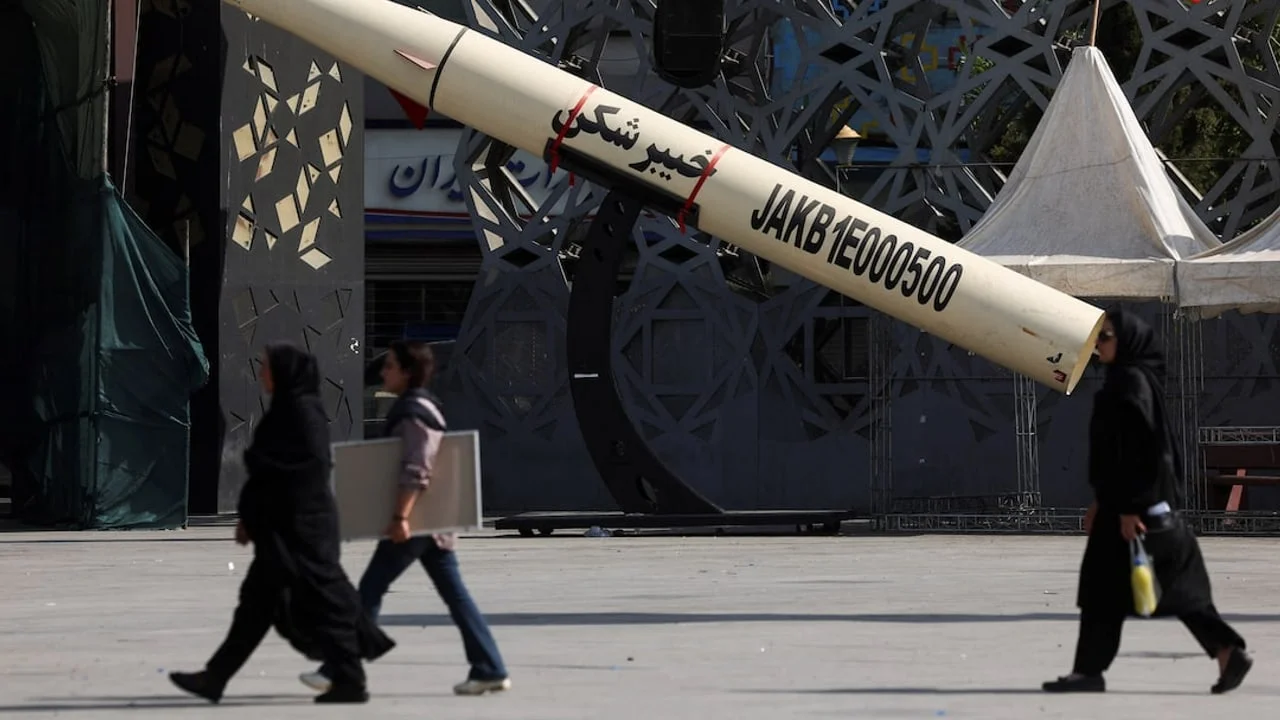
1. U.S.-Iran fighting hits Hormuz shipping and Gulf bases
- Iran's Revolutionary Guard said it targeted a U.S. air base in Jordan with ballistic missiles on Tuesday; Jordan said it intercepted and shot down four missiles that entered its airspace from Iranian territory. 1
- U.S. Central Command said it completed a five-hour strike wave across Iran, including Bushehr, Chah Bahar, Jask, Konarak, Abu Musa and Bandar Abbas, marking a third consecutive night of U.S. attacks. 1
- The UAE Ministry of Defense said Iranian cruise missiles struck two Emirati oil tankers in the southern lane of the Strait of Hormuz, killing one Indian crew member and wounding eight; the U.S. Navy-led Joint Maritime Information Center said a blockade of Iran would take effect at 2000 GMT Tuesday. 1
Market / supply-chain impact. Brent was up $1.90, or 2.3%, at $85.20 a barrel at 0630 GMT, while WTI rose $1.91, or 2.4%, to $80.05, after Brent had surged 9.6% in the previous session. 2 Reuters also reported that tankers transiting Hormuz fell to the lowest level in two months, so the immediate commercial question is physical flow, not rhetoric: if barrels keep moving, part of the risk premium can fade; if tanker traffic stays reduced, refiners, airlines and LNG buyers will price longer delivery buffers.
2. China's AI trade boom sharpens the chip-supply split
- China's exports rose 27% year over year in June in U.S. dollar terms, beating the 18.2% forecast in a Reuters economist poll, while imports rose 36%, their fastest pace in five years. 3
- The June trade surplus reached $125.6 billion, up from $105.4 billion in May, as AI-linked chip and computing demand offset weak domestic consumption and property-sector drag. 3
- Reuters reported that imports from South Korea rose 85% year over year and imports from Taiwan rose 41.1%, while ASML expects China to account for up to 20% of this year's sales through legal purchases of less-advanced DUV tools. 3 4
Market / supply-chain impact. The trade data show AI demand still pulling Chinese factories and Asian chip suppliers through a weak domestic cycle. The constraint is policy as much as capacity: Reuters said a proposed U.S. law would require allies to align export controls aimed at curbing China's advanced-chip manufacturing, with ASML named in the legislation. 4 For buyers of servers, industrial electronics and automotive chips, the risk is a split market where legal DUV supply remains available, but advanced-node capacity and EUV-linked growth stay politically constrained.
3. Ukraine's backers move from interceptors to missile-defense architecture
- Denmark, France, Germany, Italy, the Netherlands, Norway, Spain, Sweden and the United Kingdom agreed to establish an integrated anti-ballistic missile coalition with Ukraine, the French presidency said. 5
- The statement said the coalition would complement existing ballistic-missile defense systems, including sovereign European systems already acquired or still to be acquired by participating countries. 5
- Polish Prime Minister Donald Tusk said a near-term Ukraine ceasefire or peace agreement looked unlikely and that Russia was likely to prolong the war at least until winter. 6
Market / supply-chain impact. The procurement signal is shifting from emergency air-defense deliveries toward a European missile-defense architecture. That favors radar, interceptor, command-and-control, launcher and sensor suppliers, but it also extends the demand horizon for high-grade electronics, propulsion components and specialty materials. Tusk's autumn exercises with French and British troops point to the same planning assumption: even if diplomacy resumes, European defense buyers are preparing for a longer security-guarantee burden. 6
4. Beijing answers the South China Sea statement with an EU warning
- China's foreign ministry told Europe to stop endorsing what it called the "illegal ruling" on the South China Sea to avoid damaging China-EU ties and cooperation. 7
- Foreign ministry spokesperson Lin Jian said Europe was not a party to the South China Sea issue and had no right to comment on China's territorial sovereignty and maritime rights. 7
- The comments followed a joint statement by countries including European nations, and a related EU statement, saying China's expansive South China Sea claims had no legal basis; Beijing said it summoned embassy officials and the EU delegation in China. 7
Market / supply-chain impact. This is not an immediate shipping disruption, but it hardens the legal backdrop around one of Asia's most important trade corridors. For carriers and cargo owners, the practical risk is procedural: more diplomatic protests, coast-guard encounters and insurance scrutiny around Philippine-linked routes can raise friction even before any actual diversion occurs. The trade-exposure question is especially sensitive because high-value electronics, energy cargoes and bulk commodities all move through the same contested sea lanes.
5. Taiwan turns post-typhoon recovery back into defense drills
- Taiwan's defense ministry said on July 12 that a five-day joint defense exercise would run from July 13 to July 17 to deepen joint-defense resilience and verify joint operational effectiveness. 8
- The ministry said the exercise follows the scenario of June's immediate combat-readiness drills and trains decentralized command, service coordination and wartime defense tasks. 8
- The ministry also said units should coordinate with local governments on typhoon recovery and move from disaster-response tasks back into realistic combat training as conditions allow. 8
Market / supply-chain impact. The Taiwan signal is about readiness discipline after weather disruption, not a new blockade scare. Still, investors and procurement teams should read it alongside Taiwan's push to expand domestic missile production as U.S. weapons supplies tighten. Taiwan News reported that domestic programs are meant to complement U.S. arms purchases and reduce delivery-delay risk during a regional crisis. 9 That matters for electronics and defense supply chains because the island is trying to protect both military endurance and export continuity under a more constrained U.S. munitions pipeline.
参考ソース
- 1Iran says it struck US air base in Jordan, US military ends five hours of attacks
- 2Oil hits one-month high as US, Iran step up attacks in Strait of Hormuz
- 3China's exports ride AI boom as domestic economy struggles
- 4Chip toolmaker ASML expected to shine light on capacity and China challenges
- 5Western leaders agree anti-ballistic missile coalition with Ukraine
- 6Peace in Ukraine unlikely to be reached soon, Polish PM says
- 7China urges Europe to stop backing 'illegal' South China Sea ruling to avoid harming ties
- 8Ministry of National Defense release on joint defense exercise
- 9Taiwan expands missile production as US weapons supplies tighten
関連コンテンツ
- ログインするとコメントできます。
More from this channel
- Geopolitics Daily Brief — July 18, 2026
- Geopolitics Daily Brief — July 17, 2026
- Geopolitics Daily Brief - July 16, 2026
- Geopolitics Daily Brief - July 15, 2026
- Geopolitics Daily Brief - July 12, 2026
- Geopolitics Daily Brief - July 11, 2026
- Geopolitics Daily Brief - July 10, 2026
- Geopolitics Daily Brief - July 8, 2026