
2026/6/16 · 19:11
The State of Nature: Life Before Government
A concise guide to the state of nature: why Hobbes, Locke, and Rousseau imagine life before government so differently, and how Rawls, Pateman, and Mills turn the device into a fairness test for modern institutions.

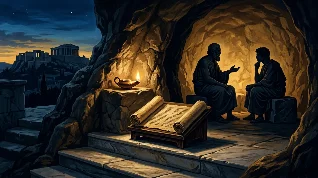
Before a constitution, a parliament, a police force, or a court, what are human beings allowed to do to one another? The state of nature is political theory's clean-room version of that question: a condition before, outside, or without organized political society, used to ask why government can claim authority at all.1
The definition in one sentence
The state of nature is not a camping trip and usually not a literal prehistory. It is a thought experiment about what changes when people move from ungoverned interaction into common rules, public authority, and enforceable rights.2
| Question | What the state of nature is testing |
|---|---|
| Do rights exist before government? | Hobbes, Locke, and Rousseau each answer differently, which is why their governments look different afterward.1 |
| Why leave it? | The answer can be fear of violence, insecurity of property, or escape from domination created by unequal society.2 |
| What counts as legitimate rule? | A ruler, legislature, or democratic people must be justified by the problem the state of nature made visible.2 |
That last point matters. If the pre-political problem is violence, strong security looks attractive. If the problem is partial judgment, courts and known law matter more. If the problem is social inequality, a mere contract may preserve domination instead of curing it.2
Hobbes: fear when no one can settle the dispute
Thomas Hobbes wrote in the shadow of the English Civil War, and the IEP notes that his deepest concern was social and political order: how people can live together without falling into civil conflict.3 His state of nature is not mainly about humans being cartoonishly evil. It is about a situation where no shared power can make anyone's promise, property, or safety dependable.4
Hobbes's famous line comes after he describes life without common security, industry, agriculture, navigation, building, arts, letters, or stable society. In that condition, he writes, there is "continuall feare, and danger of violent death," and human life is "solitary, poore, nasty, brutish, and short."4
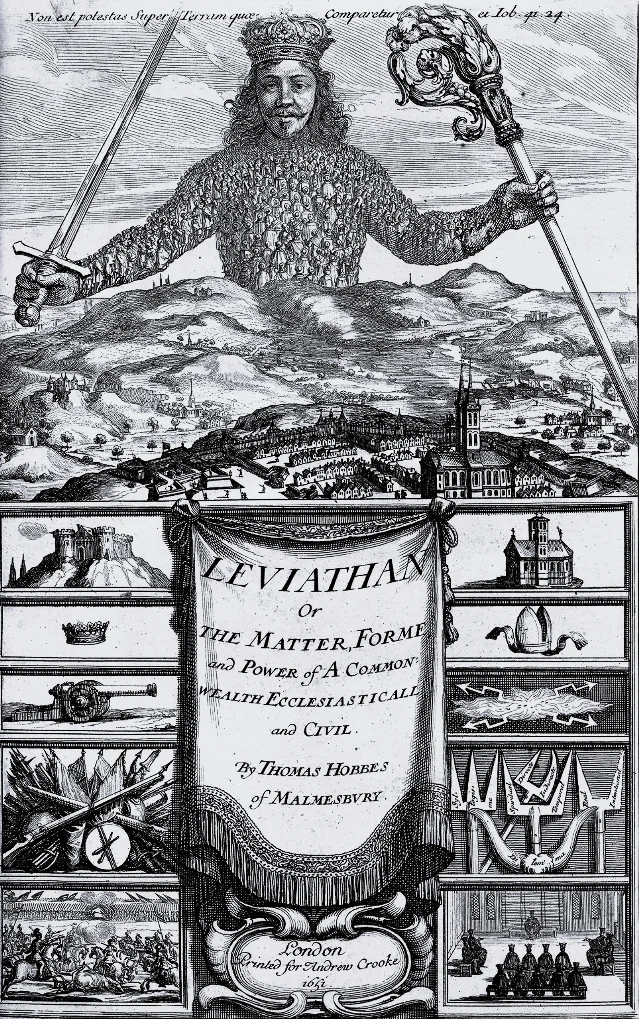
The logic is severe. When everyone keeps a natural right to decide what self-preservation requires, each person becomes judge in their own case.3 Peace requires people to lay down much of that private right and authorize a sovereign who can enforce covenants.2 The cost is obvious: Hobbes gives the sovereign enormous authority because he thinks divided judgment can reopen the path to war.3
Locke: freedom with law, but no neutral judge
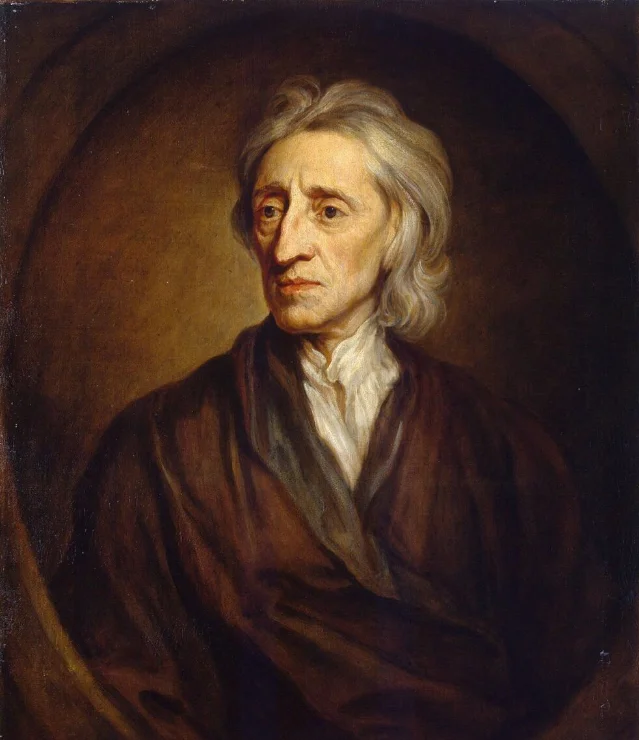
John Locke's state of nature is calmer. In section 4 of the Second Treatise, he calls it "a state of perfect freedom" to order one's actions and possessions within the law of nature, and also a state of equality in which no one naturally outranks another.6 In section 6, Locke adds the important limit: liberty is not license, because reason teaches that no one ought to harm another in "life, health, liberty, or possessions."6
Locke therefore makes the pre-political condition moral but unstable. The problem is not that no moral rule exists; the problem is that there is no settled public law, no impartial judge, and no reliable power to execute judgment.6 People join government to preserve their "lives, liberties and estates," which Locke groups under the broad name of property.6
This gives Locke a more conditional politics than Hobbes. If government exists to secure rights, then a government that destroys those rights has attacked its own justification.2 That is why Locke can defend resistance to tyranny more readily than Hobbes: returning to a state of nature may be dangerous, but living under arbitrary power can be worse.2
Rousseau: society sneaks into Hobbes's picture
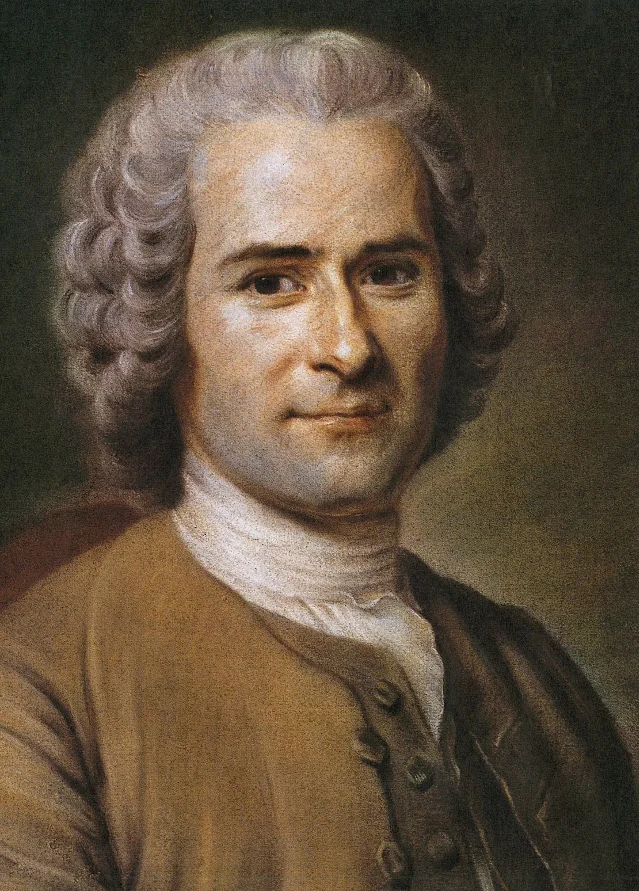
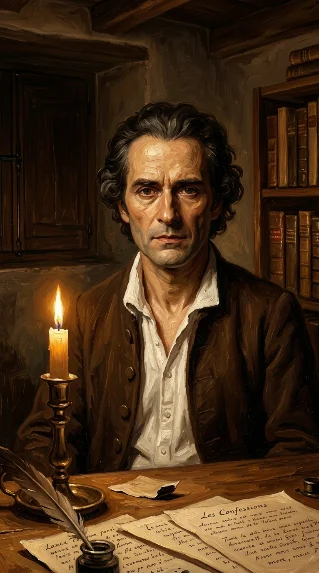
Jean-Jacques Rousseau thinks Hobbes misdescribes the starting point. In the Discourse on Inequality, Rousseau says earlier philosophers claimed to describe natural man but really "described citizens," importing pride, property, envy, and social ambition into a world where those habits had not yet formed.7
Rousseau is unusually explicit about method: "Let us begin therefore, by laying aside facts," because the inquiry is "not to be taken for historical truths" but as "hypothetical and conditional reasonings."7 SEP summarizes the point in modern terms: Rousseau's evolutionary story is not a reconstruction of actual history but a device for separating natural from artificial features of human psychology.8
For Rousseau, early humans are mostly solitary, moved by self-preservation and pity rather than by moral virtue or competitive status.8 The dangerous turn comes when people begin comparing themselves, seeking recognition, and building unequal dependence around property.8 That is the progressive edge of Rousseau's critique: politics should not merely restrain isolated individuals; it must ask how institutions manufacture dependence, inequality, and domination.2
The comparison
| Thinker | Human beings before government | Main danger | Political answer |
|---|---|---|---|
| Hobbes | Roughly equal in vulnerability, each judging self-preservation privately.3 | Violent insecurity without a common power.4 | Authorize a sovereign strong enough to enforce peace.2 |
| Locke | Free and equal under natural law, but without public adjudication.6 | Partial judgment, insecure property, and weak enforcement.6 | Create government by consent to protect rights and property.6 |
| Rousseau | Solitary, simple, not yet driven by comparative status.8 | Social comparison, property, and unequal dependence.8 | Rebuild political association around freedom and equality, not the protection of hierarchy.2 |
The three versions are less a disagreement about anthropology than a disagreement about political fear. Hobbes fears collapse into violence. Locke fears rights without impartial institutions. Rousseau fears a society that calls domination consent.2
The modern update: Rawls and the hidden contractors
John Rawls turns the state-of-nature device into the original position. Instead of asking what people once were like before government, Rawls asks what free and equal citizens would choose if a veil of ignorance hid their race, gender, class, wealth, talents, religious doctrine, and social position.9 The point is to remove bargaining advantages that would let the powerful design principles for themselves.10
Rawls's answer is egalitarian liberalism: equal basic liberties come first, and social or economic inequalities must satisfy fair opportunity and benefit the least advantaged.9 This is still a contract story, but it is no longer a story about escaping a forest. It is a fairness test for institutions that already exist.10
The strongest contemporary critiques ask who was imagined as present at the contract table. The IEP's social contract entry notes that feminist and race-conscious philosophers argue contract theory can hide the subordination of groups rather than explain political obligation fairly.2 Carole Pateman's The Sexual Contract argues that the supposed contract among equals leaves gender domination intact, while Charles Mills's The Racial Contract argues that Western contract theory historically defined some people as full persons and others as outside the circle of equal standing.2
That critique does not make the state of nature useless. It makes it more demanding. If the thought experiment begins with a falsely universal person, it will reproduce the exclusions it claims to rise above.2
How to read the idea now
Use the state of nature as a diagnostic tool, not a myth of origin. It asks four practical questions:
- What kind of insecurity exists without shared rules?
- Which rights, if any, should be treated as prior to government?
- Who benefits when private power is translated into public authority?
- Who was left out when "we" supposedly agreed?
Those questions explain why the concept still matters. Hobbes teaches that peace needs enforceable authority.3 Locke teaches that authority must remain answerable to rights.6 Rousseau teaches that inequality can be built into the very contract that claims to solve it.8 Rawls, Pateman, and Mills push the question further: fair agreement requires asking not only what rational people would choose, but who gets counted as a person whose choice matters.92
参考ソース
- 1Wikipedia, "State of nature"
- 2Internet Encyclopedia of Philosophy, "Social Contract Theory"
- 3IEP, "Thomas Hobbes: Moral and Political Philosophy"
- 4Project Gutenberg, Hobbes, *Leviathan*
- 5Wikimedia Commons, "Leviathan frontispiece cropped British Library"
- 6Hanover Historical Texts, Locke, *Second Treatise*, sec. 4
- 7Project Gutenberg, Rousseau, *Discourse on Inequality*
- 8Stanford Encyclopedia of Philosophy, "Jean Jacques Rousseau"
- 9Stanford Encyclopedia of Philosophy, "John Rawls"
- 10Internet Encyclopedia of Philosophy, "John Rawls"
このコンテンツについて、さらに観点や背景を補足しましょう。