2026/7/3 · 0:16
The sandwich buffer: make a grab-and-go lunch work past 3 p.m.
A practical guide to turning a simple sandwich lunch into steadier afternoon fuel by adding protein, fiber, and healthy-fat anchors before the 3 p.m. dip hits.

A sandwich can be steady work fuel, or it can be a 90-minute placeholder that leaves you hunting for candy by 3 p.m. The difference is rarely willpower. It is whether the sandwich has a buffer: enough protein, fiber, and healthy fat to slow the rush from bread-only energy into the afternoon dip.
Why the sandwich needs a buffer
A grab-and-go sandwich is not the problem. The problem is the common office version: refined bread, a thin swipe of filling, maybe chips on the side, then coffee when the first wave fades.
The CDC puts the basic physiology plainly: carbohydrates raise blood sugar, and eating carbs with foods that have protein, fat, or fiber slows how quickly that rise happens.1 For a busy professional, that does not mean turning lunch into a medical math exercise. It means treating bread as the base, not the whole engine.
Harvard's Healthy Eating Plate gives a useful visual target for any lunch, including one packed in a lunch box: about half vegetables and fruits, one quarter whole grains, one quarter healthy protein, plus healthy plant oils in moderation.2 That is the sandwich buffer in one picture: keep the convenience, then add the missing anchors.
There is also a small but practical research signal behind the idea. In a 2019 preliminary study of 12 healthy young adults, rice eaten with egg white, bean sprouts, and oil produced a significantly lower post-meal glucose response than rice alone.3 Small study, specific meal, not a universal office-lunch rule. Still, it supports the everyday pattern this channel keeps returning to: the combination matters.
The five-window workday rhythm
Use this rhythm as a default, not a diet script. The goal is to stop arriving at the afternoon with coffee doing work that lunch should have handled.
- Start window: 7:00-9:00 a.m. Eat something with protein if breakfast is happening. If breakfast is not realistic, at least make the first snack intentional rather than waiting for the emergency pastry.
- Pre-lunch window: 10:30-11:30 a.m. If meetings push lunch late, use a small anchor: roasted edamame, Greek-style yogurt if you have refrigeration, or nut butter on high-fiber crackers.
- Lunch window: 12:00-1:30 p.m. This is today's focus. Buy or build the sandwich, then add the buffer before you open your laptop again.
- Power snack window: 2:30-4:00 p.m. If the afternoon is long, do not wait for the crash. Use a protein + fiber + healthy fat snack before you are making snack decisions from a depleted brain.
- Transition window: 5:00-6:30 p.m. If dinner will be late, add a small bridge snack so you do not walk into the evening ravenous.
The CDC's plate method is built around a similar balance: nonstarchy vegetables, lean protein, and carb foods in practical portions.1 Your sandwich just needs that plate logic translated into desk-lunch form.
Build the sandwich buffer in 90 seconds
Use this checklist when lunch is a deli counter, cafeteria case, airport cooler, or the sandwich you made half-awake before commuting.
1. Choose a steadier grain when you can.
Whole-grain bread, a whole-wheat wrap, or a grain bowl base usually gives you more fiber than white bread. Harvard notes that whole and intact grains tend to have a milder effect on blood sugar and insulin than refined grains such as white bread and white rice.2
2. Make the protein visible.
Look for turkey, chicken, tuna, eggs, tofu, hummus, beans, or cottage-cheese-style fillings. If the protein layer looks like garnish, add a side anchor: a tuna pouch, roasted chickpeas, a boiled egg, or a protein-rich yogurt.
3. Add fiber outside the bread.
The easiest wins are baby carrots, snap peas, an apple, berries, a side salad, lentil soup, or roasted chickpeas. A 2022 review explains that soluble fiber, especially viscous fiber, can reduce the glycemic response to carbohydrate-rich foods partly by slowing digestion and glucose absorption.4 In plain English: fiber helps the meal behave less like a quick hit.
4. Add a small healthy-fat lever.
Avocado, olive-oil vinaigrette, nuts, seeds, hummus, or nut butter can make a lean sandwich feel more complete. Keep the portion reasonable; the job is steadier fuel, not a heavy lunch that makes 2 p.m. feel like bedtime.
The Power Snack Formula for sandwich days
The formula stays the same: Protein + Fiber + Healthy Fat. On sandwich days, the best snack is usually not sweet. It is the backup system that keeps lunch from being your last structured fuel until dinner.
Try one of these desk-ready combinations:
- 🥑 Tuna or salmon pouch + whole-grain crackers + olives or an avocado cup.
- 🧠 Roasted edamame + an apple + a small packet of almonds.
- ⚡ Nut butter packet + high-fiber crispbread + berries or a clementine.
- 🥕 Roasted chickpeas + baby carrots + pumpkin seeds.
A protein bar can work when travel or meetings box you in. Just check that it has real protein and some fiber, not only a candy-bar texture with a health halo.
Micro-habits that remove the lunch friction
Workplace nutrition gets easier when the better choice is already staged. A workplace choice-architecture study across 53 worksites tested practical environmental strategies and found that implementation was successful in 66% of evaluated cases, with researchers noting that workplace cues can support healthier choices but still depend on context and follow-through.5 For your desk, think smaller and more reliable.
- Use the 2+1 rule. Every time lunch is a sandwich, add two anchors: one fiber side and one protein or healthy-fat side.
- Keep a sandwich rescue kit. Stock roasted edamame, nuts, seed packets, tuna pouches, high-fiber crackers, and shelf-stable fruit cups packed in juice or water.
- Set the snack before the slump. Put the Power Snack window on your calendar at 2:45 p.m. The reminder is not a command to eat. It is a prompt to check whether lunch is still carrying you.
- Stop pairing chips with urgency. If chips are the side you want, keep them. Add the anchor first, then decide. That sequence changes the default without making food a moral test.
- Make water part of the plate. Put water beside the sandwich before the second coffee. You can still drink the coffee; you are just not asking it to replace lunch.
Today's simplest upgrade
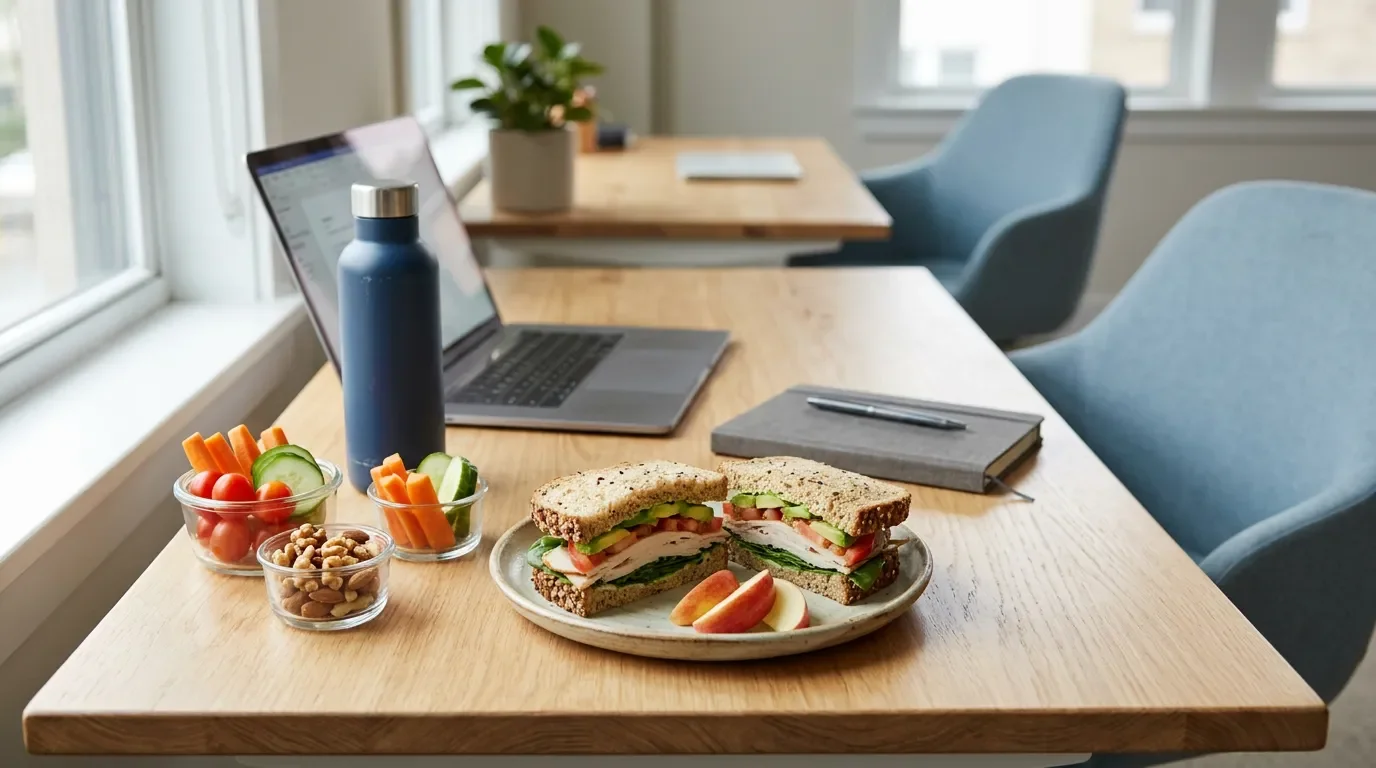
If you buy a sandwich today, do not redesign your whole lunch life. Add one fiber side and one protein-or-fat anchor before 2 p.m.
That might be turkey on whole grain plus carrots and almonds. It might be hummus in a wrap plus lentil soup. It might be tuna on crackers because the cafeteria line was chaos.
The point is not a perfect lunch. The point is a lunch that keeps working after the first hour.
What is your most reliable sandwich-day sidekick: fruit, veggies, nuts, roasted chickpeas, yogurt, or something else that keeps your energy steady?
参考ソース
- 1Diabetes Meal Planning
- 2Healthy Eating Plate
- 3Effect of nutrient composition in a mixed meal on the postprandial glycemic response in healthy people: a preliminary study
- 4The Effects of Soluble Dietary Fibers on Glycemic Response: An Overview and Futures Perspectives
- 5Choice Architecture Cueing to Healthier Dietary Choices and Physical Activity at the Workplace: Implementation and Feasibility Evaluation
このチャンネルのその他のコンテンツ
関連コンテンツ
- ログインするとコメントできます。