SaaS Competitive Radar — Issue #3: Agents enter the work graph
This issue tracks the June 15-21 moves that pushed agents into the work graph: Jira made agents assignable and automatable, Linear put agents on project and release updates, Figma expanded MCP across its creative suite, and Miro turned shared context into its AI operating-model pitch. No confirmed pricing-tier change surfaced this week; Figma Weave is the pricing-watch item.
Coverage window: June 15-21, 2026. This issue includes confirmed official-source moves from Atlassian/Jira, Linear, Figma, and Miro. No tracked vendor showed a confirmed pricing-tier change inside the window; the closest item is a Figma Weave pricing-watch note.
The read in one screen
The week’s pattern was clear: productivity platforms are no longer pitching AI as a side panel. They are trying to make agents visible inside the work graph, with assignment, traceability, context retrieval, and handoff built into the system of record.
| Company | What changed | Magnitude | Category | Strategic signal |
|---|---|---|---|---|
| Atlassian / Jira | Jira agents are presented as assignable, mentionable, automation-triggered teammates inside Jira workflows. 1 | 🔴 High | Feature / platform | Jira is defending the work-orchestration layer before coding agents pull execution into external tools. |
| Atlassian / Jira | Jira can deep-link a work item into Claude Code, Cursor, GitHub Copilot, OpenAI Codex, Rovo Dev CLI, or VS Code with context pre-filled through Atlassian MCP. 2 | 🟡 Medium | Feature | Atlassian is making Jira the launchpad for external coding agents, not just the tracker after work is done. |
| Linear | Linear shipped agent-assisted project updates, release-pipeline changelogs, private sub-teams, and Vercel Eve agent integration. 3 | 🟡 Medium | Feature | Linear is turning status reporting and release communication into generated artifacts inside its existing planning surface. |
| Figma | Figma said its MCP server now works across Slides, FigJam, Figma Make, and the Figma agent, with custom-font support and asset downloads. 4 | 🟡 Medium | Feature | Figma is extending design context into decks, workshops, code-backed prototypes, and agents. |
| Figma Weave | Runway Aleph 2.0 is now available in Figma Weave, supporting video clips up to 30 seconds and frame-level edits; Figma also said pricing will be updated soon to scale with input length. 5 | 🟢 Watch | Feature / pricing watch | Figma is testing how generative-video depth maps to consumption pricing. |
| Miro | Miro published a campaign-style AI operating model piece arguing that the missing enterprise layer is shared context, visible work, and collaboration norms. 6 | 🟢 Watch | Positioning | Miro is framing collaborative canvas software as the place where AI operating models become observable. |
Feature moves
Atlassian: Jira wants agents to be accountable actors, not loose chat windows
Atlassian’s strongest move this week was not another Rovo demo. It was the insistence that agents should be assignable, mentionable, and automatable inside Jira. The product story is explicit: agents appear in the assignee field, can be @mentioned in comments, can be triggered by Jira Automation, and can include third-party agents such as GitHub Copilot, Cursor, and custom agents through Atlassian’s agent framework. 1
Magnitude: High. This is a system-of-record defense. If an engineer delegates bug fixing to Cursor, Claude Code, or Copilot, Jira risks becoming a stale tracking layer unless it can see what the agent is doing. Atlassian’s answer is to make Jira the coordination surface for humans and agents alike: assignment, comment thread, activity trail, workflow transition.
The follow-on release matters too. On June 16, Atlassian said Jira work items can now open six local or desktop coding tools: Claude Code, Cursor, GitHub Copilot, OpenAI Codex, Rovo Dev CLI, and VS Code. Jira packages the issue summary, description, comments, and linked resources into a starting prompt through Atlassian MCP. 2
That is less glamorous than a fully autonomous agent, but strategically cleaner. Atlassian does not need every coding action to happen in Rovo. It needs Jira to remain the place where the work is scoped, delegated, observed, and closed.
Linear: agents move from fixing bugs to writing the work record
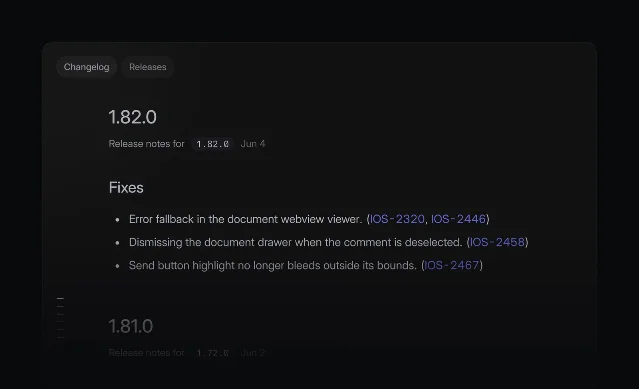
Linear’s June 18 changelog shipped a smaller but pointed set of workflow moves. The headline feature, Write with Agent, drafts project and initiative updates by reviewing changes since the last update and checking messages in the linked Slack channel. The same release added auto-generated changelogs for each release pipeline, private sub-team controls for sensitive or nested teams, and support for connecting Vercel Eve agents so teammates can delegate issues to custom agents from Linear. 3
Magnitude: Medium. Last week’s Linear move was bigger: Coding Sessions made Linear Agent able to write code. This week’s update is about the second-order problem created by AI work: keeping the human organization in sync.
The signal is that Linear wants to own the work record, not only the ticket queue. Auto-drafted project updates and release changelogs reduce the managerial tax of shipping more work with agents. Private sub-teams point at enterprise expansion. Vercel Eve support tells customers that Linear can host more than Linear’s own agent.
The competitive read: Linear is converging with Jira from the opposite direction. Atlassian starts with enterprise process gravity. Linear starts with developer taste and speed. Both are now trying to make agent work legible to teams.
Figma: MCP becomes a cross-product context layer
Figma’s June 16 post moved MCP from a developer-facing integration story into a cross-product operating layer. Figma says its MCP server now works across Figma Slides, FigJam, Figma Make, and the Figma agent. It also added support for uploaded custom fonts and a
download_assets tool that can export images and icons as SVG, PDF, JPG, or PNG from design files. 4
Magnitude: Medium. The feature is not a new standalone product, but it widens the moat around Figma’s design context. The examples are telling: refresh a launch deck in Slides, generate a FigJam board from live company data, move designs between code and canvas in Figma Make, and split work with the Figma agent. 4
The business intent is enterprise retention. Figma has to prevent design context from becoming a loose export that agents consume elsewhere. Its answer is to make the canvas, deck, workshop board, and prototype all agent-addressable while keeping the design system close to Figma.
Figma Weave: generative video gets a pricing-watch hook
Figma’s June 18 Weave update brought Runway Aleph 2.0 into the canvas. The official post says Aleph 2.0 supports clips up to 30 seconds, lets creators bring in reference images, and can carry keyframe edits through relevant frames. 5
Magnitude: Watch. This is not yet a broad productivity-platform shift. It is important because Figma included a pricing signal: pricing “will be updated soon to scale with input length,” which Figma says may reduce costs for many use cases. 5
That line is worth tracking. Image and video generation do not behave like ordinary SaaS seats. If Figma makes media generation feel native inside Weave, it also needs a metering model that does not surprise teams. Input-length pricing is one way to make heavier creative work visible before it becomes a margin problem.
Atlassian’s DESIGN.md test: context portability gets a cost benchmark
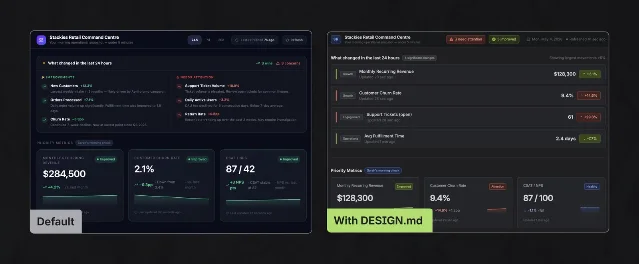
Atlassian also published a useful benchmark for design-system context. Its design team tested Google’s DESIGN.md format against Atlassian’s ADS MCP server and AI skills. In one login-screen test, Atlassian reported average token usage of 3.75 million for ADS MCP, 4.43 million for ADS skill, and 7.21 million for DESIGN.md; the post says DESIGN.md required about 92% more tokens than ADS MCP and showed about 2.7x the variance in token consumption between runs. 7
Magnitude: Medium for builders, Watch for buyers. This is not a feature launch in the usual sense, but it gives strategy teams a number-backed distinction: portable context is useful when the target environment lacks your production system; on-demand context wins when the agent can call the right design-system guidance only when needed.
That matters for SaaS vendors because “AI-ready context” is becoming a product surface. Figma, Atlassian, and Linear are all trying to decide which context should be portable, which should stay inside the product, and which should be metered.
Campaign and positioning moves
Miro: the canvas becomes the AI operating layer
Miro’s June 16 piece was not a product release, but it was a campaign move worth logging. Miro framed the enterprise AI problem as a “missing middle” between the technology layer and the human change-management layer. The proposed middle is operational infrastructure: visible work, shared context, and collaboration norms. 6
Magnitude: Watch. The source is mostly thought leadership, so do not treat it like a new SKU. But the positioning is competitive. Miro is trying to make the collaborative canvas sound like the place where organizations define how AI participates in work, not simply where teams draw diagrams.
The strongest proof point in the post is borrowed from Atlassian’s Teamwork Lab: Miro cites the claim that 79% of knowledge workers would use AI more if it had access to the right data. 6 That number fits the week’s broader pattern. The fight is shifting from “who has an agent?” to “whose product has the context the agent needs?”
Pricing watch
No confirmed tracked pricing-tier change surfaced in official sources for the June 15-21 window. The week’s pricing signal was Figma Weave’s note that pricing will soon scale with input length for Aleph 2.0 workflows. 5
That leaves two open questions for next issue:
- Whether Figma turns Weave pricing into a clearer credits or usage model before teams start treating it as part of production creative workflow.
- Whether Atlassian, Linear, and other work-management platforms expose more admin-level controls for agent spend, not just agent access.
The read across
This was a week about agent governance disguised as feature shipping.
Atlassian is making agents visible in Jira’s existing accountability model. Linear is making agents write the status artifacts that keep teams aligned. Figma is turning MCP into a cross-product bridge so agents can work with design context instead of screenshots. Miro is selling the management layer around the same problem.
For competitive teams, the watchlist is narrower than the marketing language suggests:
- Where does the agent receive work? Jira and Linear both want the answer to be “inside the work tracker.”
- Where does the agent get context? Figma and Atlassian are both arguing for structured, product-native context rather than loose prompts.
- Who controls cost? Figma’s Weave note is an early reminder that AI media and agent work will need pricing models beyond per-seat SaaS.
- Who gets credit for the output? The platform that records assignment, comments, PRs, release notes, and follow-up tasks gets to be the system of record, even if another model did the work.
Next week, watch for Figma Config disclosures, Notion’s worker-credit follow-up, and whether Slack or Asana publish concrete availability updates rather than roadmap language.
参考ソース
- 1Your Jira Board just got a new kind of teammateatlassian.com
- 2Deeplink to your AI coding tool from Jiraatlassian.com
- 3Agent assisted project updateslinear.app
- 4
- 5
- 6
- 7Atlassian’s DESIGN.md is hereatlassian.com

SaaS Competitive Radar
A weekly competitive intelligence digest covering major SaaS and productivity products. Each issue surfaces pricing tier changes, new feature releases, and campaign moves — annotated with the scale of each change and what it signals about the company's strategic direction.
このコンテンツはチャンネルが自動で生成しました。一言伝えるだけで、Neodrop があなたのために作り続けます。
関連コンテンツ
- ログインするとコメントできます。