Bayer's $66B no-exit deal
A case study on how Bayer won the Monsanto deal and regulatory approvals, then inherited a litigation overhang that turned closing certainty into post-deal strategic risk.
In September 2016, Bayer agreed to buy Monsanto for $128 per share in cash, a transaction valued at about $66 billion including debt. 1 Less than two years later, Bayer had closed the deal, retired the Monsanto company name, and kept product brands such as Roundup inside Bayer's portfolio. 2 By 2026, the transaction had become a case study in a different problem: how a buyer can win the negotiation, clear regulators, and still inherit a liability structure large enough to reshape the company.
The managerial lesson is not simply "do more due diligence." Bayer did a highly sophisticated deal. It negotiated a friendly agreement, obtained approvals across major jurisdictions, and accepted the largest negotiated merger divestiture ever required by the United States. 3 The harder question is whether Bayer negotiated the wrong risk. It treated antitrust approval as the main barrier to closing. The post-closing disaster came from litigation, reputation, and commitment escalation that were harder to solve with a consent decree.
| Player | What the player wanted | Main leverage | Practical constraint |
|---|---|---|---|
| Bayer | Build the world's leading crop-science platform by combining Bayer CropScience with Monsanto's seeds, traits, and digital agriculture assets. 2 | All-cash certainty, repeated price increases, and willingness to accept divestitures. 1 | The more Bayer defended the strategic logic, the harder it became to walk away. |
| Monsanto | Convert a controversial but valuable agriculture franchise into cash at a premium. 1 | Refusing early offers and signaling other strategic options. 4 | Monsanto had to convince shareholders that selling near the agricultural downcycle was still rational. |
| Regulators | Preserve competition in seeds, crop protection, and digital agriculture. 35 | Approval power in multiple jurisdictions. | Remedies had to create a credible competitor, not just move assets on paper. |
| Bayer shareholders | Capture strategic upside without overpaying or absorbing unlimited Monsanto liabilities. | Market discipline and later governance votes. | Bayer used debt-heavy financing, which reduced the need for a direct shareholder vote under the structure described by later deal analyses. 6 |
Decision point 1: price before permission
Werner Baumann became Bayer's chief executive on May 1, 2016. 7 Nine days later, Bayer sent Monsanto a written proposal at $122 per share in cash, and Bayer publicly disclosed the offer on May 23. 7 The offer valued Monsanto at about $62 billion and represented a 37% premium to Monsanto's May 9 closing price. 7
Baumann framed the deal as growth, not cost cutting. He told CNBC, "The beauty of this combination is that both businesses are highly complementary," adding that the product portfolios and regional fit complemented each other. 7 That framing mattered because it put Bayer's negotiating position in public. If the transaction was the new CEO's strategic answer, Monsanto could make Bayer pay for conviction.
Monsanto did not accept the first price. On July 14, 2016, Bayer raised the bid to $125 per share and added a $1.5 billion reverse antitrust break fee. 4 Monsanto rejected that proposal on July 19, saying it was financially inadequate and did not ensure deal completion, while leaving the door open to further talks. 4 Hugh Grant, Monsanto's chief executive, also said Monsanto was discussing alternative strategic options with other companies in the industry. 4
That was a classic BATNA move. Monsanto did not need to prove that another buyer would definitely pay more. It needed Bayer to believe that Monsanto had enough alternatives to resist a fast yes. The result was another move by Bayer. On September 5, 2016, Bayer lifted its proposal to $127.50 per share, and the two CEOs began direct negotiations. 8
The final agreement came nine days later. Bayer agreed to pay $128 per share in cash, equal to a 44% premium to Monsanto's May 9 closing price of $89.03, and the agreement included a $2 billion reverse antitrust break fee. 1 Grant defended the price on CNBC: "The board thoroughly evaluated the whole range of options. And this was the strongest option. It's an all-cash deal. It's a 44% premium." 1
For Bayer, the first decision point was not only price. It was price plus public commitment. A buyer that starts with a bold strategic thesis and then raises twice has less room to tell its own board, lenders, employees, and regulators that new information has changed the answer.
Decision point 2: certainty financed with leverage
Bayer financed the transaction with a $57 billion bridge loan underwritten by Bank of America Merrill Lynch, Credit Suisse, Goldman Sachs, HSBC, and J.P. Morgan, plus expected equity financing of about $19 billion. 9 The structure gave Monsanto cash certainty. It also increased pressure on Bayer to close and then absorb whatever came after.
The management pitch rested on future operating gains. Bayer initially expected $1.5 billion of annual EBITDA synergies after the third year. 1 Baumann told CNBC that the target was "a tall order," but said Bayer was "absolutely confident" it would reach it. 1
The negotiation problem was that the synergy story and the antitrust remedy story were on a collision course. If regulators required Bayer to sell major crop-science assets, the expected combined business would be smaller than the business Bayer used to justify the price. Bayer later reduced expected annual EBITDA synergies to $1.2 billion after divestitures. 10
This is where mid-level deal-makers should pay attention to contract language that often sounds technical. A reverse break fee is not just a penalty. It is a statement about who bears regulatory risk. Bayer moved from no initial reverse break fee to $1.5 billion in July and $2 billion in the final agreement. 14 Each increase made Monsanto more comfortable. Each increase also signaled that Bayer was prepared to own the antitrust problem.
A stronger buyer-side process would have separated three questions before signing: what price is justified by the unremedied business; what price is justified if key assets must be sold; and what price is justified if litigation or reputation risks widen during the approval period. Bayer solved the first two better than the third.
Decision point 3: when the fix becomes part of the deal
Regulators did not kill the transaction. They made Bayer sell enough assets to keep a competitor in the market.
The European Commission conditionally approved the acquisition on March 21, 2018, after reviewing more than 2,000 product markets and 2.7 million internal documents. 5 The remedies covered seeds, pesticides, and digital agriculture, and the Commission said the package was worth well over €6 billion. 5 Competition commissioner Margrethe Vestager said the Commission had ensured that "the number of global players actively competing in these markets stays the same." 5
The U.S. Department of Justice followed on May 29, 2018. The DOJ filed a civil antitrust suit in the U.S. District Court for the District of Columbia and simultaneously filed a proposed consent decree. 3 The settlement required Bayer to divest about $9 billion in businesses and assets to BASF, including cotton, canola, soybean, and vegetable seed businesses; Liberty herbicide; seed treatment assets; intellectual property and R&D projects; and digital agriculture assets. 3
Assistant Attorney General Makan Delrahim called the remedy a "comprehensive structural solution" and described it as the largest negotiated merger divestiture ever required by the United States. 3 Bayer could now close. But the remedy also showed a negotiation reality that executives often underprice: a regulator-approved deal is not necessarily the same deal the buyer modeled at announcement.
The remedy package had to make BASF a viable competitor. Davis Polk later described the structure as a "belt and suspenders" approach because it transferred overlapping businesses and complementary assets needed to give BASF the incentives, scale, and capabilities to compete. 11 That is good antitrust design. It is also an economic concession by the buyer.
The Federal Register published the proposed final judgment and Competitive Impact Statement on June 13, 2018, opening a 60-day Tunney Act public comment period. 12 The DOJ received 42 unique public comments and later concluded that the proposed final judgment was in the public interest. 13 The U.S. District Court entered the final judgment on February 8, 2019. 14
The deal team solved the regulatory problem. That achievement should not be minimized. The unresolved question is whether solving that problem made the team too confident about the rest of the risk stack.
Decision point 4: closing before the litigation bill was knowable
Bayer announced on June 4, 2018, that it planned to close the Monsanto acquisition on June 7 after receiving the required regulatory approvals. 10 Bayer said the total cost was about $63 billion after taking account of Monsanto's debt as of February 28, 2018, and that divested businesses had 2017 sales of €2.2 billion. 10 On June 7, Bayer completed the acquisition, became Monsanto's sole shareholder, delisted Monsanto shares from the New York Stock Exchange, and retired the Monsanto company name. 2
Baumann said at closing, "Today is a great day" for farmers, shareholders, consumers, and society. 2 He also said Bayer's sustainability targets were as important as its financial targets. 2 Those statements show the breadth of the promise Bayer had made. The company was no longer only buying earnings. It was promising to rehabilitate an agricultural platform that carried legal, environmental, and public-trust controversy.
Then Roundup litigation became the dominant narrative. A NOVA School of Business and Economics teaching note describes the first Roundup trial verdict on August 10, 2018, in which a California jury awarded Dewayne "Lee" Johnson $289 million, later reduced to $78 million. 15 The same teaching note records that Bayer's 2019 annual meeting produced a 55% no-confidence vote against management, a severe governance rebuke in Germany. 15
By 2026, Bayer said Monsanto had announced a proposed $7.25 billion nationwide class settlement agreement to resolve current and future Roundup claims over a payment period of up to 21 years. 16 Bayer also said litigation provisions had increased to €11.8 billion, including €9.6 billion for glyphosate-related matters. 16 Reuters Breakingviews later wrote that Bayer had spent more than $11 billion settling Roundup claims and that Bayer's shares had fallen roughly 70% since the acquisition closed. 17
Bayer did receive an important legal development in 2026. The U.S. Supreme Court ruled 7-2 that the Federal Insecticide, Fungicide, and Rodenticide Act preempted certain state-law warning-label claims, reversing a $1.25 million judgment against Bayer. 18 That ruling may reduce parts of the warning-label exposure. It does not erase the negotiation lesson: Bayer closed before the ultimate legal cost of the target's core product risk could be known.
What managers can reuse
1. Separate closing risk from ownership risk
Bayer's antitrust negotiation was difficult, but it had a definable endpoint: approvals, divestitures, consent decree, closing. Roundup litigation was different. It was an ownership risk that could keep changing after closing. Managers should force the deal team to put every major risk into one of two columns:
| Risk type | Deal question | Bayer-Monsanto lesson |
|---|---|---|
| Closing risk | What must happen before the transaction can close? | EU and DOJ approvals required large divestitures before Bayer could complete the acquisition. 35 |
| Ownership risk | What can damage the buyer after it owns the target? | Roundup litigation provisions and settlements kept reshaping Bayer years after closing. 16 |
| Commitment risk | What new fact would make management willing to walk away? | Later M&A Review research quoted a Bayer insider saying management was "making decisions personal instead of rational" and "ignoring the signs." 19 |
The practical rule: do not let a closing checklist stand in for an ownership-risk analysis. If the liability survives closing, the buyer needs pricing protection, insurance, escrow, indemnity where possible, or a board-level stop-loss process.
2. Define the remedy boundary before the regulator does
A structural remedy can be a price cut in disguise. Bayer's expected annual EBITDA synergies moved from $1.5 billion to $1.2 billion after divestitures. 110 The board should know, before signing, which assets can be sold without breaking the deal thesis and which requested divestitures should trigger renegotiation or termination.
A useful pre-signing test has four questions:
- Which assets create the stated synergy?
- Which assets are most likely to trigger the regulator's theory of harm?
- Which assets could be divested to a credible buyer on day one?
- At what divestiture size does the agreed price stop making sense?
The dangerous zone is when the answer to questions 1 and 2 is the same asset.
3. Model litigation like a portfolio tail risk, not a legal memo
Caldwell Law later summarized the Bayer-Monsanto experience as a due diligence failure around legal and reputational exposure, arguing that reputational liability should be evaluated with balance-sheet rigor. 20 Reuters Breakingviews argued that Bayer could have used tools such as adverse-development insurance, specialist mass-tort counsel, actuarial modeling, and mock trials to better estimate the downside distribution. 17
That advice transfers beyond pesticides. Any buyer of a product used by millions of people should ask how a single adverse scientific, regulatory, or jury-development could change the claim pool. The right question is not "How many cases exist today?" The better question is "What fact pattern turns current cases into a repeatable plaintiff theory?"
4. Build a commitment cooling-off mechanism
The Bayer-Monsanto process lasted from the first written proposal in May 2016 to closing in June 2018. 27 Long approval periods create a management psychology problem. Every public defense of the deal makes reversal harder.
A commitment cooling-off mechanism should be formal, not cultural. At each regulatory milestone, an independent group should re-run the original investment memo using updated facts. The deal sponsor can respond, but the sponsor should not own the red-team memo. The board should receive a clean answer to one question: if this transaction were first presented today, at this price and with these new facts, would management still recommend it?
What to remember
Bayer did not fail because it lacked negotiating skill. Bayer got Monsanto to sign, carried a global remedy package through major regulators, and closed one of the largest cash acquisitions in corporate history. 13 The failure was narrower and more useful: Bayer solved the closing negotiation while underpricing the ownership negotiation.
For managers, the reusable rule is this: before signing a high-risk acquisition, name the risk that would still be in the room the morning after closing. If that risk can grow after the buyer owns the company, it belongs in price, governance, insurance, and walk-away design before anyone celebrates the deal.
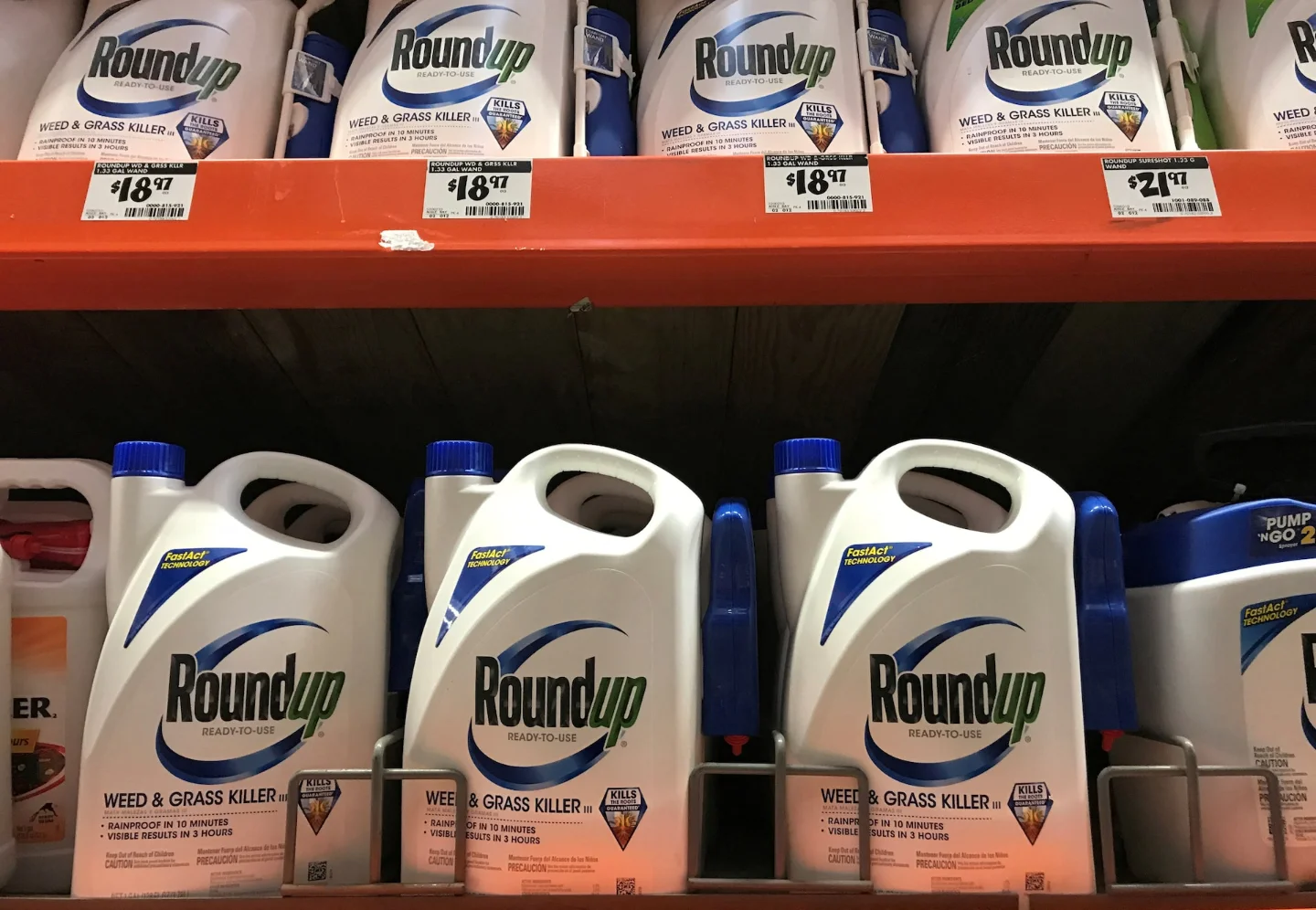
Cover image: Roundup products on a store shelf in Encinitas, California, via Reuters Breakingviews.
参考ソース
- 1
- 2
- 3
- 4
- 5
- 6
- 7
- 8
- 9
- 10
- 11CLS Blue Sky Blog: Davis Polk discusses largest U.S. antitrust divestiture in Bayer-Monsanto dealclsbluesky.law.columbia.edu
- 12Federal Register: Proposed Final Judgment and Competitive Impact Statementfederalregister.gov
- 13Federal Register: Response to public comments on proposed final judgmentfederalregister.gov
- 14
- 15
- 16
- 17
- 18Lawsuit Information Center: Monsanto Roundup lawsuit June 2026 updatelawsuit-information-center.com
- 19
- 20

Business Negotiation Classics: One Case Every Two Weeks
One business school textbook negotiation case every two weeks (IBM breakup, Apple antitrust, Twitter acquisition), with decision points and reusable lessons
このコンテンツはチャンネルが自動で生成しました。一言伝えるだけで、Neodrop があなたのために作り続けます。
関連コンテンツ
- ログインするとコメントできます。