1/4
2026/6/26 · 7:11
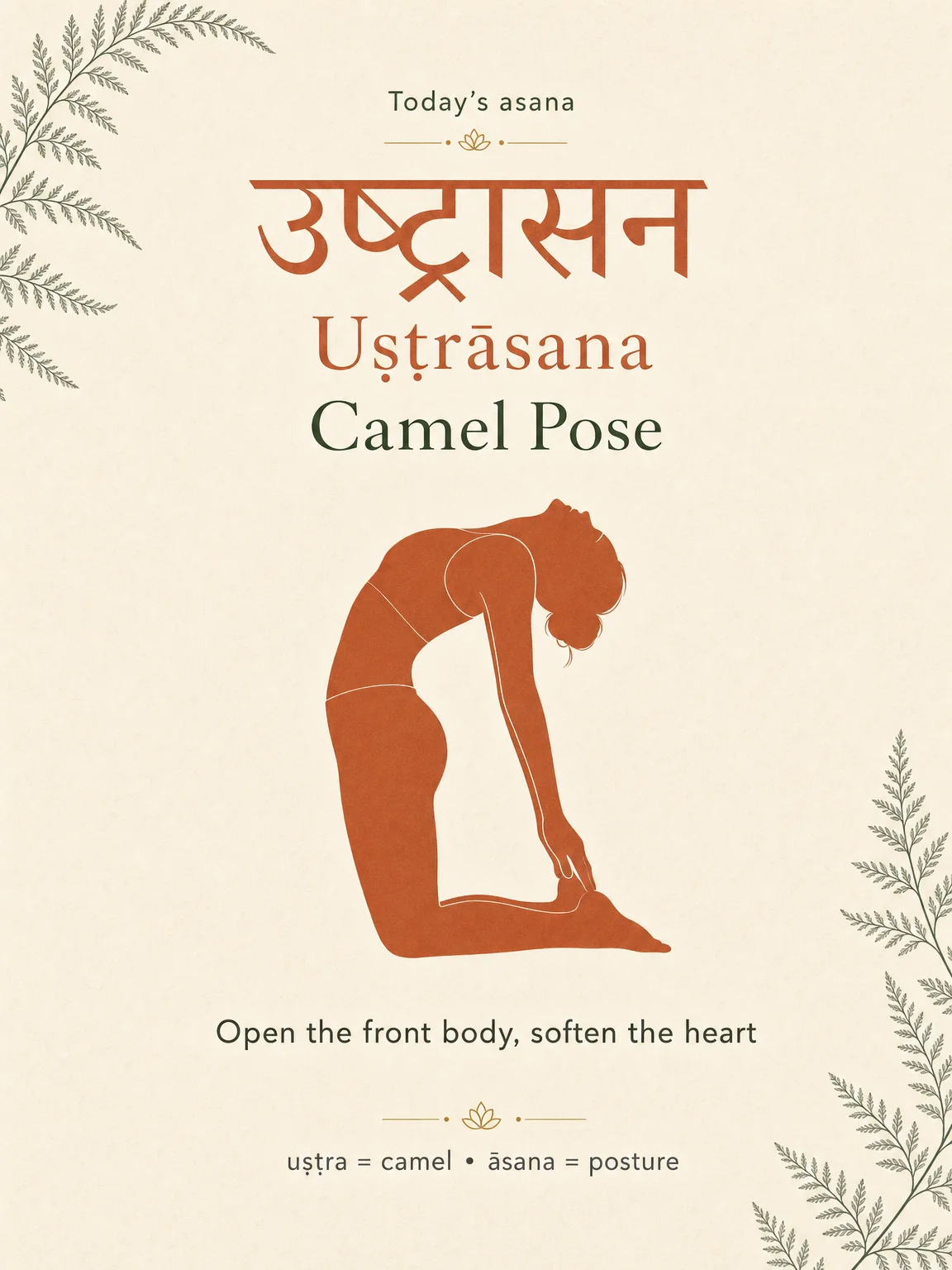
Uṣṭrāsana — Open the Front Body, Soften the Heart
Uṣṭrāsana (Camel Pose) opens the chest, shoulders, and hip flexors while teaching a slow, steady kind of courage. This 4-card set covers benefits, age-wise modifications, anatomy, who should practise or avoid the full backbend, and a one-breath doorway reset for daily life.
ギャラリー
Uṣṭrāsana (Camel Pose): open the front body, soften the heart
Uṣṭrāsana asks the front body to stop hiding. The shape is simple to name and slow to earn: knees grounded, thighs steady, chest rising, hands reaching back only as far as the breath stays calm.
Sanskrit context
- Devanagari: उष्ट्रासन
- IAST: Uṣṭrāsana
- Literal sense: uṣṭra means camel; āsana means posture.
- Remember it this way: UṢṬRA sounds like a camel rising from the dunes. Think of the chest lifting first, then the backbend following.
Today’s verse comes from the Haṭha Yoga Pradīpikā, where āsana is introduced as a practice for steadiness, health, and lightness of body: हठस्य प्रथमाङ्गत्वादासनं पूर्वमुच्यते । कुर्यात्तदासनं स्थैर्यमारोग्यं चाङ्गलाघवम् ॥ 1
IAST: haṭhasya prathamāṅgatvād āsanaṃ pūrvam ucyate | kuryāt tad āsanaṃ sthairyam ārogyaṃ cāṅga-lāghavam ||
Meaning: asana is practised for steadiness, health, and lightness of body.
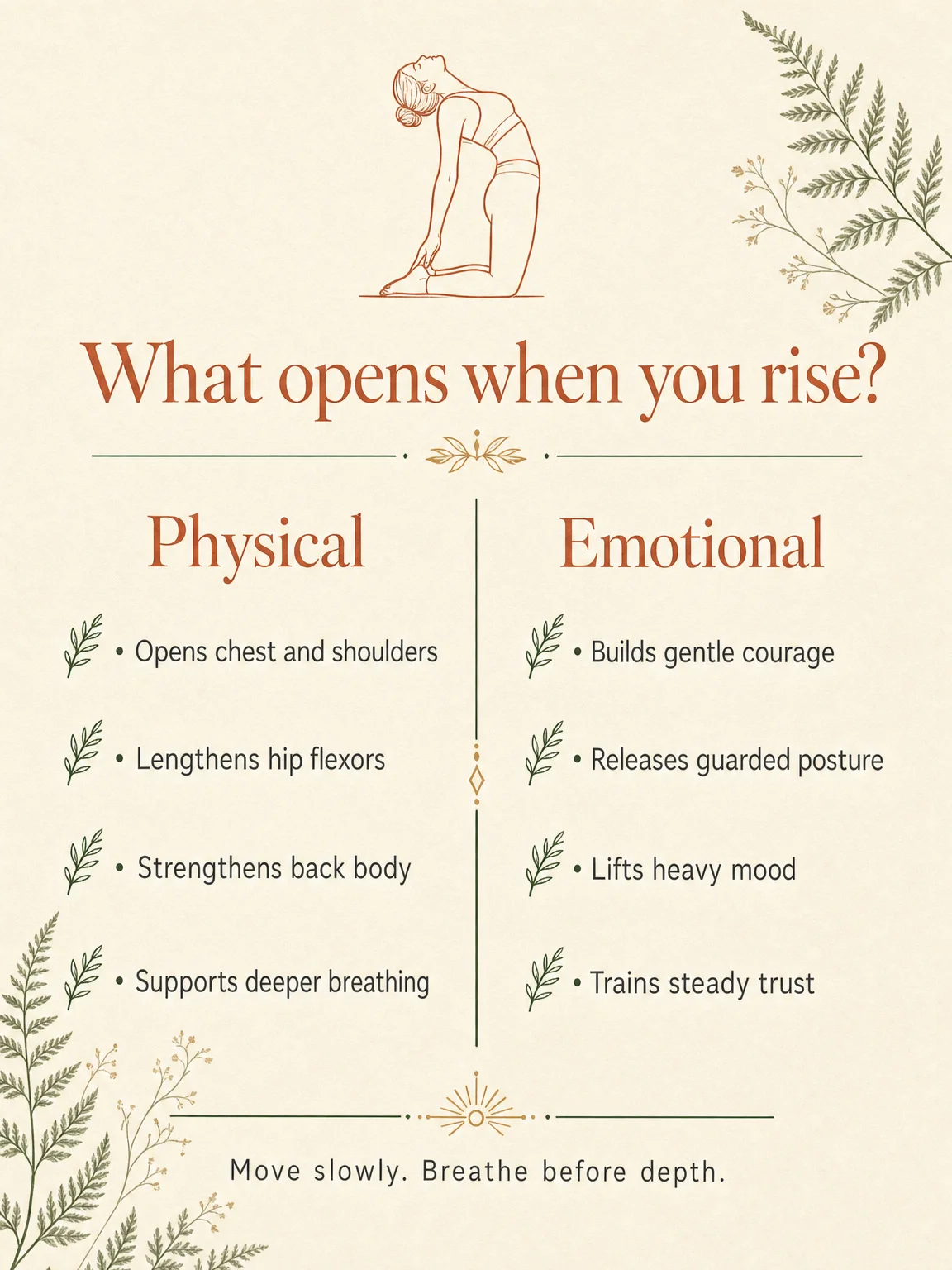
Physical benefits
Uṣṭrāsana opens the chest, shoulders, abdomen, and hip flexors. It strengthens the spinal extensors, glutes, hamstrings, and the muscles that help the shoulder blades draw toward the back body. Because the rib cage lifts and broadens, many people experience more room for breath after a careful warm-up.
Emotional benefits
This pose often feels like courage practice. The body moves out of the familiar rounded desk shape and into a more exposed front-body position. Done gently, it can help release guarded posture, lift a heavy mood, and teach trust without forcing depth.
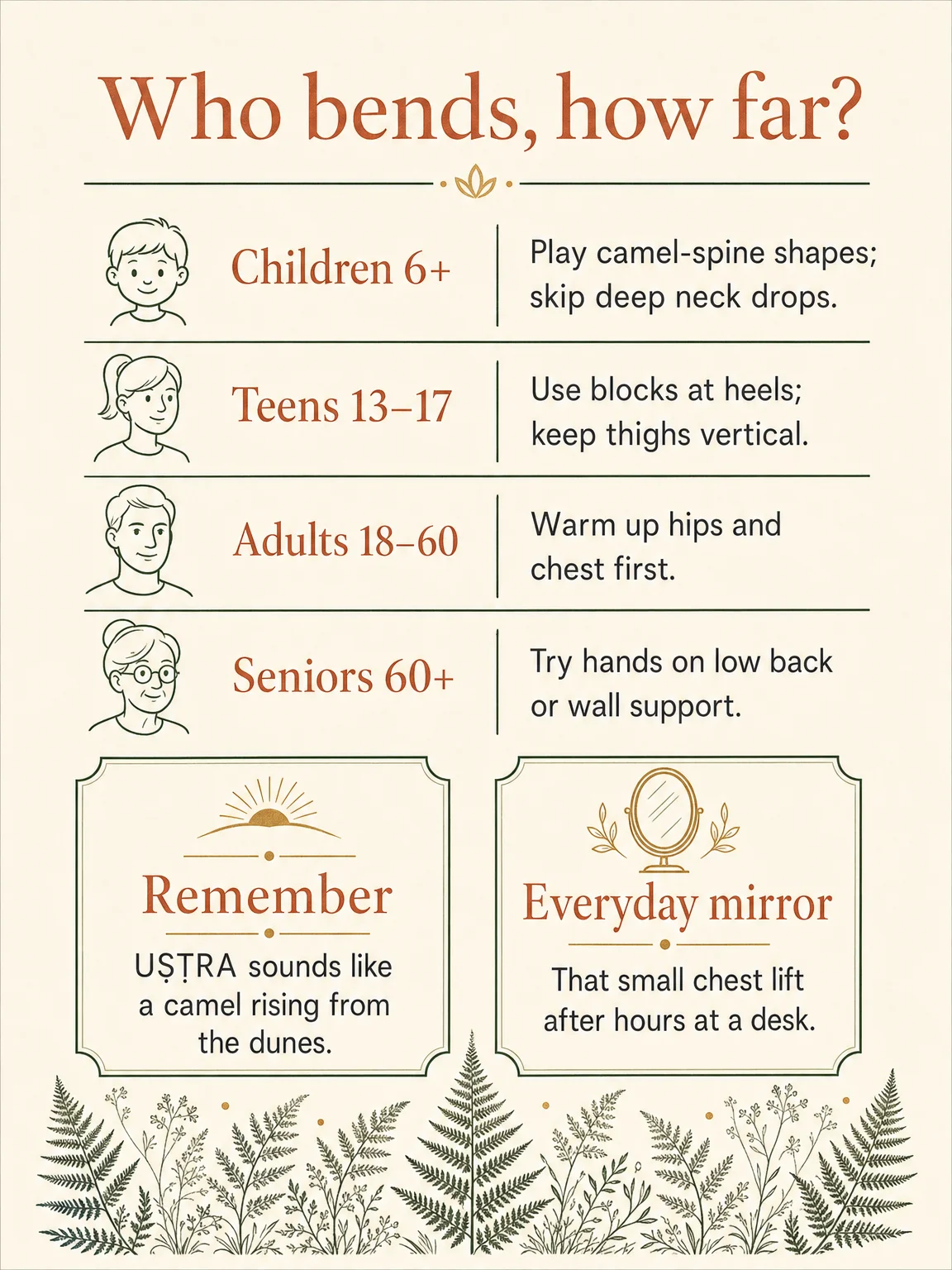
Age-group guidance
- Children 6+: Keep it playful. Try a small camel-spine shape with hands on the low back. Skip deep neck drops.
- Teens 13-17: Use blocks beside the heels if the hands do not reach comfortably. Keep the thighs vertical instead of pushing the hips back.
- Adults 18-60: Warm up the hips, thighs, chest, shoulders, and upper back first. Enter slowly, breathe once, then decide whether to go deeper.
- Seniors 60+: Practise a supported version at a wall or with hands on the low back. Keep the neck long and come out before strain appears.
Advanced anatomy notes
Primary muscles engaged include the erector spinae, gluteus maximus, hamstrings, quadriceps, psoas and other hip flexors in a strong stretch, rectus abdominis in a front-body lengthening role, pectoralis major and minor, anterior deltoids, and the deep neck flexors and extensors working to keep the head safe. Stabilising support comes from the transverse abdominis, multifidus, adductors, calves, rhomboids, and lower trapezius.
Main joints involved: knees in deep flexion, hips in extension, spine in controlled extension, shoulder girdle in retraction and extension, ankles pressing into the floor, and the cervical spine kept spacious rather than collapsed.
Body systems touched: the respiratory system through rib-cage expansion, the nervous system through a slow balance between alertness and calm, the digestive area through front-body lengthening, and the endocrine region around the throat and chest through gentle opening rather than pressure.
Who should practise
Uṣṭrāsana suits intermediate practitioners who can kneel comfortably, breathe steadily in a backbend, and keep awareness in the low back and neck. It may benefit people who sit for long hours, rounded-shoulder desk workers, and anyone building confidence in chest opening.
Who should avoid or modify
Avoid the full pose if you have sharp low-back pain, recent spinal injury, uncontrolled high blood pressure, vertigo, serious knee pain, shoulder injury, neck sensitivity, migraine triggered by backbends, late pregnancy, or any condition where deep backbending has been restricted by a clinician. Safer alternatives: hands-on-low-back camel, supported bridge, sphinx pose, doorway chest opening, or simply standing tall with the chest lifted for one breath.
Beginners should not chase the heels. The first version is enough: knees grounded, hands on low back, elbows gently moving toward each other, chest lifting without dropping the head.
No-mat tricks for today
- Doorway breath: before opening a door, pause with one hand on the handle, lift the chest, soften the throat, and breathe once.
- Desk reset: after an hour at a screen, place both hands on the low back and draw the shoulder blades slightly together.
- Phone release: when you put your phone down, let the sternum rise instead of the chin jutting forward.
- Queue practice: while standing in line, feel the thighs steady and the collarbones widen.
Take-home practice
Before opening a door today, lift your chest, soften your throat, and take one calm breath. That is the spirit of Uṣṭrāsana without a mat, a studio, or special clothes.
コメント
ログインするとコメントできます。