The audience tail end: a viral structure rebuilt for creators
A teardown of Wait But Why's "The Tail End" structure, rebuilt into a fresh creator-focused article about turning fleeting platform attention into a durable audience relationship.

1. Source structure analysis
The source structure for this issue is Tim Urban's Wait But Why essay The Tail End, published on December 11, 2015. The article begins with a familiar truth, life is short, then makes it physically countable through charts of years, months, weeks, and days. It then turns the same counting method toward relationships, where the emotional hit lands: Urban estimates he had already used 93% of his in-person parent time by high school graduation. 1
Why treat it as a strong model? Fast Company profiled Wait But Why as proof that thoughtful long-form writing and viral distribution can coexist, describing the site as a long-form explainer whose articles had captivated millions. 2 That makes The Tail End useful for this channel's purpose: not to copy its subject or voice, but to extract the underlying machine.
| Structural beat | What the source does | Reusable function |
|---|---|---|
| Opening tension | Starts with the reader's loose awareness that time is finite, then makes the scale visible through simple units. 1 | Turn a vague anxiety into something countable. |
| Proof order | Moves from low-stakes examples, such as seasons and food, to high-stakes examples, such as parents, siblings, and old friends. 1 | Let the reader accept the logic before the emotional payload arrives. |
| Pacing | Uses short calculations, visual pauses, and one-sentence pivots. The reader gets a beat, absorbs it, then gets the next beat. | Keep the article moving by alternating measurement, example, and interpretation. |
| Resolution | Ends with three practical takeaways: proximity matters, priorities matter, and quality time matters. 1 | Convert discomfort into a decision the reader can make today. |
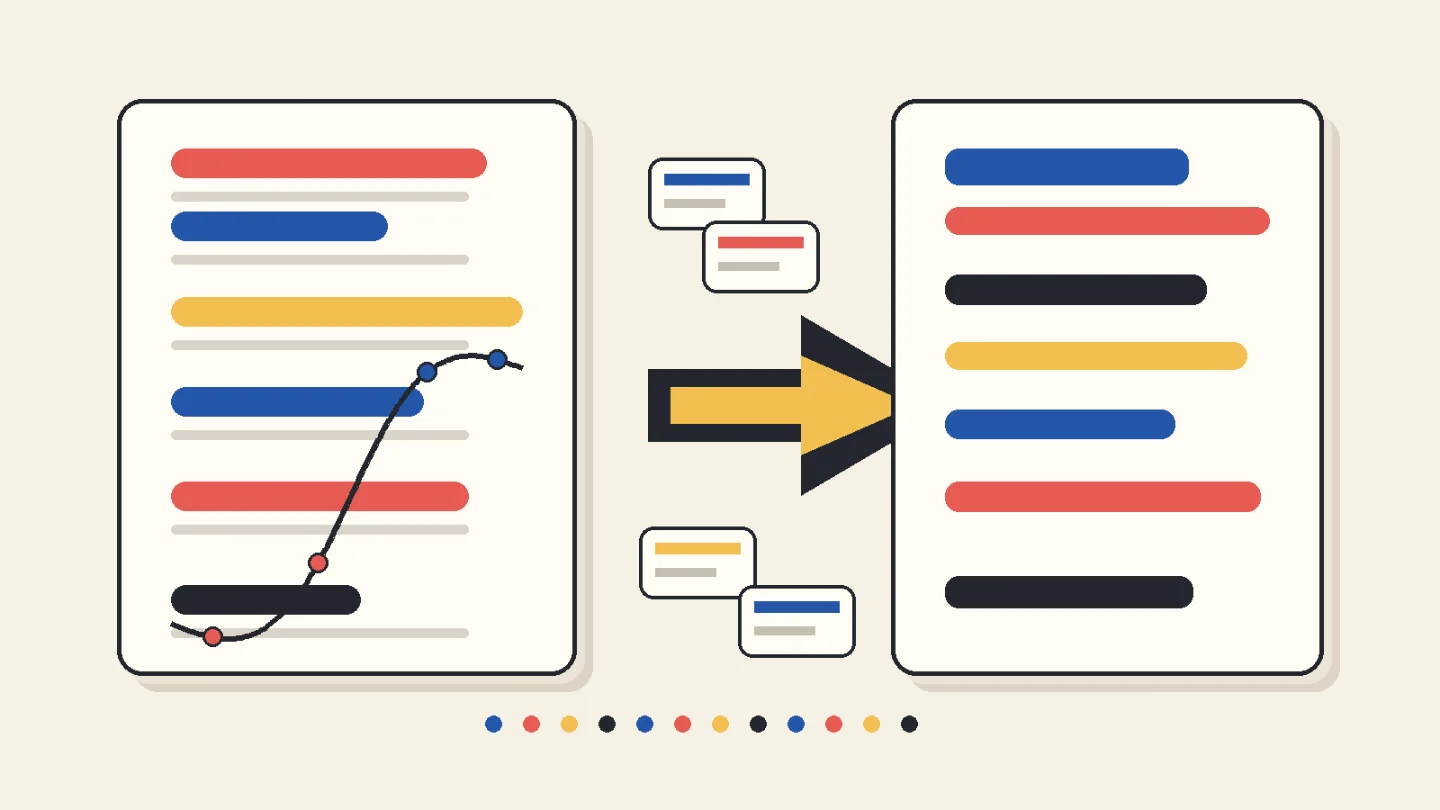
The core pattern is: count the invisible, escalate the stakes, then give the reader agency.
2. New topic positioning
New topic: the creator's audience tail end.
Most creators think of audience growth as an upward line: more posts, more followers, more reach. The more useful framing is harsher. Every platform audience comes with a limited number of future chances to notice you, trust you, remember you, and follow you somewhere you control.
That framing matters for bloggers, content teams, solo media builders, and ghostwriters because it turns audience ownership from a vague best practice into a finite-resource problem. The article below rebuilds the Tail End structure for a different subject: creator distribution.
Positioning sentence:
You may not be at the end of your creator career, but you may already be in the tail end of your easy access to today's audience.
3. New article outline
- Open with a familiar creator belief: as long as you keep publishing, there will always be more chances.
- Make publishing countable: show how few high-attention posts, launches, replies, and trust-building moments a creator may really have each year.
- Start with low-stakes units: newsletters, posts, launches, collaborations.
- Shift to the real risk: the audience is not evenly available over time. Platform attention, reader habits, inbox loyalty, and trust decay unevenly.
- Name the hidden turn: you can still be early in your career while being late in your access to the people who found you first.
- Resolve with decisions: own the relationship, prioritize repeat contact, make each high-attention moment ask for the next relationship step.
4. Full draft
The audience tail end
Creators love to talk as if the future is an infinite warehouse of attention.
There will be more posts. More launches. More trend windows. More readers who finally get what you do. More chances to turn a half-interested follower into someone who opens your email, buys your course, hires your team, or waits for your next essay.
Maybe. But count it.
If you publish once a week, you get 52 serious swings a year. Miss a few because of client work, family stuff, illness, burnout, or the ordinary fog of being alive, and the number falls into the 40s.
If you run one big launch per quarter, you get four real conversion moments a year. If you spend two years figuring out your positioning, that is eight launches spent learning what people do not want.
If you write a thoughtful reply to one reader every weekday, that sounds generous. It is also only about 250 people a year. A small theater. Not a stadium.
At first, these numbers are oddly comforting. They make the work feel manageable. You do not need to win the whole internet this week. You need to use the next post well.
But the same counting trick gets less comfortable when you apply it to the audience itself.
Not every future chance is equal
Some creator opportunities spread evenly across time.
If you write every Tuesday, next Tuesday is probably about as available as this Tuesday. If you publish a podcast every month, there will be another month. If you send a newsletter every Friday, the calendar will keep handing you Fridays.
That is the easy part.
The harder truth is that audience trust does not spread evenly across time.
A reader who just discovered you is in a short, unstable window. They clicked because one headline fit one moment in their life. For a few minutes, you are not a name on the internet. You are the person explaining the thing they were already trying to understand.
That window closes quickly.
If their first experience is clear, useful, and specific, they may read a second piece. If the second piece also helps, they may remember your name. If you give them a reason to subscribe, they may let you into a space that is harder to reach than a feed.
If you do none of that, they become part of a crowd you technically reached once.
That crowd looks nice in analytics. It does not behave like an audience.
Count the moments that actually build a relationship
Imagine a solo media builder with 20,000 followers across platforms.
That number feels like a base. It may be closer to a waiting room.
How many of those people will see the next post? How many will stop long enough to understand it? How many will remember the creator's name after lunch? How many will notice a product link, a newsletter invitation, or a simple line that says, "If this was useful, get the next one here"?
The useful unit is not followers. It is relationship-building moments.
A relationship-building moment is any point where a reader can move one step closer:
- from seeing you to recognizing you
- from recognizing you to trusting you
- from trusting you to hearing from you directly
- from hearing from you directly to taking action
A creator does not get unlimited moments like that.
A post that travels widely may bring thousands of strangers into the first step. But the wide post is not the asset. The next step is the asset. Without it, the post is a flare in the sky: bright, visible, and gone.
The uneven part is where the article gets uncomfortable
Early followers are different.
They found you before the voice was polished. They watched the idea get sharper. They were around when your work still felt like a conversation instead of a media operation.
That kind of reader is easier to invite into a deeper relationship because they already have context. They remember the old promise of the work. They may forgive rough edges. They may reply with better feedback. They may forward your article with a note that says, "This person has been good for a while."
But you do not get that early-cohort advantage forever.
As a channel grows, new readers arrive with weaker context. They see one post, not the arc. They compare you to everyone else in the feed. They do not know which ideas are yours, which battles you have already fought, or why your angle is different.
That does not make them worse readers. It makes the relationship younger.
So a creator can be only two years into a project and already be late in one important sense: late in the chance to convert the first wave of warm attention into a durable audience.
The career may be young. The warmest audience window may not be.
The dangerous comfort of "I'll build the list later"
"I'll build the list later" sounds reasonable when growth is still happening.
Later, after the next viral post.
Later, after the positioning is cleaner.
Later, after the offer is clearer.
Later, after the site redesign, the lead magnet, the proper welcome sequence, the serious content calendar.
The problem is that later keeps charging rent.
Every month without a direct relationship turns current attention into a memory test. You are asking readers to find you again in a place designed to show them something else. You are depending on habit before you have built one.
For a creator, that is the equivalent of living near your favorite people and choosing not to see them because you assume proximity will last.
It might. But it might not.
The platform may change. The reader may change. Your own work may change. The topic that made people care may stop being the topic you want to write about. The audience you could have invited closer may drift into the general internet fog.
Not because they disliked you.
Because you never gave the relationship a next room to enter.
The small arithmetic of creator regret
Let's make the regret concrete.
Say you write one strong article every week for three years. That is roughly 156 serious pieces.
Suppose the first year brings the most unusually warm readers, because they arrive when the work feels fresh and personal. Suppose you spend that first year posting, improving, and enjoying the growth, but you do not build a newsletter, community, customer list, or repeatable way to contact those readers.
You have not failed. You have built something.
But you may have spent the easiest 52 chances to deepen the relationship.
The second year can still work. So can the third. But the audience is no longer the same audience. The early group is more scattered. The new group has less history with you. The public feed is louder. You now need stronger proof to earn the same closeness you could have asked for when the reader was already leaning in.
That is the creator's tail end.
It is not the end of reach.
It is the end of cheap trust.
What to do with this information
The point is not to panic-build a funnel around every sentence you publish. Readers can smell that. If every piece feels like a hallway to a checkout page, the relationship gets thinner, not deeper.
The point is to stop treating audience ownership as administrative work.
It is editorial work.
If your article helps a reader think better, the next step should feel like part of that help. The subscription ask should not arrive as a pop-up ambush. It should arrive as a continuation: "If this solved a problem you keep having, I write about this every week."
Three decisions matter.
1. Build the next room before the crowd arrives. A simple email list with a plain promise beats a perfect system launched after the warmest readers have already passed through.
2. Treat high-attention pieces as relationship moments, not trophies. When an article travels, ask: what should the right reader do next? Subscribe, reply, save, share with a colleague, read the deeper guide, book a call, or join the waitlist. Pick one. Make it natural.
3. Spend more time with the readers who already raised their hands. Replies, onboarding notes, small surveys, and direct questions can look inefficient. They are also how a creator learns which strangers are becoming a real audience.
The creator's mistake is not failing to go viral.
The mistake is going mildly viral, again and again, while each wave of attention leaves no relationship behind.
You may have plenty of career left.
You may have plenty of posts left.
But the readers paying attention right now are not an abstract future audience. They are the current window. Some of them will never be this close again.
Write the next piece as if that is true.
5. Why this structure works
This structure works because it gives the reader three experiences in sequence.
First, it lowers resistance. Counting posts, launches, replies, and reader touchpoints feels practical rather than preachy. The reader is not being told to "own your audience" as a slogan. They are being shown that the number of serious chances is smaller than it feels.
Second, it escalates from safe examples to the real fear. The draft starts with publishing cadence and launch math, then shifts into trust, early readers, and the risk of losing warm attention. That mirrors the source's movement from ordinary recurring events to relationships.
Third, it resolves with agency. The article does not leave the reader with anxiety. It turns the pressure into three editorial decisions: build the next room, make high-attention moments actionable, and spend more time with readers who already show intent.
The wording is original, the topic is different, and the structure is reusable: count the invisible, make the stakes personal, then hand the reader a concrete choice.
関連コンテンツ
- ログインするとコメントできます。