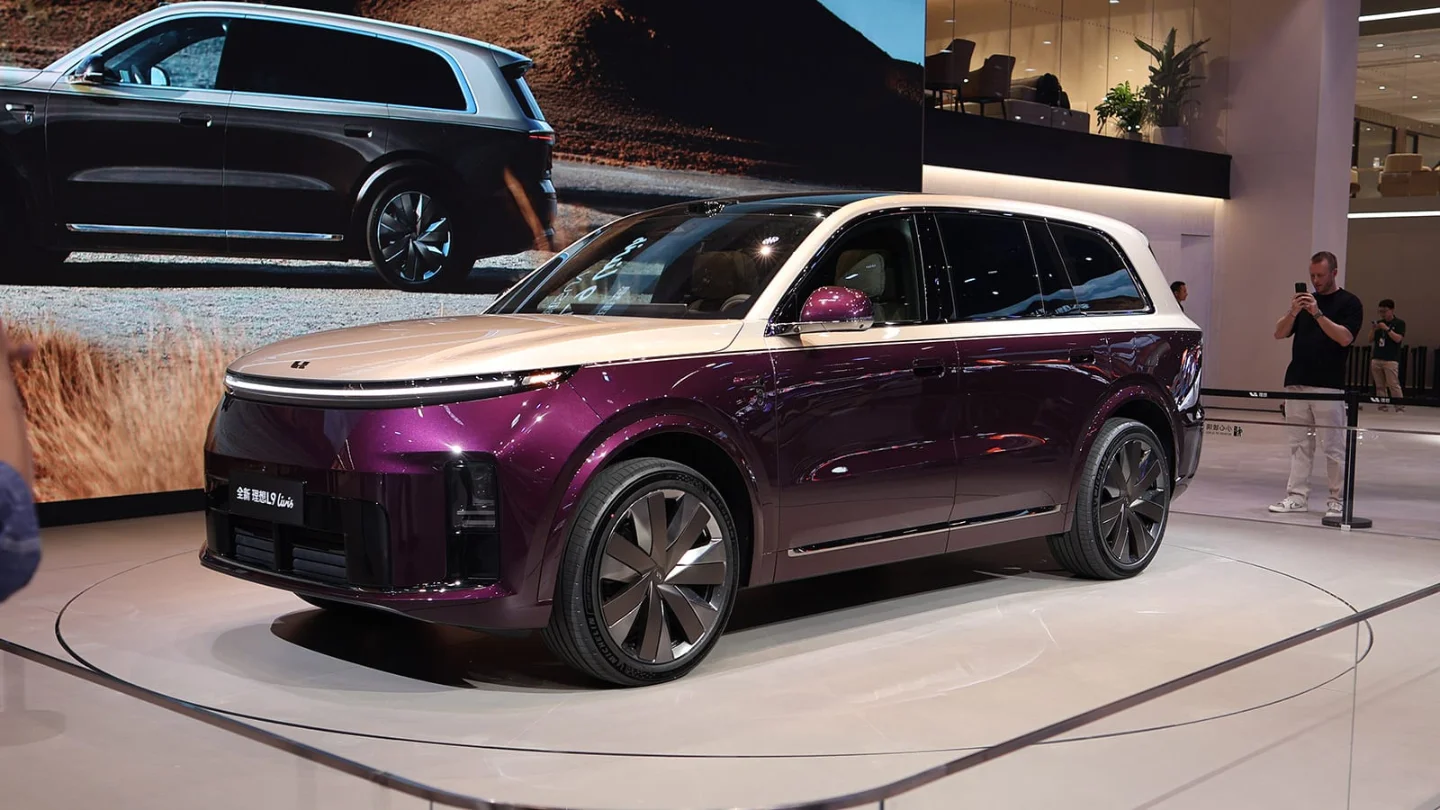
Li Auto puts a price on its overseas L9 bet in Kazakhstan
Li Auto has launched the updated L9 in Kazakhstan at local prices and paired the sale with Allur assembly plans, localized software and a 300,000-delivery milestone, but has not yet set customer handovers or factory output targets.
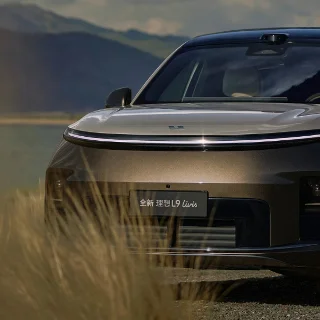
Kazakhstan launch puts a price on Li Auto's overseas L9 bet
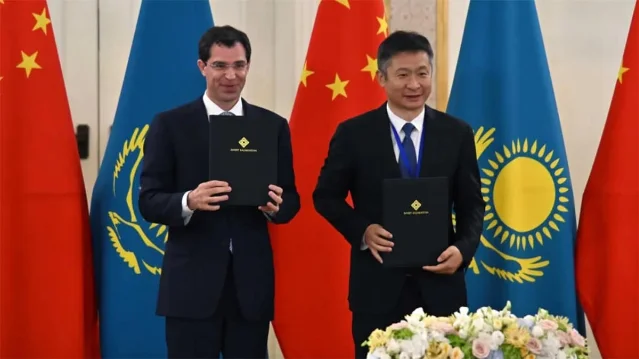
Li Auto has started selling the updated L9 in Kazakhstan at 43,990,000 KZT for the Ultra and 51,900,000 KZT for the Livis. The launch also turns the country's July 16 assembly agreement with Allur into a broader market plan: local assembly is slated for Allur's Kostanay plant, while authorized sales and service coverage is being built in Almaty and Astana. 1
That is a meaningful step beyond exporting finished cars. It is also a more complete test of Li Auto's international product strategy, because Kazakhstan is receiving a version adapted for local climate, roads, charging conditions, maps and entertainment services.
The local offer at a glance
The Kazakhstan announcement names two trims and gives the first public local prices. The China-market figures below are reference points, not a direct currency-adjusted comparison: taxes, homologation, equipment and distribution costs can all change the relationship between markets.
| Trim | Kazakhstan price | China MSRP reference | Kazakhstan status |
|---|---|---|---|
| L9 Ultra | 43,990,000 KZT, reported as $92,830 | RMB 459,800 | Officially on sale; customer handover date not stated |
| L9 Livis | 51,900,000 KZT | RMB 509,800 | Officially on sale; customer handover date not stated |
The China prices come from the May launch of the second-generation L9. That launch also established the Ultra and Livis split, with the Livis carrying the higher equipment level. 2
For Kazakhstan, Li Auto describes the L9 as its first global model developed for overseas markets. The company says the local version has changes to charging performance and thermal management for Kazakhstan's climate, road conditions and charging infrastructure. 1
The international L9 is still an EREV first
The powertrain remains an extended-range electric vehicle system. The wheels are driven electrically, while the range extender supplies electricity when the battery's charge is depleted. For the Kazakhstan version, Li Auto quotes a 350 km WLTC battery-only range and a 1,370 km combined range. WLTC is a different test cycle from the CLTC figures used in China, so the two sets of range numbers should not be read as a like-for-like upgrade or downgrade.
The reported equipment list is substantial for a first overseas-market version:
- An 800-volt active suspension system
- Steer-by-wire and rear-wheel steering
- A 29-inch panoramic display
- A Qualcomm Snapdragon 8797 cockpit chip
- A localized infotainment stack built around Yandex and Amap services
The Kazakhstan system supports Yandex Maps, Yandex Music, Yandex Books and Yandex Video, with Spotify and Apple CarPlay also built in. Those are practical localization choices rather than cosmetic software changes: navigation, traffic data, entertainment and phone integration are part of whether an imported premium vehicle feels usable after the sale. 1
Li Auto's May China launch provides the engineering baseline. The new L9 uses a 72.7 kWh battery, 5C charging, 420 km of CLTC electric range and up to 1,650 km of CLTC combined range. The Livis adds an 800-volt fully active suspension system, while the two trims use different levels of the company's Mach M100 intelligent-driving hardware. 2
Sales begin; the delivery schedule does not
"Officially on sale" is the firmest delivery statement in the Kazakhstan announcement. It does not give a first customer handover date, booking window or initial allocation. The same gap applies to the Kostanay project: Li Auto and Allur say local assembly will begin, but do not publish a factory start date, annual capacity, investment amount or local-content target. 1
The operating pieces around the sale are clearer. Allur and Doscar are named as authorized partners, with official sales and service coverage planned for major cities including Almaty and Astana. Buyers using authorized channels are promised official warranty support, certified maintenance and repairs, original parts, technical assistance and ongoing OTA updates. That network matters as much as the showroom launch for a large EREV, because customers still need confidence that the range extender and high-voltage systems can be serviced locally.
The ceremony also marks a change in the type of overseas commitment Li Auto is making. The Allur partnership covers local production, sales-channel expansion and service-network development. 1
Why the 300,000 milestone matters
Li Auto says cumulative L9 deliveries have passed 300,000 units. The nameplate launched in June 2022, with deliveries beginning in late August that year, so the milestone arrived roughly four years after the first launch. The company also says the L9 ranked first in cumulative insurance registrations in China's full-size SUV market through June 2026. 1
That gives the Kazakhstan launch a ready-made halo product, but it does not remove the model's recent sales pressure. CnEVPost's figures show 2025 L9 deliveries fell 47.31% year over year to 45,214 units, while June 2026 deliveries recovered to 6,106 units. The June figure was up 24.79% year over year and 137.59% from May. 1
The timing makes the overseas push easier to read. Li Auto is using the L9's accumulated brand recognition to enter a new region just as the refreshed vehicle is trying to regain momentum at home. The Kazakhstan version also gives the company a controlled place to test the international operating stack before its stated third-quarter rollout into Central Asia and the Middle East becomes a wider program. 2
Positioning against the premium field
In Kazakhstan, the L9 is positioned as a large premium family SUV with an EREV fallback rather than as a pure battery-electric vehicle. That distinction matters where long-distance routes and charging coverage may make a 350 km WLTC electric range more useful when paired with a 1,370 km combined figure. The trade-off is that the vehicle still carries a large, premium price before local assembly has had time to show whether it can lower costs.
The comparison set includes AITO's range-extended family SUVs, NIO and XPeng's battery-electric alternatives, and imported BMW, Mercedes-Benz and Audi SUVs. Li Auto's answer is a mix of electric drive, long combined range, high-end chassis hardware and local digital services. It is selling a family-use proposition with a technology-heavy cabin, not simply a Chinese luxury badge.
A direct Kazakhstan price ranking is not possible from the launch material: it gives no local prices or equipment lists for those rival brands, and it does not state whether every rival model is officially available through an equivalent service network. The useful conclusion is narrower. Li Auto has now made the L9's local proposition concrete; the market comparison will depend on delivered customer prices, warranty terms, charging support and service execution.
The next facts to watch
Four disclosures will decide whether this is a real manufacturing transition or mainly a market-entry announcement:
- The first customer delivery date and the initial Kazakhstan allocation.
- The first pilot build at Kostanay, followed by a stated production capacity.
- The assembly method, local-content ratio and any price change after local production begins.
- The warranty, charging support and service coverage outside Almaty and Astana.
Li Auto has moved the L9 from a Central Asian export story to a priced launch with a named assembly partner. The hard evidence of localization will arrive when Allur reports a vehicle off the line and customers report how quickly the cars are delivered and supported.
関連コンテンツ
- ログインするとコメントできます。
More from this channel
- Li Auto starts new L6 deliveries as its RMB 249,800 volume bet reaches customers
- Li Auto picks Kazakhstan for first overseas factory, with L6, L8, and L9 in scope
- Li Auto launches refreshed L6 at RMB 249,800 as its family-SUV reset gets real
- Li Auto i9 filing adds 400 kW and LiDAR tiers as September launch gets spec test