2026/7/4 · 8:14
Your road-trip playlist cannot fix drowsy driving. Here's the stay-awake plan.
A practical guide to spotting drowsy driving before it gets dangerous: how sleep debt, late-night drives, caffeine, and common medicines affect your reaction time, plus what to do when you start fading behind the wheel.
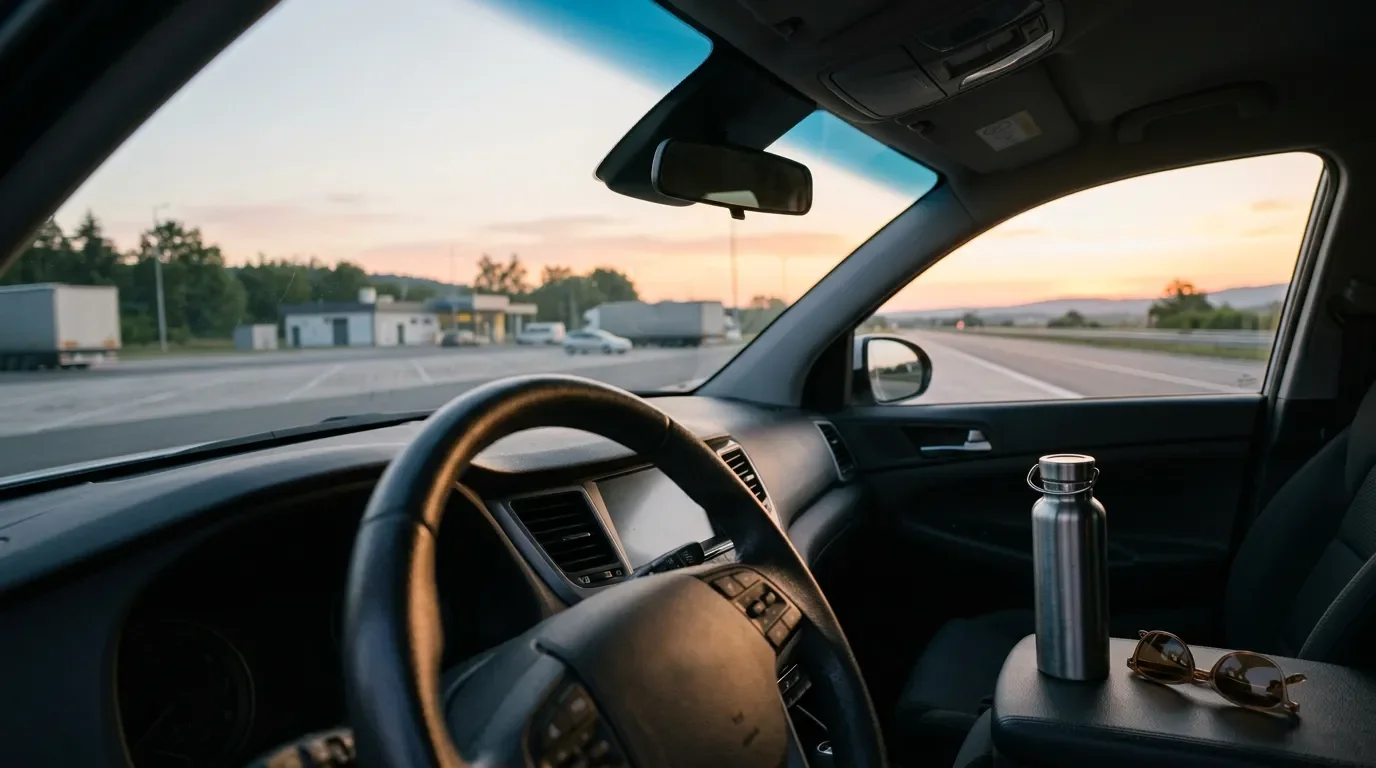
The scary part about drowsy driving is how normal it feels right before it gets dangerous. You are not drunk. You are not texting. You are just "kind of tired," and the playlist is good, and the next exit is only 20 minutes away.
That is exactly the trap. NHTSA says drowsy-driving-related crashes killed 644 people in 2024, and the agency is blunt that the real crash count is hard to measure because sleepiness is not as easy to document after a crash as alcohol or speeding. 1
So here is the road-trip version: if you are fighting sleep behind the wheel, you do not need more willpower. You need a stop.
Why music, windows, and vibes are not enough
Sleepy driving messes with the exact skills driving needs: attention, reaction time, lane control, and judgment. NHLBI explains that sleep deficiency can make it harder to learn, focus, and react, and it links sleepiness while driving to serious crash injuries and deaths. 2
NHTSA points to three common drowsy-crash patterns: they often happen between midnight and 6 a.m. or in the late afternoon, they often involve one driver running off the road, and they often happen on rural roads and highways. 1 That is basically a lot of long drives, post-party drives, early airport drives, and "I can make it home tonight" drives.
The part people underestimate is microsleep. NHTSA says a seriously sleep-deprived driver can briefly lose consciousness for four or five seconds. At 55 mph, that is more than 100 yards traveled while asleep. 1 That is longer than a football field with no real driver.
Check your sleep debt before the keys come out
You do not have to feel destroyed for your risk to climb. In an AAA Foundation analysis, drivers who slept 5 to 6 hours in the past 24 hours had 1.9 times the crash rate of drivers who slept at least 7 hours. Drivers who slept 4 to 5 hours had 4.3 times the crash rate, and drivers under 4 hours had 11.5 times the crash rate. 3
That does not mean every short-sleep drive ends badly. It means "I only slept four hours, but I feel fine" is not reliable data.
Before a long drive, do this quick filter:
| If this is true | Treat it like this |
|---|---|
| You slept under 5 hours | Do not be the main driver if there is another option. AAA found crash risk rose sharply below this range. 3 |
| You are driving between midnight and 6 a.m. | This is one of NHTSA's peak drowsy-crash windows, so plan a driver swap, nap, hotel, or later start. 1 |
| You are coming off a festival, party, shift, red-eye flight, or all-nighter | Assume your self-assessment is too generous. NHTSA lists late nights, long shifts, holiday drives, and hanging out late with friends as common fatigue setups. 1 |
| You took allergy meds, sleep meds, motion-sickness meds, cannabis/CBD, anxiety meds, opioids, or some cold medicines | Check the label before driving. FDA says some prescription and over-the-counter medicines can cause drowsiness, blurred vision, dizziness, slower movement, or trouble focusing, sometimes into the next day. 4 |
If two rows apply, be boring. Delay the drive, split the drive, or sleep first.
The real warning signs are not subtle
Do not wait until you are literally nodding off. By then, you are already late.
Pull over if you catch yourself doing any of this:
- Drifting out of your lane or hitting a rumble strip.
- Missing an exit, turn, or traffic sign you normally would have noticed.
- Blinking hard, rubbing your eyes, or doing the "one eye closed for a second" thing.
- Forgetting the last few miles.
- Getting weirdly impatient or spacey.
- Needing constant snacks, scrolling stops, loud music, or cold air just to stay engaged.
NHTSA specifically names crossing roadway lines and hitting a rumble strip as signs to watch for, especially if you are driving alone during high-sleepiness windows. 1
What actually works when you get sleepy
The move is simple, but it has to happen early: get off the road safely.
NHTSA's short-term advice is to drink one to two cups of coffee and pull over for a short 20-minute nap in a safe place, such as a lighted, designated rest stop. The agency also warns that coffee or energy drinks alone may only help for a short time, and you may not be as alert as you think. 1
A practical version:
- Pick the next safe stop, not the shoulder unless it is an emergency.
- Park somewhere visible and legal.
- Set a 20-minute timer.
- If you use caffeine, drink it before the nap so it starts kicking in afterward.
- Wake up, walk around, drink water, and reassess honestly.
If you still feel foggy after that, the answer is not a second playlist. It is a longer stop, a different driver, a rideshare, or sleeping where you are.
The meds check people skip
A lot of road-trip sleepiness is not just bad sleep. It is bad sleep plus something sedating.
FDA says some medicines can make driving unsafe by causing sleepiness, dizziness, blurred vision, slowed movement, fainting, or trouble focusing. The list includes some antihistamines, motion-sickness medicines, sleep medicines, muscle relaxants, opioids, some anxiety medicines, some antidepressants, some cold and allergy medicines, and cannabis or CBD products. 4
Two friend-level rules:
- If a label says it may cause drowsiness, believe it the first time.
- If you have never taken that medicine before, do not make a long drive your test run. FDA recommends taking nonprescription medicine for the first time when you will not need to drive. 4
This matters even more with "nighttime" cold meds, allergy meds, sleep aids, and motion-sickness pills. They can feel like a small thing when you are packing, then become the whole problem two hours into the drive.
When it deserves real attention
Most drowsy driving prevention is not medical. It is logistics: sleep, timing, stops, meds, and not pretending you are tougher than biology.
But get real help if any of these sound familiar:
- You almost fall asleep while driving more than once.
- You regularly feel uncontrollably sleepy during the day even after what should be enough sleep.
- Someone says you snore loudly, gasp, or stop breathing during sleep.
- A medication keeps making you foggy, slowed down, or unsafe to drive.
- You are using caffeine, stimulants, or energy drinks just to function most days.
NHTSA says adequate daily sleep is the only true way to protect yourself from drowsy driving risk, and FDA says a health professional may be able to adjust timing, dose, or medication if side effects interfere with safe driving. 1 4
The plan before the next long drive
Do this before you leave:
- Sleep like the drive counts, because it does.
- Avoid starting the longest stretch between midnight and 6 a.m.
- Check medication labels, especially allergy, cold, sleep, nausea, pain, and anxiety meds.
- Decide your first rest stop before you feel tired.
- Give your passenger permission to call out lane drifting, heavy blinking, or weird silence.
- If you are too tired, make the unglamorous choice: delay, swap drivers, or stop for the night.
The goal is not to become the perfect health person. It is to get where you are going with your reaction time still online.
このチャンネルのその他のコンテンツ
関連コンテンツ
- ログインするとコメントできます。