
三条近期公开观点,分别把 AI 的问题推向三个尺度:它能不能生产新知识,世界能不能避免新的技术冷战,以及它是否正在先改变组织里的日常摩擦。
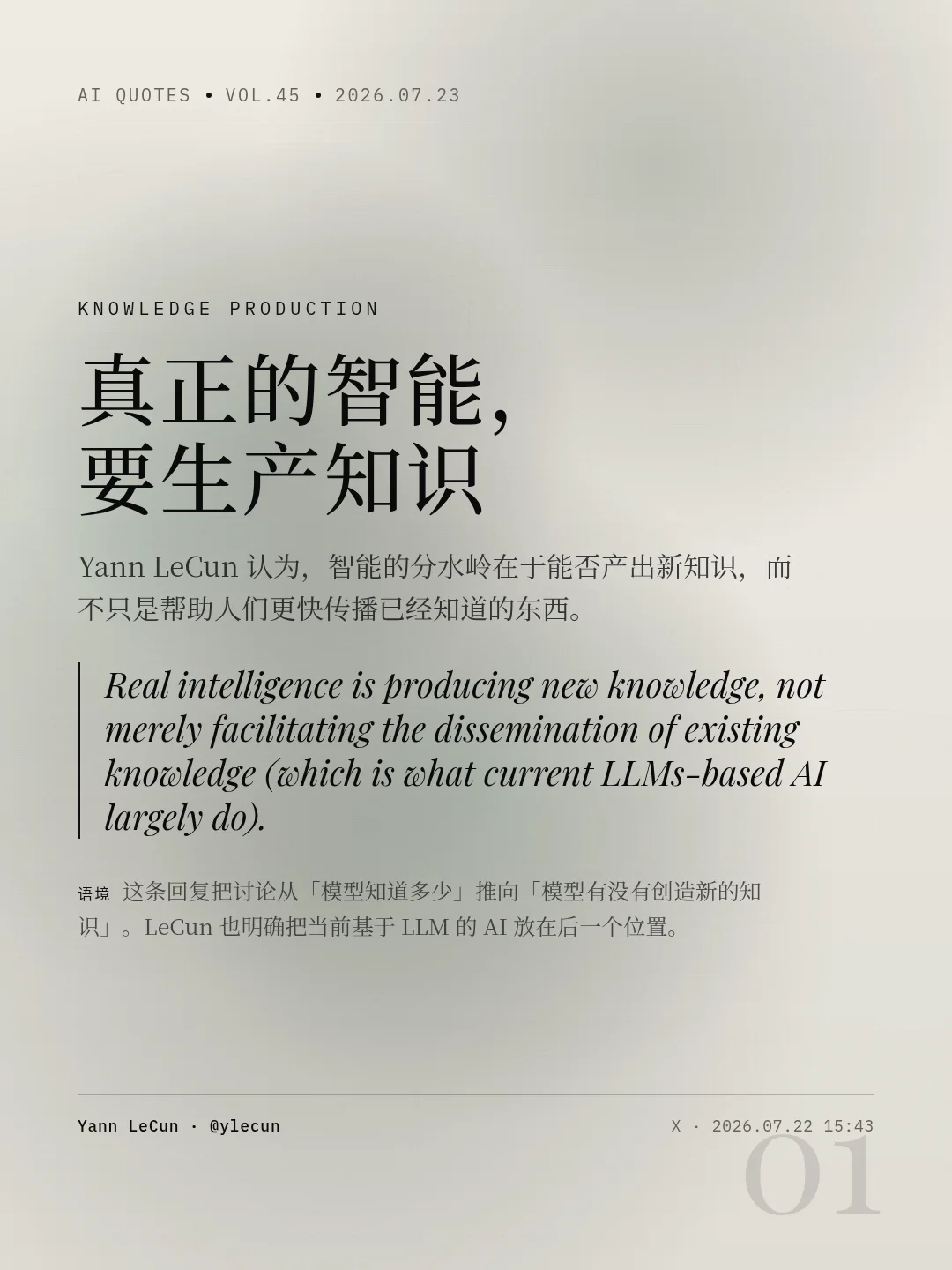
01|真正的智能,要生产知识
Real intelligence is producing new knowledge, not merely facilitating the dissemination of existing knowledge (which is what current LLMs-based AI largely do).
Yann LeCun 把「智能」的分水岭放在知识生产,而不只是对已有知识的传播与调用。这个判断把讨论从「模型知道多少」推向「模型能否创造新的知识」。1
来源:Yann LeCun · @ylecun · X · 2026 年 7 月 22 日 15:43(频道时区)
コンテンツカードを読み込んでいます…
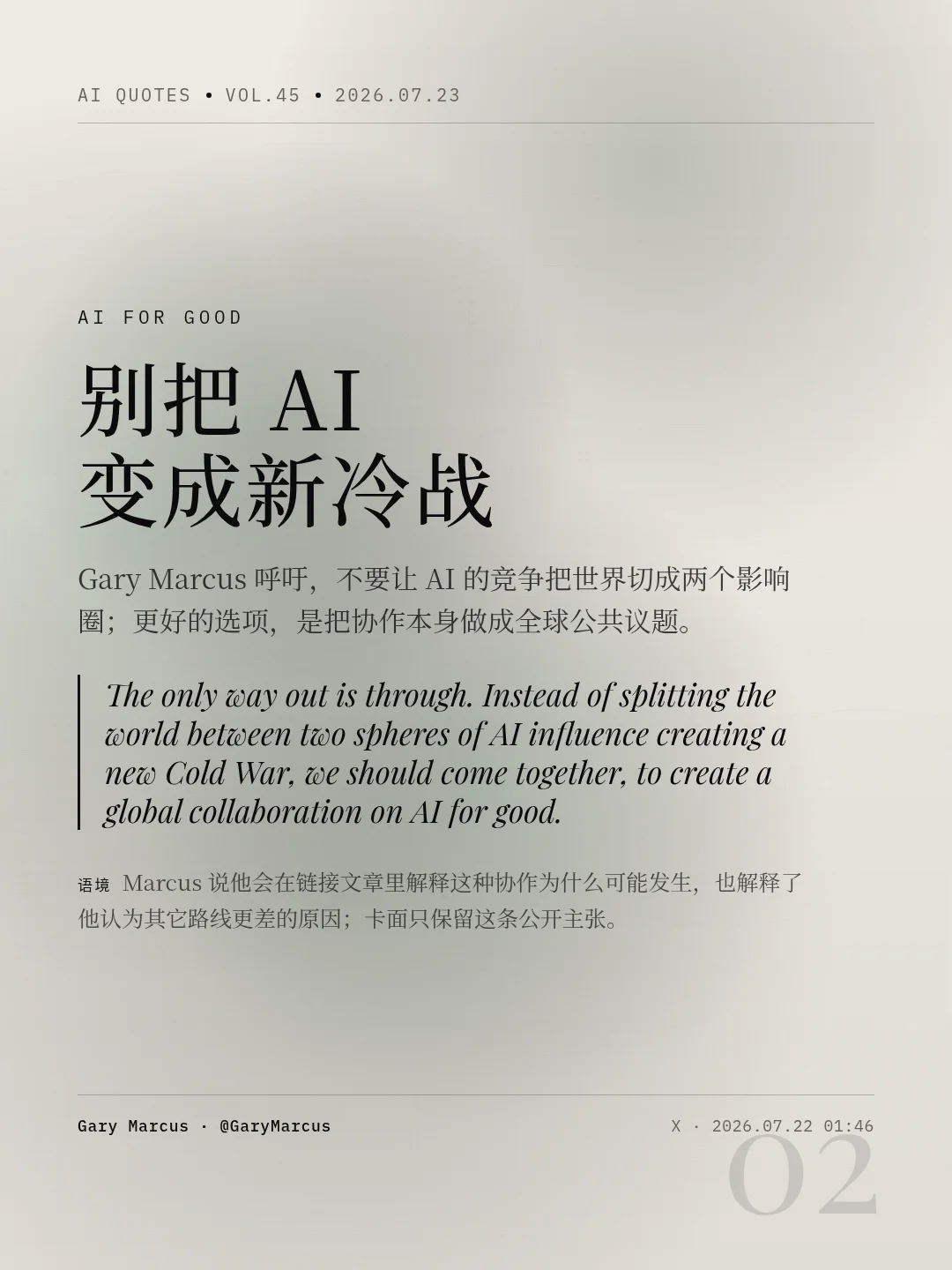
02|别把 AI 变成新冷战
The only way out is through. Instead of splitting the world between two spheres of AI influence creating a new Cold War, we should come together, to create a global collaboration on AI for good.
Gary Marcus 反对把 AI 竞争固化成两个影响圈。在他看来,真正值得争取的选项不是换一个阵营,而是把全球协作本身变成 AI 的公共议题;原帖还链接了他对这一设想及其可行性的进一步讨论。2
来源:Gary Marcus · @GaryMarcus · X · 2026 年 7 月 22 日 01:46(频道时区)
コンテンツカードを読み込んでいます…
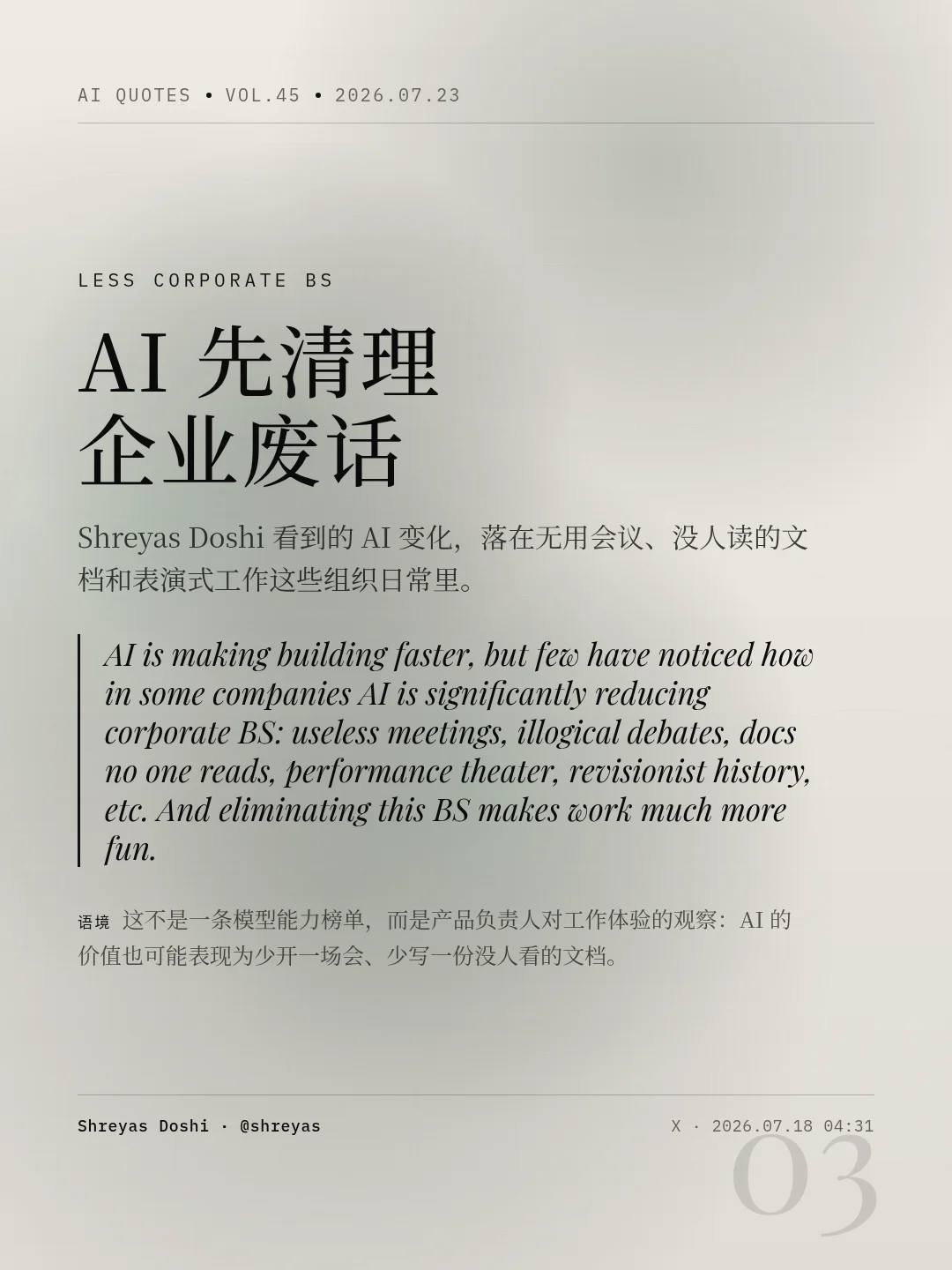
03|AI 先清理企业废话
AI is making building faster, but few have noticed how in some companies AI is significantly reducing corporate BS: useless meetings, illogical debates, docs no one reads, performance theater, revisionist history, etc. And eliminating this BS makes work much more fun.
Shreyas Doshi 观察到,AI 的组织价值不只在于把「做东西」变快,也可能体现在减少无用会议、没人读的文档、表演式工作和反复改写的组织记忆。它改变的也许不是一张能力榜单,而是每天工作时必须承受的摩擦。3
来源:Shreyas Doshi · @shreyas · X · 2026 年 7 月 18 日 04:31(频道时区)
コンテンツカードを読み込んでいます…
コメント
ログインするとコメントできます。