After kickoff, the smartest World Cup ads got tactical: DoorDash, Jack in the Box, La Colombe and more
2026/6/22 · 8:16

After kickoff, the smartest World Cup ads got tactical: DoorDash, Jack in the Box, La Colombe and more

This week's roundup tracks the verified post-kickoff shift from star-studded hero films to matchday utilities, local fandom and owned brand folklore. It covers DoorDash, Jack in the Box, La Colombe, Verizon, Goodnites and Tecate, with clear notes on which picks are fresh releases and which are catch-up craft benchmarks.

The short version

This issue covers the World Cup advertising wave I could verify from roughly June 12-19, plus two late-cycle picks that have become useful benchmarks now that the tournament has moved from pre-kickoff spectacle into matchday behavior. The clear shift: brands are spending less time proving they can assemble a mega-cast and more time building rituals, utilities, local identity, and owned folklore around the tournament.
One practical note: I did not find reliable official YouTube uploads for several of this week's strongest campaigns, so I am linking to the original reporting and campaign pages rather than embedding unofficial reposts.

This week's watchlist

BrandCampaignWhy it matters this weekBest read as
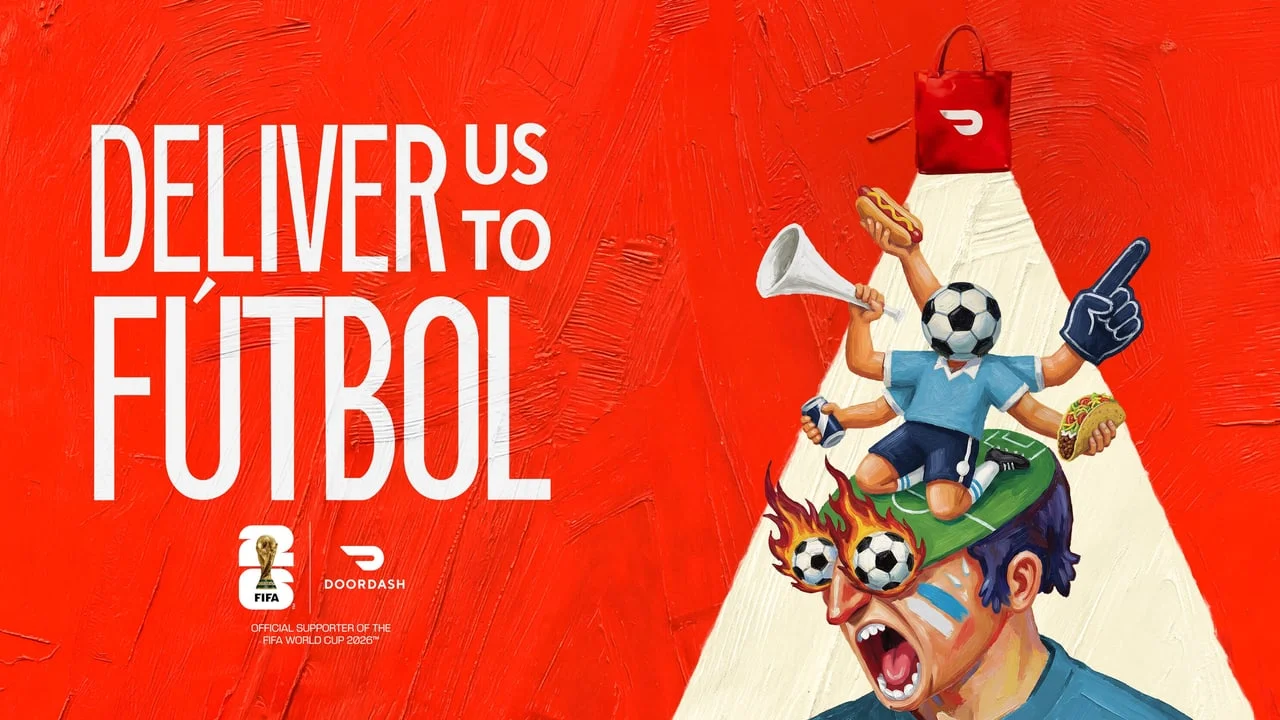
DoorDashDeliver Us To FútbolA first-ever global launch for DoorDash, Deliveroo and Wolt, built around fans outsourcing everything except the match. 1The strongest matchday-ritual idea
Jack in the BoxThe Spiciest PlayerA non-sponsor turns its mascot into fake football history instead of trying to borrow FIFA's official language. 2The best ambush-lore play
La ColombeMust Be The CoffeeA USMNT partner narrows the global tournament to one city: Philadelphia belief, coffee, and the underdog myth. 3The most focused local-fandom film
VerizonDr. Evil / Yo soy Betty, la fea simplicity pushVerizon uses World Cup media as the launchpad for a broader anti-fee, loyalty and rewards campaign, with two pop-culture tracks for different audiences. 4The best media-buy-meets-product reset
GoodnitesTo My Younger SelfA 90-second Tim Ream spot moves from product proof to stigma, confidence and childhood shame. 5The purpose-led catch-up pick
TecateThere's Football Outside FootballThree black-and-white print ads turn iconic football moments into fan behavior in bars, parties and backyards. 6The global craft pick

DoorDash makes delivery the invisible matchday infrastructure

DoorDash is the week's most complete World Cup idea because the product behavior is not bolted on after the celebrity casting. The campaign argues that when football takes over daily life, food delivery becomes the invisible infrastructure that lets fans stay glued to the match.
USA TODAY's Ad Meter spotlight published on June 18 describes "Deliver Us To Fútbol" as DoorDash's first-ever global launch with Deliveroo and Wolt, bringing the three portfolio brands together on a global stage for the first time. 1 The film uses a Dasher's point-of-view journey and folds in Ricardo Kaká, Alex Morgan and Khaby Lame, which gives it enough star power without turning the whole idea into a celebrity roll call. 1
The sharper point is strategic. DoorDash is not simply saying "we deliver food during sports"; it is making a claim about matchday rituals across countries and cultures. Gina Igwe, DoorDash's vice president of brand, creative and consumer marketing, frames the work around shifted sleep schedules, reservations planned around kickoff, and the food rituals that make each match feel personal. 1
That is why this one earns the top slot. It turns a global logistics message into a fan-behavior message, and it gives DoorDash a credible reason to talk about football without needing the emotional posture of a sportswear brand.

Jack in the Box invents football folklore for itself
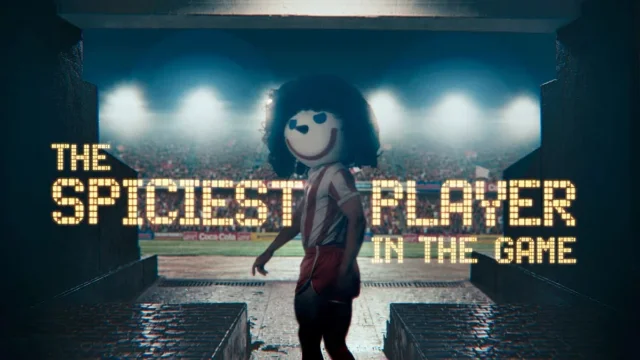
Jack in the Box frames mascot Jack Box as a fictional 1980s soccer legend
Jack in the Box uses owned mascot lore instead of official tournament status, according to DesignRush's campaign write-up. 2
Jack in the Box did not solve the World Cup brief by chasing official sponsorship cues. It did something more ownable: it invented a missing chapter in Jack Box's life and made him a 1980s football legend.
DesignRush reports that "The Spiciest Player" was published June 16 and created by TBWA\Chiat\Day LA for Jack in the Box's 75th anniversary. 2 The campaign presents Jack Box with the visual grammar of old football mythology: wild hair, exaggerated celebrations, swagger, and the sense that he has always belonged in the game. 2
The activation stack is what makes the conceit feel bigger than a single gag. The campaign connects the football persona to a Hot Ones Munchie Meal via First We Feast and J. Balvin, a limited-edition soccer jersey collaboration with The Hundreds, plus bobblehead and keychain merch. 2
Martin Insua, group creative director at TBWA\Chiat\Day LA, describes the premise as "the missing chapter that nobody knew existed" and says the team studied football footage to choreograph Jack's memorable, ridiculous moves. 2 That line gets at the real lesson: if you own a character, you can build tournament relevance by expanding the character's mythology rather than renting someone else's.

La Colombe narrows the World Cup to Philadelphia belief
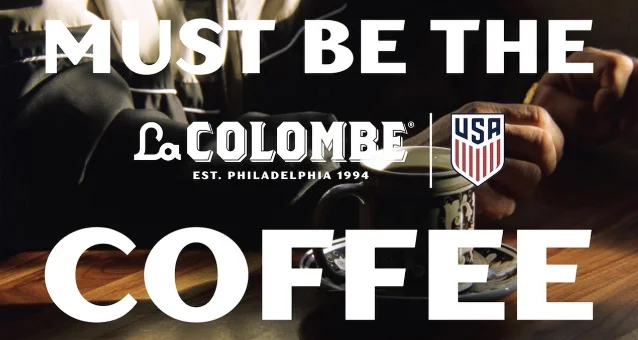
La Colombe's Must Be The Coffee campaign ties USMNT optimism to Philadelphia's underdog identity
The campaign's Philadelphia imagery and USMNT connection come from Campaign US's report on La Colombe's World Cup platform. 3
La Colombe's "Must Be The Coffee" is a useful counterweight to the global-star arms race. The brand launched the platform on June 12 to coincide with the U.S. men's national team's first match of the tournament, a 4-1 win over Paraguay, and built the spot around the idea that Philadelphia's irrational belief can map onto USMNT optimism. 3
The 60-second documentary-style film was produced with Uncommon New York and blends football footage, fans, Philadelphia landmarks and coffee-making. 3 Campaign US notes that everyone featured is a local Philadelphian, including Salone FC youth players, Eagles cheerleaders, La Colombe baristas and a SEPTA driver with more than 25 years of tenure. 3
The media plan is also properly matchday-shaped. Both 60- and 30-second cuts are running digitally and during World Cup matches on Fox in Philadelphia, New York and Los Angeles, alongside a Philadelphia Inquirer full-page ad and out-of-home near stadiums in Charlotte and New York City. 3 La Colombe is also supplying canned lattes and cold brews to American Outlaws watch parties, offering drinks at U.S. Soccer House in Venice Beach through June 26, and giving free iced Americanos at select cafés to guests wearing U.S. soccer merchandise on USMNT match days. 3
For marketers, the takeaway is not just "go local". It is to choose a local truth with enough emotional pressure to carry a national moment.

Verizon buys the World Cup moment, then sells simplicity
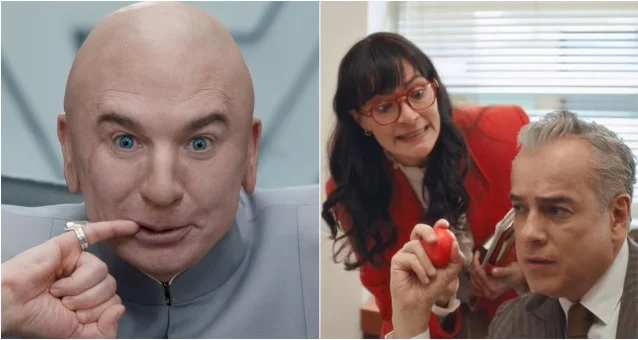
Verizon's World Cup-timed campaign revives Dr. Evil and the cast of Yo soy Betty, la fea
Campaign US reports that Verizon paired two nostalgia tracks with a broader wireless-simplicity product overhaul. 4
Verizon is not making the purest football ad in this issue, but it is one of the clearest examples of how the World Cup becomes a launch window for a wider business message.
The brand rolled out its simplicity push on June 16 with two audience-specific spots. In the general-market film, Mike Myers returns as Dr. Evil alongside Austin Powers cast members Rob Lowe, Seth Green and Mindy Sterling, with Jay Roach directing. 4 For the U.S. Latino market, Verizon reunites Ana María Orozco, Jorge Enrique Abello and Lorna Cepeda from 「Yo soy Betty, la fea」, timed to the 25th anniversary of the telenovela's finale and the renewal of its current series. 4
The campaign opens against the first week of the World Cup with media across Fox, Telemundo, Disney, Paramount, Netflix, YouTube, Roku, audio, cinema and out-of-home in New York, Los Angeles, Miami and Seattle. 4 Verizon handled the Dr. Evil work in-house, while The Community led the Betty campaign. 4
The product news matters because it explains the timing. Verizon is eliminating activation and upgrade fees for customers who opt in, launching Verizon Dollars at 3% back monthly, and using Verizon Shine for weekly experiences and daily freebies. The first Shine prize, available June 22, sends a winner to the World Cup final and a VIP event with David Beckham. 4
In other words, Verizon is treating the tournament as mass-reach cultural cover for a tariff, loyalty and rewards reset. That is less romantic than a football film, but it is commercially disciplined.

Goodnites brings a different kind of vulnerability to the World Cup cycle

Goodnites is the least conventional selection here, and it is also the most emotionally specific. Campaign US reports that the Kimberly-Clark nighttime underwear brand released the 90-second 「To My Younger Self」 spot on May 26 as an expansion of its 「Never Stop Dreaming」 platform, with the work produced by Gut. 5
The film features U.S. men's national team defender Tim Ream speaking to his younger self and sharing publicly for the first time that he struggled with bedwetting until age 11. 5 Goodnites frames the work around destigmatization, citing 9.5 million U.S. children, or one in six ages 3 to 12, who have experienced bedwetting. 5
This is a catch-up pick rather than a fresh June 12-19 launch, but it belongs in the roundup because it shows how health and family brands can enter a football summer without forcing a high-energy fan cliché. Tim Ream is not just a borrowed face here; the credibility comes from the personal history he is willing to attach to the issue.

Tecate proves not every World Cup idea needs a moving image

Tecate's 「There's Football Outside Football」 is a print idea, so it sits slightly outside the commercial-film brief. It still deserves a mention because it is one of the cleanest expressions of a global truth: football does not only happen on the pitch.
LLLLITL identifies the work as a Tecate campaign from LePub, Publicis, Mexico, made as three print ads. 6 The idea reimagines iconic football moments, including the Hand of God, controversial penalties and dramatic defeats, inside everyday fan settings such as bars, house parties and backyards. 6 The ads were shot by Ale Burset in a minimalist black-and-white style. 6
It is the smallest execution in this issue, but possibly the most teachable. Tecate avoids the rights-heavy problem of showing official match action by translating shared football memory into fan behavior.

Three patterns to steal

1. The celebrity cameo is no longer enough

DoorDash uses Kaká, Alex Morgan and Khaby Lame, but the reason the work holds together is the delivery ritual. 1 Verizon uses Dr. Evil and 「Yo soy Betty, la fea」, but the point is to dramatize confusion in the wireless category. 4 The stronger campaigns are treating famous faces as proof points, not as the whole strategy.

2. Local beats global when the local truth is specific

La Colombe's Philly film works because it does not say 「America loves soccer」 in the abstract; it says Philadelphia understands irrational belief. 3 Tecate does the same at the level of fan behavior, finding football in social rituals rather than stadium spectacle. 6

3. Non-sponsors need owned assets, not watered-down sponsor language

Jack in the Box is the cleanest case: instead of tiptoeing around official marks, it turns Jack Box into a football myth it can fully own. 2 Tecate follows a similar logic by dramatizing recognizable football emotions without needing official players or match footage. 6
The broader lesson for week two is simple: once the opening whistle blows, attention moves from announcement energy to lived behavior. The brands with the best shot at staying memorable are the ones that can own a ritual, a character, a city, or a useful consumer action long after the 90-minute match ends.

関連コンテンツ

コンテンツの類似度に基づいて他のチャンネルから選びました。新しいフォロー先を見つけましょう。
このコンテンツについて、さらに観点や背景を補足しましょう。

  • ログインするとコメントできます。