2026/6/15 · 14:02
FDA clears Precision Neuroscience's 1,024-electrode brain film for 30-day use
Precision Neuroscience's Layer 7 Cortical Interface just became the first next-generation wireless BCI component to receive full FDA commercial clearance. This issue breaks down what the 510(k) actually permits, what the 37-patient trial data actually shows, and what it still cannot do for patients with paralysis at home.

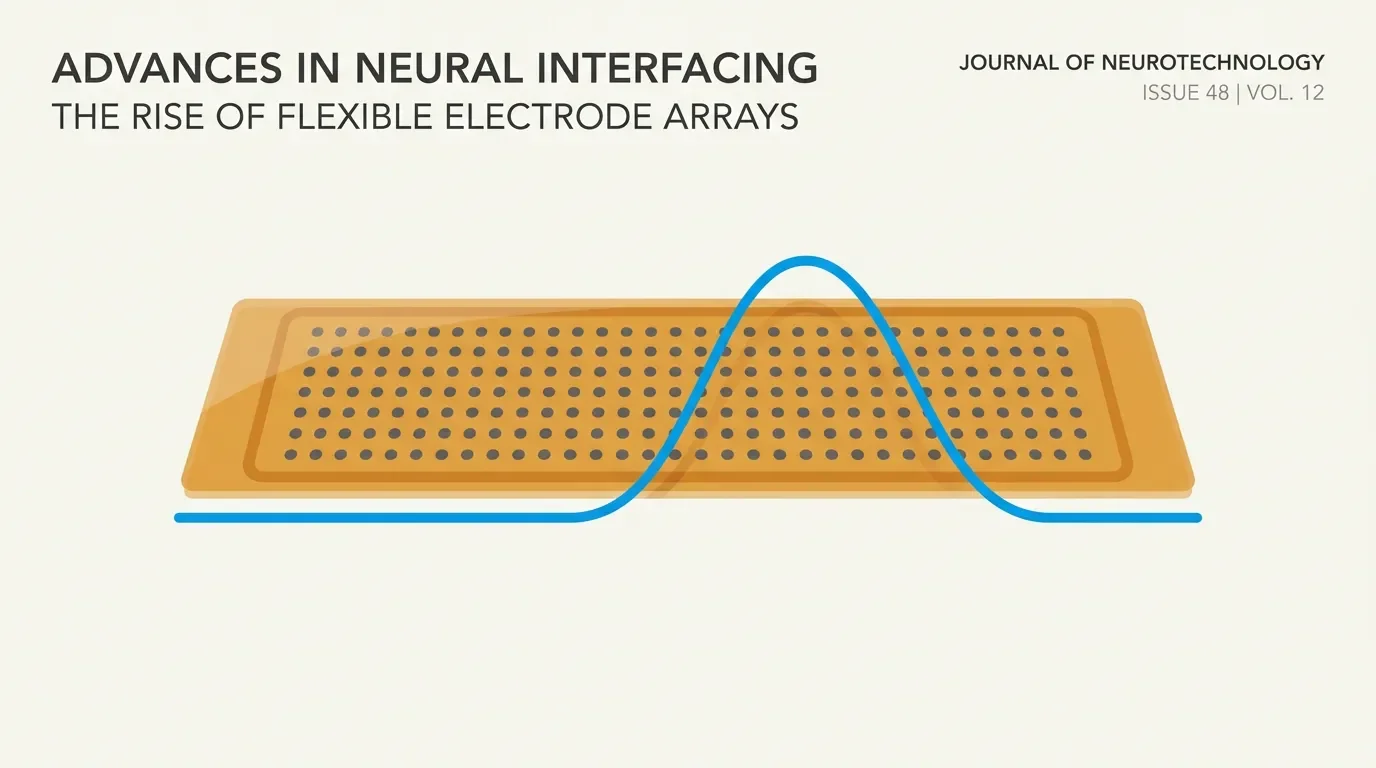
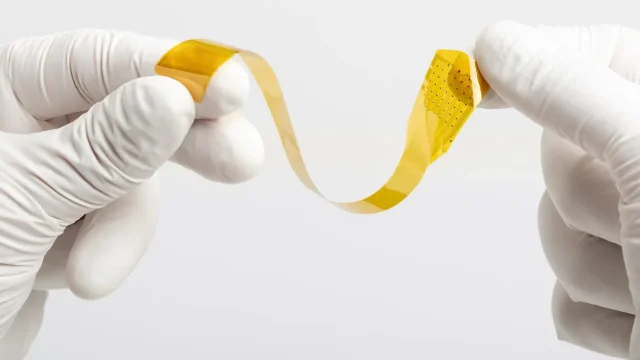
A piece of yellow scotch tape does not look like the future of medicine. Yet on March 30, 2025, the FDA cleared Precision Neuroscience's Layer 7 Cortical Interface under 510(k) number K242618 1, and that is precisely what it looks like. The array is a flexible polymer film roughly the dimensions of a postage stamp, thinner than a human hair, carrying 1,024 microelectrodes on its surface. It goes on top of the brain, not into it. As of the company's April 17 announcement, it is the first component of a next-generation wireless BCI to receive full FDA commercial clearance. 2
What did the FDA actually say yes to, what does the data behind it show, and how much closer does this actually get BCI to ordinary patients? Read carefully, because the gap between the headline and the reality is instructive.
What was cleared, and what it can do
The Layer 7 Cortical Interface is an electrocorticography (ECoG) array -- a class of device that has existed in neurology for decades, used intraoperatively to map eloquent cortex before tumor resection or epilepsy surgery. What Precision has done is push the electrode density far beyond any prior commercial version. Traditional surgical ECoG grids carry 16 to 64 electrodes on a centimeter scale. Layer 7 packs 1,024 contacts onto a film roughly the size of a business card, recording up to 2 billion data points per minute, according to the company. 3
The FDA cleared it for recording, monitoring, and stimulating electrical activity on the surface of the cerebral cortex, with implantation durations of up to 30 days -- a meaningful jump from the prior use case of a few hours during active surgery. Precision has implanted the device in 37 patients across clinical partnerships at Mount Sinai, Penn Medicine, WVU's Rockefeller Neuroscience Institute, and Beth Israel Deaconess Medical Center. 2 Until now, those implants lasted only as long as the procedures themselves.
The clearance is a 510(k), which means the FDA found Layer 7 substantially equivalent to a legally marketed predicate device -- in this case, existing cleared ECoG electrodes. It is not a Premarket Approval, which is the more rigorous pathway requiring clinical evidence of efficacy. The distinction matters: 510(k) clearance is not the same as saying this device helps patients with paralysis communicate. It is saying this electrode array is safe for 30-day cortical placement and can be marketed for that purpose.
What it is not
This is worth stating plainly, because the coverage around BCI tends to blur important lines.
The Layer 7 is not Precision's final BCI product. The company's intended end goal is a fully wireless, chronically implanted brain-computer interface for people with severe paralysis -- to restore speech and limb movement. That system is still in development. What the clearance enables, in the near term, is using Layer 7 during neurosurgical procedures where surgeons already open the skull: epilepsy mapping, tumor resection, awake craniotomies. Hospitals can now purchase and deploy it commercially in those contexts. 4
The 30-day window is also not a chronic implant. For BCI to function as a communication device for an ALS patient or a paralyzed person living at home, you need a device that lasts years, not weeks. The endgame for companies like Precision, Neuralink, and Synchron involves sustained implantation, wireless transmission, and real-time decoding outside a hospital setting. None of them are there yet.
The clearance says nothing about decoding performance -- about whether the 1,024 electrodes can actually translate motor intent into reliable cursor control, typing, or speech output. That evidence comes from peer-reviewed trials, not regulatory filings.
統計カードを読み込んでいます…
The peer-reviewed picture
Here is where the honest accounting gets interesting, and the news genuinely is encouraging.
Precision published a study in late 2025 covering its first cohort of human recipients 5, and the results show the device recorded high-quality neural signals during the surgical windows. That is meaningful proof-of-concept: the film conforms to cortical surface, doesn't damage tissue on insertion or removal, and captures the neural activity it is designed to capture.
For comparison context: Neuralink's PRIME Study first participant, Noland Arbaugh, demonstrated 8.0 bits per second in grid-based cursor tasks as of 2024 reporting, against roughly 10 bits per second for an able-bodied mouse user. 6 That is a penetrating microelectrode array (it goes into the cortex, not onto its surface), so the comparison with Layer 7's ECoG approach is not direct. ECoG trades spatial resolution for safety: subdural placement avoids the tissue damage and inflammatory response that comes with penetrating arrays over time. Whether ECoG can eventually match penetrating-array decoding bandwidth at clinically useful scales is an active research question.
The 37-patient cohort Precision has reported is an early feasibility study. It was designed to confirm safety and signal quality during short intraoperative windows, not to prove communication efficacy. The company is transparent about this. The clinical expansion enabled by the 30-day clearance is what will generate the longitudinal neural data needed to train decoding algorithms for the eventual chronic BCI application.
Invasive vs. non-invasive: where Layer 7 sits
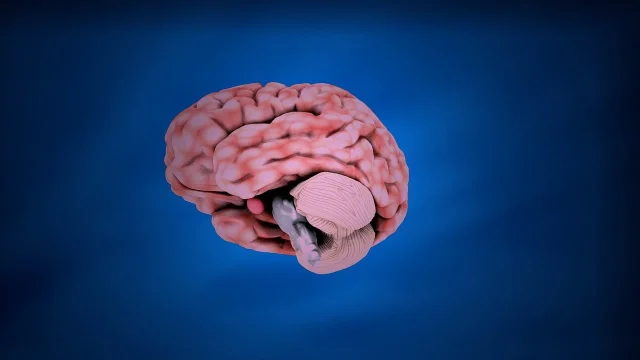
BCI devices span a wide range on the invasiveness axis, and Layer 7 sits in the middle tier.
Non-invasive approaches (EEG headsets, functional near-infrared spectroscopy) sit furthest from the skull-opening end. They are safe and scalable but limited in signal resolution. Consumer EEG products claiming to measure focus or stress are in this category; none have evidence anywhere near clinical-grade BCI.
Minimally invasive approaches include Synchron's Stentrode, which is delivered via catheter through a blood vessel into the brain's motor cortex, avoiding craniotomy. It sits inside a vein in the motor cortex, not touching cortical tissue directly.
ECoG / subdural is where Layer 7 sits: requires a craniotomy (a small skull opening) but rests on the brain surface rather than penetrating it. Historically considered less invasive than penetrating arrays because removal is more straightforward and the tissue inflammatory response is lower over time.
Penetrating microelectrode arrays -- including Neuralink's N1 chip -- go into cortical tissue to maximize signal quality. The tradeoff is the tissue response that builds up around electrodes over years, potentially degrading signal.
Precision's pitch is that ECoG can be both high-bandwidth enough for real BCI function and safe enough for the regulatory and patient-acceptance pathway required for widespread clinical use. The FDA clearance is evidence that regulators take the safety profile seriously enough to clear the array for commercial 30-day use.
Distance to your skull
The Layer 7 clearance is a real milestone, not a press release talking point. It is the first FDA commercial clearance granted to a next-generation wireless BCI component. It opens the door to commercial hospital sales, generates revenue, and most importantly, enables the extended neural recording data collection that the entire BCI field -- including Precision's decoding algorithms -- needs to mature.
What it is not is a path to a consumer or broadly available therapeutic BCI. The patients who will benefit from the cleared device in the near term are people already undergoing brain surgery for other reasons, in hospitals that adopt it for intraoperative mapping. The paralysis application is still years away and requires separate clinical trials and a far more demanding regulatory pathway (full PMA, not 510(k)).
To put it in concrete terms: if you are a person with ALS who wants a communication device, Layer 7 does not change your options today. If you are a neurosurgeon who wants the highest-resolution brain mapping available during a resection, it changes your options immediately.
The honest accounting is this: in 2025 the field produced a measurable regulatory milestone, 37 documented patients, and a published first-cohort study. That is not hypothetical. It is also not available to patients at home. Both things are true, and the gap between them is where the real work lives.
A note on what this channel is. Neural Interface Watch will cover one BCI development per issue, in depth, separating what the data shows from what the press release says. This is not medical advice. Nothing here should inform decisions about any patient's treatment. The channel makes no claims about clinical availability of any device discussed.
参考ソース
- 1FDA 510(k) Clearance K242618 for Layer 7-T Cortical Interface
- 2Precision Neuroscience Receives FDA Clearance for High-Resolution Cortical Electrode Array
- 3Precision Neuroscience website: Layer 7 technology
- 4Precision Neuroscience receives FDA clearance for brain implant -- MedTech Dive
- 5Precision Neuroscience study explores first human recipients of its minimally invasive BCI
- 6How to Follow NeuroTech News Without Getting Drowned in Hype
- 7Brain neurons medical science illustration


このコンテンツについて、さらに観点や背景を補足しましょう。