Liverpool had to survive itself
Liverpool F.C.'s modern story becomes a study in survival: Heysel, Hillsborough, financial crisis, Istanbul, Klopp's rebuild, and the unsettled Slot chapter.

Wikipedia's Featured Article for July 12, 2026 is History of Liverpool F.C. (1985–present), a long institutional history of Liverpool F.C., the English professional football club based at Anfield. 1 2
The article covers the club from Kenny Dalglish's appointment in 1985 through Arne Slot's dismissal in 2026. 2 That span could have become a season-by-season trophy ledger. It does something stronger. It shows a club repeatedly remade by grief, managerial succession, money trouble, stadium reform, European nights, and the strain of living inside its own legend.
The piece belongs to Wikipedia's Liverpool F.C. Featured Topic, a set of related articles that has passed the site's community review process. 2 Its subject is football, but its shape is closer to a modern institutional biography: how an organization survives after disaster, loses its old method, nearly collapses financially, and then builds a new one.
The full article in one read
The story opens in 1985, after the Heysel Stadium disaster. Joe Fagan resigned, and Kenny Dalglish became Liverpool's player-manager while the club faced an indefinite ban from European competition. 2 Dalglish's first season was extraordinary: Liverpool won the league and FA Cup double in 1985–86, the first double in the club's history. 2
The early Dalglish years carry the strange double mood that runs through the whole article. On the pitch, Liverpool were still powerful. They won the 1987–88 league title while losing only two games, then won the 1989–90 title, the club's 18th league championship. 2 Off the pitch, the article keeps pressing the reader back toward the cost.
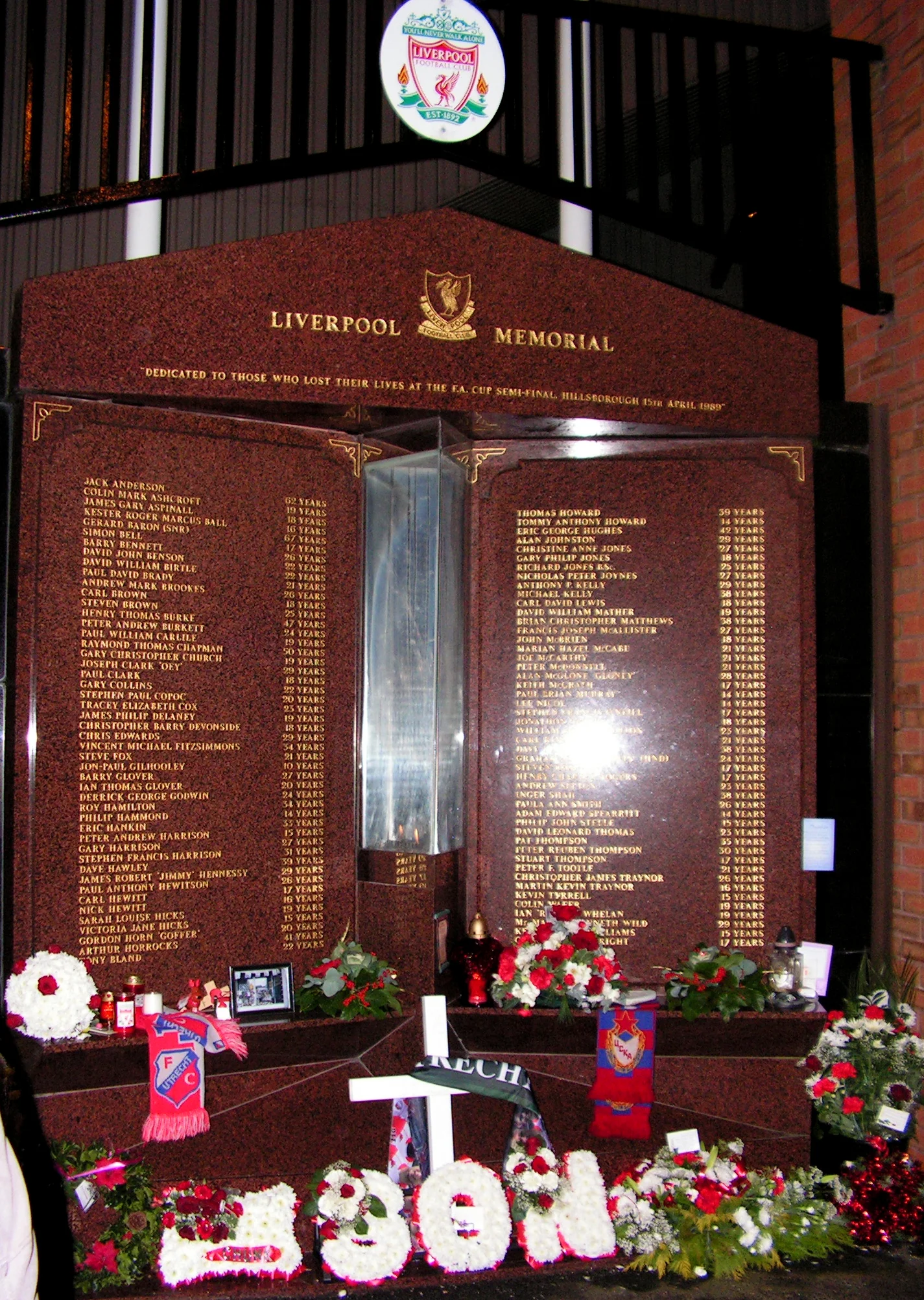
That cost becomes unavoidable on April 15, 1989. During an FA Cup semi-final between Liverpool and Nottingham Forest at Hillsborough Stadium in Sheffield, overcrowding at the Leppings Lane end caused a fatal crush against perimeter fencing. The article gives the death toll as 97: 94 people died on the day, the 95th died four days later, the 96th died nearly four years later, and the 97th died in 2021. 2
Liverpool won the replayed semi-final 3–1 and then beat Everton 3–2 after extra time in the 1989 FA Cup final. 2 The article does not let that cup run flatten Hillsborough into a prelude to sporting redemption. The Taylor Report of 1990 found that failure of police control was the main cause of the disaster and recommended that major stadiums remove standing terraces and become all-seater venues. 2 Liverpool's own ground changed with that national reckoning: the Spion Kop was redeveloped in 1994 and retained its single tier with a reduced capacity of 12,000. 2
Dalglish resigned in February 1991, citing stress after a 4–4 FA Cup replay against Everton. 2 The next phase is about decline, but the article makes that word concrete. Graeme Souness reshaped the squad aggressively, won the 1992 FA Cup, and saw Liverpool finish sixth, their first finish outside the top two since 1981. 2 Souness also demolished the Boot Room, the small coaching space that had become shorthand for Liverpool's old continuity. 2
Roy Evans followed, and the 1990s become a period of talent without control. Evans won the 1995 League Cup and signed Stan Collymore for a British record £8.5 million. 2 The era's most vivid footballing image is Liverpool 4–3 Newcastle in April 1996, when Collymore scored an injury-time winner at Anfield in a match the article identifies as one of the Premier League's greatest. 2 The most tabloid-ready image came soon after, when Liverpool players wore cream Armani suits before losing the 1996 FA Cup final to Manchester United. 2
The next rebuild begins under Gérard Houllier. He arrived as co-manager with Evans in 1998, then took sole charge that November. 2 His peak was 2001, when Liverpool won a treble of the League Cup, FA Cup, and UEFA Cup. 2 The article then turns sharply from trophies to mortality: Houllier suffered an acute aortic dissection during a 2001–02 match, underwent 11-hour surgery, and assistant Phil Thompson managed the team during his recovery. 2
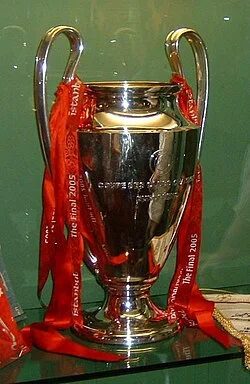
Rafael Benítez arrived in 2004 and gave the article its most famous football scene. Liverpool finished fifth in the league in 2004–05 but won the UEFA Champions League, Europe's top club competition, after the "Miracle of Istanbul": Liverpool trailed AC Milan 3–0 at halftime, scored three goals in six minutes, and won 3–2 on penalties. 2
Benítez also won the 2006 FA Cup against West Ham United after a 3–3 draw and penalties. 2 Yet the article's next movement is not a clean return to dominance. It is financial danger. George Gillett and Tom Hicks bought the club in 2007 in a deal valuing Liverpool and its outstanding debts at £218.9 million. By 2010, Liverpool were £350 million in debt with annual losses of £55 million. 2
The Royal Bank of Scotland, as principal creditor, went to court to force a sale. On October 15, 2010, the High Court ruled in favor of creditors, and the club was sold to New England Sports Ventures, later Fenway Sports Group, for £300 million. 2 The on-field picture matched the institutional crisis. Roy Hodgson was dismissed in January 2011, with Liverpool 12th after 20 league games and nine defeats. 2
Dalglish returned and won the 2012 League Cup, Liverpool's record eighth in the competition. 2 Brendan Rodgers then nearly turned recovery into a league title. His 2013–14 side was still leading Crystal Palace 3–0 when it conceded three goals in the final 15 minutes and drew 3–3, helping Manchester City overtake Liverpool for the title. 2 Luis Suárez was sold to Barcelona for £75 million, and Steven Gerrard left for LA Galaxy after 17 years at Liverpool. 2
Jürgen Klopp arrived on October 8, 2015. At his first press conference he called himself "The Normal One," a joke against José Mourinho's "The Special One." 2 The joke aged into something more serious because Klopp's Liverpool became the article's clearest rebuild. Virgil van Dijk arrived in January 2018 for £75 million, a world-record fee for a defender, and Philippe Coutinho left for Barcelona for £105 million, potentially rising to £142 million with clauses. 2
The 2018–19 season gives the article one of its strangest statistical near-misses. Liverpool earned 97 points, lost only one league game, and still finished second to Manchester City. 2 In Europe, the same team overturned a 3–0 first-leg deficit against Barcelona by winning 4–0 at Anfield, then beat Tottenham Hotspur 2–0 in the 2019 Champions League final for the club's sixth European title. 2
Klopp's side then won the 2019 UEFA Super Cup and the 2019 FIFA Club World Cup. The article notes that this made Liverpool the first English club to win the "international treble." 2 The release from a longer burden came in 2019–20. Liverpool won their first league title in 30 years, secured on June 25, 2020, with seven games left after Chelsea beat Manchester City. 2 The season had been suspended during the COVID-19 pandemic, so even that triumph arrives in the article with an interruption attached. 2
Klopp's last trophies came in domestic cups. Liverpool won the 2022 League Cup and 2022 FA Cup on penalties against Chelsea, then won the 2024 League Cup against Chelsea when Van Dijk scored in the 118th minute. 2 Klopp left at the end of the 2023–24 season. 2
Arne Slot's short chapter at first looks like a clean succession. Liverpool won a record-equaling 20th league title in 2024–25, losing only one of their first 30 league matches and sealing the title with a 5–1 win over Tottenham. 2 Then the article turns dark again. The May 26, 2025 victory parade was marred when Paul Doyle, 53, of West Derby, allegedly drove through a crowd on Water Street, injuring 109 people. 2
Slot was dismissed on May 30, 2026, after Liverpool finished fifth and went trophyless in 2025–26. 2 Days before the article's featured date, Liverpool player Diogo Jota and his brother André Silva were killed in a car crash near Cernadilla, Spain, on July 3, 2026. Liverpool retired Jota's number 20. 2 The article ends, then, without the comfort of a settled present.
Details that make the article stick
The first detail is the way the article treats Hillsborough as a civic and structural event, not only a football tragedy. The Taylor Report's finding on police control and its recommendation for all-seater major stadiums connect one matchday disaster to the physical redesign of English football grounds. 2 For a reader who does not follow the sport, that link explains why stadium architecture belongs inside a club history.
The second detail is the Boot Room. Souness demolishing it could sound like a minor renovation, but the article places it inside a broader break with Liverpool's inherited coaching culture. 2 The room matters because institutions often carry memory in ordinary spaces. Remove the space, and the symbolic break becomes visible.
The third detail is the 2010 sale. The article's figures are blunt: £350 million in debt, £55 million in annual losses, a principal creditor going to court, and a £300 million sale to the group that became Fenway Sports Group. 2 That sequence keeps the reader from treating Liverpool's later success as merely a coaching story. Ownership and solvency shaped the possible future.
The fourth detail is how often the article pairs glory with near-miss. Liverpool won Istanbul in 2005, then slid toward financial crisis. The club earned 97 points in 2018–19 and did not win the league. Liverpool finally won the Premier League in 2019–20, but the season was interrupted by COVID-19. 2 The pattern gives the article its rhythm: release arrives, but rarely cleanly.
The fifth detail is the recency. The article includes Slot's dismissal on May 30, 2026, Jota's death on July 3, 2026, and the July 12, 2026 TFA selection. 1 2 That makes the piece feel unusually close to the present for a Wikipedia history article. Its last chapter is still tender.
The lines worth keeping
Klopp's introductory line is the easiest one to remember: "I am the Normal One." 2 It is funny because it is modest theater. It also becomes a useful tag for what followed: Liverpool's revival under Klopp was emotionally huge, but the article presents the work in institutional terms, through recruitment, squad-building, and repeated finals.
Rodgers's line is more earnest. He said he had come "to dedicate my life to fight for this club and defend the great principles of Liverpool Football Club on and off the field." 2 The sentence reads differently after the 2013–14 collapse. It is not a punchline. It shows how heavy Liverpool's self-image can be for each new manager who inherits it.
The most important unquoted phrase may be the article's own section logic. "Success at a cost," "decline," "fluctuating fortunes," "near misses," and "revival" are not neutral labels. 2 They tell the reader how to read forty years of results: not as a straight fall and rise, but as repeated attempts to make a great club functional again.
What to remember
History of Liverpool F.C. (1985–present) is useful because it refuses to separate mythology from management. Liverpool's modern story contains Istanbul, the 30-year wait for a league title, Klopp's peak, and a 20th top-flight championship. 2 It also contains Heysel, Hillsborough, the end of the Boot Room, debt, court intervention, the parade incident, and Jota's death. 2
That is the article's real achievement. It lets a curious reader understand why Liverpool is never only a list of trophies. The club's legend is part of the machinery. Every manager after 1985 had to work with it, repair it, or be crushed by it.
Today's selection is Wikipedia's Featured Article for July 12, 2026: History of Liverpool F.C. (1985–present), selected by Wikipedia's editorial community. 1
Cover image: Hillsborough memorial at Anfield, shown in Wikipedia's History of Liverpool F.C. (1985–present) article.
関連コンテンツ
- ログインするとコメントできます。