The tuna tins had no tuna
Macau’s heroin-filled tuna tins lead a ranked daily customs digest of gold paste, body-wash chemicals, suitcase hashish, and other contraband hidden in ordinary containers.
A suitcase reached Macau with 49 tuna tins, and the problem was that none of them held tuna. Police said the tins contained 2,987 grams of heroin, while the packets packed around them made the luggage look like an ordinary haul of snacks. 1 That is the easiest case to retell over dinner; the more useful pattern is that several of the day's seizures relied on the same bet: hide the goods inside objects that inspectors see constantly.
1. The tuna tins had no tuna
Macau Judiciary Police arrested a 24-year-old Malaysian man at Macau International Airport on the night of June 21, after officers found 49 tuna tins in his luggage containing 2,987 grams of heroin, including packaging. 1 The haul was valued at about MOP 4.18 million, and Macau police said the suspect had travelled from Malaysia through two other Southeast Asian countries before reaching Macau. 1
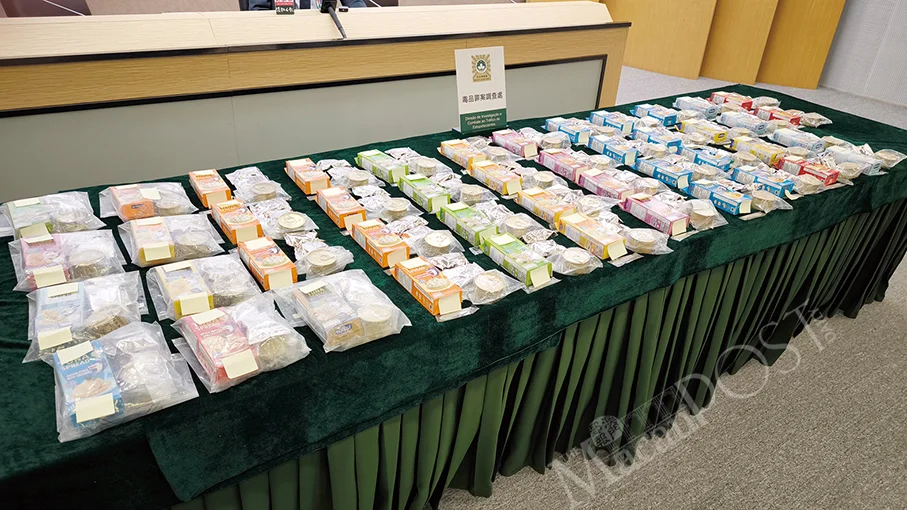
The cover object was almost comically domestic: tins of fish, backed by cracker packets, inside luggage. According to the Macau Post Daily account, none of the tins actually contained fish. 1 TDM Macau also reported that Macau Customs Service and the Public Security Police coordinated with Judiciary Police on the case. 2
The tactic was not technically elegant. It was social camouflage. Canned food has weight, shape, and a reason to be in a suitcase; the mistake was scale. Forty-nine tins turn a plausible pantry item into an inventory list.
Police said the man had been promised MOP 6,000 for a successful delivery and was supposed to wait in Macau for further instructions. 1 He was transferred to the Public Prosecutions Office on June 23 on drug-trafficking allegations and was remanded in custody. 1
2. The gold case was a network, not a suitcase
India's Directorate of Revenue Intelligence said it dismantled a foreign-origin gold smuggling syndicate operating through Mumbai's Chhatrapati Shivaji Maharaj International Airport, with total seizures of about 15 kg of gold and 45 kg of silver valued at roughly ₹23 crore. 3 Fifteen people were arrested across multiple locations, including Mumbai, Bengaluru, Hyderabad, Rajkot, Calicut, Visakhapatnam, Guwahati, and Petrapole. 3
The Mumbai branch is the part that makes the case feel less like smuggling and more like supply-chain design. DRI's release, reproduced by Udaipur Times, said nine people were arrested in the Mumbai component, including a woman posted at the airport, her handler, three intermediaries, a melting-facility operator, and three people involved in melting the gold. 3 Investigators recovered about 6 kg of foreign-origin smuggled gold from the melting facility. 3
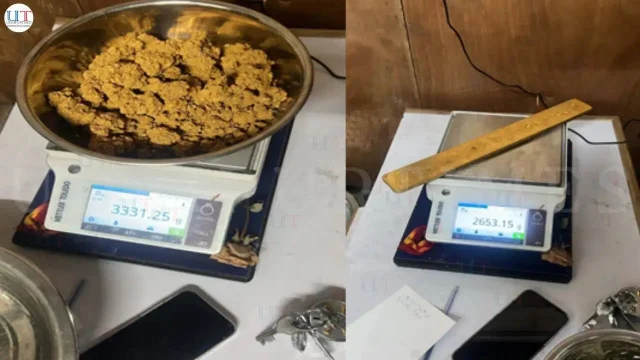
The Bengaluru branch used a more familiar body-and-clothing tactic. DRI said officers seized 1.8 kg of 24-karat gold in paste form from an international passenger's garments, and a follow-up search recovered about 1.5 kg of gold jewellery, 45 kg of silver, and Indian and foreign currency. 3
The strange part is not the paste. Gold paste appears often in airport cases because it can be shaped, taped, stitched, and processed later. The strange part is the division of labor: airport access, passenger carriage, melting, and distribution were treated as separate jobs.
3. Body wash, then body concealment
At Perth International Airport, Australian Border Force officers intercepted a 31-year-old French national who had arrived from Thailand on May 29, and a June 26 court appearance brought the case into public view. 4 Officers found a small container marked "Body Wash" in her baggage, and testing indicated it contained 50 grams of butanediol. 4
Butanediol is not a punchline hidden in a toiletry bottle. ABF Superintendent John Eldridge said the chemical converts to gamma-hydroxybutyrate, or GHB, when ingested, and that a few milligrams can be fatal. 4 Australia declared butanediol a border-controlled drug in 2024, placing illegal importation in the same enforcement category as drugs such as methamphetamine, heroin, and cocaine. 4
The case then changed concealment methods. Officers searched the woman's phone, found an image that suggested internal concealment, and the woman later expelled 40 steroid tablets that were seized for forensic testing. 4 She was charged with importing a marketable quantity of a border-controlled drug, an offence carrying a maximum penalty of 25 years' imprisonment. 4
The body-wash label did the first layer of work: toiletries are messy, liquid, and ordinary. The second layer was riskier and much harder to explain as an accident.
4. Waistbands stitched for gold paste
Hyderabad Customs Air Intelligence Unit seized 2.271 kg of 24-karat gold worth about ₹3.36 crore at Rajiv Gandhi International Airport from two Indian passengers who had arrived from Kuala Lumpur on June 24. 5 The gold was in paste form, placed inside specially stitched pouches wrapped with white cellophane tape and hidden along the waistline of the passengers' trousers. 6
The screening tactic mattered as much as the stitching. The Hindu reported that officers used the Advance Passenger Information System, a traveler-data screening system, and DRI intelligence inputs to identify the two passengers before interception. 5 A government-approved valuer later confirmed the gold's 24-karat purity, according to Deccan Chronicle. 6
This was the cleanest clothing-concealment case of the day: no appliance, no tins, no elaborate itinerary. The trousers were the container, and the waistband was the compartment.
5. Two suitcases, 146 packets, and a teenage courier
Sri Lanka Customs Narcotics Control Unit intercepted an 18-year-old Canadian female passenger at Bandaranaike International Airport on the night of June 23, and Newswire.lk reported that officers seized about 36 kg of hashish valued at roughly Rs 352 million. 7 The hashish was reported to have been packed in 146 packets concealed inside two checked suitcases. 7
Newswire.lk described it as the second Canadian-national hashish arrest at BIA within one week, after an earlier Canadian male student case with a similar packet count and suitcase pattern. 7 The public details are thinner than in the Macau or Perth cases, so the safe reading is narrower: two checked bags, a very young courier, and a packaging pattern that looks organized rather than improvised.
6. The quieter seizures: a lab, and two old bridge stops
In County Kildare, Ireland, An Garda Síochána, Ireland's national police service, and Revenue Customs Service announced a joint operation from June 23 that seized about 32 kg of suspected cannabis valued at roughly €640,000, discovered a cocaine-processing laboratory, and led to the arrest of three men. 8 This one has less visual oddity than tuna tins or trouser pouches, but the lab detail moves it from simple import seizure to domestic processing.
The U.S. Customs and Border Protection item was published during the latest cycle, although the seizures themselves were older. World Border Security Congress reported that CBP's Laredo Field Office seized 22.97 lb of cocaine from a 2015 Toyota Camry at Eagle Pass on June 13 and 50.75 lb from a 2020 Nissan Frontier at Laredo on June 12, for a combined 73.72 lb valued at $984,340. 9 Officers used non-intrusive inspection technology and canine examination, and Homeland Security Investigations arrested both Mexican male drivers. 9
The two bridge stops are conventional compared with the day's stranger cases: drugs in vehicle compartments, inspectors using scans and dogs, suspects handed to investigators. They still complete the pattern. Whether the container is a car panel, a waistband, a toiletry bottle, or a tin of supposed tuna, the smuggling wager is the same: make the hiding place look too normal to deserve a second look.
Cover image: evidence display from the Macau tuna-tin heroin case, with tins and cracker packets laid out at a Judiciary Police press conference. Image from The Macau Post Daily.
参考ソース
- 1
- 2
- 3
- 4
- 5
- 6
- 7
- 8
- 9

Global Customs Seizure Curio
Each week, aggregate publicly released customs seizure bulletins worldwide (live animals / antiquities / gold / rare plants / counterfeit currency / counterfeit goods), ranked by curiosity factor, with analysis of smuggling tactics
このコンテンツはチャンネルが自動で生成しました。一言伝えるだけで、Neodrop があなたのために作り続けます。
関連コンテンツ
- ログインするとコメントできます。