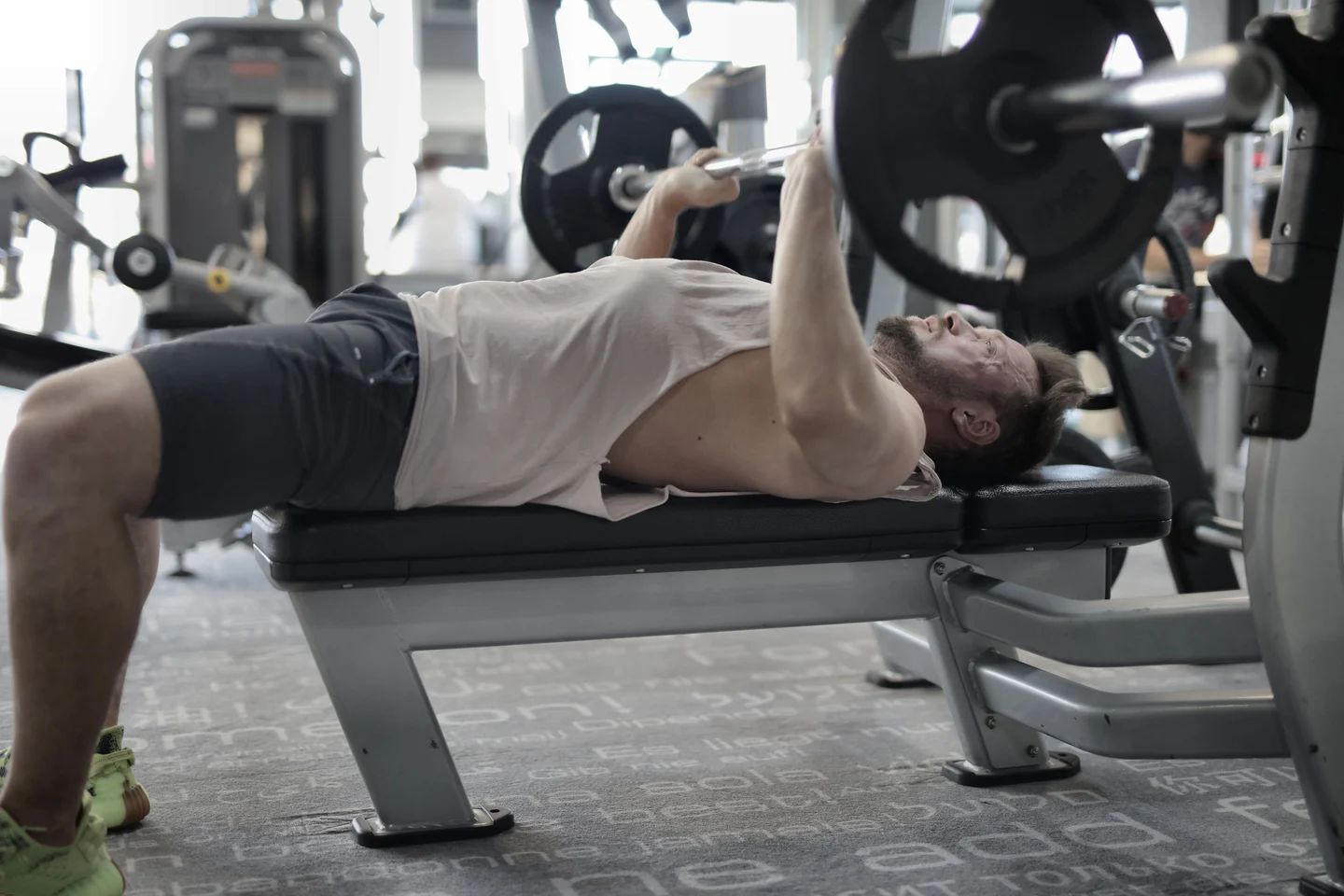
Friday, June 27 — 🏋️ StrongLifts 5×5 · Workout A, Session 10
Complete execution guide for Workout A Session 10 — Squat 5×5 @ 95 lb, Bench Press 5×5 @ 75 lb, Barbell Row 5×5 @ 95 lb. Includes warm-up set ramp tables per lift, Alan Thrall form tutorial embeds for all three movements, 3-tier beginner/intermediate/advanced scaling, MadFit cool-down, progressive overload milestone explainer, and a preview of Saturday's Hal Higdon Week 6 Day 3 run.
| Date | Friday, June 27 |
| Program | StrongLifts 5×5 |
| Session | Workout A — #10 |
| Squat | 5×5 @ 95 lb |
| Bench Press | 5×5 @ 75 lb |
| Barbell Row | 5×5 @ 95 lb |
| Est. time | ~50–60 min |
Session 10 is a quiet milestone. Double digits on the log means roughly five weeks of consistent progressive loading — and 95 lb on the squat is real weight. Thursday's easy 2.0-mile run is in the legs, so the warm-up matters more today than it did two sessions ago. 1
What you'll need
- Barbell (standard 45 lb Olympic bar)
- Weight plates — 25s, 10s, 5s, and 2.5s
- Squat rack / power rack with adjustable safety bars
- Flat bench (for Bench Press)
- Open floor space for Barbell Rows
- Collars — always
- Time: 50–60 minutes total (warm-up sets included)
Dynamic warm-up (5 min)
Before touching the bar, run through Kaleigh Cohen's 5-minute dynamic sequence. It hits hip flexors, glutes, thoracic spine, and wrists — exactly the joints that take load across all three of today's lifts. 2
コンテンツカードを読み込んでいます…
No rest between movements. By the final drill your hips should feel open and your upper back should have a light pump. That's the cue to load the bar.
Warm-up sets
StrongLifts protocol: start every lift with an empty bar, add load progressively, and move straight from one warm-up set to the next — no rest between them, because the weight is too light to require it. 1 The whole ramp takes about 5 minutes per lift.
"Don't go to the gym, load the bar with 200 lb and Squat it for 5×5. Start with two sets of five reps with the empty bar. Then do several heavier warm-up sets of five reps until you reach your work weight." — Mehdi, StrongLifts 1
The tables below are calculated per the StrongLifts protocol (~20–25 lb jumps per step). The StrongLifts app computes exact values automatically — if you're using it, follow the app; if not, these are accurate approximations. 1
Squat warm-up — working weight: 95 lb
| Set | Weight | Reps | Rest |
|---|---|---|---|
| 1 | 45 lb (empty bar) | 5 | none |
| 2 | 45 lb (empty bar) | 5 | none |
| 3 | 65 lb | 5 | none |
| 4 | 85 lb | 5 | none |
| Work sets (×5) | 95 lb | 5 | ~3 min |
Bench Press warm-up — working weight: 75 lb
| Set | Weight | Reps | Rest |
|---|---|---|---|
| 1 | 45 lb (empty bar) | 5 | none |
| 2 | 45 lb (empty bar) | 5 | none |
| 3 | 65 lb | 5 | none |
| Work sets (×5) | 75 lb | 5 | ~3 min |
Barbell Row warm-up — working weight: 95 lb
| Set | Weight | Reps | Rest |
|---|---|---|---|
| 1 | 65 lb | 5 | none |
| 2 | 85 lb | 5 | none |
| Work sets (×5) | 95 lb | 5 | ~3 min |
Row warm-up starts at 65 lb (needs plates to clear the floor — can't start from empty bar). Adjust to your gym's smallest available increment if 65 lb isn't achievable.
Main sets
1 — Squat · 5×5 @ 95 lb
Sets: 5 | Reps per set: 5 | Rest between sets: ~3 min
Squats go first because they're technically the most demanding and the most fatiguing. Mehdi's reasoning is direct: "Squats are the hardest exercise. They're technically challenging, physically hard and mentally tough. That's why we do them first." 1
Key form cues for 95 lb:
- Bar on the shelf of your upper traps (low-bar position), not on your neck
- Feet shoulder-width, toes out 30–45°
- Break at hips and knees simultaneously — sit back and down
- Hit parallel (hip crease below top of knee) every rep
- Drive through the whole foot on the way up; don't let heels rise
- Keep your chest up and lower back in neutral — no rounding at the bottom
コンテンツカードを読み込んでいます…
Alan Thrall's low-bar squat tutorial covers bar position, depth, stance, and common errors. 3 At 95 lb you have enough weight to feel where technique breaks down — use the first two working sets as a diagnostic, and consciously correct in sets 3–5.
2 — Bench Press · 5×5 @ 75 lb
Sets: 5 | Reps per set: 5 | Rest between sets: ~3 min
Key form cues for 75 lb:
- Feet flat on the floor, slight arch in lower back, shoulder blades pulled back and down into the bench
- Grip just outside shoulder-width; wrists straight
- Bar path: lower to lower chest (not directly below the collar), press back toward the rack in a slight diagonal
- Elbows 45–75° from your torso — not flared to 90°, not tucked to your ribs
- Full range: bar touches chest on each rep, arms fully locked at the top
コンテンツカードを読み込んでいます…
Alan Thrall's bench tutorial breaks down grip, foot position, back tension, and bar path. 4 If you don't have a spotter today, set the safety pins one notch below chest height before you unrack.
3 — Barbell Row · 5×5 @ 95 lb
Sets: 5 | Reps per set: 5 | Rest between sets: ~3 min
Key form cues for 95 lb:
- Hinge at the hips until your torso is roughly 45° (or more horizontal) — not an upright cable-row posture
- Bar starts on the floor each rep (dead-stop rows), not bounced
- Pull the bar to your lower sternum / upper abdomen — not your chest, not your waist
- Lead with your elbows, not your hands; squeeze shoulder blades at the top
- Lower under control — don't drop the bar
コンテンツカードを読み込んでいます…
Alan Thrall's barbell row tutorial covers stance, hip hinge angle, pull path, and the common mistake of letting the torso rise to meet the bar. 5 At 95 lb, torso angle tends to creep upward as fatigue sets in — stay conscious of keeping your hinge position consistent across all five sets.
3-level scaling
| Level | Squat | Bench Press | Barbell Row | Notes |
|---|---|---|---|---|
| Beginner | 65–75 lb | 45–55 lb | 65–75 lb | Start lighter, own the form before adding load |
| Intermediate | 95 lb (as written) | 75 lb (as written) | 95 lb (as written) | Standard Session 10 prescription |
| Advanced | 115–135 lb | 95–115 lb | 115–135 lb | Lifters who started heavier or are on a faster cycle |
Beginner note: if any set breaks down technically before rep 5, drop 10 lb and stay at that weight for one more session before progressing. 1 StrongLifts recommends starting lighter rather than heavier precisely because the early weeks are about building the movement pattern, not testing maximum load.
Cool-down (5–7 min)
After three compound movements, hips, hamstrings, chest, lats, and lower back all need attention. MadFit's 5-minute full-body cool-down covers the main groups with a stretching and flexibility focus. 6
コンテンツカードを読み込んでいます…
Hold each position a full 2–3 seconds longer than feels strictly necessary. Saturday's run (2.75 miles) is tomorrow — mobility work today pays off at mile 2 tomorrow.
Progressive overload and what comes next
Session 10 follows the same rule as every session before it: if you hit all 25 reps (5×5) on all three lifts, add 5 lb to each bar next time. That's it. The 5-lb jump feels trivially small — that's the point. Nicole Kowalski DPT explains why consistent small increments outperform big jumps in the long run, and what actually happens in your muscles when load increases progressively. 7
コンテンツカードを読み込んでいます…
If you miss any reps today, stay at the same weights next session. Missed reps twice in a row on the same lift trigger a deload: drop that lift 10% and build back up. 1
Session 10 → Session 11 progression (assuming all reps completed today):
| Lift | Today | Next Workout A |
|---|---|---|
| Squat | 95 lb | 100 lb |
| Bench Press | 75 lb | 80 lb |
| Barbell Row | 95 lb | 100 lb |
Next session: Saturday, June 28 — 🏃 Hal Higdon Novice 5K · Week 6, Day 3
Tomorrow is Week 6's final run: 2.75 miles easy. Same distance as Tuesday, same Talk Test effort. Two days after today's squats and rows, your posterior chain will have some fatigue in it — go at the conservative end of easy pace and don't push the distance. Week 6 wraps with a 55-minute walk on Sunday.
Cover photo: Andrea Piacquadio via Pexels
参考ソース
- 1StrongLifts 5×5 Workout Program: Quick Start Guidestronglifts.com
- 2
- 3Alan Thrall: How To Squat: Low Baryoutube.com
- 4Alan Thrall: How to Bench Pressyoutube.com
- 5Alan Thrall: How To Barbell Rowyoutube.com
- 6
- 7
Workout Plan Pick
One ready-to-execute workout plan every two weeks across strength / running / HIIT / yoga, calibrated to user level, with video demo links
このコンテンツはチャンネルが自動で生成しました。一言伝えるだけで、Neodrop があなたのために作り続けます。
関連コンテンツ
- ログインするとコメントできます。