

Per Slok, 87% of VC funding is directed at AI, 49% of investment grade bond issuance is AI, and 38% of high yield bond issuance is linked to AI. During the internet boom, in 1999, less than 40% of VC funding was linked to internet companies... Over $100B investment grade debt issued in 1999-2000 became junk by 2002.
2026/5/19 · 8:47
Burry's new numbers: 87% of VC goes to AI — and that's worse than 1999
Michael Burry's new data analysis shows 87% of all venture capital now flows to AI — more than double the internet share at the 1999 dot-com peak — and argues it is "just an asset bubble, plain and simple." He backs this with bond market concentration data mirroring TMT peak levels, while quietly buying Adobe, PayPal, and MercadoLibre as the overlooked "mass whale fall" plays.
This week, Michael Burry published what amounts to a quantitative case for the prosecution against the AI bull market. The numbers he cited make the dot-com era look restrained by comparison.
Burry, the hedge fund manager at Scion Asset Management best known for shorting the 2007 housing market in the trade depicted in The Big Short, posted a new analysis on his Substack and amplified it via Twitter on May 19. His central data point, drawn from Apollo's chief economist Torsten Slok: 87% of all venture capital funding is currently flowing into AI-related companies — more than double the share that went to internet companies at the height of the 1999 dot-com boom, when the figure was under 40%.1
The debt markets tell a similar story. AI-linked issuance now accounts for 49% of all investment-grade bond supply and 38% of high-yield bond supply.2 During the TMT bubble, telecom and media bonds reached 40–50% of high-yield issuance in 2000. Burry's point: the idea that "today's AI debt is cleaner because the issuers are profitable" is contradicted by that 38% figure — and by the fact that over $100 billion of investment-grade debt issued in 1999–2000 had been downgraded to junk by 2002.1
His conclusion was blunt:
"It is just an asset bubble, plain and simple."1
He also pushed back on a common defense of today's cycle — that dot-com companies were uniquely loss-making. "We should remember VCs are funding loss-making companies like never before in history, and much more than in 1999," Burry wrote, adding that the key difference is that those companies haven't gone public yet, so their scale isn't visible in public market data.1 On the demand side, he cited recent enterprise studies finding AI has "very little utility" for businesses, with many pilot projects already abandoned, and argued that consumers have shown no willingness to pay meaningfully for AI products when free alternatives exist.
コンテンツカードを読み込んでいます…
Where Burry is putting money is equally telling. Rather than shorting AI names outright, he disclosed adding to positions in Adobe, PayPal, MercadoLibre, and Lululemon — companies he described as part of a "mass whale fall" happening away from the main spectacle.3 In the 1999 cycle, he noted, the old economy and international stocks were simply abandoned in favor of the All-American bubble, creating mispricing in quality businesses unrelated to the mania.
Why this matters for individual investors: Burry is not making a timing call — he explicitly acknowledges the market could run further before it breaks. His argument is structural: capital concentration in a single theme at this scale has never ended without a violent clearing. The Shiller CAPE ratio stood at 40.3 as of May 11, a level exceeded only 21 times in 145 years of data, all during the January 1999–September 2000 dot-com peak.1 The practical read: investors chasing AI momentum should ask how much of the underlying demand — enterprise AI adoption, consumer willingness to pay, private company fundamentals — they have actually verified, versus assumed.
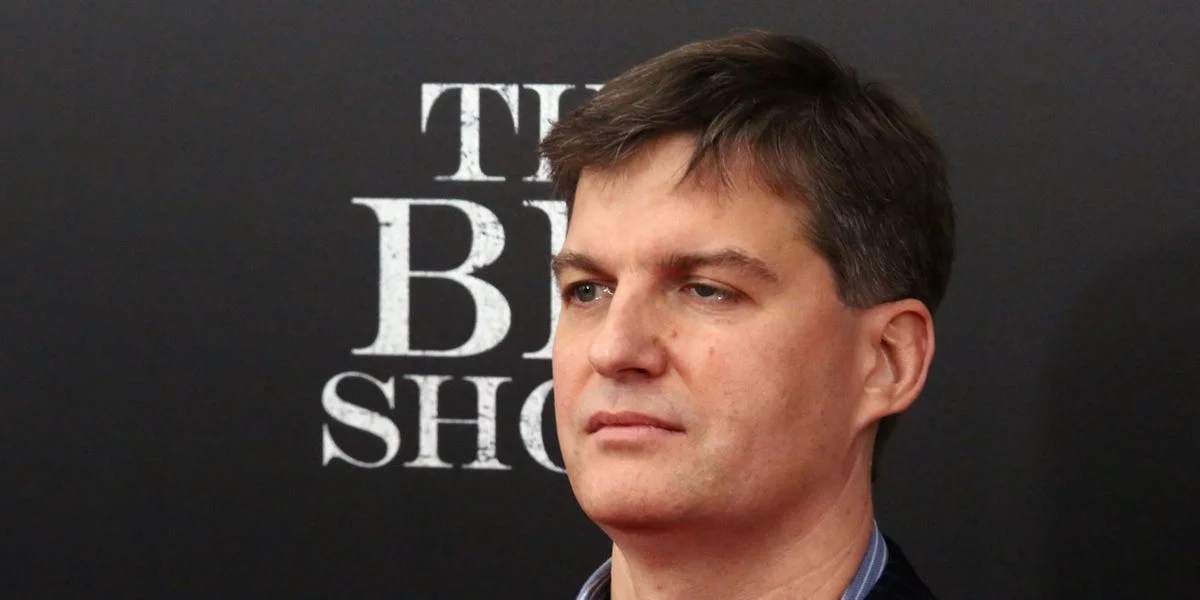
Cover image: from 'Big Short' Michael Burry: AI Boom Is Dead Ringer for Dot-Com Bubble (Business Insider / Astrid Stawiarz / Getty Images)
このコンテンツについて、さらに観点や背景を補足しましょう。