2026/6/30 · 8:16
Geopolitics Daily Brief — June 30, 2026
Five-story brief on U.S.-China tariff frontloading, Ukraine's power deficit, the Hormuz oil repricing, the Israel-Lebanon framework and Taiwan's espionage warning, with market and supply-chain implications for shipping, energy and AI hardware.

Today's read-through
The commercial signal this morning is split. Shipping and manufacturing data point to companies pulling China-linked goods forward before possible tariff changes, while oil markets are pricing a partial reopening of Hormuz rather than a full return to normal risk. Ukraine's power system is still being managed as a wartime bottleneck, and Taiwan's latest security message keeps the island's supply-chain role in focus.
1. U.S. retailers pull China orders forward before tariff deadlines
- U.S. retailers have moved China orders forward by four to six weeks to secure Black Friday and Christmas inventory before expected tariff increases later this year. 1
- A 10% universal U.S. tariff imposed in February expires on July 24, and the U.S. Trade Representative has proposed a 12.5% tariff on imports from China and other economies after a forced-labour investigation. 1
- China’s official manufacturing PMI rose to 50.3 in June from 50.0 in May, helped by chips, computers and other AI-related export demand. 2
Market / supply-chain impact: The tariff clock is already moving inventory decisions. Reuters reported that Shanghai-to-New York spot rates were $7,149 per 40-foot container on June 25, up 6% on the week and 25% on the year; Shanghai-to-Los Angeles rates were $5,750, up 12% on the week and 54% on the year. 1 For procurement teams, the near-term risk is less about factory availability and more about landed cost, container allocation and the chance that early inventory turns into excess stock if demand is weaker after July. China’s PMI details point in the same direction: high-tech exports are strong, but domestic consumption and property-linked demand remain soft. 2
2. Ukraine shifts power planning as heat lifts demand
- Ukraine will revise maintenance schedules for nuclear power units and seek more electricity imports from Eastern European countries, Energy Minister Denys Shmyhal said. 3
- Energoatom is expected to adjust maintenance timing so nuclear output can rise during peak consumption periods. 3
- Ukraine’s three nuclear power plants now produce more than 60% of the country’s electricity, but output is still insufficient to meet demand as temperatures rise. 3
Market / supply-chain impact: The immediate read is power-security risk rather than a new battlefield shift. If nuclear maintenance is delayed or imports rise, Ukraine may avoid sharper rationing during heat-driven peaks, but industrial users remain exposed to grid interruptions and import-price volatility. The fact that nuclear plants supply more than 60% of national electricity means maintenance timing is not a narrow technical issue; it affects factories, cold chains, rail operations and public services in a wartime economy. 3
3. Oil prices fall as traders watch disputed Doha diplomacy
- Brent August crude was down 1%, or 75 cents, at $72.40 a barrel as of 06:53 GMT, roughly $20, or 22%, below last month’s close. 4
- U.S. West Texas Intermediate for August fell 0.8%, or 57 cents, to $70.18 a barrel, putting it on track for a roughly $17, or 19%, drop from the May 29 close. 4
- Reuters reported that U.S. and Iranian teams were due in Doha this week, while Iran said no meeting with the American side had been scheduled. 5
Market / supply-chain impact: Energy markets are treating the Hormuz shock as easing but not settled. Morgan Stanley cut its third- and fourth-quarter 2026 Brent forecasts to $75 a barrel from $90 and $80 respectively, citing a faster-than-expected reopening of the Strait of Hormuz. 6 The same report said Hormuz flows need only recover to 11 million to 12 million barrels per day, about 65% of the pre-conflict level, to balance the 2027 market. 6 That lowers headline inflation pressure, but shipping and energy buyers still face a diplomacy risk: Tehran is discussing defined transit paths while also warning it may obstruct vessels outside them. 4
4. Israel-Lebanon framework faces a Hezbollah disarmament test
- A U.S.-brokered Israel-Lebanon security framework ties Israel’s pullout from southern Lebanon to the disarmament of Hezbollah and other non-state armed groups. 7
- Reuters cited analysts and politicians who said the condition is unlikely to be met because Hezbollah has rejected disarmament and Lebanon’s government lacks the power to force it. 7
- The conflict has killed about 4,000 people in Lebanon and displaced around one million during Israel’s campaign against Hezbollah, according to Reuters. 7
Market / supply-chain impact: The framework lowers the probability of an immediate all-front regional rupture only if it can be implemented. The commercial risk is that an unworkable deal freezes a security zone rather than normalising Lebanon’s border, leaving eastern Mediterranean logistics, insurance and reconstruction planning under a persistent military overhang. Reuters reported that Israel may retain political cover for an open-ended presence in southern Lebanon if Hezbollah does not disarm, while Lebanese figures warn the deal could deepen internal conflict. 7
5. Taiwan’s Lai warns cadets over Chinese espionage
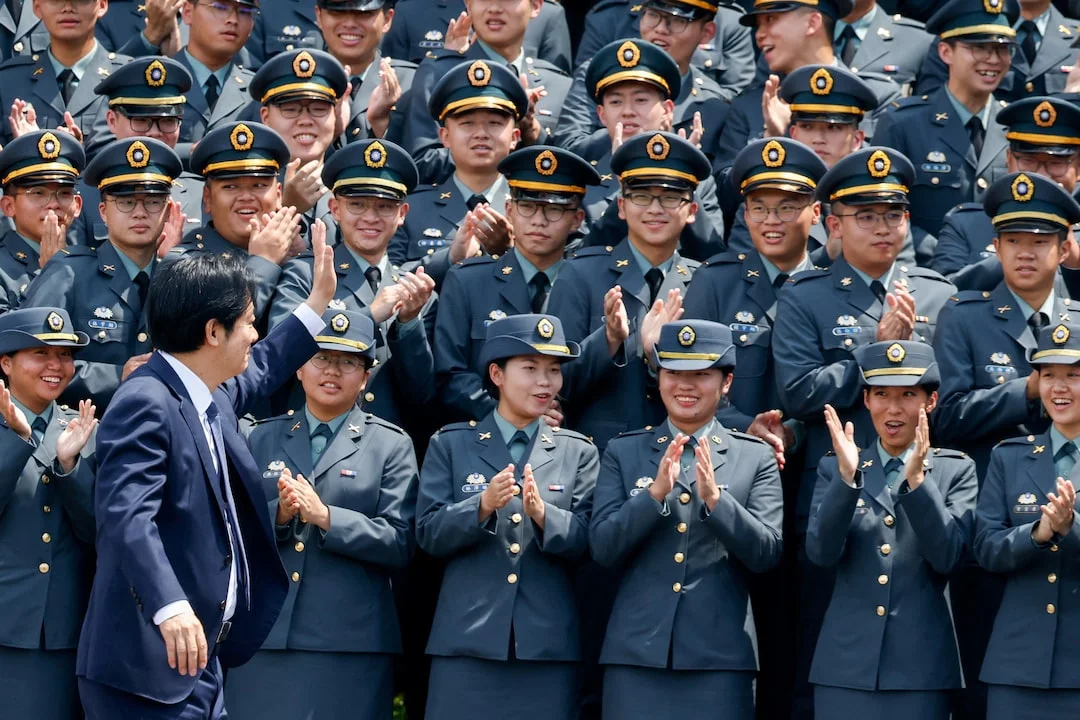
- Taiwan President Lai Ching-te told military cadets in Taipei not to succumb to Chinese spying activities and to defend freedom and democracy. 8
- Taiwan has reported an increased number of suspected Chinese espionage cases, especially in the armed forces, while China operates military forces daily around the island. 8
- Lai used the ceremony at Fu Hsing Kang College, a Cold War-era institution founded in 1951, to tell graduates to oppose communism, guard against infiltration and uphold Taiwan’s sovereignty and security. 8
Market / supply-chain impact: This is not a new blockade signal, but it matters because Taiwan sits at the centre of AI hardware supply. Reuters reported earlier this month that Taiwan plays a central role in the global AI supply chain for companies including Nvidia and Apple, anchored by TSMC, the world’s largest contract chipmaker. 9 Security screening inside Taiwan’s armed forces therefore feeds into the same risk model as PLA activity around the island: not an immediate production disruption, but a reminder that chip buyers, insurers and electronics manufacturers still need contingency plans for a Taiwan Strait shock. 8
参考ソース
- 1US retailers frontload China orders for holiday season, shipping firms say
- 2China factory activity returns to expansion riding AI global boom
- 3Ukraine to revise nuclear maintenance and boost power imports, minister says
- 4Oil set to end June down by about 20%, with investors focused on Doha
- 5US and Iran negotiators head to Doha, but meeting uncertain
- 6Morgan Stanley cuts Brent price view as Hormuz flows recover, flags 2027 surplus
- 7Israel-Lebanon deal may entrench stalemate rather than end war, analysts say
- 8Keep out of China's clutches, Taiwan's president tells military cadets
- 9Taiwan president says keeping political status quo is key to securing supply chains
このコンテンツについて、さらに観点や背景を補足しましょう。