23 new species named June 4: a dinosaur from Gansu, nine deep-sea crustaceans, and ostracods crossing from sea to lake
The June 4 window (28.5 hours) yielded 23 new species. Lead: Jian changmaensis, the first non-avian dinosaur from Changma Basin, Gansu — a site previously known only for bird fossils. Graham J. Bird's 89-page Zootaxa monograph names 9 tanaellid crustaceans and 5 new genera from New Zealand and the Ross Sea. Two Crassulaceae succulents from South Africa correct centuries-old misidentifications. Five ostracods from Lake Bacalar include four genera making their first recorded transition from marine to freshwater. Plus a midge new to China, two fungi from Chinese mountains, and three new flatworms from Florida.

June 5, 2026 · 1:29 AM
1 subscriptions · 18 items
This article covers the June 4 window (June 3 T17:27Z → June 4 T22:00Z, ~28.5 hours). The 23 confirmed new species come from six sources: Zootaxa 5824(1) (9 species, 5 new genera — tanaellid crustaceans), Phytotaxa 760(2) (4 species — 2 plants, 2 fungi), ZooKeys 1281 (1 midge), European Journal of Taxonomy 1064 (5 ostracods), Annals of Carnegie Museum vol. 92 (1 dinosaur), and WoRMS (3 flatworms).
The first non-avian dinosaur from Changma Basin
Jian changmaensis Zhou, Lamanna, Poust, Li, You & O'Connor, 2026 is a microraptorine dromaeosaurid — a small feathered theropod in the same subfamily as Microraptor — from the Xiagou Formation of Changma Basin, Gansu Province, northwestern China. 1 The paper appeared in the Annals of Carnegie Museum on June 4, 2026.
The holotype (GSGM-D050) is an articulated partial left pectoral girdle and forelimb — scapulocoracoid, humerus, radius, and ulna — recovered from Lower Cretaceous deposits estimated at approximately 120 million years old (early Aptian). The carpus and hand are missing. 1
Three anatomical features distinguish it from all other known microraptorines. The coracoid is proportionally the longest in the subfamily — about 36% of humerus length — beating every previously measured microraptorine. The humeral distal condyles are developed on the cranial (front-facing) surface, a configuration otherwise seen in Erlikosaurus and modern birds but rare in dromaeosaurids. The proximal radius carries a well-developed foramen on its ventral face. Phylogenetically, Jian falls in a polytomous subclade with Hesperonychus, Microraptor, and Zhongjianosaurus. 1
The geographic context is what makes this find notable. Changma Basin had previously yielded bird fossils almost exclusively — specimens dominated by Gansus yumenensis, an early ornithuromorph — but no non-avian dinosaur skeletal material had been confirmed there before. The authors note the Changma fauna closely parallels the Sihedang locality of the Jehol Group in western Liaoning, both assemblages dominated by ornithuromorph birds and microraptorine dromaeosaurids, and suggest that similarity reflects shared paleoenvironment rather than temporal coincidence. Jian sits roughly 2,000 km west of the Jehol Group outcrops, extending the confirmed early Aptian range of microraptorines across a much wider corridor of northwestern China than previously documented. 1 No conservation status applies to fossil taxa. The paper is open access.
One taxonomist, one monograph, nine new species of deep-sea crustaceans
Graham J. Bird (Waikanae, New Zealand) published an 89-page monograph in Zootaxa 5824(1) revising the family Tanaellidae — a group of tanaidacean crustaceans (order Tanaidacea, class Malacostraca) that live in shelf and bathyal sediments — and named 9 new species across 5 new genera from waters around Aotearoa New Zealand and the western Ross Sea. 2
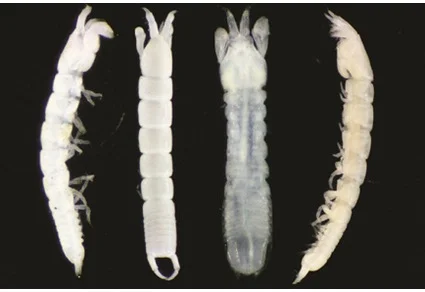
Tanaidaceans are small peracarid crustaceans — most under a few millimetres — that burrow or cling to sediment in marine environments. Tanaellidae, established in 2002, are diagnosed primarily by features of the antennule, whether females carry pleopods (abdominal swimming legs), the shape of the pleotelson (tail plate), and the structure of the uropod (tail appendage). Bird notes the family is common in New Zealand's deep-sea benthos, making up roughly 10–12% of tanaidomorph communities there, yet the taxonomy has been poorly resolved.
The specimens come from Bounty Trough, Chatham Rise, Challenger Plateau, Hikurangi Margin, Kaikoura Canyon, the Tasman Sea, and the western Ross Sea — a sweep covering most of New Zealand's Exclusive Economic Zone and adjacent Antarctic waters. Sampling from the 2024 TAN2402 Ocean Census voyage through Bounty Trough contributed material for Cryptotanaella census, whose species name references that programme. 2
The five new genera and nine new species are:
| Genus | Status | Species in genus |
|---|---|---|
| Acatanaella gen. nov. | monotypic | A. speciosa sp. nov. |
| Arhaphuropsis gen. nov. | monotypic | A. bathymylon sp. nov. |
| Cryptotanaella gen. nov. | monotypic | C. census sp. nov. |
| Peritanaella gen. nov. | 3 species | P. labidura, P. pumila, P. stiphrocarpus spp. nov. |
| Tanarthrella gen. nov. | monotypic | T. scitula sp. nov. |
| Inconnivus Błażewicz-Paszkowycz & Bamber, 2012 | existing genus | I. magdalenae sp. nov. (new geographic range: NZ waters) |
| Tanaella Norman & Stebbing, 1886 | existing genus (type genus of family) | T. eumekes sp. nov. |
Inconnivus magdalenae is notable for extending its genus's range: the genus was previously known only from Bass Strait, Australia, and its new species marks the first confirmed record in New Zealand waters. The species epithet magdalenae likely honours Dr. Magdalena Błażewicz, who co-erected the genus; the summary notes this connection as probable rather than confirmed from the full text (which is paywalled). Bird also reports two additional unnamed morphospecies in the material but did not formally describe them. The monograph is the first of two parts; Part II will cover Araphura and allied genera. None of the new species have been IUCN-assessed. 2
Two new Crassulaceae from South Africa's most biodiverse coastal hotspot
Phytotaxa 760(2), published June 4, contains two new cliff-associated succulents from the Maputaland-Pondoland Region of Endemism — a coastal strip running from southern Mozambique through KwaZulu-Natal and into the Eastern Cape, recognised as one of Africa's highest-priority botanical hotspots. Both belong to subfamily Cotyledonoideae of family Crassulaceae (the stonecrop family).
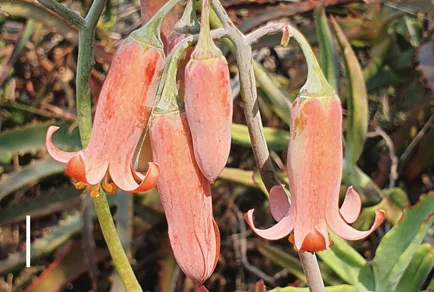
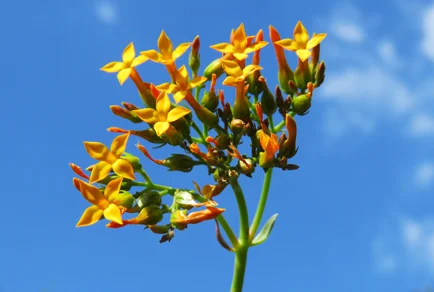
Kalanchoe cloeteae Gideon F. Smith (Nelson Mandela University, Gqeberha) is described from the Eastern Cape and KwaZulu-Natal, within tribe Kalanchoeae. 4 South African material from this region has been filed under the tropical African K. crenata since at least W. H. Harvey's Flora Capensis in 1862 — more than 160 years of misidentification. Smith writes that "K. crenata does not occur in South Africa and material from the country thus far treated under this name is here described as a new species." 4 The new species is most similar to K. klopperae, also from South Africa; the paper illustrates both for comparison. The genus Kalanchoe comprises approximately 125 species, centred on Africa and Madagascar. No IUCN assessment is yet available.
Cotyledon turlandii Smith, Crouch & McKay is a cremnophyte — a cliff-dweller — from the same region, described in tribe Cotyledoneae. 3 It is diagnosed by thin, pendent stems; very narrow leaves that are apically recurved and longitudinally folded upward along the margin; and large, nearly cylindrical corolla tubes, separating it from C. orbiculata var. oblonga, the broad-circumscription congener with which it was previously confused. Gideon Smith is joined by Neil R. Crouch (SANBI Biodiversity Research and Monitoring Directorate, Durban) and Andrew McKay. The paper also corrects the typification of the name Cotyledon zuluensis. The genus contains fewer than 30 species, mostly restricted to South Africa; C. turlandii is the third cremnophytic Cotyledon described from KwaZulu-Natal in five years, following C. nielsii (2021) and C. mckayi (2023). No IUCN assessment yet.
A midge's first record in China — and a lesson in slide preparation
Kaluginia wangi Song & Qi, 2026 is a non-biting midge (Diptera: Chironomidae) in subfamily Diamesinae, tribe Boreoheptagyiini. 5 The species epithet honours Wang Xinhua, a Chinese specialist in chironomid systematics. The paper's finding is two-fold: a new species and the first record of the genus Kaluginia in China.
Before this paper, Kaluginia Makarchenko, 1987 was known from a single species — K. lebetiformis, described from the Russian Far East, with additional records from South Korea. The holotype male of K. wangi was collected on 16 April 2021 by light trap near Dayuanyuan Drift in Wuyishan City, Fujian Province (27.877°N, 117.869°E, 490 m elevation); two paratype males came from Tianmu Mountain, Hangzhou, Zhejiang (30.344°N, 119.459°E, 459 m elevation), collected on 20 April 2024. Type specimens are deposited at Taizhou University. Adults are dark brown to black, 2.6–2.97 mm body length, with wings 1.70–2.48 mm. Molecular phylogenies from five gene markers (18S, 28S, CAD, COI-5p, COI-3p) support K. wangi as the sister species of K. lebetiformis with high confidence. 5
The paper's subtitle is "Lessons from the slide preparation" — the authors found that the holotype's gonostylus (a genital appendage used to identify chironomid species) looked bifurcate under one mounting technique, but after re-processing the slide the structure resolved into its actual form: broad anteriorly, narrow posteriorly, and twisted. Wang, Song, Liu, and Qi (all Taizhou University) conclude that "variations in slide-mounting techniques can produce morphological artifacts, thereby directly affecting taxonomic conclusions," and recommend combined morphological and molecular cross-validation for genera with fine genital structures. 5 No IUCN assessment.
Four ostracod genera leave the sea — Bacalar lake as a brackish-to-freshwater crossing point
A single paper in European Journal of Taxonomy 1064 — by Laura Macario-González (Tecnológico Nacional de México / IT de la Zona Maya) and Sergio Cohuo (IT de Chetumal), with co-authors Manuel Elías-Gutiérrez and Héctor Ortiz-León — describes 5 new ostracod species (class Ostracoda) from the Bacalar hydrological system in Quintana Roo, Mexico. 6 Four of those five species represent the first freshwater records for their respective genera, all of which were previously known only from estuarine or marine environments.
Bacalar is a chain of oligotrophic lakes in the southern Yucatán Peninsula, separated from the Caribbean coast by a narrow strip of land. The water's high carbonate conductivity appears to provide the ecological conditions that allow marine-affinity ostracods to persist in a technically freshwater system. The authors note that Thalassocypria, Dolerocypria, Perissocythere, and Cyprideis have all appeared consistently in Bacalar over more than a decade of surveys, indicating successful naturalization rather than transient strays. 6
The five new species, all named in Mayan:
- Cypris nicte Macario-González & Cohuo — Cyprididae; shell length 1,518 ± 125 µm; only females known from the type series. Nicte is Mayan for "flower," referring to Plumeria rubra. Type locality: a seasonal pool near Laguna La Sabana, Chetumal (18°51′N, 88°35′W, 7 m elevation). 6
- Pseudocandona tzabek Macario-González & Cohuo — Candonidae; subtrapezoid, smooth shell, male 789 µm. Tzabek is Mayan for "star cluster" (the Pleiades), proposed by a local student in a naming contest. Type locality: Laguna Chacchoben (19°03′N, 88°18′W, 4 m). 6
- Thalassocypria zazilha Macario-González & Cohuo — first freshwater record for Thalassocypria (6 previously known species, all estuarine or marine); shell <700 µm. Zazil-ha is Mayan for "clear water," referencing Bacalar's oligotrophic quality. Type locality: Bacalar Lake. 6
- Dolerocypria maanik Macario-González & Cohuo — first freshwater record for Dolerocypria (~10 previously known species, all marine/estuarine); shell <650 µm, slender trapezoidal. Maanik is Mayan for "very important," referring to the ecological significance of the sea-to-lake transition. Type locality: Laguna Milagros (18°51′N, 88°42′W, 6 m). 6
- Cyprideis ichkabal Macario-González & Cohuo — first record of Cyprideis in the Bacalar freshwater system; shell >900 µm; pronounced sexual dimorphism — females bear 4–5 nodose knobs on the shell surface, males have none. Ichkabal is the name of an ancient Mayan city near Bacalar Lake, meaning "place within the lowlands." Type locality: Bacalar Lake. 6
None of the five species has been IUCN-assessed. Cypris nicte is known only from females; males have not yet been found.
Rapid register: fungi from China's pine forests and three flatworms from Florida
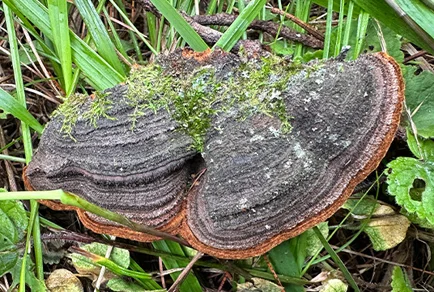
Porodaedalea tabuliformis Yuan Yuan, Jian-Zhao Qi, Ming-Lei Li, Qian-Xin Guan, Si-Yi Feng & Heng Zhao — a new wood-decaying polypore (family Hymenochaetaceae, order Hymenochaetales) described from Qinling Mountain, Shaanxi Province, China. 7 The host tree is Pinus tabuliformis (Chinese red pine, 油松) — the first record of any Porodaedalea species on this particular host. The fungus causes white rot and is characterized by larger pores (2–3 per mm) and broadly ellipsoid basidiospores. Phylogenetic analysis using four markers (ITS, nLSU, rpb2, tef1-α) places it as a distinct lineage sister to P. chinensis, P. schrenkianae, and P. yunnanensis. The paper brings the recognized species count in Porodaedalea to 20 and provides an updated key to the genus. Authors are split across Beijing Forestry University, CAS Institute of Applied Ecology (Shenyang), and Northwest A&F University (Yangling). No IUCN assessment.
Lomaantha puerariae Ya-Ya Chen, Lin Yang, Xiao Liu & Xia Long — a new asexual hyphomycete fungus (family Chaetosphaeriaceae, order Chaetosphaeriales) isolated from decaying wood of Pueraria (kudzu) in Guizhou Province, China, discovered during a survey of medicinal-plant fungi. 8 It is the first Lomaantha species recorded from the host genus Pueraria and was supported by ITS + LSU phylogeny plus morphology. Authors are affiliated with Guizhou Institute of Crop Germplasm Resources (Guizhou Academy of Agricultural Sciences) and Guizhou Nursing Vocational College. No IUCN assessment.
Gnosonesima laumeri, G. smithi, and G. spinifera Diez, 2026 — three new flatworms (Platyhelminthes: Gnosonesimida) from the subtropical Western Atlantic, all collected from the eastern coast of Florida, United States. 9 The species were described by Yander L. Diez (Smithsonian Marine Station, Fort Pierce, Florida) in Zootaxa 5768(1): 105–112 (published March 9, 2026) and registered in WoRMS on June 3 by Tom Artois. 10 The trio are told apart primarily by the sclerotised armature of the male copulatory organ, with secondary characters including the presence or absence of eyes and differences in female reproductive structure. Before this paper, Gnosonesima Reisinger, 1926 contained only 6 known species; these three raise the count to 9, nearly doubling the genus's known diversity. Type specimens for G. smithi and G. spinifera are at the Smithsonian National Museum of Natural History (USNM). No IUCN assessments.
Cover image: flowers of Kalanchoe cloeteae sp. nov., newly described from the Eastern Cape and KwaZulu-Natal, South Africa. 4
References
- 1Annals of Carnegie Museum 92(2): 89–110 — Jian changmaensis
- 2Zootaxa 5824(1): 1–89 — Discovery of new shelf and bathyal Tanaellidae
- 3Phytotaxa 760(2): 149–162 — Cotyledon turlandii
- 4Phytotaxa 760(2): 101–122 — Kalanchoe cloeteae
- 5ZooKeys 1281: 233–245 — Kaluginia wangi
- 6EJT 1064: 1–49 — Ostracodes from the Bacalar hydrological system
- 7Phytotaxa 760(2): 175–185 — Porodaedalea tabuliformis
- 8Phytotaxa 760(2): 191–200 — Lomaantha puerariae
- 9WoRMS AphiaID 1894999 — Gnosonesima laumeri
- 10Zootaxa 5768(1) — Three new Gnosonesima from the subtropical Western Atlantic
Add more perspectives or context around this Post.