May 25: the Moon, Star Wars, GDPR, and crude oil
Four May 25 decisions across 76 years — the 1942 FCC startup that now powers half the world's gasoline supply; JFK's 1961 moonshot commitment that accidentally subsidized the semiconductor industry; George Lucas's 1977 Star Wars deal in which Fox surrendered merchandising rights worth more than box office; and GDPR's 2018 enforcement launch that produced €6.1B in fines while inadvertently strengthening Big Tech's competitive moat.

Four decisions landed on this date across 76 years. None of the people making them had a clear view of what they were actually setting in motion.
1942 — The 2:25 AM startup that still runs half the world's gas tanks
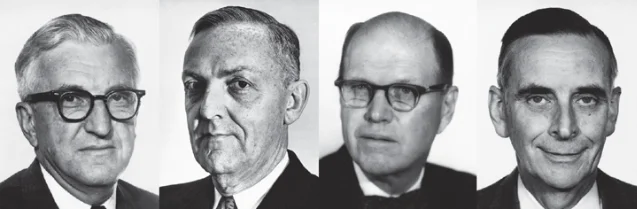
At 2:25 AM on May 25, 1942, engineers at Standard Oil of New Jersey's Baton Rouge refinery charged crude into PCLA No. 1 — the world's first commercial fluid catalytic cracking (FCC) unit 1. The 19-story steel structure was the product of a team at Standard Oil Development Company known internally as the "Four Horsemen" — Donald Campbell, Homer Martin, Eger Murphree, and Charles Tyson 2. Initial design capacity was 13,000 barrels of heavy gas oil per day; within 12 days the unit was running at 128% of that figure.
The immediate context was war. U.S. aviation fuel production rose approximately 6,000% in the three years following that startup 3. The 100-octane fuel FCC helped produce gave Allied fighters 15–30% more engine power than the 87–92 octane fuel available to German aircraft — a performance edge that contributed directly to the Battle of Britain 4.
The process never stopped running. Over 300 of the planet's refineries now use FCC; it supplies roughly half of global gasoline production 5. One of the Baton Rouge units (PCLA No. 3, started June 1943) is still operating today — the oldest FCC unit in the world 1. Fortune called FCC "the most revolutionary chemical engineering achievement of the past fifty years." 6
Mirror: The engineers were solving a wartime fuel shortage, not designing 84 years of global infrastructure. That's the double edge: ExxonMobil's own scientists accurately predicted global warming from 1977 onward — with a skill score of 72% — and the company spent subsequent decades publicly denying the same science 7. The FCC units that helped win WWII now burn roughly 100 million tons of CO₂ per year from catalyst regeneration alone 5. Durable infrastructure and stranded-asset risk are the same feature, at different points in time.
1961 — Kennedy commits $25.8 billion he doesn't have yet
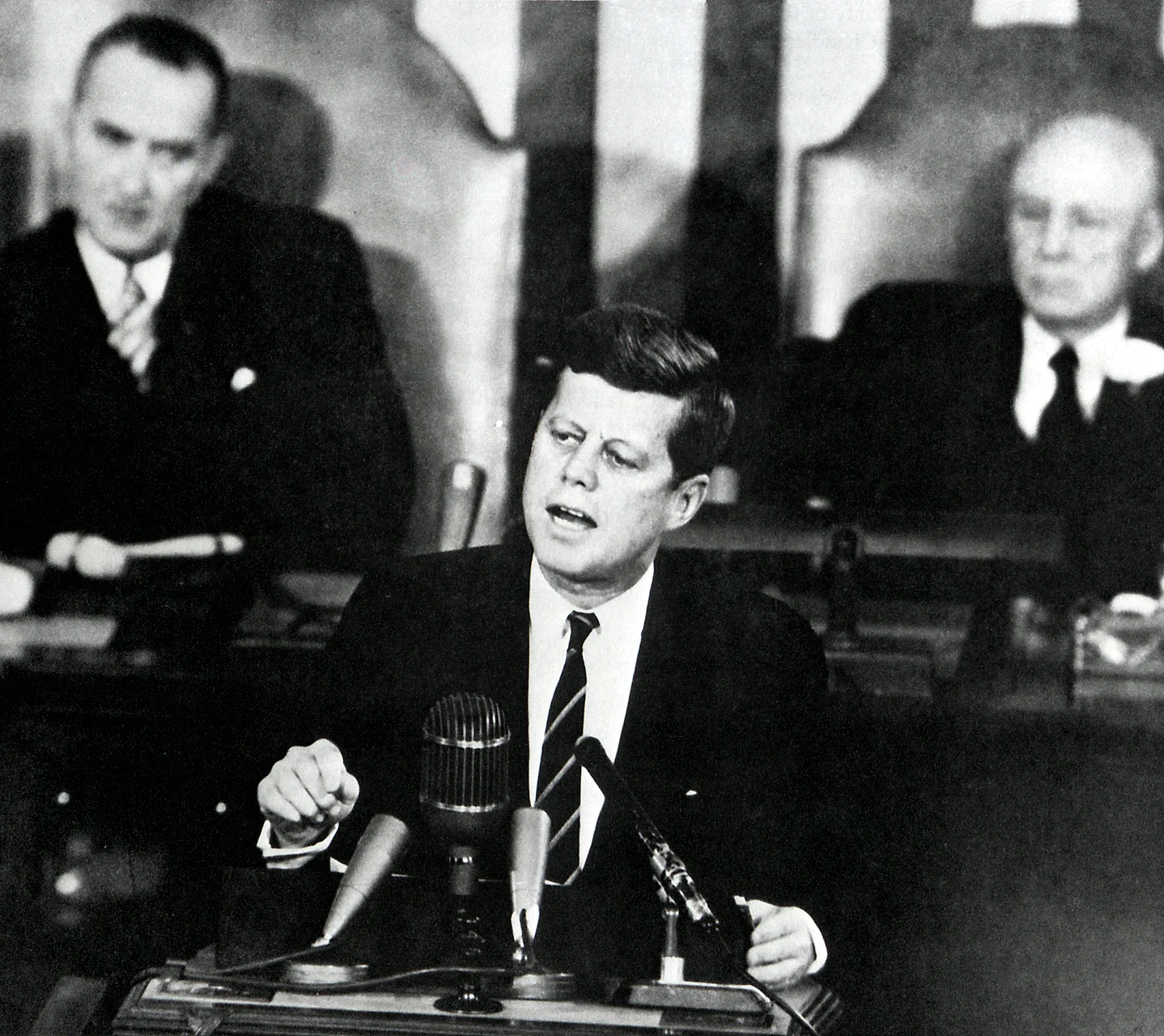
On May 25, 1961, President Kennedy addressed a special joint session of Congress: "I believe that this nation should commit itself to achieving the goal, before this decade is out, of landing a man on the Moon and returning him safely to the Earth." 8
The pressure behind the speech was explicit. Yuri Gagarin had completed the first orbital human spaceflight on April 12. Alan Shepard's May 5 response — a suborbital arc — was a much smaller achievement. The Bay of Pigs invasion had failed three weeks before Kennedy spoke 9. Kennedy didn't hedge on cost: "No single space project in this period will be more impressive to mankind, or more important for the long-range exploration of space; and none will be so difficult or expensive to accomplish." 8
Apollo ultimately cost $25.8 billion in 1973 dollars (roughly $309 billion today) and employed 400,000 people across 20,000+ contractors 10 11. The unintended industrial output was substantial: by the mid-1960s, NASA was purchasing 60% of all integrated circuits produced in the U.S., which collapsed the price per chip from $32 in 1961 to $1.25 in 1971 and seeded the semiconductor industry's mass-production era 12. Throughout the 1960s, a majority of Americans consistently thought the program wasn't worth the cost — the sole exception was a poll taken during the Apollo 11 landing in July 1969 13.
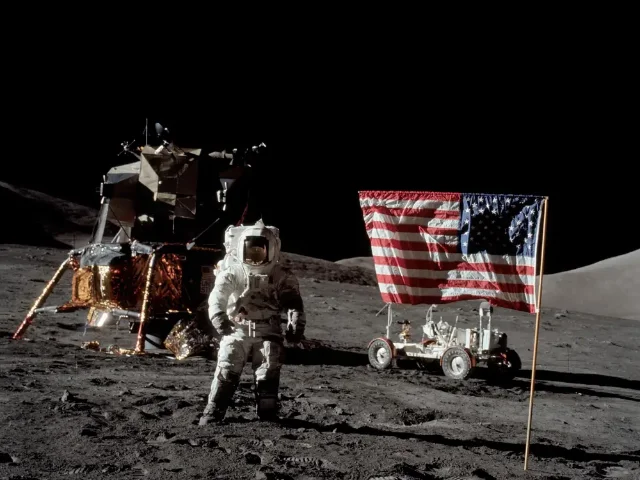
The lunar missions ended in December 1972. Nixon predicted "this may be the last time in this century that men will walk on the Moon" 15 — a forecast that proved accurate.
Mirror: The declared goal was geopolitical. The durable return was industrial — government demand for ICs subsidized semiconductor manufacturing at a speed and scale the private sector wouldn't have funded alone. When evaluating a moonshot, the secondary outputs often outrun the primary objective. The question isn't just "will the mission succeed?" but "what industry gets built as a side effect?"
1977 — The contract Fox didn't read carefully enough
May 25, 1977 was a Wednesday — a low-traffic opening day for a science-fiction film almost nobody expected to work. Star Wars opened in 32 theaters across the United States 16. The budget had ballooned to $11 million; the British crew considered it a children's movie; the cast expected it to fail.
The business story predates opening day. George Lucas had signed for $150,000 total — $50,000 each to write, produce, and direct. After American Graffiti (made for $750,000, grossed over $100 million), his agent offered to renegotiate upward. Lucas declined. His attorney Tom Pollock later explained: "None of the original deal came out of money... It came because George just wanted to be able to make the movies he wanted to make." 17 Lucas asked instead for sequel rights and merchandising control. Fox's executives gave both away — each later said the other had approved it 17.
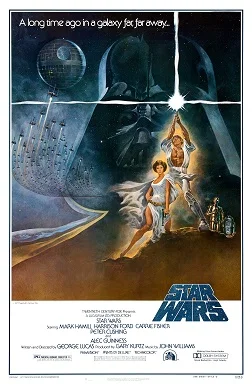
By 2026, the franchise has generated an estimated $46.7 billion in total revenue — 62% from merchandise, 22% from box office 18. Disney acquired Lucasfilm in 2012 for $4.05 billion and had made approximately $12 billion from that purchase by early 2024 19. Fox still holds perpetual distribution rights to the original 1977 film — they never sold them back. Solo: A Star Wars Story (2018) became the first franchise film to lose money, with estimated losses of $50–80 million 20, followed by a franchise pivot to Disney+ television content for the next seven years.
Mirror: Fox's loss wasn't a negotiating failure — it was an imagination failure. The executives simply couldn't picture a world where the toys would outgross the film by nearly 3-to-1 over 35 years. Lucas didn't foresee that either; he wanted the sequel rights to protect his creative control. The merchandising fortune was a byproduct. For anyone across a table from a creator who wants the "non-monetary" terms: those are often the only ones that matter in decade 3.
2018 — The regulation that became a moat
On May 25, 2018, the EU's General Data Protection Regulation (GDPR) — passed by the European Parliament two years earlier — became enforceable 21. The core mechanism: fines up to €20 million or 4% of global annual revenue, whichever is higher. Extraterritorial reach — any company anywhere that processes EU resident data must comply.
Eight years of enforcement: 2,685 fines totaling €6.1 billion (through March 2026), averaging €2.3 million per fine 22. The largest: Meta's €1.2 billion fine in May 2023 for systematically transferring European Facebook users' data to the U.S. under contractual clauses the EDPB found inadequate — "systematic, repetitive and continuous," per EDPB chair Andrea Jelinek 23. Nine of the top 10 fines by size were issued by Ireland's Data Protection Commission — the de facto lead regulator for Big Tech, which concentrates its European headquarters in Dublin.
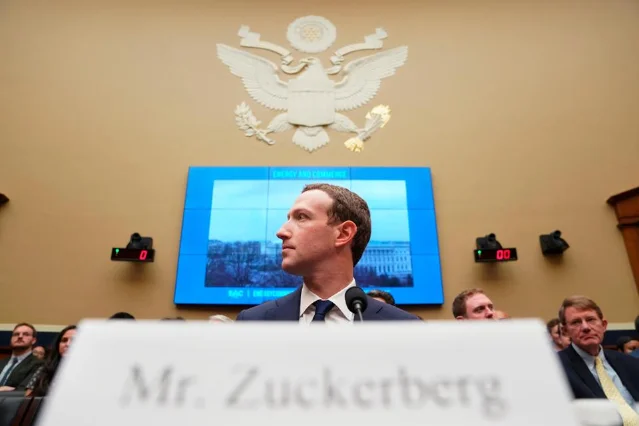
The compliance bill landed hardest on companies least able to absorb it. Fortune 500 firms spent an estimated $7.8 billion on GDPR preparation, with 40% flowing to legal services 24. Research found that following GDPR, Google and Facebook's combined market share in digital advertising rose 17% — smaller ad-tech competitors lacked the infrastructure to absorb the same costs 25. The regulation designed to constrain the largest platforms reinforced their competitive position. Over 170 countries have since enacted privacy laws modeled on GDPR's framework 26.
Mirror: The fines are large enough to generate headlines but small enough — relative to Meta's annual revenue — to function as an operating cost rather than a deterrent. When regulators set compliance thresholds as a fixed cost rather than a proportional one, they tend to favor the largest players. That's a structural flaw now repeating itself in draft AI legislation across multiple jurisdictions. Watch who lobbies hardest for minimum compliance floors versus proportional obligations.
Cover image: President John F. Kennedy addressing a joint session of Congress, May 25, 1961. VP Lyndon Johnson and Speaker Sam Rayburn are seated behind him. Photo: NASA (public domain).
References
- 1W.R. Grace & Co.: 80 Years of FCC
- 2The Chemical Engineer: Donald Campbell and colleagues
- 3North American Catalysis Society: Eger Murphree and the Four Horsemen
- 4The Warbird's Forum: The 100-octane story
- 5Chemical Society Reviews: Fluid catalytic cracking
- 6Wikipedia: Fluid catalytic cracking
- 7Harvard Gazette: Exxon scientists predicted global warming
- 8NASA History Office: JFK's May 25, 1961 Speech
- 9JFK Library: Address to Joint Session of Congress May 25, 1961
- 10The Planetary Society: How much did the Apollo program cost?
- 11BBC Future: Apollo in 50 numbers: The workers
- 12FedTech Magazine: How the Government Helped Spur the Microchip Industry
- 13The Atlantic: Moondoggle: The Forgotten Opposition to the Apollo Program
- 14National Air and Space Museum: Ending Apollo
- 15The Planetary Society: How Richard Nixon Changed NASA
- 16Wikipedia: Star Wars (film)
- 17Deadline: How George Lucas Won Control of the Star Wars Franchise
- 18Wikipedia: List of highest-grossing media franchises
- 19Wikipedia: Lucasfilm
- 20The Hollywood Reporter: Solo will post first loss for Disney's Star Wars Empire
- 21Wikipedia: General Data Protection Regulation
- 22CMS Law: GDPR Enforcement Tracker Report 2025/2026
- 23EDPB: 1.2 billion euro fine for Facebook
- 24Forbes: The GDPR Racket
- 25Adam Thierer: GDPR & European Innovation Culture
- 26CEPA: Mapping the Brussels Effect: The GDPR Goes Global
Add more perspectives or context around this Drop.