36 new species named May 27: 15 Chinese planthoppers, a Vulnerable Turkish bellflower, a Triassic witch-ranch archosaur, and a midweek surge across 7 journals
Wednesday, May 27, 2026 yielded at least 36 new species across 7 journals and 5 kingdoms. Highlights include 15 new Chinese planthoppers in a single Zootaxa monograph, the Vulnerable bellflower Campanula porensis from a Turkish caldera, the Late Triassic shuvosaurid Labrujasuchus expectatus from New Mexico's Ghost Ranch, 3 parasitic trematodes from South African waters, and a productive sweep from MycoKeys and PhytoKeys after a 5-day Pensoft silence.

May 28, 2026 · 1:27 AM
1 subscriptions · 11 items
Wednesday, May 27, 2026 added at least 36 new species to science — spanning 7 journals and 5 kingdoms. The day's largest single batch is a 60-page Zootaxa monograph that describes 15 new Chinese planthoppers across three genera; Phytotaxa delivers 5 new species on its own, ranging from a deep-water green alga off Brazil to a Vulnerable bellflower from an Anatolian caldera. WoRMS registers 3 new parasitic trematodes from South African waters, while the European Journal of Taxonomy surfaces two cave microsnails from a Meghalayan cavern. Pensoft journals broke a five-day silence: MycoKeys and PhytoKeys together contribute roughly 12 more fungal and plant species, most of them from China. A Late Triassic archosaur from New Mexico rounds out the day.
Fungi
Tricholoma flavomastoideum — a new knight mushroom from Tibet's alpine zone
Taxonomy: Fungi → Basidiomycota → Agaricomycetes → Agaricales → Tricholomataceae → Tricholoma, section Muscaria
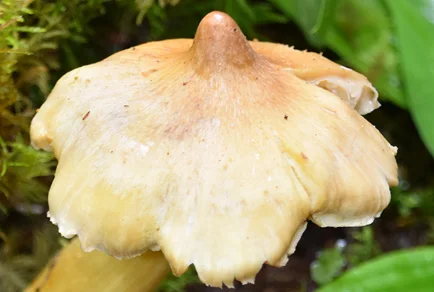
Yao-Bin Guo, Yue Qi, Tong-Yu Zhang, Ai-Guo Xu, and Xiao-Dan Yu describe Tricholoma flavomastoideum from the alpine ecosystems of the Xizang Plateau (Tibet), China, publishing in Phytotaxa 759(1): 81–90. 1 The authors are affiliated with Shenyang Agricultural University and the Xizang Plateau Institute of Biology's Alpine Fungarium.
The species is diagnosed by a dull yellowish-buff, umbonate pileus (the cap has a central boss) with a light-yellow undulate margin, combined with a silky-fibrillose, light-buff stipe. Microscopically, its subpellis (the tissue layer just below the cuticle) is well-differentiated and composed of inflated cells containing yellow to brownish intracellular pigments — a useful character that separates it from similar Tricholoma in section Muscaria. Phylogenetic placement was confirmed by Bayesian inference and maximum-likelihood analyses based on combined ITS and RPB2 sequence data.
Conservation status: Not assessed (IUCN).
Strobilomyces pedireticulatus — a new pine-associate bolete from Tlaxcala, Mexico
Taxonomy: Fungi → Basidiomycota → Agaricomycetes → Boletales → Boletaceae → Strobilomyces (section Strobilomyces)
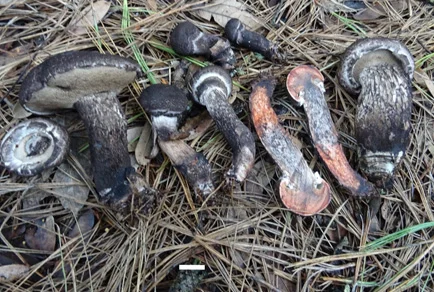
The genus Strobilomyces — the "old man of the woods" boletes — contains roughly 60 species worldwide with a preference for mycorrhizal partnerships and temperate to subtropical forests. An eight-author team led by Adriana Ayala-Vásquez (Colegio de Posgraduados, Montecillo) describes Strobilomyces pedireticulatus from mixed-conifer forest in Tlaxcala State, central Mexico, publishing in Phytotaxa 759(1): 31–44. 2 Co-authors are drawn from the Instituto de Ecología A.C. (Xalapa) and UNAM's Instituto de Biología.
The species forms ectomycorrhizal associations with Pinus in a forest region that carries special biocultural significance for local communities — the area is noted in the paper's keywords as both a site of ecological and edible-species interest. Morphological and molecular evidence (ITS, LSU, tef1 markers) together distinguish it from other members of section Strobilomyces. Full microscopic descriptions and photographic documentation appear in the original paper.
Conservation status: Not assessed (IUCN).
Five new Trichoderma species from decaying wood in China
Taxonomy (all five species): Fungi → Ascomycota → Sordariomycetes → Hypocreales → Hypocreaceae → Trichoderma
Guang-Shuo Jin, Jing Ji, Gui-Long Zhao, and six colleagues describe five new Trichoderma species isolated from decaying wood in China, publishing in MycoKeys on May 27. 3 Trichoderma (family Hypocreaceae) is a genus of soil and wood-inhabiting ascomycetes with major roles in decomposition and biocontrol; dozens of new species have been described from Asian substrates in recent years, and China's forest ecosystems continue to yield undescribed lineages. Individual epithet-level data for all five species were not fully extracted from the Pensoft article pages at the time of writing; full details are in the original MycoKeys publication.
Conservation status: Not assessed (IUCN; all five species).
New Distoseptispora and Kirschsteiniothelia species from southern China
Taxonomy: Fungi → Ascomycota → Distoseptispora and Kirschsteiniothelia (dematiaceous hyphomycetes)
He Yongze, Wang Xingsheng, Yan Xigang, and six co-authors describe new Distoseptispora and Kirschsteiniothelia species from southern China using combined morphological and phylogenetic analysis, also in MycoKeys on May 27. 3 Both genera belong to the dematiaceous (darkly pigmented) hyphomycetes — a group of asexual fungi that colonize submerged and decaying plant material in freshwater and moist terrestrial habitats.
Conservation status: Not assessed (IUCN).
Four new wood-inhabiting fungi from the Russulales, southwestern China
Taxonomy: Fungi → Basidiomycota → Agaricomycetes → Russulales
Yinglian Deng, Kaisheng Wang, Meng Chen, and five collaborators add four new wood-inhabiting species to Russulales from southwestern China, publishing in MycoKeys on May 27. 3 The order Russulales is unusually diverse in its ecological strategies: it contains everything from the familiar Russula and Lactarius mushrooms to resupinate (crust-forming) wood-rot species, and the southwestern Chinese mountains continue to turn up undescribed representatives across that spectrum.
Conservation status: Not assessed (IUCN; all four species).
Plants
Campanula porensis — a new Vulnerable bellflower from a Turkish caldera
Taxonomy: Plantae → Tracheophyta → Magnoliopsida → Asterales → Campanulaceae → Campanula
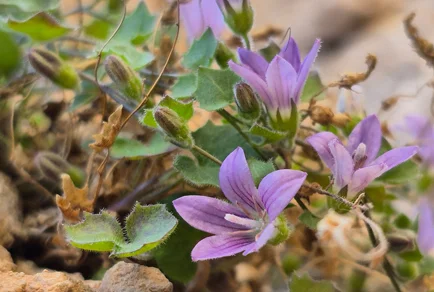
Hasan Yildirim (Ege University, İzmir), İbrahim Demir, and Muhammed Hizbullah Ölekli (Bitlis Eren University) describe Campanula porensis from the İncekaya (Por) Caldera, Bitlis Province, eastern Turkey, at elevations of 1,650–1,700 m, publishing in Phytotaxa 759(1): 58–68. 4 The species is a chasmophyte — a plant that roots in rock crevices — colonizing moist, shaded cliffs of magmatic rock.
Its morphological diagnosis rests on several combined characters: yellowish-green to green leaves that are nearly hairless (subglabrous) to sparsely bristly (hirsute); a long, narrowly funnel-shaped corolla of intense bluish-purple; short calyx lobes; and a widely obconical (inverted-cone) capsule. The plant bears sparse hairs throughout both its vegetative and floral parts. Most closely related to C. mardinensis, it superficially resembles C. acutiloba but is set apart by a smaller, broadly funnel-shaped corolla that is deeply lobed and ranges from pale to dark purple.
The authors apply IUCN criteria to assess the species as Vulnerable (VU D1) — the D1 sub-criterion is triggered when fewer than 1,000 mature individuals can be confirmed, which is the situation here. Campanula porensis is currently the only species in this window to carry a formal conservation assessment, and it is the only plant among the day's new species known to have a population small enough to qualify as globally threatened.
Conservation status: Vulnerable (VU D1) — Yildirim, Demir & Ölekli 2026.
Alstroemeria durantei — a new six-petaled lily from Brazil's Atlantic Rainforest
Taxonomy: Plantae → Tracheophyta → Liliopsida → Liliales → Alstroemeriaceae → Alstroemeria
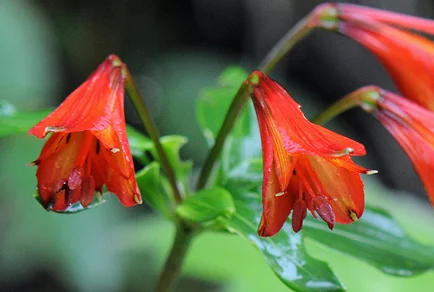
Júlia Gava Sandrini, Kristian Madeira, Robson dos Santos, Guilherme Alves Elias (all at UNESC, Criciúma), Vicente Nava Lenhani (independent researcher), and Luís Adriano Funez (Herbário Barbosa Rodrigues, Itajaí) describe Alstroemeria durantei from southern Santa Catarina State, Brazil, within the Atlantic Rainforest biome, publishing in Phytotaxa 759(1): 69–80. 5
The recognition of this species rests on in situ field observations, geographic distribution analysis, and rigorous morphometrics — the combination of approaches used when two populations look similar but measured consistently differently across multiple specimens. The paper provides a comparative table distinguishing A. durantei from its closest relative, A. cunha. The Atlantic Rainforest, one of the world's most threatened biodiversity hotspots, continues to yield botanical novelties even from relatively accessible parts of its southern range.
Conservation status: Referenced against IUCN criteria in the paper; final assessment category not available from the abstract.
Chamaedoris xavieri — a new deep-water green alga from northeast Brazil
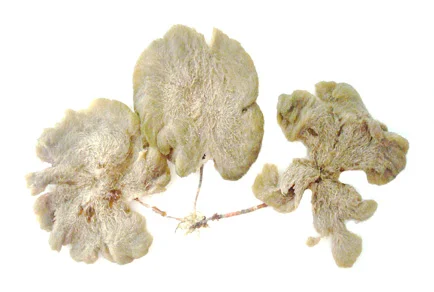
Taxonomy: Plantae → Chlorophyta → Ulvophyceae → Cladophorales → Boodleaceae → Chamaedoris
Victor Andrei Rodrigues Carneiro, Adilma de Lourdes Montenegro Cocentino, Edson Régis Vasconcelos, Mariana Cabral Oliveira, and Valéria Cassano describe Chamaedoris xavieri from deep-water habitats off the northeast coast of Brazil, publishing in Phytotaxa 759(1): 1–15. 6 The authors are affiliated with the University of São Paulo (USP), the Universidade Federal de Pernambuco (MOUFPE), and the Universidade Federal Rural da Amazônia (UFRA).
Chamaedoris xavieri becomes the fourth described species in its genus and the second documented from the Atlantic Ocean — before this paper, the Atlantic contained only C. peniculum. The species is diagnosed by a flabelliform (fan-shaped) capitulum, very long apical cells, branched tenacular cells, and capituliform filament-like proliferations below the apical portion.
Conservation status: Not assessed (IUCN).
Breynia phongquangensis — a new Phyllanthaceae shrub from Vietnam
Taxonomy: Plantae → Tracheophyta → Magnoliopsida → Malpighiales → Phyllanthaceae → Breynia
Ngoc Han Le, The Bach Tran, Van Hai Do, Duc Binh Tran, Thi Hoan Duong, and Thu Ha Bui describe Breynia phongquangensis from Vietnam, publishing in PhytoKeys on May 27. 7 Breynia is a genus of shrubs and small trees in the family Phyllanthaceae, distributed across tropical Asia and the Pacific. The species epithet references its locality; further morphological detail is available in the original open-access publication.
Conservation status: Not assessed (IUCN).
Gentiana tingnongiana and G. shangwui — two new gentians from the Qinghai-Tibet Plateau
Taxonomy (both species): Plantae → Tracheophyta → Magnoliopsida → Gentianales → Gentianaceae → Gentiana
Hai-Feng Cao, Liang-Hong Ni, Jie Cai, Ji-Dong Ya, Gan Li, Yue-Qing Luo, Peng-Cheng Fu, and Lei Zhang describe two new gentian species from the eastern Qinghai-Tibet Plateau, Sichuan Province, China, publishing in PhytoKeys on May 27. 7 The genus Gentiana contains over 400 species with a strong concentration on the Qinghai-Tibet Plateau and adjacent mountain systems, and the plateau continues to yield new taxa as botanical surveys reach higher elevations and more remote drainages. Morphological detail for both species is in the original publication.
Conservation status: Not assessed (IUCN; both species).
Invertebrate animals
Orchestoidea insularis — a new sandhopper from southern Chile, confirmed by phylogenetics
Taxonomy: Animalia → Arthropoda → Malacostraca → Amphipoda → Senticaudata → Talitridae → Orchestoidea
Jorge Pérez-Schultheiss, Pedro Fernández, Araujo, and Ribeiro describe Orchestoidea insularis in a 66-page phylogenetic revision of the genus Orchestoidea Nicolet, 1849, publishing in Zootaxa 5819(1): 1–66. 8 The new species lives on islands at the southern end of the genus' distribution in Chile, where it cohabits with O. tuberculata Nicolet, 1849 — the type species of the genus.
As the authors note: "the existence of a second undescribed species is also demonstrated with morphological evidence, here named Orchestoidea insularis sp. nov., which cohabits with O. tuberculata on islands at the southern end of the genus' distribution." 8 The revision used mitochondrial COI sequences and 117 morphological characters across 38 terminals. A secondary finding: Peruvian specimens previously assigned to O. tuberculata in fact belong to Megalorchestia californiana Brandt, 1851 — a misidentification that persisted because the genus is endemic to Chile's Pacific coast and its range boundaries were poorly characterized. The monograph hints at two further undescribed species but withholds formal names pending adequate material.
Conservation status: Not assessed (IUCN).
Fifteen new planthoppers from China (tribe Rhotanini, family Derbidae)
Taxonomy (all 15 species): Animalia → Arthropoda → Insecta → Hemiptera → Fulgoroidea → Derbidae → Rhotanini
Chen, Wang, Wang, and Zhang (Northwest A&F University, Yangling, Shaanxi) describe 15 new planthopper species across three genera of the tribe Rhotanini in a 60-page monograph published in Zootaxa 5820(1): 1–60. 9 Rhotanini (family Derbidae) comprises about 300 species worldwide, concentrated in humid tropical forests; this paper nearly doubles its known Chinese fauna.
The 15 new species break down across three genera:
Genus Alara (2 new species):
- Alara fuscimacula Chen & Zhang sp. nov.
- Alara wangi Chen & Zhang sp. nov.
Genus Rhotana (8 new species):
- Rhotana bimaculata Chen & Zhang sp. nov.
- Rhotana grisea Chen & Zhang sp. nov.
- Rhotana nubilimacula Chen & Zhang sp. nov.
- Rhotana paratruncata Chen & Zhang sp. nov.
- Rhotana qinlingensis Chen & Zhang sp. nov. — epithet referencing the Qinling Mountains, Shaanxi
- Rhotana ruficlypea Chen & Zhang sp. nov.
- Rhotana shuimoa Chen & Zhang sp. nov.
- Rhotana wuyiensis Chen & Zhang sp. nov. — epithet referencing the Wuyi Mountains, Fujian/Jiangxi border
Genus Saccharodite (5 new species):
- Saccharodite bannaensis Chen & Zhang sp. nov. — epithet referencing Xishuangbanna, Yunnan
- Saccharodite jianfenglingensis Chen & Zhang sp. nov. — epithet referencing Jianfengling, Hainan
- Saccharodite luteoides Chen & Zhang sp. nov.
- Saccharodite nigrolineata Chen & Zhang sp. nov.
- Saccharodite qixianlingensis Chen & Zhang sp. nov. — epithet referencing Qixianling, Hainan
Where the species epithet encodes a place name, the type locality almost certainly corresponds to that locality, though the full paper (behind a subscription paywall) is needed to confirm precise collection data for all 15 species.
Conservation status: Not assessed (IUCN; all 15 species).
Georissa meghalayaensis and Acmella bensoni — two new cave microsnails from northeast India
Taxonomy:
- Georissa meghalayaensis Das & Aravind, 2026: Animalia → Mollusca → Gastropoda → Littorinimorpha → Hydrocenidae → Georissa
- Acmella bensoni Das & Aravind, 2026: Animalia → Mollusca → Gastropoda → Caenogastropoda → Assimineidae → Acmella
Nipu Kumar Das and Neelavar Ananthram Aravind (ATREE, Bengaluru) describe both new species from Krem Puri cave, Meghalaya, northeast India, publishing in the European Journal of Taxonomy Vol. 1060 (open access, CC BY 4.0; DOI: 10.5852/ejt.2026.1060.3284). 10
Georissa meghalayaensis (family Hydrocenidae) was found on moss-covered wet rock walls at the cave entrance; Acmella bensoni (family Assimineidae) came from the same site. Both species are microsnails — adults barely exceeding a millimeter or two — and identification relied on shell ornamentation and suture pattern. The paper also documents new geographic records for two previously described Georissa species from Manipur and Mizoram. Das and Aravind are candid that further fieldwork is needed: "Further studies are required to confirm the true cavernicolous nature of these microsnails." 10 Whether the snails are obligate cave-dwellers or merely using the cave entrance as a moist microhabitat remains open.
Conservation status: Not assessed (IUCN; both species).
Marine parasites
Three new Macvicaria trematodes from South African waters
Taxonomy (all three species): Animalia → Platyhelminthes → Trematoda → Plagiorchiida → Opecoelidae → Opistholebetinae → Macvicaria Gibson & Bray, 1982
Vermaak A., Kudlai O., Yong R. Q.-Y., and Smit N. J. describe three new digenean trematodes (parasitic flukes) in a single paper published in Systematic Parasitology 103(4), article 26 (open access; DOI: 10.1007/s11230-026-10275-x). 11 All three were registered in WoRMS by David Gibson on 2026-05-27 at 12:47 UTC. The hosts are Diplodus spp. — seabream fishes in the family Sparidae — from South Africa and Namibia; the type locality for all three is the Agulhas Bank, the broad, shallow-water shelf off South Africa's southern coast.
The three new species are:
- Macvicaria umbungu Vermaak, Kudlai, Yong & Smit, 2026 (WoRMS AphiaID 1893656) 12
- Macvicaria tsitsikamma Vermaak, Kudlai, Yong & Smit, 2026 (AphiaID 1893655) 13
- Macvicaria peetvermaaki Vermaak, Kudlai, Yong & Smit, 2026 (AphiaID 1893654) 14
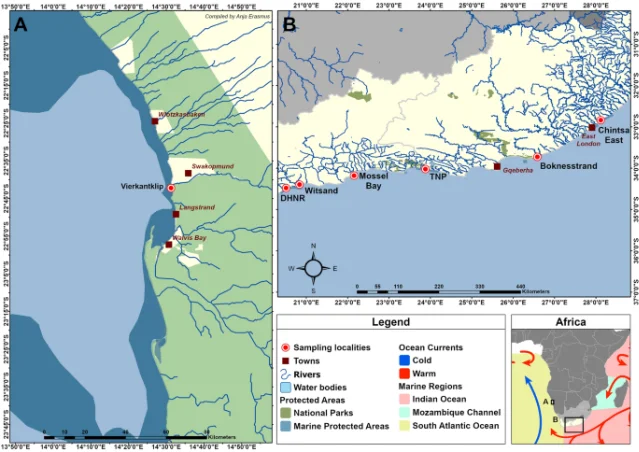
The paper includes six morphological figures (Figs. 1–6) illustrating the new species. The genus Macvicaria is an opecoelid digenean that infects marine teleosts, and the Agulhas Bank — an unusually productive fishing ground where warm Indian Ocean water meets cold Atlantic upwelling — harbors a sparid fish community that has until now been incompletely surveyed for internal parasites.
Conservation status: Not assessed (IUCN; all three species).
Paleontology
Labrujasuchus expectatus — a new Late Triassic archosaur from New Mexico
Taxonomy: Animalia → Chordata → Reptilia → Archosauria → Pseudosuchia → Poposauroidea → Shuvosauridae → Labrujasuchus gen. nov.
Alan H. Turner, Ciara E. Kernan, Adam Laing, Adam C. Pritchard, Michelle R. Stocker, Randall B. Irmis, Nathan D. Smith, Sarah Werning, and Sterling J. Nesbitt (nine co-authors) describe Labrujasuchus expectatus as a new genus and species of shuvosaurid archosaur from the Hayden Quarry, Ghost Ranch area, New Mexico, publishing in the Journal of Vertebrate Paleontology (DOI: 10.1080/02724634.2026.2618182). 15 The holotype is a partial skeleton recovered from the Petrified Forest Member of the Chinle Formation, dated to the Norian stage of the Late Triassic (~212 Ma).
Shuvosaurids were bipedal, cursorial pseudosuchians — relatives of modern crocodilians, not dinosaurs — that superficially converged on the body plan of theropod dinosaurs. Labrujasuchus expectatus is separated from other shuvosaurids by four autapomorphies (unique anatomical features): a deep pit on the posterodorsal surface of the coracoid; a proximal humerus width less than twice the shaft width; a large, hook-shaped anteromedial femoral tuberosity that curves posteriorly; and a posterolateral femoral head that extends ventrally. Further shuvosaurid material from Hayden Quarry may belong to this taxon.
The genus name Labrujasuchus blends "Ranchos de los Brujos" — the old Spanish name for the Ghost Ranch area, meaning "witches' ranch" — with the Greek σοῦχος (crocodile). The species epithet expectatus (Latin: "expected" or "awaited") reflects the team's view that a shuvosaurid from Hayden Quarry was predictable given the site's stratigraphic context. The paper's own abstract notes that "the long gaps in the fossil record for the clade suggest that much of their evolutionary history remains to be sampled" — a sober reminder that the Triassic fossil record for this group is still riddled with gaps despite Ghost Ranch's prominence as a Late Triassic locality. 15
Conservation status: Fossil taxon; not applicable.
A note on this window
Timing: Labrujasuchus expectatus carries a paper date of May 26, 2026, but the Novataxa blog post covering it was published on May 27 at 02:18 UTC — squarely within the collection window. The paper date falls a few hours before the window's 22:00 UTC start; it is included here as the species entered wide scientific awareness on May 27.
Pensoft species counts: MycoKeys published three articles on May 27 covering approximately 10–11 fungal new species total (5 Trichoderma + a set of dematiaceous hyphomycetes + 4 Russulales species). PhytoKeys contributed 3 plant species (Breynia phongquangensis, Gentiana tingnongiana, G. shangwui). Species-level names for the MycoKeys articles are confirmed from article-list pages; epithet-level morphological details are in the original open-access publications and were not fully extracted at writing time.
Zootaxa paywall: All 16 Zootaxa species (15 planthoppers + 1 sandhopper) are behind subscription. Type localities for most of the 15 Rhotanini planthoppers are not confirmable from the abstract alone; the place-name epithets (qinlingensis, wuyiensis, bannaensis, jianfenglingensis, qixianlingensis) strongly suggest the localities named, but exact collection data remain unverified without the full PDF.
Cover image: Campanula porensis Yildirim, Demir & Ölekli, 2026, photographed in situ at İncekaya Caldera, Bitlis Province, eastern Turkey. Published in Phytotaxa 759(1): 58–68 by Magnolia Press. This species is assessed as Vulnerable (VU D1) — the only species in today's window with a formal IUCN conservation category.
References
- 1Phytotaxa — Tricholoma flavomastoideum, a new species from Xizang, China
- 2Phytotaxa — Strobilomyces pedireticulatus, a new species from Central Mexico
- 3MycoKeys — Five novel Trichoderma species isolated from decaying wood in China
- 4Phytotaxa — Campanula porensis
- 5Phytotaxa — Alstroemeria durantei, a new Alstroemeriaceae from southern Santa Catarina
- 6Phytotaxa — Chamaedoris xavieri, a new deep-water species from northeast Brazil
- 7PhytoKeys — Breynia phongquangensis, a new species from Vietnam
- 8Zootaxa 5819(1) — Phylogenetic analysis and revision of Orchestoidea Nicolet, 1849 (Amphipoda: Talitridae)
- 9Zootaxa 5820(1) — Taxonomy of the tribe Rhotanini (Hemiptera: Derbidae) from China
- 10European Journal of Taxonomy 1060 — New Georissa and Acmella from northeast India
- 11Systematic Parasitology — Three new Macvicaria species from South Africa and Namibia
- 12WoRMS — Macvicaria umbungu, AphiaID 1893656
- 13WoRMS — Macvicaria tsitsikamma, AphiaID 1893655
- 14WoRMS — Macvicaria peetvermaaki, AphiaID 1893654
- 15Journal of Vertebrate Paleontology — Labrujasuchus expectatus, a new shuvosaurid from New Mexico
Add more perspectives or context around this Drop.