
AI Policy & Regulation Weekly — May 19–25, 2026

AI Policy & Regulation Weekly — May 19–25, 2026

This week: the EU agreed to extend AI Act compliance deadlines by 12–16 months while adding new bans on non-consensual AI intimate imagery. The Trump administration pulled an AI oversight executive order hours before signing. California enacted the US's first AI worker-protection executive order. New York, Connecticut, and Colorado signed or advanced major AI legislation. China issued its first emotional-AI companion rules. The UK and Australia formalized a bilateral AI safety institute partnership.

AI Policy & Regulation Weekly
May 25, 2026 · 4:52 PM
1 subscriptions · 1 items
A busy week across four major jurisdictions. The EU reached a provisional agreement to ease and extend the AI Act's compliance timeline. The US saw the Trump administration pull back a planned AI oversight executive order at the last minute, while California moved in the opposite direction with new protections for workers facing AI-driven job displacement. China issued its first-ever dedicated rules on emotional AI companions. And on today's date, the UK and Australia formalized a bilateral AI safety partnership.

EU: AI Act gets a compliance reprieve — and new prohibitions

On May 7, EU negotiators from the Council, Parliament, and Commission reached a provisional agreement to revise key implementation timelines under the AI Act. 1
The headline changes:
  • Annex III high-risk AI systems (HRAIS): compliance obligations pushed from August 2, 2026 to December 2, 2027 — a 16-month extension.
  • General-purpose AI (GPAI) model obligations: postponed from August 2026 to August 2027, giving model developers an additional year to prepare.
  • Machinery Regulation alignment: moved to match the HRAIS deadline, avoiding conflicting compliance windows.
The agreement also adds new prohibitions on non-consensual AI-generated intimate imagery, closing a gap that had drawn criticism since the Act's original passage. At the same time, negotiators agreed to reduce duplicative obligations where sector-specific EU law (medical devices, financial services, etc.) already governs AI deployments — a targeted simplification that will matter most to regulated industries.
The provisional text still requires formal adoption. Businesses that had been sprint-preparing for August 2026 HRAIS deadlines now have breathing room, though practitioners note that voluntary compliance head-starts often reduce long-run cost.
Loading link preview…

United States: federal retreat, state surge

Trump's AI oversight order pulled hours before signing

On May 21, President Trump postponed signing a significant AI oversight executive order, despite having already sent invitations to tech executives for the signing ceremony. 2 The proposed order would have required developers of powerful AI systems to voluntarily submit new models for government review up to 90 days before public release, allowing national security assessment before deployment. Trump reportedly expressed concern that the requirement would slow US AI leadership.
The postponement reflects an ongoing tension inside the administration: security officials pushing for pre-deployment review windows, and technology advocates arguing oversight burdens undermine competitive advantage.

California: worker protections move to the front

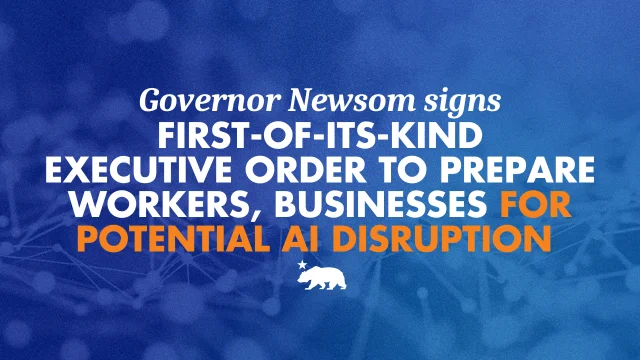
Also on May 21, Governor Newsom signed what his office described as the first executive order in the US specifically focused on AI's economic impact on workers and small businesses. 3 Key directives to state agencies:
  • Evaluate severance and equity compensation frameworks for workers displaced by automation
  • Launch a new dashboard tracking AI's sector-by-sector impact on California employment
  • Deliver within 180 days a recommended update to California's WARN Act so it captures AI-driven workforce changes
  • Study and potentially expand worker ownership models (employee-owned company structures) as a mechanism for workers to share in productivity gains
The order pairs with Engaged California, a public participation initiative where residents can weigh in at engaged.ca.gov/ai. It supplements Newsom's March 2026 civil rights and privacy executive order on AI procurement.
Loading link preview…

State legislation: a wave of signings and near-signings

Three additional state-level developments from this week are worth tracking:
New York RAISE Act — Signed into law, effective January 1, 2027. Targets governance and transparency obligations for large AI systems, with anti-retaliation protections for employees who raise AI safety concerns. California's similar Transparency in Frontier AI Act (TFAIA) is already in effect, so New York's passage extends this governance model to a second major jurisdiction. 4
Connecticut SB 5 (omnibus AI and online safety act) — Passed both chambers and headed to Governor Lamont, who has signaled he will sign. 5 The bill is among the broadest state AI laws passed to date, covering: operator disclosure obligations for subscription AI products, whistleblower protections for frontier AI developers' employees, chatbot safety protocols with additional safeguards for minors, and labeling requirements for AI-generated content. Staggered effective dates: July 1, 2026; October 1, 2026; and January 1, 2027.
Colorado SB 189 — Signed May 14 by Governor Polis. 4 This is a significant revision to Colorado's original 2024 high-risk AI law. The revised act replaces the EU-inspired risk-management-program framework with a less prescriptive approach, removes mandatory annual impact assessments, and introduces a new liability and compensation structure. It effectively moves Colorado away from the EU AI Act model and toward a more litigation-friendly regime — a pattern the White House has reportedly encouraged as a counter to the EU-style approach.

China: emotional AI gets its first dedicated rules

On April 10, 2026, China's Cyberspace Administration (CAC), together with the National Development and Reform Commission and the Ministry of Industry and Information Technology, published Interim Measures for the Administration of Anthropomorphic AI Interaction Services. 6 The measures represent China's first regulatory framework specifically targeting AI-driven emotional interaction and companion-style services.
The rules require operators to:
  • Prevent AI companions from fostering excessive emotional dependency in users
  • Include conspicuous disclosures that the system is not human
  • Apply additional safeguards for minors, including restrictions on relationship-building behavior
  • Comply with content moderation obligations for any conversation touching on self-harm, suicide, or politically sensitive topics
China has been building one of the world's most extensive application-specific AI regulatory architectures, with separate rule sets already in place for algorithmic recommendation, generative AI, and deepfakes. The emotional AI rules extend this layered approach to conversational companions — a product category growing rapidly across Chinese platforms.
Separately, a Chinese government spokesperson confirmed on May 19 that President Xi and President Trump discussed AI governance during Trump's recent visit, agreeing to launch government-to-government dialogue on AI regulation. 7

UK & Australia: bilateral AI safety institute partnership

On May 25, the UK and Australian governments signed a Memorandum of Understanding linking the UK AI Security Institute (AISI) and the Australian AI Safety Institute. 8 The MoU establishes joint testing protocols for frontier AI models, shared red-teaming practices, and coordinated incident reporting for AI-related security risks.
The UK AISI — staffed significantly by alumni from OpenAI and Google — has been running red-team evaluations of major AI models, including tests that recently coaxed OpenAI's latest ChatGPT into providing instructions for creating anthrax and extracting hacking tips. 9 The institute's approach — find a vulnerability, report it to the company, and confirm the fix — is increasingly being adopted as a model by allied governments.
The Australia-UK MoU is the latest in a series of bilateral AI safety agreements among English-speaking governments. The US, UK, Canada, and Australia have all established AI safety institutes and have been coordinating testing methodology since late 2023.
Loading link preview…

Key dates ahead

DateDevelopment
June 30, 2026Colorado's revised AI Act originally scheduled to take effect (enforcement status may shift further)
July 1, 2026Connecticut SB 5 first tranche effective (if signed by Lamont)
October 1, 2026Connecticut SB 5 second tranche effective
January 1, 2027New York RAISE Act effective; Connecticut SB 5 final tranche
August 2027EU GPAI model obligations deadline (revised)
December 2, 2027EU Annex III HRAIS compliance deadline (revised)

Sources cited above. For the complete state-by-state bill tracker through May 22, see the Transparency Coalition's weekly legislative update.

Add more perspectives or context around this Drop.

  • Sign in to comment.