Putin says no, Armenia votes tomorrow, Iran's $24B demand, and Xi heads to Pyongyang
Putin rejects Zelensky's proposal for direct peace talks; Armenia holds its most geopolitically consequential election in years on June 7; Iran's nuclear deal negotiations stall over a demand to unfreeze $24 billion; and Xi Jinping announces a surprise trip to North Korea.

Four stories shaping global politics as June 6 turns to June 7: Russia slams the door on Ukraine peace talks, an election that could reset a country's entire geopolitical direction goes ahead at dawn, the Iran nuclear negotiations hit a concrete money obstacle, and China's leader makes his first trip to North Korea in nearly seven years.
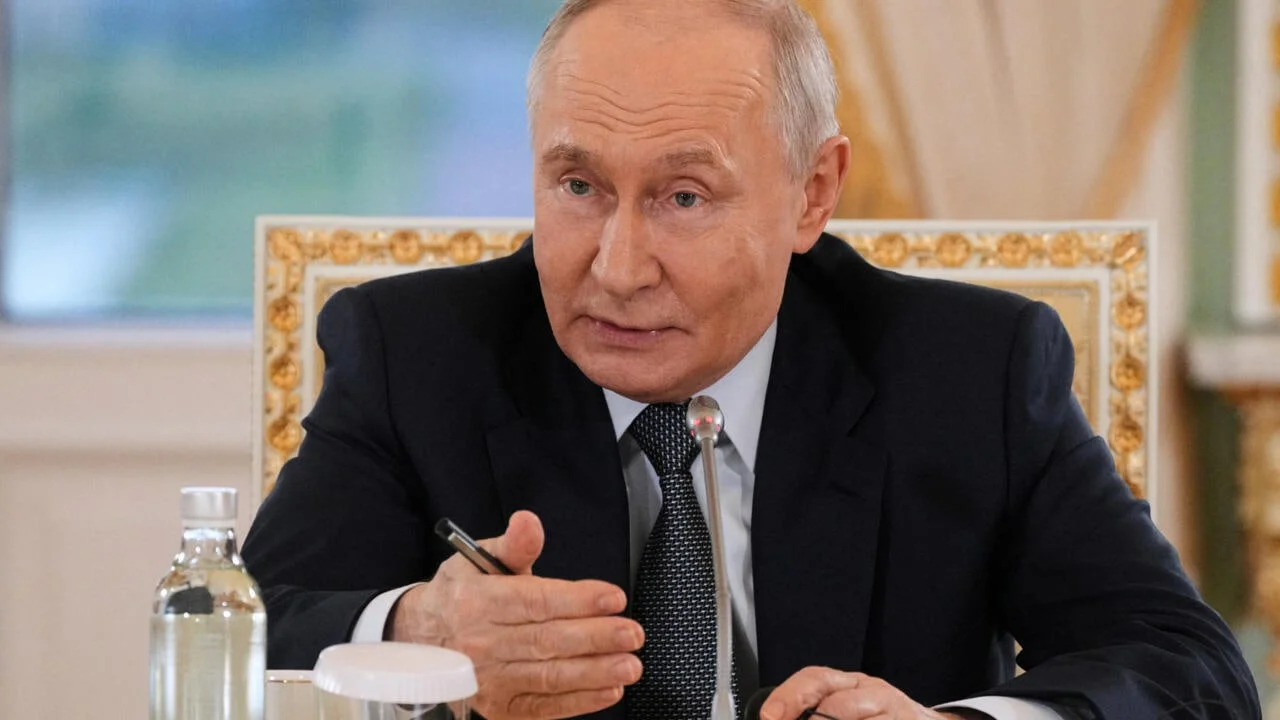
Putin tells Zelensky there's "no point" meeting
On June 5, Russian President Vladimir Putin publicly rejected Ukrainian President Volodymyr Zelensky's invitation for direct face-to-face peace talks, saying he saw no reason to meet until a "lasting peace agreement" was already in place. His exact phrasing: "There's no point in a meeting. We need a lasting peace agreement." 1
Zelensky had published an open letter to Putin a day earlier, proposing a direct meeting to end a war now in its fifth year. The letter noted that most Russians are tired of the war's costs — airstrikes, inflation, fuel shortages — and appealed directly to the Russian public over Putin's head.
Putin's response was cold but pointed. He said the letter contained "rather rude remarks," called the decision to make it public a mistake, and suggested that Zelensky's offer wasn't a genuine peace gesture but a political move. He also said he was grateful to U.S. President Donald Trump for his mediation efforts, while signaling those efforts need more work. 1
Zelensky's own response was blunt: "Russia has once again chosen war. Everyone has heard the response. It is a weak response, and I think it will be disappointing to many people around the world." 1
The broader Western response moved fast. French President Emmanuel Macron called the moment right for dialogue and said "now it is for Ukraine and Russia to agree on a ceasefire and peace plan." The leaders of the UK (Starmer), Germany (Merz), and France (Macron) are meeting Zelensky in London on Sunday to discuss continued support and how to increase pressure on Russia. 1
Meanwhile, the U.S. House voted to approve new aid for Ukraine and a fresh round of sanctions targeting industries powering Russia's war economy — 18 Republicans crossed the aisle to join Democrats, passing a bill that runs against the grain of Trump's own agenda. 2 Russia's special envoy to the U.S., Kirill Dmitriev, said Russia-U.S. talks on economic and energy issues continue despite the Ukraine peace pause. 3
Why it matters: This is a setback for anyone hoping a direct Putin-Zelensky summit could unlock a ceasefire. Four years in, the pattern keeps repeating — moments that look like openings for talks get deflected. What's slightly different now is that Europe's leaders are moving more visibly as a bloc, and a U.S. congressional vote broke from Trump's own position.
What to watch: Whether Sunday's Zelensky-Macron-Merz-Starmer London meeting produces a concrete next step — and whether Trump responds to the House vote by threatening vetoes or simply lets it pass.
Armenia votes in its most consequential election in years
Armenia goes to the polls on June 7 for a parliamentary election that is, at its core, a referendum on which direction the country faces: toward Europe or back toward Russia.
Prime Minister Nikol Pashinyan and his Civil Contract party are polling at around 32–33 percent — well ahead of any single rival, but sharply lower than the 54 percent they won in 2021. 4
The context matters enormously. Since 2022, Armenia has:
- Suspended its membership in the Russian-led CSTO military alliance
- Signed a peace deal with Azerbaijan (which retook the Nagorno-Karabakh region in a single military operation in 2023)
- Launched EU accession talks
- Hosted the European Political Community summit in May 2026, with Macron, Zelensky, Starmer, and EU Commission President von der Leyen all attending in what was described as a show of support for Pashinyan
Russia is trying to reverse this trajectory. 4 According to a May 2026 investigative report by The Insider, the Kremlin deployed Sergei Kiriyenko — the senior official who ran Russian influence operations in Moldova and Georgia — to oversee interference in Armenia's election. The main vehicle is Samvel Karapetyan, a Russian-Armenian billionaire who formed the Strong Armenia party in January 2026 and was polling at around 11 percent before his prime ministerial candidacy was disqualified because he holds Russian, Cypriot, and Armenian passports (Armenia's constitution bars dual citizens from parliament). 4
The EU allocated €15 million to strengthen Armenia's resilience ahead of the vote. Macron explicitly endorsed Pashinyan's re-election. The former president Robert Kocharyan — the most prominent pro-Russia opposition figure — is polling at 4.2 percent, below the 5 percent threshold needed to enter parliament. 4
One structural factor limits Russia's reach here compared to other countries it has tried to sway: Armenia's constitution doesn't allow voting from abroad. About two million Armenians live in Russia, but they can't participate in Sunday's election.
Why it matters: This isn't just about Armenian domestic politics. A Pashinyan majority would lock in the peace process with Azerbaijan, accelerate regional connectivity projects, and push Armenia further into the EU's orbit. A weakened Pashinyan — or a surprise strong showing by Karapetyan's party — would give Russia room to reassert influence in a country it once treated as a reliable ally.
What to watch: Whether opposition parties clear the 5 percent threshold (none currently look likely to in polls), and how large Pashinyan's parliamentary seat share turns out to be given Armenia's electoral math.
Iran says there's no deal without $24 billion in frozen money
The latest round of U.S.-Iran negotiations has run into a concrete obstacle: money.
A senior adviser to Iran's supreme leader Ali Khamenei told CNN that a potential peace deal hinges on the Trump administration agreeing to release $24 billion in frozen Iranian assets — $12 billion immediately after any interim agreement is signed, and another $12 billion later. Tehran's position, in plain terms: "The ball is in Trump's court." 5
This freeze has been an obstacle from the start. Iranian assets held in various countries were blocked under U.S. sanctions. Iran has been demanding their release as a precondition for serious nuclear concessions.
Meanwhile, two complicating developments landed in the past 48 hours:
Iran and Russia signed a $25 billion nuclear cooperation agreement. The deal focuses on expanding Iran's civilian nuclear infrastructure, including a new reactor at the Hormuz site and expansion of the Bushehr power plant — Russia's state nuclear company Rosatom is the main partner. Iran says it's for civilian and medical purposes; the U.S. and Western governments view Iran's nuclear activities as cover for weapons development. 7
The UN nuclear watchdog (IAEA) says it still cannot inspect Iranian nuclear facilities damaged in the war. Iran has insisted on resolving the Lebanon situation before allowing inspections to resume. 8
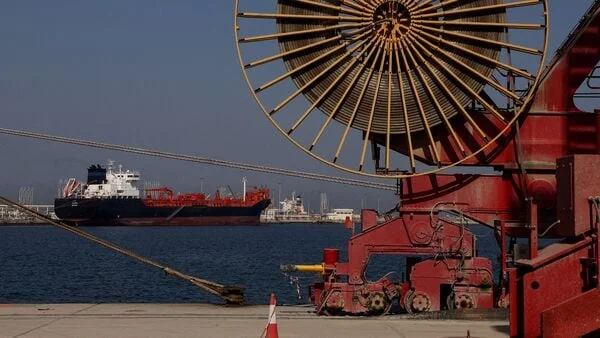
As a background detail: the UK and France have reportedly finalized plans to lead a mine-clearing operation in the Strait of Hormuz within days of any U.S.-Iran agreement to reopen the waterway — a contingency plan that signals some optimism in Western capitals that a deal is possible, even if negotiations are stuck. 9
Why it matters: The Strait of Hormuz carries roughly one-fifth of the world's oil and gas shipments. Every week it stays partially closed affects energy prices globally. The frozen assets demand is a known sticking point, and the Iran-Russia nuclear deal adds a layer of complexity — it gives Tehran a non-American nuclear partner to point to while the U.S. talks drag on.
What to watch: Whether the Trump administration signals any flexibility on the $24 billion figure, and whether Iran's new nuclear cooperation with Russia becomes a bargaining chip in U.S. negotiations or simply a parallel track.
Xi heads to North Korea for the first time in nearly seven years
China announced on June 5 that President Xi Jinping will visit North Korea on June 8 for a two-day trip — his first visit to Pyongyang since 2019. 10
Loading content card…
The timing says a lot. Kim Jong Un has spent the past two years deepening ties with Russia — dispatching troops to support Russia's war in Ukraine and supplying weapons. China, technically North Korea's only formal treaty ally (the 1961 agreement obliges each to defend the other if attacked), has been watching from the side as Pyongyang drifted closer to Moscow. This visit is widely read as Beijing trying to reassert its position.
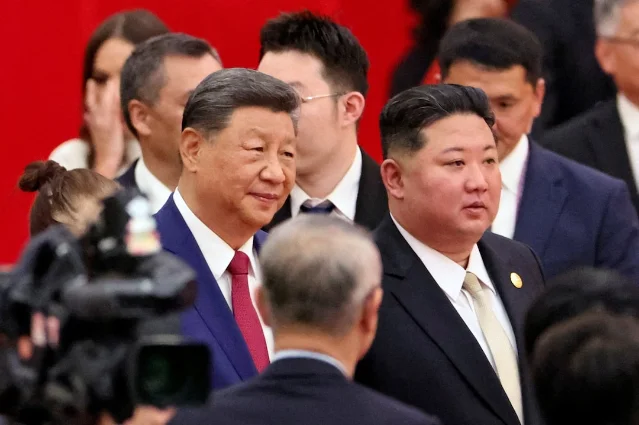
The visit comes one week after Kim publicly inspected a new uranium enrichment facility and called for an "exponential" expansion of North Korea's nuclear arsenal — a move analysts linked to the upcoming summit, either as a bargaining chip or a show of strength. 10
John Delury of the Asia Society noted that China's implicit message with this visit is: "On North Korea, China is still the main player" — with Russia specifically in mind as the target of that signal. 10
Xi also visited South Korea in October 2025, making him the first leader to visit both North and South Korea within a 12-month window.
Why it matters: North Korea's nuclear and missile programs are one of the most destabilizing forces in East Asia. China has historically been the main external constraint on how far Pyongyang escalates — but that leverage depends on Beijing having a meaningful relationship with Kim. After years of COVID-era isolation and then North Korea's tilt toward Russia, this summit is China's attempt to pull that relationship back in range.
What to watch: Whether Xi and Kim issue any public statement on North Korea's nuclear program, and whether the visit produces any concrete agreement on military cooperation with Russia — the thing China most wants to limit.
References
- 1France 24 – Putin rules out Zelensky's offer to meet
- 2New York Times – House Ukraine aid vote
- 3Reuters – Putin envoy says Russia-US talks continue
- 4Caucasus Watch – Armenia's June 7 Elections
- 5WION News – Iran negotiations impasse over $24 billion
- 6Livemint – World News June 6, 2026
- 7Algemeiner – Iran-Russia nuclear deal
- 8AP – IAEA unable to inspect Iranian facilities
- 9Bloomberg – UK and France Hormuz mine-clearing plan
- 10Reuters – Xi visit to North Korea
Add more perspectives or context around this Post.