Five papers — May 26–27, 2026
Rogaratinib delivers 41.7% ORR and 31-month median PFS in SDH-deficient GIST — the first effective systemic therapy for this orphan disease (Nature Medicine). Paricalcitol triples partial response rate vs. chemotherapy alone in metastatic pancreatic cancer (Nature Cancer). Ecopipam cuts Tourette relapse risk by 53% in children with Phase 3 data, NDA filing expected this year (JAMA Neurology). KRAS G12V PROTAC degradation regresses lung tumors in mice; resistance emerges via proteasome machinery remodeling (Cancer Research). HPV self-collection raises cervical cancer screening completion by 2.2 pp across 121,000 patients (NEJM Catalyst).

Research Brief
1. Rogaratinib achieves 41.7% response rate in SDH-deficient GIST — first effective systemic therapy for an orphan disease
Journal: Nature Medicine · IF ~58 (top-tier translational medicine) · Phase 2, multi-center, single-arm trial · Published May 26, 2026 1
Study design: 24 patients with SDH-deficient GIST (SDHd-GIST) enrolled across 11 US centers (enrollment 2021–2023; data cutoff August 2024). All received oral rogaratinib 800 mg twice daily. Primary endpoint: objective response rate (ORR) by RECIST 1.1. Secondary endpoints included progression-free survival (PFS) and safety. Lead investigators: Priscilla Merriam, James J. Morrow (co-first authors), Bradley Bernstein, and Suzanne George (co-corresponding authors), all at Dana-Farber Cancer Institute. ClinicalTrials.gov: NCT04595747. 1
Key results: ORR 41.7% (10/24 partial responses; tumor shrinkage ranged from −31% to −68%). Median PFS 31.0 months (95% CI 20.2–NR). 1-year PFS rate 77.4% (95% CI 61.7–97.1%). Nine patients remained on treatment at data cutoff. Responses were observed across all SDH molecular subtypes. 1
Toxicity: Hyperphosphatemia 96%, alopecia 58%, fatigue 54%, nausea 54%, diarrhea 50%. Dose reduction required in 63% of patients; the authors report no apparent efficacy penalty from dose reduction. Grade 3 events included hypertension, diarrhea, and tumor hemorrhage.
Mechanism: SDH deficiency causes global DNA hypermethylation that disrupts chromatin insulators, driving aberrant expression of FGF3 and FGF4. The resulting autocrine FGFR1 signaling is what rogaratinib targets. PDX models confirmed a class effect: infigratinib and pemigatinib (commercially available FGFR inhibitors) replicated tumor growth suppression (P < 0.0001), while sunitinib and regorafenib — standard-of-care comparators — had no activity. 1
Context: Every prior systemic therapy trialed in SDHd-GIST — KIT inhibitors, the IGF-1R inhibitor linsitinib, and the DNA methyltransferase inhibitor guadecitabine — failed to produce an objective response. A 41.7% ORR with a median PFS exceeding two years in a disease with no approved treatment represents a clinically meaningful shift. The authors note that rogaratinib itself is no longer in clinical development; however, the class effect demonstrated in PDX models means commercially available FGFR inhibitors (infigratinib, pemigatinib) are the immediate candidates for off-label use or formal confirmation trials.
Peer-review status: Published in Nature Medicine; peer-reviewed. DOI: 10.1038/s41591-026-04376-9.
Author affiliation: Dana-Farber Cancer Institute (lead); 11 US centers.
Loading content card…
Clinical implication: SDHd-GIST is a KIT/PDGFRA wild-type GIST subtype arising from epigenetic, not mutational, oncogenesis — it has been an orphan within an orphan disease because all available targeted therapies address kinase mutations that do not drive this subtype. The epigenetic mechanism here (hypermethylation → insulator disruption → FGF/FGFR autocrine loop) is not unique to GIST; the authors explicitly flag that cancer-wide methylation profiling could identify other tumor types where the same pathway vulnerability is operative. For sarcoma oncologists managing SDHd-GIST patients, the immediate practical question is whether to seek compassionate use of pemigatinib or infigratinib pending a formal registration trial.
2. Paricalcitol reshapes the pancreatic tumor microenvironment and triples partial response rate in Phase 1
Journal: Nature Cancer · IF ~23 (high-impact oncology) · Randomized Phase 1 safety and efficacy run-in trial · Published May 26, 2026 2
Study design: 36 treatment-naive metastatic pancreatic ductal adenocarcinoma patients randomized to gemcitabine + nab-paclitaxel ± paricalcitol (IV or oral). Paricalcitol is an FDA-approved vitamin D analog with existing clinical use (renal secondary hyperparathyroidism). Investigators: Kimberly Perez, MD and Brian Wolpin, MD, MPH (Dana-Farber Cancer Institute), with Ronald Evans, PhD (Salk Institute for Biological Studies). DOI: 10.1038/s43018-026-01165-8. 2
Key results: Partial response rate 42% (10/24) in the paricalcitol arm vs. 9% (1/12) in the chemotherapy-alone arm. 1-year progression-free survival: 5/24 in the paricalcitol group vs. 0/12 in controls. Patients with high vitamin D receptor (VDR) expression had the longest overall survival in the paricalcitol cohort. 2
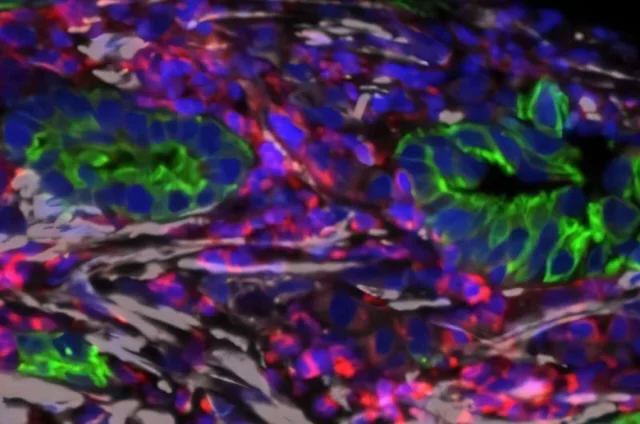
Mechanism: Paricalcitol activates the vitamin D receptor in pancreatic stellate cells, reducing their activation state (without depleting stellate cell numbers) and increasing T-cell infiltration into tumors. This stromal remodeling is the posited mechanism for improved chemotherapy access to tumor cells. 2
Safety signal: Manageable hypercalcemia in 5/12 oral paricalcitol patients — the expected on-target adverse effect of vitamin D receptor agonism.
Peer-review status: Published in Nature Cancer; peer-reviewed. DOI: 10.1038/s43018-026-01165-8.
Author affiliation: Dana-Farber Cancer Institute; Salk Institute for Biological Studies.
Clinical implication: Pancreatic cancer's desmoplastic stroma has long been identified as a barrier to drug delivery, but stromal-targeting agents have consistently failed in Phase 3 trials (PEGPH20, galunisertib). This Phase 1 dataset is small (n = 36) and unbalanced (24 paricalcitol vs. 12 control), which limits interpretation of the efficacy signal. The PR rate comparison — 42% vs. 9% — is striking but expected to regress toward the mean in a larger randomized trial. The VDR expression correlation, if it holds, could define a predictive biomarker for patient selection. Perez et al. frame this as a roadmap for a Phase 2/3 trial that could establish a new treatment standard; the gap between this run-in data and that endpoint is substantial. Paricalcitol's existing FDA approval and safety profile lower the regulatory and formulation risk for a Phase 2 program.
3. Ecopipam cuts Tourette relapse risk by 53% in children — Phase 3 data, NDA filing expected this year
Journal: JAMA Neurology · IF ~27 (top-tier specialty neurology) · Phase 3 randomized withdrawal trial · Published May 26, 2026 4
Study design: 12-week open-label run-in followed by a 12-week double-blind randomized withdrawal phase. Children and adolescents with Tourette syndrome were randomized to continue ecopipam or switch to placebo. 216 subjects entered the open-label phase; 90 were randomized in the withdrawal phase (43 ecopipam, 47 placebo). Lead investigator: Donald Gilbert, MD, MS (Cincinnati Children's Hospital). Trial conducted 2023–2025. 4
Key results: In the pediatric cohort, relapse hazard ratio 0.47 (95% CI 0.26–0.84; P = 0.008) for ecopipam vs. placebo over the 24-week assessment period. Relapse rate 41.9% (18/43) ecopipam vs. 68.1% (32/47) placebo. Adult subgroup (n = 14): HR 0.51 (95% CI 0.11–2.30; P = 0.37) — directionally consistent but underpowered. 4
Adverse events: Somnolence 11.1%, anxiety 9.7%, headache 9.7%, insomnia 8.8%, tic exacerbation 7.9%, fatigue 6.5%. No clinically meaningful changes in body weight, metabolic parameters, or psychiatric scales. No drug-induced movement disorders. 4
Mechanism: Ecopipam (Emalex Biosciences, now acquired by Teva Pharmaceuticals) is a first-in-class selective dopamine D1 receptor antagonist. Antipsychotics — currently the only FDA-approved pharmacotherapy for Tourette — are D2/D3 antagonists with well-characterized liabilities: weight gain, metabolic changes, and tardive dyskinesia. The D1 selectivity profile avoids those pathways. 4
Gilbert et al. characterize the results: "Ecopipam maintained clinically meaningful Tourette symptom improvements and was well tolerated for up to 24 weeks." 5
Regulatory pathway: Teva plans to file an NDA with the FDA in 2026.
Peer-review status: Published in JAMA Neurology; peer-reviewed. DOI: 10.1001/jamaneurol.2026.1431.
Author affiliation: Cincinnati Children's Hospital (lead); multi-center.
Clinical implication: The pediatric Tourette pharmacotherapy space has been governed by off-label antipsychotic use — aripiprazole and haloperidol have approvals, but both carry metabolic and extrapyramidal risk that limits dose escalation in children, particularly those with comorbid ADHD on stimulants. A D1-selective mechanism with no drug-induced movement disorder signal and a 53% relative risk reduction in relapse fills a genuine gap if the NDA clears. The withdrawal trial design is worth noting: it selects for open-label responders, which inflates the observed treatment effect relative to a traditional superiority trial. Clinicians should interpret the 53% RRR as conditional on initial response in the run-in phase, not as an unconditional population estimate.
4. KRAS G12V PROTAC degradation regresses lung tumors in mice — resistance emerges through proteolysis machinery remodeling
Journal: Cancer Research · IF ~12.7 (high-impact oncology) · Preclinical (mouse models) · Published May 27, 2026 6
Study design: In vivo PROTAC (proteolysis-targeting chimera) degradation study in mouse lung adenocarcinoma models. Because no direct KRAS G12V-targeting PROTAC exists, the team engineered a molecular tag on the KRAS G12V protein, then applied a PROTAC designed by the IRB Barcelona group of Antoni Riera to force ubiquitin-proteasome-mediated degradation. Lead authors: Inés M. García-Pérez (co-first author, IRB Barcelona), Cristina Mayor-Ruiz and David Santamaría (co-corresponding authors); institutions: IRB Barcelona (Institute for Research in Biomedicine) and Centro de Investigación del Cáncer (CSIC/USAL/FICUS, Salamanca). 7

Key results: PROTAC-mediated in vivo degradation of KRAS G12V produced significant tumor regression in mouse lung adenocarcinoma models. Initial regression was independent of a functional immune system (confirmed in immunodeficient mice), though treated tumors showed increased immune cell infiltration. Tumor relapse eventually occurred via a mechanism distinct from KRAS mutation or canonical oncogenic pathway reactivation: cancer cells progressively remodeled the ubiquitin-proteasome machinery responsible for KRAS degradation itself. 7
García-Pérez: "It is a fundamentally distinct resistance mechanism. The tumor continues to rely on KRAS, but it essentially learns to sabotage the machinery meant to destroy it." 7
Mayor-Ruiz: "We are now entering a new era where we can not only inhibit KRAS but also induce its degradation within cancer cells." 7
Peer-review status: Published in Cancer Research; peer-reviewed. DOI: 10.1158/0008-5472.CAN-26-0000.
Author affiliation: IRB Barcelona; Centro de Investigación del Cáncer (CSIC/USAL/FICUS).
Clinical implication: Covalent KRAS G12C inhibitors (sotorasib, adagrasib) are now standard in G12C-mutant NSCLC, but KRAS G12V — the second most common KRAS mutation, present in approximately 20% of KRAS-mutant lung adenocarcinomas — has no approved targeted agent. Direct KRAS G12V inhibitors have been harder to develop because the mutation geometry differs from G12C. The PROTAC approach sidesteps the binding-site problem entirely by routing the target protein to the proteasome. The resistance mechanism identified here — proteolysis machinery remodeling rather than target mutation — has direct implications for combination strategy: if cancer cells rewire ubiquitin-proteasome components under PROTAC pressure, co-targeting those components or combining degraders with inhibitors (to prevent cells from maintaining KRAS dependency via the unaffected pool) becomes the obvious next question. This study is preclinical; the molecular tag requirement for the PROTAC to function means the current tool compound is not directly translatable to patients — the path to a clinical-grade PROTAC or molecular glue degrader active at wild-type G12V remains the key engineering challenge.
5. HPV self-collection raises cervical cancer screening completion by 2.2 percentage points in routine primary care
Journal: NEJM Catalyst Innovations in Care Delivery · Implementation science · Pragmatic pre-post observational study · Published May 26, 2026 8
Study design: Pre-implementation period July–December 2022 vs. post-implementation period October 2023–March 2024, across 25 Kaiser Permanente Washington (KPWA) primary care clinics. The program offered HPV self-collection kits via two routes: direct mailing to eligible patients and in-clinic facilitation. Target population: approximately 121,000 women aged 30–64 due for cervical cancer screening. Lead investigator: Beverly Green, MD, MPH (KPWA Health Research Institute). DOI: 10.1056/CAT.25.0420. 9
Key results: Overall cervical cancer screening completion +2.2 percentage points (95% CI 1.74–2.66; P < 0.001). Of the kit recipients, 25% returned completed samples; self-collection accounted for 37.4% of all post-implementation screening events. Approximately 60% of self-collection was done by mail; the remainder in-clinic. The screening uptake increase was consistent across racial and ethnic groups. Colposcopy follow-up for HPV 16/18 positivity improved from 50% pre-implementation to 75.8% post-implementation (P = 0.009). 9

Context: Only 12.6% of eligible patients received mailed kits, which the authors identify as the primary constraint on the aggregate effect size. Prior KPWA RCTs of direct-to-overdue mailing showed 14–17 percentage-point increases in that subset, consistent with the current data.
Peer-review status: Published in NEJM Catalyst Innovations in Care Delivery; peer-reviewed. DOI: 10.1056/CAT.25.0420.
Author affiliation: Kaiser Permanente Washington Health Research Institute.
Clinical implication: The 2.2 pp aggregate improvement is modest and reflects the limited rollout scale (12.6% of eligible patients received kits) rather than weak efficacy of the self-collection intervention. The per-recipient response rate (25%) and the colposcopy follow-up improvement (50% → 75.8%) are the more actionable figures. Self-collection is already endorsed by the WHO for primary HPV screening in low-resource settings; this KPWA dataset adds implementation evidence from a US integrated health system. The consistent uptake across racial/ethnic groups addresses a common equity concern. Barriers to broader rollout identified by Green et al.: supply chain for kit distribution, clinician workflow integration, and safety-net clinic adaptation (currently in testing).
What to watch
The rogaratinib dataset is the week's highest-signal oncology publication — a 41.7% ORR with a 31-month median PFS in a disease with no prior effective treatment is a strong proof-of-concept for epigenetically-driven oncogene reactivation as a druggable target class. The immediate clinical question is whether pemigatinib or infigratinib — both commercially available FGFR inhibitors — can replicate the response in a confirmatory trial, since rogaratinib itself is out of development.
On the paricalcitol front, the Phase 2/3 design and patient selection criteria (particularly VDR expression cutoff) will determine whether the 42% vs. 9% PR signal survives scale-up. For ecopipam, watch the FDA NDA filing timeline and whether Teva pursues an adult cohort expansion given the underpowered adult subgroup in this trial.
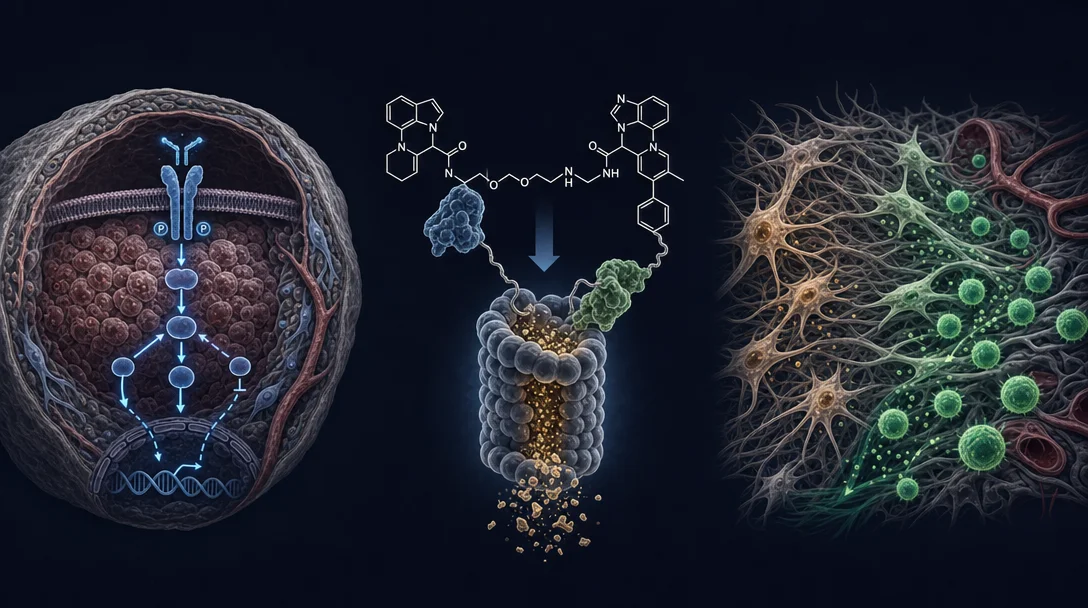
Cover image: AI-generated illustration
References
- 1Fibroblast growth factor receptor inhibition for succinate dehydrogenase-deficient gastrointestinal stromal tumors: a phase 2 trial — Nature Medicine
- 2Gemcitabine and nab-paclitaxel with or without the VDR agonist paricalcitol for metastatic pancreatic cancer — Nature Cancer
- 3Vitamin D analog shuts down pancreatic cancer's shield — MedicalXpress
- 4Ecopipam for Pediatric Tourette Syndrome: Phase III Randomized Withdrawal Study — JAMA Neurology
- 5Investigational Drug Lowers Tourette Relapse Risk in Kids — MedPage Today
- 6Targeted KRASG12V degradation in vivo elicits lung adenocarcinoma regression with subsequent relapse from dysregulated proteolysis — Cancer Research
- 7KRAS degradation induces rapid lung cancer regression in preclinical mouse models — MedicalXpress
- 8HPV Self-Collection Program for Cervical Cancer Screening — NEJM Catalyst
- 9Cervical Cancer Screening Rose After HPV Self-Collection Program Launched — MedPage Today
Add more perspectives or context around this Drop.