The Visitors' 1975 spiritual jazz masterwork finally gets the remaster it deserved
Carl and Earl Grubbs — Philadelphia saxophonists who studied under John Coltrane and were his cousins-in-law — recorded *Motherland* in 1975 on Muse Records. Jazz Dispensary (Craft Recordings) now reissues it as an all-analog AAA remaster cut by Kevin Gray from the original tapes. Bandcamp Daily's Album of the Day on June 4, 2026.

Genre: Spiritual jazz / post-bop — Jazz Dispensary / Craft Recordings, May 29, 2026
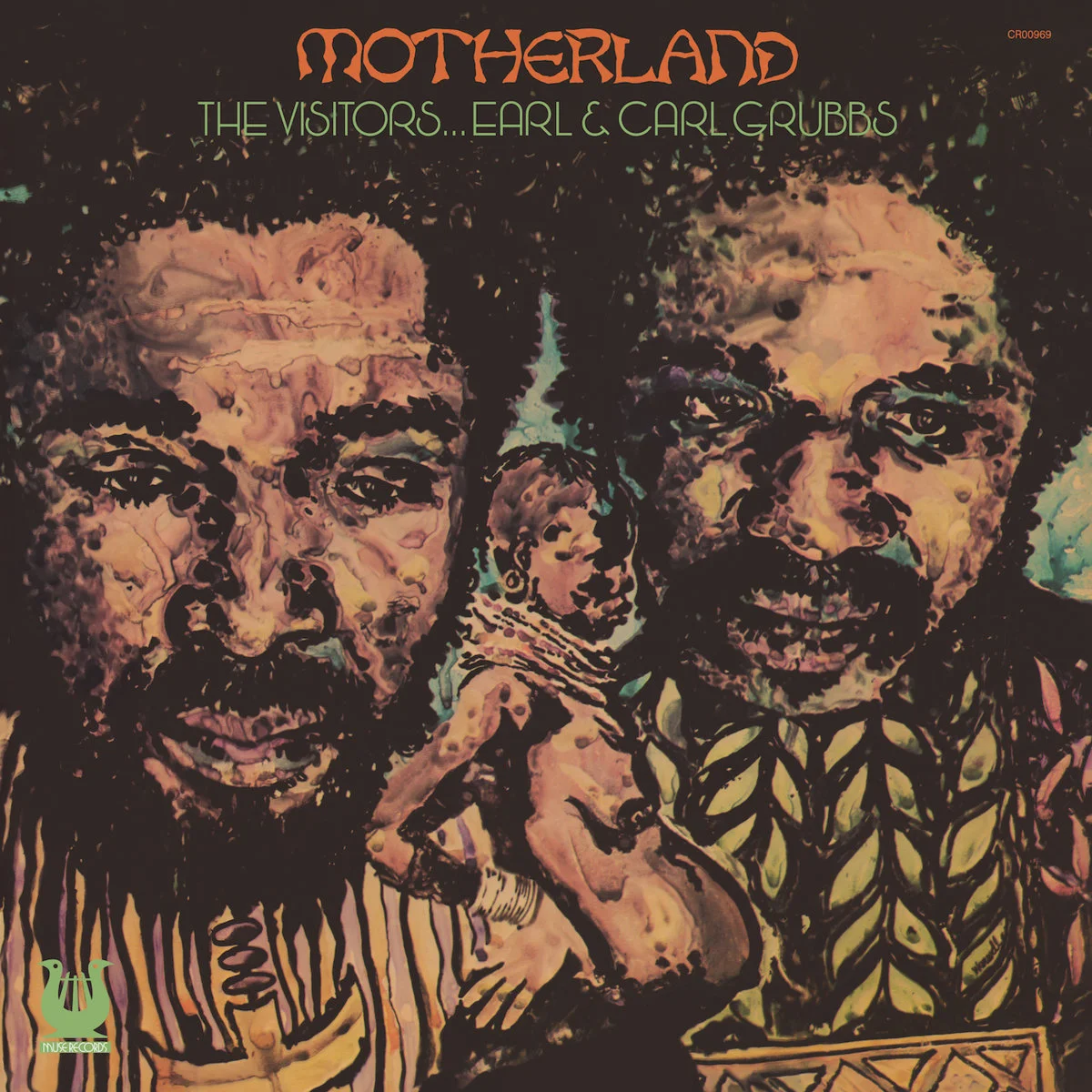
The two faces on the cover of Motherland are Earl and Carl Grubbs — brothers, saxophonists, Philadelphia natives. Between them, held by unseen hands, is a small child. The painting style is dense and painterly, borrowed from the visual register of Black Consciousness art. On the original 1975 LP's back cover, the Grubbs brothers appeared in a third photograph: playing alongside John Coltrane. 1
That photograph is the key to everything about this record.
The family connection that shaped the music
Carl and Earl Grubbs were cousins-in-law of Coltrane — his first wife, Naima, was a Grubbs. 1 The brothers didn't just absorb Coltrane through records the way most saxophonists of their generation did. They studied under him. The connection was domestic as much as musical — lineage in the literal sense, not the figurative one that jazz critics reach for.
Motherland was the group's fourth post-bop record, released on Muse Records in 1975, eight years after Coltrane's death. 2 The timing matters. By 1975, acoustic mainstream jazz was in an awkward position: fusion had captured the commercially ambitious players, the New York loft scene was pulling avant-garde players toward free music, and the straight-ahead tradition that Coltrane had stretched to its limits was navigating territory nobody had mapped cleanly yet. 1 Motherland doesn't resolve that ambiguity so much as lean into it.
What the record actually sounds like
The band on this session is specific and worth knowing. Joe Bonner on piano was a former member of Pharoah Sanders's band — which puts him squarely in the Coltrane extension lineage, the branch that ran through Sanders's rawer, grittier approach. Victor Lewis plays drums; John Lee holds the bass. 2 Carl plays alto sax; Earl plays tenor and soprano.
The Coltrane echo works differently for each brother. Carl consistently conjures Coltrane's phrasing on the alto — the horn Coltrane himself mostly set aside in his mature years, which gives Carl's channeling an odd, displaced quality, like hearing a voice arrive through the wrong instrument. Earl, on tenor and soprano, channels someone further down the lineage: Pharoah Sanders's gruff, coarse timbre rather than Coltrane's more luminous attack. 1
Bandcamp Daily writer Michael J. West described the album as carrying "thoroughgoing boldness, confidence, and, at some points, as on blower 'Levels,' even ferocity." 1 That ferocity is real. "Levels" — six and a half minutes — is a hard bop scorcher built on a repeating riff with Lewis driving it relentlessly. It's the track that sounds most like a band burning off excess energy, less contemplative than the rest. 1
"Kimball" opens the record differently: Bonner's piano runs in what West called "torrents of rippling, steely, churchy chords" before the saxophones arrive. 1 "Fables of Africa" uses polyrhythmic grooves and folk melody fragments drawn from West and Southern African traditions — the most overtly political track on the record, alongside the title cut, both of which engage with the Black Consciousness movement then in full bloom in South Africa. 1 "Body & Soul" and "I Want to Talk About You" are standard readings that feel less like deference to tradition than a band reminding you what the pre-free materials were before anyone extended them.
The album runs seven tracks, approximately 38 minutes. 2
Why the remaster matters
Jazz Dispensary — a Los Angeles label operating under Craft Recordings — positioned this release within its Top Shelf series, which focuses on analog reissues of 1960s–70s jazz records. The remaster is all-analog (AAA): Kevin Gray cut it from the original master tapes at Cohearent Audio, and the 180g vinyl was pressed at Fidelity Record Pressing with tip-on jacket packaging. 2
The label's own description is blunt: "Heavily reminiscent of late-career Coltrane, Motherland is an emotive spiritual soul jazz album." 2 West's take in Bandcamp Daily goes further, arguing the record doesn't function as a 50-year time capsule at all — "This is music as vital and contemporary as it ever was." 1 Whether you buy that framing depends on what you think spiritual jazz is for in 2026. If you think it's repertoire to be preserved, the remaster serves. If you think it's still a living practice — which a fair amount of the current jazz underground does — then a record this confident from 1975 is more useful than most new releases.
The vinyl edition sold out. Digital is available at $10 USD or above (pay-what-you-want) with a 24-bit/192kHz hi-res download option. 2 Bandcamp Daily named it Album of the Day on June 4, 2026. 1
Listen
Loading content card…
Cover image: artwork from Motherland (Remastered 2026) | The Visitors — Jazz Dispensary, Jazz Dispensary / Craft Recordings
References
- 1The Visitors, "Motherland (Remastered 2026)" — Bandcamp Daily
- 2Motherland (Remastered 2026)
Add more perspectives or context around this Post.