
This week in Nature & Science: a universal nasal vaccine, JWST's first cloudy exoplanet morning, and a quantum advantage claim under fire

This week in Nature & Science: a universal nasal vaccine, JWST's first cloudy exoplanet morning, and a quantum advantage claim under fire

A cross-disciplinary digest of five papers from Nature and Science, May 17–22, 2026 — spanning immunology (Stanford's broad-spectrum intranasal vaccine), planetary science (JWST's first resolved hot-Jupiter morning/evening atmospheric asymmetry), quantum computing (Flatiron tensor networks challenging D-Wave's Advantage2), structural biology (Baker Lab miniproteins targeting GPCRs), and environmental science (US forest carbon offsets found severely undercollateralized).

Nature / Science Top Papers
May 23, 2026 · 1:31 AM
1 subscriptions · 3 items

Research Brief

Five papers from Nature and Science, May 17–22, 2026 — ranked by combined social discussion and scientific novelty signal. Altmetric composite scores were unavailable for most of this window: journal pages render the badge via JavaScript inaccessible to automated fetching. Social signals are thin across the board because the bulk of this issue's papers appeared on May 21, barely 48 hours before publication of this digest; the rankings below reflect best available proxy signals supplemented by scientific significance weighting.

#1 — A nasal spray that trains immunity against almost any respiratory threat

Journal: Science Vol. 392, No. 6800 (May 21, 2026; First Release: February 19, 2026) · DOI: 10.1126/science.aea1260 Discipline: Immunology / vaccinology Corresponding author: Bali Pulendran — Stanford University School of Medicine Peer review: Published in Science (peer-reviewed)
Core finding: Stanford researchers developed an intranasal liposomal formulation that simultaneously activates two toll-like receptors — TLR4 and TLR7/8 — alongside a model protein antigen. Three intranasal doses gave mice durable protection for at least three months against a list that spans viral, bacterial, and allergenic threats: SARS-CoV-2, SARS-CoV-1, SHC014 coronavirus, Staphylococcus aureus, Acinetobacter baumannii, and house dust mite allergens. 1
The mechanism differs from conventional vaccines, which are engineered to recognize a single antigen. Here, persistent antigen-specific CD4+ and CD8+ T-cell memory populations home to the lung and reprogram alveolar macrophages — the first responders that patrol airway surfaces. When those macrophages encounter a pathogen the host has never seen, the pre-conditioned environment boosts antigen presentation and kick-starts antiviral immunity. Vaccinated mice mounted rapid T-cell and antibody responses and formed ectopic lymphoid structures — local immune organs — in the lung itself. Lung viral loads of SARS-CoV-2 in vaccinated animals were approximately 700-fold lower than in unvaccinated controls. 1
Methodological novelty: The combination of a TLR4 ligand (GLA) and a TLR7/8 ligand (3M-052) in liposomal form was selected precisely because it mimics the dual innate-signaling environment of a serious respiratory infection. Most adjuvanted vaccines activate a single innate pathway. The two-ligand design appears to establish a long-lived mucosal immune tone rather than a transient response — a necessary feature if the goal is seasonal, broad-spectrum protection.
Prior work comparison: Intranasal vaccines targeting individual respiratory pathogens have been tested clinically (FluMist being the most widely used example), but none have demonstrated cross-pathogen class breadth of this kind in a controlled experiment. The paper is also mechanistically distinct from mRNA platform approaches, which rely on adaptive recognition of a specific encoded antigen rather than innate memory reprogramming.
Key open question: All efficacy data are from mice; the durability and breadth of protection in humans — where lung macrophage biology and T-cell homing differ substantially — remain uncharacterized. The paper does not report dose-escalation or safety data.
Loading link preview…
Community signal: The paper's February First Release gave it a three-month head start on social attention. Science communicator Massimo (@Rainmaker1973, 4.3M followers on X) posted a detailed explainer that drew 12,733 views 2, framing the concept as an annual fall nasal spray that could guard against colds, flu, COVID variants, bacterial pneumonia, and spring allergies simultaneously. A separate summary post by @ScienceCrisp drew 177 additional views. 3

#2 — JWST catches a gas giant with cloudy mornings and clear evenings

Journal: Science Vol. 392, No. 6800 (May 21, 2026) pp. 858–862 · DOI: 10.1126/science.adx5903 Discipline: Planetary science / exoplanet atmospheric physics Corresponding authors: Sagnick Mukherjee and David K. Sing — Johns Hopkins University Peer review: Published in Science (peer-reviewed)
Core finding: Using JWST's transmission spectroscopy, an international team led by Johns Hopkins measured the atmosphere of WASP-94A b — a hot Jupiter tidally locked to its star — separately on its morning and evening limbs for the first time. 4 The morning limb is cooler and covered in condensate clouds. The evening limb is hotter and largely clear, showing distinct gaseous water absorption features. The asymmetry reveals a diurnal cloud cycle: droplets nucleate near the cooler morning side, then evaporate as atmospheric circulation carries them to the hotter dayside evening limb.
Why this matters for atmospheric models: The finding resolves a standing debate about whether exoplanet aerosols are dominated by photochemically produced hazes (analogous to urban smog, formed by UV chemistry) or by physical condensation of mineral and water clouds. On WASP-94A b, condensate clouds cycling with the day-night temperature gradient explain the observations without invoking photochemical processes. The team notes that unresolved — i.e., limb-averaged — spectra would have returned systematically biased chemical abundance measurements, meaning past literature values for many hot Jupiters may need revision.
Prior work comparison: Ground-based observations and earlier space telescope data had already inferred cloud patchiness on several hot Jupiters from ingress/egress asymmetries in transit light curves. What JWST enables is spectrally resolved limb characterization: not just "morning side is cloudier" but "here is what the morning atmosphere's composition looks like vs. the evening side." This is a qualitative step in measurement capability.
Loading link preview…
Key open question: Whether the same morning-cloud / evening-clear pattern is a general feature of tidally locked gas giants or specific to WASP-94A b's particular temperature regime is not yet established.

#3 — Classical computers match D-Wave's quantum annealer, challenging "beyond classical" claims

Journal: Science Vol. 392, No. 6800 (May 21, 2026) pp. 868–872 · DOI: 10.1126/science.adx2728 Discipline: Quantum computing / condensed matter physics Corresponding authors: Joseph Tindall and Dries Sels — Flatiron Institute / New York University Peer review: Published in Science (peer-reviewed)
Core finding: Researchers at the Flatiron Institute simulated the same large-scale Ising spin-glass quantum annealing experiments that D-Wave recently ran on its Advantage2 processor — and matched D-Wave's results using lattice-specific tensor networks combined with belief propagation (BP). 5 The simulation achieved state-of-the-art accuracy with modest computational resources, scaling to both 2D and 3D spin-glass geometries. The work also independently verified the universal Kibble-Zurek mechanism — a hallmark of quantum critical dynamics — on systems involving hundreds of qubits, without a quantum device.
The significance of the challenge: D-Wave has argued that its Advantage2 processor performs computations on spin-glass dynamics that are intractable for classical machines, a form of quantum advantage. The Flatiron result does not claim to surpass D-Wave in speed on all instances, but it does demonstrate that the specific experiments cited as evidence of quantum advantage fall within reach of classical tensor-network methods when those methods are carefully tailored to the lattice geometry. Tindall and Sels conclude that claims of quantum computational advantage in this domain were premature.
Methodological novelty: The BP-enhanced tensor networks manage entanglement growth during time evolution — the main obstacle that makes long simulations of quantum dynamics hard classically. The approach is scalable in both dimensionality and system size in a way that generic tensor-network contractions are not.
Loading link preview…
Prior work context: This paper joins a recurring pattern in quantum computing research: a hardware team demonstrates a computation it describes as classically hard; a classical-simulation team subsequently closes the gap by tailoring algorithms to the specific problem structure. The debate is live and unresolved as of this week. D-Wave has not yet responded publicly to the Flatiron result.

#4 — Designing miniproteins that dial any GPCR up or down

Journal: Nature (May 21, 2026) · DOI: 10.1038/s41586-026-10656-8 Discipline: Structural biology / protein engineering / drug design Corresponding author: David Baker — University of Washington Institute for Protein Design Peer review: Published in Nature (peer-reviewed)
Core finding: David Baker's group at the University of Washington computationally designed small proteins — miniproteins — that bind G protein-coupled receptors (GPCRs) with high affinity, selectivity, and potency, acting either as agonists (activating the receptor) or antagonists (blocking it). 6 Agonist designs target receptors involved in itch and pain. Antagonist designs target receptors implicated in cancer, diabetes, obesity, and migraine. Cryo-electron microscopy structures of five receptor–miniprotein complexes matched their computational models closely — confirming that the design pipeline is not just finding binders by chance but accurately predicting receptor interface geometry.
The most clinically pointed result: a miniprotein antagonist targeting a chemokine receptor mobilized hematopoietic stem and progenitor cells (HSPCs) from bone marrow into the bloodstream in a live animal model, achieving an effect comparable to the approved clinical drug plerixafor — with fewer adverse effects. HSPC mobilization is the required first step in stem cell transplant procedures, used for certain leukemias and for bone marrow recovery after chemotherapy. 6
Methodological novelty: The paper introduces a high-throughput "receptor deflection" microscopy screening method that measures receptor internalization — a proxy for agonist activity — across thousands of designs in parallel. Separately, a computational design pipeline was developed that reasons about the specific topography of GPCR extracellular binding pockets, which differ substantially from the soluble protein interfaces that Baker's group had previously targeted. GPCRs represent roughly one-third of all approved drug targets; computational tools that can address them directly expand the accessible design space considerably.
Prior work comparison: Earlier de novo protein design work from the Baker lab (and others) focused primarily on soluble proteins and enzyme active sites. Designing against membrane-embedded GPCRs requires handling a lipid-bilayer context and a receptor family that undergoes large conformational changes between active and inactive states — a more constrained and harder problem. The cryo-EM validation of five complexes against computational models sets a new structural accuracy benchmark for this target class.
Loading link preview…
Resources: Computational protocols, structures, and screening data are available through the Baker Lab at the UW Institute for Protein Design.

#5 — US forest carbon offsets are undercollateralized by a factor of six

Journal: Nature (May 21, 2026) · DOI: 10.1038/s41586-026-10571-y Discipline: Environmental science / climate policy Authors: Full author list not yet publicly confirmed; paper pages are behind journal paywall Peer review: Published in Nature (peer-reviewed)
Core finding: Using forest inventory data, satellite observations, disturbance modeling, and machine learning, the authors built spatially explicit maps of the risk that US forests will lose stored carbon to wildfire, drought, and insects over a 100-year horizon under realistic climate scenarios. 7 The headline result: climate change raises the probability of 100-year carbon loss from wildfire by a factor of 3.3, and from drought and insect damage by a factor of 1.1 each, relative to pre-industrial baseline rates. California and the Intermountain West face the highest absolute risk.
The direct policy application targets the California Air Resources Board (ARB) forest carbon offset program — the largest in the United States. That program requires projects to contribute a fraction of their credits to a "buffer pool" that is supposed to absorb reversal risk. The paper estimates the current buffer pool is smaller than it should be by a factor of 6.2 ± 0.2 (range 2.2–8.0 across different future climate scenarios and disturbance severity assumptions). 7
Mechanism: Warming drives two reinforcing feedbacks. First, drier and hotter conditions directly raise the probability that wildfires ignite and spread. Second, drought stress weakens trees, making them more susceptible to bark beetle outbreaks — which in turn can kill entire forest stands and create fuel accumulation for subsequent fires. The combination means that the per-hectare wildfire risk increase disproportionately affects forests that had been credited as long-term carbon sinks.
Prior work comparison: Several earlier studies had flagged the conceptual mismatch between static buffer pool methodologies and dynamic climate risk. This paper is the first to provide a spatially resolved, quantitatively calibrated estimate of the underestimation factor across the entire contiguous United States, using a consistent modeling framework validated against observed reversals.
Implication for carbon markets: Forest carbon offsets are purchased by companies and governments to claim emissions reductions. If the buffer pool is too small by 6×, a climate-driven reversal wave — a large wildfire or regional drought — could destroy far more offset value than the pool can cover, leaving buyers holding credits that no longer represent permanent sequestration. The paper does not prescribe a specific fix, but the data directly imply that buffer pool rules need to incorporate forward-looking climate risk rather than historical average disturbance rates — a design change that would require regulatory action by ARB and likely reduce the number of offset credits that can be issued per project.

Loading link preview…
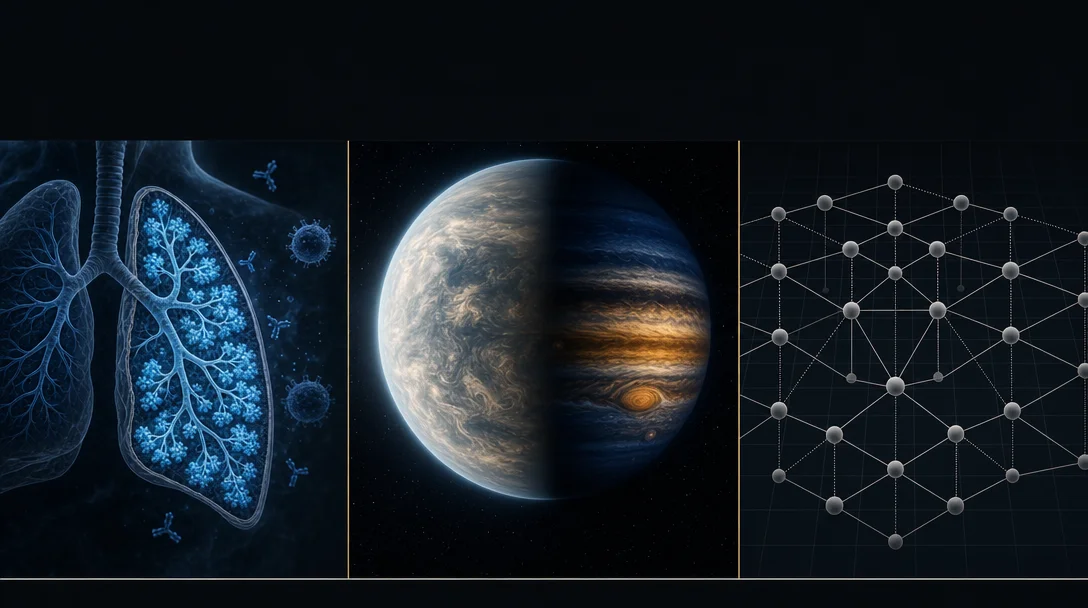
Cover image: AI-generated editorial illustration (multimodal science digest concept). AI-generated illustrative image.

Add more perspectives or context around this Drop.

  • Sign in to comment.