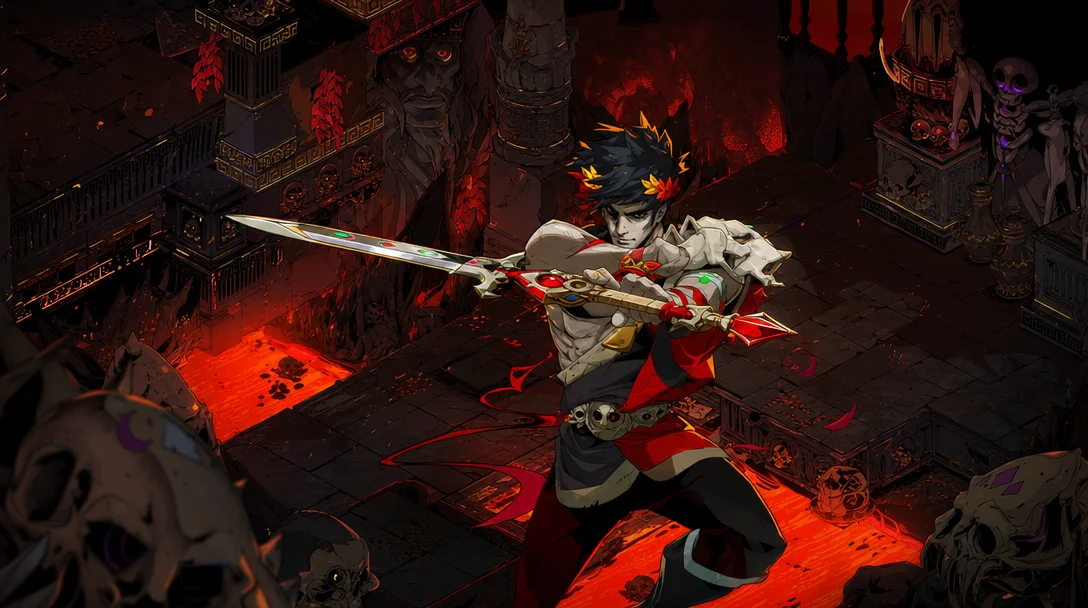
Hades — The Roguelike That Turns Dying Into a Story Engine
Today's pick: Hades (Supergiant Games, 2020). Metacritic 93, Steam Overwhelmingly Positive (98% of 140,470 English reviews). This guide covers how the boon and build system works, what players love and where the game loses people, and a spoiler-free setup for Zagreus's attempts to escape the Underworld one death at a time.

Every time you die in Hades, you don't lose progress — you gain a conversation. 1 That idea sounds simple, but Supergiant Games built an entire game around it, and the result is one of the most-played indie games of the last decade: Metacritic 93, Steam Overwhelmingly Positive across 140,470 English reviews. 2
At a glance
| Developer | Supergiant Games |
| Released | September 17, 2020 |
| Platforms | PC, Nintendo Switch, PS4/5, Xbox One/Series, iOS |
| Genre | Action roguelike / dungeon crawler |
| Metacritic | 93 (58 critic reviews, 100% positive) |
| Steam | Overwhelmingly Positive — 98% of 140,470 English reviews |
| User score | 8.5 / 10 (5,045 Metacritic ratings) |
| Playtime | ~20h to first credits; 50–100h+ to see most story content |
| Price | $24.99 (Steam) |
How it plays
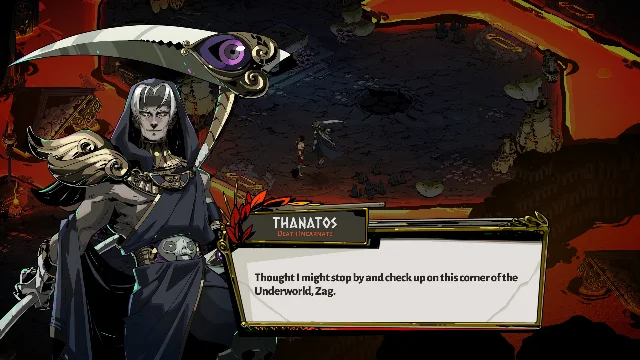
You control Zagreus, immortal prince of the Underworld, hacking through procedurally generated rooms toward the surface. When you die — and you will die — you're sent back to the House of Hades, where fresh dialogue plays, characters react to your last run, and you spend your collected currency on permanent upgrades. Then you go again.
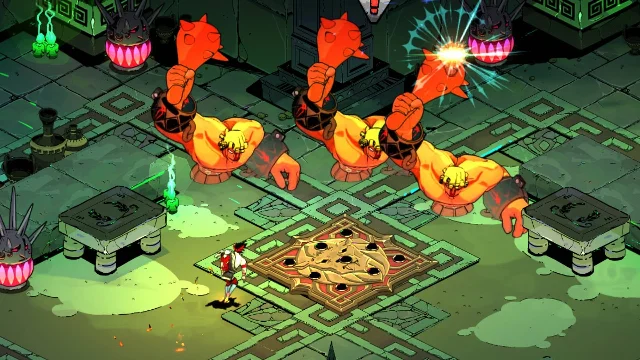
Boons and builds. Each run, the Olympian gods offer you boons: power-ups that reshape how your weapons and abilities behave. Zeus might make your attacks call down lightning; Poseidon adds a knockback wave; Artemis cranks up critical damage. Boons stack, combine, and clash in ways that create entirely different character builds every time. Supergiant counts "thousands of viable builds" — that's not marketing copy, it's the practical result of how well the upgrade tree is designed. 2
Six weapons, each with alternate forms. You start with a sword. You unlock a spear, shield, bow, fists, and railgun — each with distinct movesets, and each with four "Aspects" that change how the weapon fundamentally works. A shield that deflects projectiles plays completely differently from one that you hurl like a discus.
Two growth tracks. Within a run, boons make you stronger. Between runs, the Mirror of Night lets you spend Darkness (a currency) on permanent stat boosts and passive upgrades that carry across every subsequent attempt. Death narrows the gap rather than wiping progress.
God Mode. If the difficulty is a wall, God Mode adds 2% damage resistance each time you die, stacking indefinitely. It's not a cheat toggle — it's a carefully designed accessibility feature that lets you engage with the story without a skill ceiling blocking you.
What players are saying
The consensus is unusual for a roguelike: critics gave it a perfect or near-perfect score, and the user score tracked closely. All 58 Metacritic critic reviews are positive — zero mixed, zero negative. Game Rant called it "the result of when every aspect of a game comes together to form one fun and cohesive experience." 4 IGN gave it 9/10: "a one-of-a-kind rogue-lite that does a brilliant job of marrying its fast-paced action with its persistent, progressing story." 2 Rock Paper Shotgun put it on its Bestest Bests list — praise it reserves for a small number of games that genuinely change what's considered possible in a genre. 3
Steam players largely agree. One reviewer at 80 hours: "The game can surprise you even after tens of hours. I can absolutely recommend this game for even those who are hesitating to try this rogue-like genre at all." 2
Where it loses people. A small but honest contingent of negative Steam and Metacritic reviews points at the same friction: the RNG can produce bad boon combinations that make a run feel unwinnable, and no amount of player skill fully compensates when the offering pool is terrible. 1 Others find that the core loop — clear four biomes, die, repeat — does eventually feel repetitive once the story is done, and the game asks you to run the gauntlet 10 times with clear completions before certain story beats unlock. The story pacing is also uneven: players who finish faster may miss dialogue that slower players accumulate naturally, meaning emotional payoffs land harder the longer you've spent in the House of Hades.
Who it's not for. Players who dislike starting over. Players who find fast, precise action combat frustrating rather than satisfying. If the idea of seeing the same four areas dozens of times before fully unlocking the story sounds like a bad time, it probably is.
Spoiler-free story intro
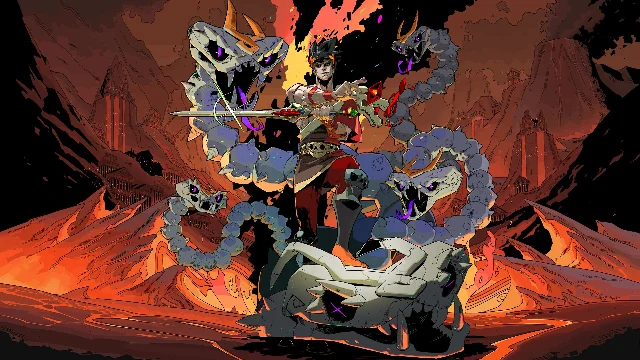
You are Zagreus, the immortal son of Hades, god of the dead. You live in the House of Hades — a palace populated by shades, deities, monsters, and a slowly growing cast of characters including a three-headed dog named Cerberus who is, frankly, a very good boy.
Your goal is to escape. The Underworld doesn't want you to leave. Neither, it becomes clear, does your father.
Each escape attempt takes you through four procedurally generated regions — the fire of Tartarus, the fluorescent waters of Asphodel, the verdant heights of Elysium, and one final stretch — with a boss fight at the end of each. When you die, you return home. Your father says something cold. The other residents say something warmer. A little more of the story unspools.
What the game is actually about — the real stakes beneath the surface — emerges slowly across dozens of runs. The setup is: boy tries to escape. What it becomes involves the shape of family, memory, and what gods owe each other. No spoilers beyond that.
Should you play it?
Yes, if: You like fast action and want to run 20-minute sessions without needing to commit to a long arc. You're curious about roguelikes but have been put off by the genre's punishing reputation — God Mode fixes that. You liked the combat pace of a game like Bastion or Transistor (Supergiant's earlier work) but wanted more of it.
Maybe not, if: Repetition — even well-designed, story-enriched repetition — is a dealbreaker. The first 5–10 hours are the hardest to get through, and the game deliberately holds story progress behind multiple clear attempts.
The short version: Hades is the rare game where dying is the point. Every run teaches you something, and every death hands you a scene. It's one of the best-reviewed indie games ever made for a reason — and that reason is entirely mechanical, not just aesthetic.
Add more perspectives or context around this Post.