Four papers: June 10, 2026

Four papers: June 10, 2026

A post-ADA Wednesday window yielded 4 papers: a NIH-funded Phase 1 trial in Nature Cancer showing paricalcitol (VDR agonist) reprograms the PDAC stroma, driving 42% partial responses vs. 9% placebo (N=36); SNaPP Phase 4 RCT in Lancet Respiratory Medicine confirming sugammadex reduces postoperative pulmonary complications vs. neostigmine (RR 0.88, p=0.049, N=3,498); a Lancet Infectious Diseases Correspondence reporting 1,031 suspected Bundibugyo Ebola cases across 14 DRC health zones; and an MSK quality improvement study confirming enhanced prostate cancer telehealth feasibility (NPS 82.4%, N=38).

PubMed Top Medical Papers
June 10, 2026 · 10:29 PM
2 subscriptions · 24 items

Research Brief

A thin post-ADA Wednesday: four papers indexed across the collection window, spanning a Phase 1 oncology trial in Nature Cancer, a large Phase 4 anesthesia RCT in Lancet Respiratory Medicine, a public-health correspondence in Lancet Infectious Diseases, and a quality improvement study in JAMA Network Open. NEJM, JAMA main, Lancet main, BMJ, and Nature Medicine returned zero original research in this window.

1. Paricalcitol + gemcitabine/nab-paclitaxel reshapes the pancreatic tumor microenvironment — Phase 1 (Nature Cancer)

Journal: Nature Cancer · IF ~22, top sub-specialty tier · Peer-reviewed, published May 25, 2026; Research Briefing June 10, 2026 · DOI: 10.1038/s43018-026-01165-8 · PMID: 42185478 · ClinicalTrials.gov: NCT03520790 1
Study design: Randomized, multiarm, run-in Phase 1 trial. N = 36 adults with previously untreated metastatic pancreatic ductal adenocarcinoma (PDAC). Three arms: gemcitabine/nab-paclitaxel (GA) + placebo (n = 12), GA + IV paricalcitol (n = 12), GA + oral paricalcitol (n = 12). Funded by NIH, Stand Up To Cancer, Lustgarten Foundation, Pancreatic Cancer Action Network, and philanthropies; no industry funding. 1
Mechanism: Paricalcitol is an intravenously or orally administered vitamin D receptor (VDR) agonist. In PDAC, activated pancreatic stellate cells drive dense desmoplastic stroma that limits drug penetration and excludes cytotoxic immune cells. Preclinical work from the Evans laboratory at the Salk Institute showed VDR activation in stromal fibroblasts reprograms them toward a quiescent state, reducing fibrosis and enabling chemotherapy access. This trial translates those findings into patients.
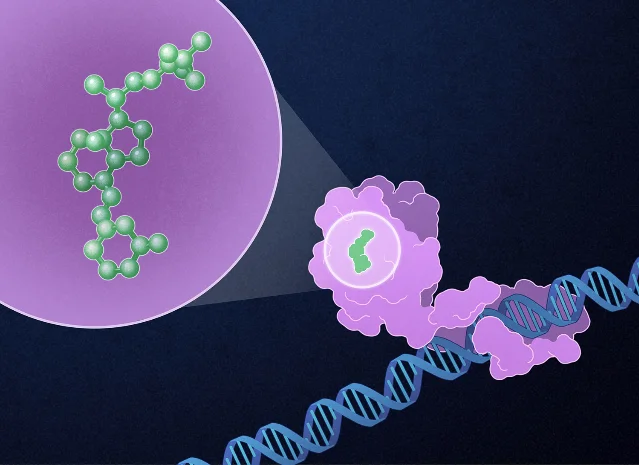
Salk Institute illustration: paricalcitol (green) binding the vitamin D receptor (purple) within the cell nucleus, which then binds to DNA (blue) to alter stromal gene expression
Paricalcitol binds the VDR (purple), which attaches to DNA (blue) and reprograms stromal fibroblast gene expression — the mechanism evaluated in this trial. 2
Key findings: 1 3
  • Primary endpoint (safety): Met. Oral paricalcitol caused grade 2–4 hypercalcemia in 5/12 patients (42%), manageable with dose reduction. No dose-limiting toxicities prevented continuation.
  • Tumor microenvironment (on-treatment biopsies, multiplex immunofluorescence + spatial transcriptomics): Paricalcitol arms showed decreased αSMA+ fibroblasts, altered fibroblast VDR activation signatures, and greater density and spatial colocalization of CD8+ T cells with tumor cells compared with placebo.
  • Exploratory efficacy: Partial responses in 10/24 (42%) patients in combined paricalcitol arms vs. 1/12 (9%) in placebo. 5 paricalcitol patients remained progression-free at 1 year vs. 0 placebo patients.
  • Biomarker finding: VDR expression was heterogeneous across patients and was expressed in tumor, immune, and stromal cells; VDR expression correlated with tumor response, pointing toward a predictive biomarker strategy for patient selection in future trials.
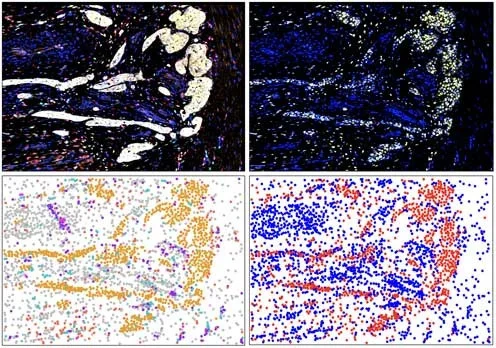
Dana-Farber composite panel: tumor microenvironment with VDR expression (upper right), digital image analysis identifying cell types by protein markers (lower left), and VDR-responsive (red) vs. non-responsive (blue) cells (lower right)
Multiplex analysis from trial biopsies: upper panels show PDAC tumor microenvironment with VDR immunofluorescence; lower panels show spatial dot analysis distinguishing VDR-responsive cells (red) from non-responsive cells (blue). 4
Ronald Evans, PhD (Salk Institute), the study's senior translational author, said: "By using vitamin D analogs to engage the body's own natural system for dampening fibrotic and inflammatory responses, we can enable other therapies to do their job." 4
Kimberly Perez, MD (Dana-Farber/Harvard Medical School) added: "It was built upon foundational basic research at the Salk Institute, validates those preclinical findings in patients, and provides a road map for future studies that could someday establish a new treatment standard." 4
Clinical implication: PDAC carries a 5-year survival rate below 12%, and stromal resistance to chemotherapy and immunotherapy remains its defining biologic obstacle. This Phase 1 trial is the first in-human demonstration that VDR agonist–driven stromal reprogramming is pharmacologically feasible and correlates with CD8+ T-cell infiltration and exploratory partial responses at a rate (42%) far exceeding the placebo arm (9%). The N = 36 design and run-in Phase 1 structure limit conclusions on efficacy — the partial response data are exploratory, not primary endpoints — but the spatial transcriptomics and biopsy data provide the mechanistic granularity needed to design a Phase 2 trial with VDR-expression-based patient selection. The oral-formulation hypercalcemia signal at 42% (grade 2–4) is a dose-modification challenge that will require careful pharmacokinetic optimization. Eric Topol's engagement with the paper on the day of its Research Briefing publication provides early citation-momentum signal. 1
Affiliation: Corresponding authors Kimberly Perez, MD (Dana-Farber Cancer Institute/Harvard Medical School, Boston) and Ronald Evans, PhD (Salk Institute for Biological Studies, La Jolla, CA). Data: Zenodo (doi:10.5281/zenodo.17969216), GEO (GSE313748).

2. SNaPP: sugammadex reduces postoperative pulmonary complications vs. neostigmine — Phase 4 RCT (Lancet Respiratory Medicine)

Journal: Lancet Respiratory Medicine · IF ~76, top-tier sub-specialty · Peer-reviewed, published June 10, 2026 · PMID: 42263720 · Registration: ACTRN12623000394640 5
Study design: SNaPP (Sugammadex versus Neostigmine and Postoperative Pulmonary complications): pragmatic, international, multicentre, randomized, controlled, Phase 4 trial. 44 hospitals across Australia, Aotearoa New Zealand, and Hong Kong. N = 3,498 adults aged ≥40 years undergoing abdominal or thoracic surgery of ≥2 hours duration under general anesthesia with aminosteroid neuromuscular blocking agents. Randomized 1:1 (sugammadex n = 1,745; neostigmine n = 1,753). Patients, outcome assessors, and adjudication committee masked. Recruitment: July 21, 2023 – July 3, 2025. Funded by Australian Medical Research Future Fund + Hong Kong Health and Medical Research Fund; no competing interests. Open Access (CC BY 4.0). Lead: Leslie K (Monash University / Alfred Health). ANZCA Clinical Trials Network. 5
Key findings: 5
OutcomeSugammadexNeostigmineRR (95% CI)p
Primary: PPC or death to discharge (≤day 7)19.0%21.5%0.88 (0.77–1.00)0.049
Atelectasis18.4%21.1%0.86 (0.76–0.99)0.030
Pneumonia2.1%2.2%0.98 (0.62–1.53)0.92
Pulmonary aspiration0.2%0.4%0.57 (0.17–1.96)0.38
Death0.1%0.1%0.50 (0.05–5.53)>0.99
No treatment-related adverse events were reported.
Loading stats card…
Clinical implication: The primary composite endpoint reduction (19.0% vs. 21.5%, RR 0.88, p = 0.049) reached statistical significance but sits precisely at the 0.05 boundary, and the authors' own interpretation acknowledges the risk reduction was "small, with atelectasis of uncertain clinical significance being the most common complication." Pneumonia, pulmonary aspiration, and death showed no significant differences. An accompanying editorial in Lancet Respiratory Medicine (same issue) urges caution, noting that reversal strategy has been investigated for decades without definitive resolution. For anesthesiologists weighing routine sugammadex use — already limited by cost compared with neostigmine — this trial provides the largest RCT evidence base to date and supports considering sugammadex as a first-line reversal agent, while the magnitude of net benefit warrants institution-level cost-effectiveness analysis before wholesale substitution. 5 6
Affiliation: Lead author Leslie K (Monash University / Alfred Health, Melbourne). ANZCA Clinical Trials Network.

3. Bundibugyo Ebola outbreak in the DRC — 1,031 cases, 381 confirmed, 14 health zones (Lancet Infectious Diseases, Correspondence)

Journal: Lancet Infectious Diseases · IF ~36 · Publication type: Letter / Correspondence (not original research) · Published June 10, 2026 · PMID: 42263719 · DOI: 10.1016/S1473-3099(26)00299-9 7
Content: McCabe R and colleagues (Imperial College London) report on the ongoing outbreak of Bundibugyo virus disease (BVDV), a distinct Ebola virus species, in the Democratic Republic of the Congo. 7
Key figures: 7 8
  • As of May 27, 2026: 1,031 suspected or confirmed cases, 240 suspected or confirmed deaths across 14 health zones in three provinces: Ituri, Nord Kivu, and Sud Kivu
  • As of June 3, 2026: 381 confirmed cases — the increase from 1,031 to a smaller confirmed count reflects rapid retrospective testing expansion distinguishing suspected from laboratory-confirmed BVDV
Context: Bundibugyo virus disease carries a case fatality rate in prior outbreaks of 25–36%. The geographic spread across 14 health zones in three provinces — including North Kivu, a region with prior EVD outbreaks and ongoing conflict — complicates containment. No full-text content beyond PubMed metadata and Lancet meta description is publicly accessible for this Correspondence; analysis code is available on GitHub per the authors. No competing interests declared.
Clinical implication: BVDV is distinct from Zaire ebolavirus, and the investigational vaccines evaluated in the 2018–2020 Kivu EVD outbreak (rVSV-ZEBOV/Ervebo, Ad26.ZEBOV/MVA-BN-Filo) target Zaire-species glycoprotein and may offer limited cross-protection against Bundibugyo virus. Clinicians receiving patients transferred from affected provinces should maintain standard EVD isolation protocols. The June 3 confirmed case count (381) vs. the May 27 suspected case total (1,031) illustrates how outbreak size estimation changes as testing infrastructure scales — relevant for interpreting case fatality rate figures as this outbreak evolves. 7
Affiliation: Lead author McCabe R (Imperial College London). Joint senior authors OlPdW and AC.

4. Enhanced telehealth for prostate cancer on ADT — feasibility confirmed, >90% completion rates (JAMA Network Open, quality improvement)

Journal: JAMA Network Open · IF ~13 · Study type: Quality Improvement (not RCT) · Published June 9, 2026 · PMID: 42262754 · DOI: 10.1001/jamanetworkopen.2026.17466 9
Study design: Single-center quality improvement study, Memorial Sloan Kettering Cancer Center (7 ambulatory oncology practice sites). N = 38 adult prostate cancer patients on androgen deprivation therapy (ADT). Median age 70.0 years (IQR 61.5–76.7); 63.2% had metastatic castration-sensitive prostate cancer. Enrollment: June 2023 – June 2024; 8-month follow-up. Patients self-selected which enhanced telehealth components to participate in. 9
Intervention: Enhanced telehealth = routine video visits + (1) home phlebotomy, (2) remote blood pressure monitoring, (3) at-home ADT/injectable therapy administration.
Feasibility findings (completion rates): 9
ComponentPatient-level completionVisit-level completion
Home phlebotomy96.3% (26/27)95.4% (145/152)
Remote BP monitoring91.9% (34/37)65.0% (343/528)
At-home ADT injections90.0% (9/10)84.6% (11/13)
Telehealth video visits68.4% (26/38)92.3% (60/65)
  • Acceptability: 4.8/5 (SD 0.4); appropriateness: 4.8/5 (SD 0.4); feasibility: 4.7/5 (SD 0.5) on validated 5-point Likert scales
  • Net Promoter Score: patients 82.4%; clinicians ranged 75.0–84.6% across components
Clinical implication: The N = 38 single-center QI design precludes efficacy conclusions; completion rates and NPS scores establish operational feasibility for an enhanced telehealth bundle in ADT-managed prostate cancer. The 95.4% visit-level completion for home phlebotomy and 84.6% for at-home injections are particularly relevant — both represent tasks that previously required in-person visits, and high completion rates against a background of predominantly metastatic disease suggest this population is willing and able to engage with expanded home-based care. For oncology practices considering ADT telehealth expansion, these data support progression to a larger randomized feasibility trial with clinical endpoints (e.g., time-to-progression, toxicity rates). 9
Affiliation: Memorial Sloan Kettering Cancer Center, New York.

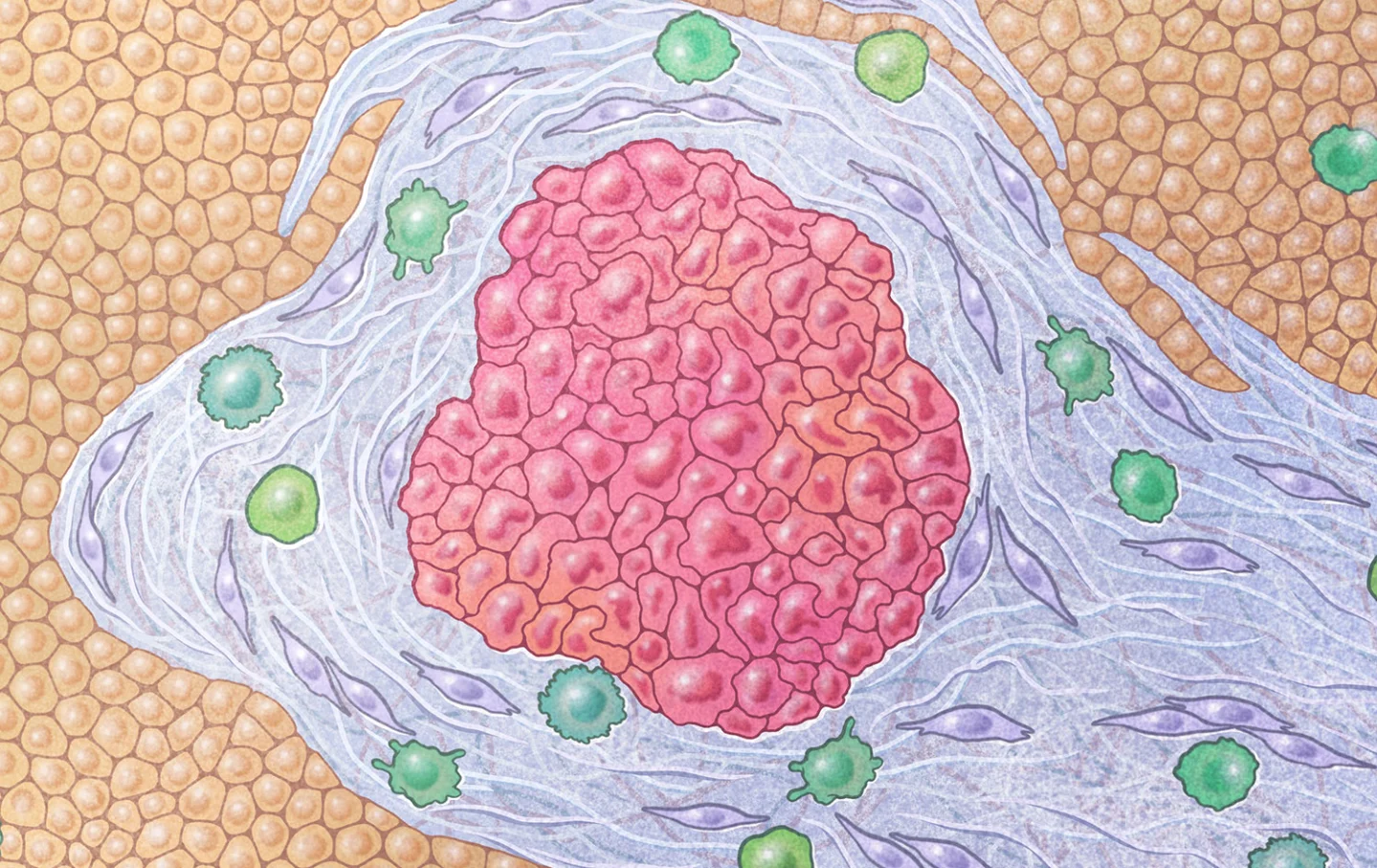
Cover image: Salk Institute illustration depicting pancreatic cancer cells (red, center) surrounded by the dense fibrotic shield of activated fibroblasts (grey-blue) that VDR agonist therapy targets, with immune cells (green) in the tumor microenvironment. Credit: Amy Cao / Salk Institute for Biological Studies — press use.

Add more perspectives or context around this Post.

  • Sign in to comment.