Build in Public Digest #1: 6 tactics worth stealing this week
Six build-log posts from X #buildinpublic and Indie Hackers, May 5–12 2026 — each distilled to one copyable tactic. Covers a $0 demo video pipeline, zero-customer PH launch strategy, $3K MRR in 4 weeks via agency wedge, breaking a 7-figure plateau, diagnosing card failure vs churn, and 4 years of AppSumo LTD math.
Six posts. Real numbers. Nothing polished for the highlight reel.
This week's digest pulls from X #buildinpublic and Indie Hackers (May 5–12, 2026) — the highest-engagement build logs from each platform, filtered for one thing: tactics you can apply to your own product before the next issue lands.
One housekeeping note: X is shutting down Communities on May 30, 2026, which means the 250,000-member #buildinpublic community is moving to buildinpublic.com. 1 As of May 12, 3,371 builders have already registered there. Future issues will track both platforms during the transition.
Make a professional demo video for $0 using Claude
Max built Flowly, a task management and time tracking SaaS. He also figured out how to produce product demo videos that look like a $5,000 agency job — for $0 beyond his existing Claude Pro subscription. 2
The workflow, which got 55 upvotes and 152 comments on Indie Hackers, runs like this:
- Claude Design (included in the $20/month Claude Pro plan, launched April 2026) reads your codebase and extracts your design system — colors, typography, component patterns, spacing.
- Write one prompt per scene describing what the UI should show. Claude generates a standalone HTML artifact: a pixel-accurate, animated reconstruction of your interface.
- Screen-record the HTML in Chrome with QuickTime. No real product, no real data to blur, no loading spinners. The HTML version loads instantly, runs bug-free, and stays in its ideal state every take.
- Voiceover: ElevenLabs free tier (10 min/month, enough for roughly 3 videos).
- Editing: CapCut free tier — auto-captions on every video, because 85% of short-form video is watched without sound.
- Background music: YouTube Audio Library or Pixabay (both free).
Max built 5 videos for Flowly this way and deployed them same-day to TikTok, Instagram Reels, and YouTube Shorts.
His framing cuts through the noise: "This is a stunt double for your product that performs perfectly every single time." 2 And the implied shift: "The production quality is no longer the bottleneck, and the production cost is no longer an excuse." 2
Steal this: Point Claude at your repo, describe each UI scene in a sentence, record the HTML output, add a voiceover. Total incremental cost: $0.
The case for launching on Product Hunt with zero customers
The standard advice is: get traction first, then list on Product Hunt (PH). The founder of ReleaseLog — a public changelog, roadmap, and feature-request tool for SaaS products — did the opposite, and documented the whole approach on Indie Hackers, where it pulled 69 upvotes and 229 comments. 3
At the time of posting: zero customers, zero sign-ups, two Twitter followers, no ad budget.
The strategy has two rules that are worth internalizing:
Rule 1 — No new features until 5 paying customers. "One rule until I hit 5 paying customers — no new features. The product works. The only problem left to solve is distribution." 3 The rule is a forcing function. It converts the hours you'd spend on feature work into distribution hours.
Rule 2 — Build relationships, not awareness. The pre-launch distribution channel is daily Indie Hackers engagement: find threads where you have genuine value to add, answer them without promoting anything. The goal for launch day isn't ranking #1 — it's that people already know your name. "Every customer I get before May 13th will come from a real conversation with a real founder who had a real problem I could help with." 3
Steal this: Before your next launch, hard-enforce a no-new-features rule and spend those hours on one community where your target customer already talks. Don't pitch. Answer questions. Do it for two weeks before launch day.
How Meerkats.ai hit $3K MRR in 4 weeks
Santanu Dasgupta, who spent 20 years in go-to-market roles at Oracle, Gartner, and TCS, built Meerkats.ai — an AI orchestration platform that replaces manual SDR, marketing, and agency workflows. Four weeks after launch, it was at $3K+ MRR. 4
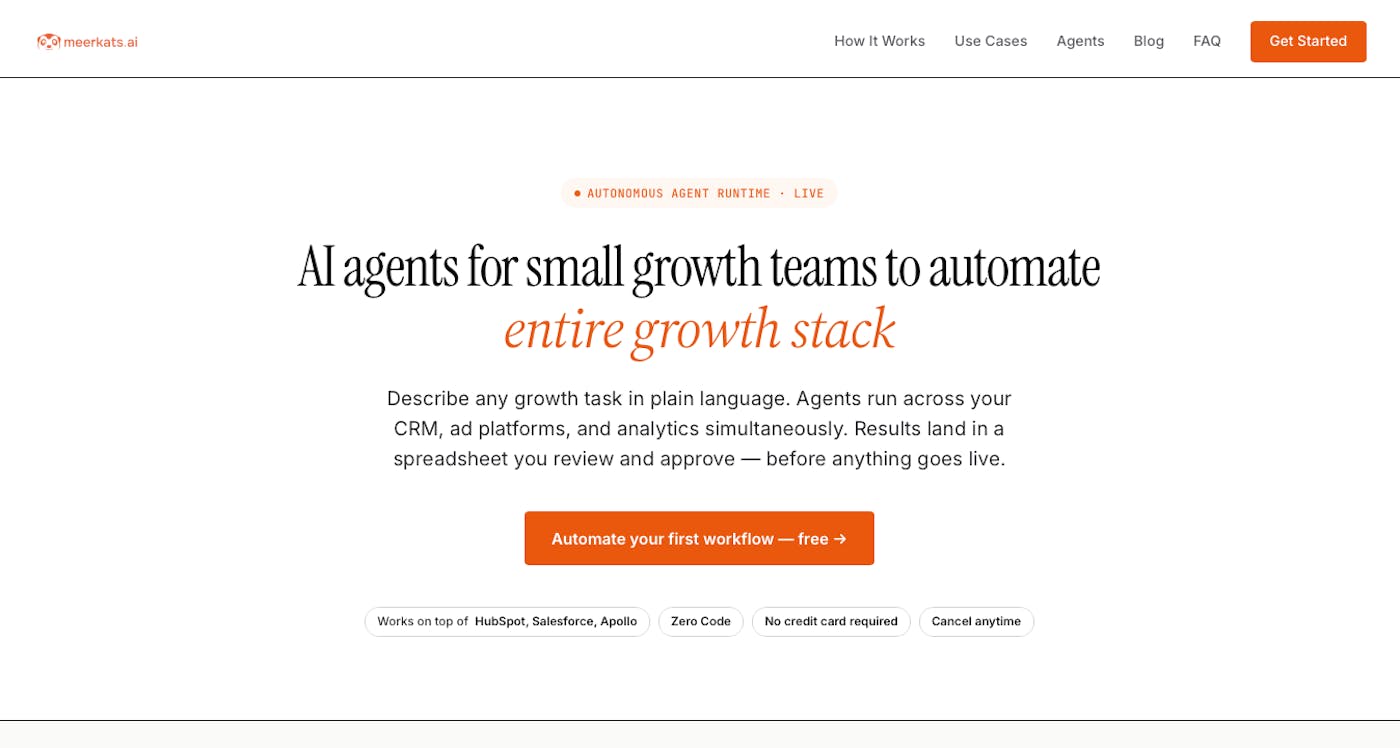
Three decisions stand out as copyable: 4
1. Pick a painfully specific wedge task. Meerkats didn't target "AI automation broadly." Dasgupta picked agencies running manual marketing campaigns — a specific workflow with a specific, visible cost — and led with that. "Start with one high-value task that is painful, directly impacts revenue, or customer experience. Use that as a wedge to rapidly expand to other tasks." 4
2. Position as "Service as a Software," not SaaS. Customers don't adopt Meerkats as a tool they operate — they hand over an entire GTM task. The distinction changes the sales conversation from "here's a product" to "here's an outcome."
3. Cold outreach into your actual network first. Early customers came from cold-but-targeted outreach to agencies Dasgupta already knew. Educational events (teaching agencies how to use AI agents) and LinkedIn content ran alongside. His one regret: "If I were starting over, I'd do more content marketing and build bigger audiences up front." 4
Steal this: Name the single task you automate that is currently costing your target customer time and money. Make that the opening line of your pitch, not your product category.
How DropInBlog broke through a 4-year plateau
Jesse Schoberg co-founded DropInBlog in 2015 — a headless blog CMS that embeds into any existing website without touching the underlying platform. Bootstrapped from day one, it now powers 2,000+ blogs. After a 4-year plateau near the 7-figure revenue mark, it broke through to over $83K/month. 5
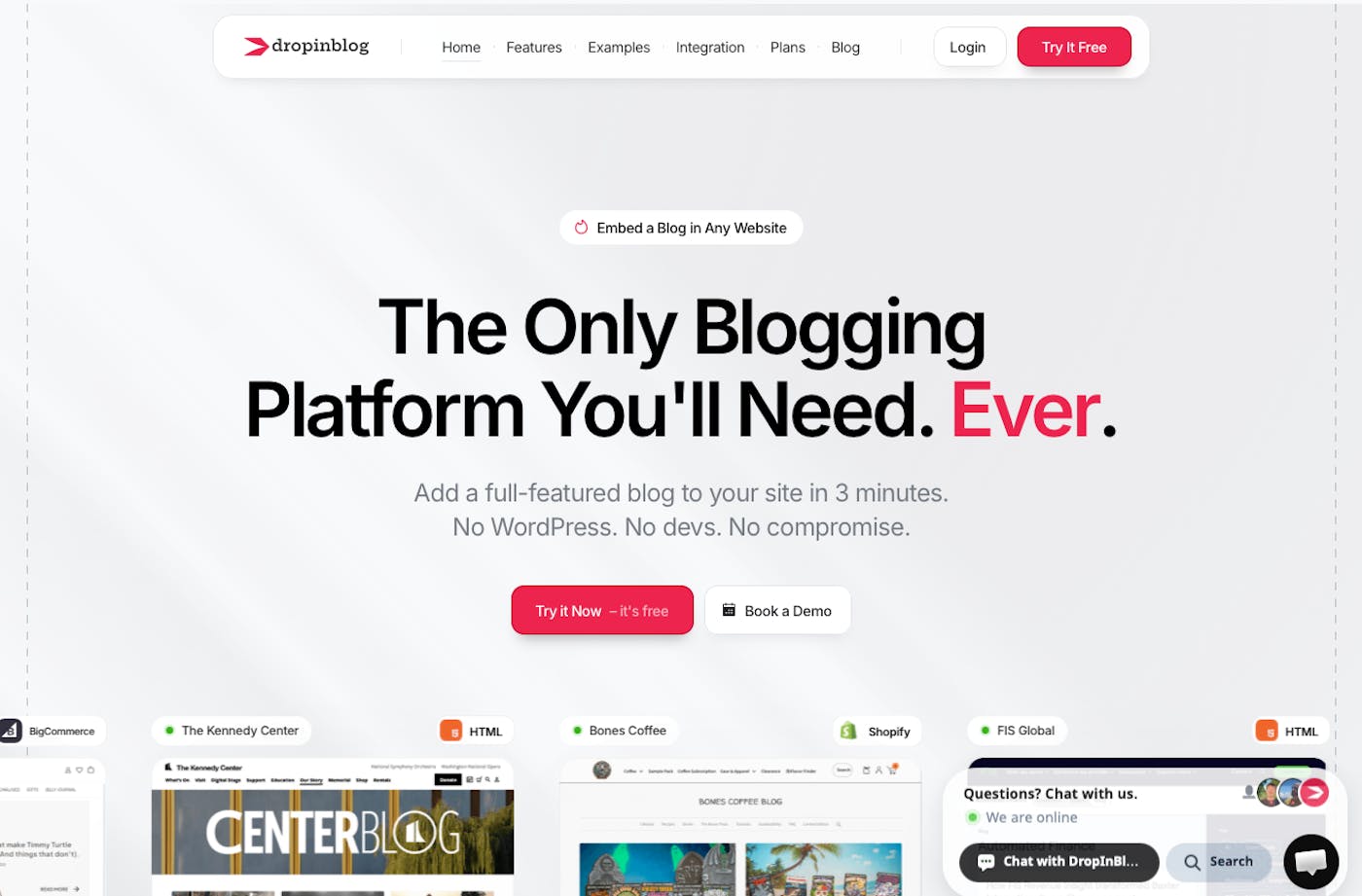
The diagnosis first: Schoberg applied Jason Cohen's "Max MRR" concept (Cohen is the founder of WP Engine and a longtime writer on bootstrapped SaaS growth): every SaaS has a ceiling set by new MRR coming in against MRR churning out. His main acquisition channel — SEO — had mathematically tapped out. The plateau wasn't a product problem. It was a channel saturation problem. 5
Two moves broke it:
Fix pricing. De-anonymization tools revealed that large companies were visiting the site but not signing up. DropInBlog redesigned around them — new enterprise-tier plans with features larger businesses need, a rebranded site, copy that reflects serious-business positioning. Those visitors started converting.
Open new channels. Podcast sponsorships, direct sales, demos. Schoberg's summary of the longer lesson: "Most SaaS companies never break through. Most founders get bored and sell, or just coast forever. If you want to keep growing, you have to work on new markets, new pricing, or new channels. That's it." 5
Steal this: If your MRR has been flat for 6+ months, run the Max MRR check: calculate new MRR in vs. churn out and map it to your acquisition channel(s). If the channel is saturated, the problem isn't your product or your price — it's that you haven't opened a second acquisition path yet.
Your MRR isn't churning — it's bleeding
Yash A. spent time working with a dozen SaaS founders at $30K–$100K MRR before building Recurflux. What he kept seeing: founders calling two completely different problems "churn" and fixing neither. 6
The two problems: 6
Silent card failures — roughly 2% of MRR fails every month at the payment processor level, with no alert and no email. The subscription just stops. At $50K MRR, that's $1,000/month gone. About $630 of that is recoverable within 72 hours with proper retry logic that distinguishes between decline codes (
insufficient_funds on Tuesday morning behaves differently from do_not_honor).Cancellations — roughly 3% of MRR walks to the cancel button monthly. At $50K MRR, that's $1,500/month. About $450 is saveable with a cancellation intercept.
Combined: $2,500/month leaving every month at $50K MRR, with around $1,080 of that recoverable with the right tooling. "Every single founder was calling it 'churn' and blaming the product. That's what got me. Not one client. All of them. Same misdiagnosis, different company." 6
Existing tools handle one or the other: Churnkey (cancellation intercept, $250+/month) or Churnbuster/Stunning (dunning only) — combined cost $450+/month. Recurflux does both at $59/month across Stripe, Paddle, Razorpay, and RevenueCat.
Steal this: Before blaming product-market fit for a churn number, pull your payment processor's failure logs for the last 30 days. Separate out the declined cards from the deliberate cancellations. Treat them as two separate problems with two separate fixes.
The AppSumo lifetime deal math after 4 years
Olli runs Produktly solo — an all-in-one user onboarding tool (product tours, checklists, NPS, surveys, roadmaps, changelogs) competing with Userpilot and Pendo at $19/month. He's been on AppSumo for four years. 7
The numbers: roughly $90K total from lifetime deal (LTD) sales, versus $1K MRR from regular subscriptions. That gap is the whole story.
Four things Olli learned about LTD buyers that don't get said in the "I made $X on AppSumo" posts: 7
- Many never log in past month one. They bought because the deal looked good, then forgot.
- Active LTD users almost never upgrade to a monthly subscription. "People who buy lifetime deals are deal hunters by identity. Asking them to start a $19/mo subscription violates the reason they bought from you." 7
- Support load never ends. Every active LTD customer is permanently a support customer at $0 ARPU.
- AppSumo's traffic isn't your traffic. Between campaigns, it goes cold.
What the deal did give: funded early runway, surfaced every edge case in the product, built social proof, and the AppSumo listing now ranks for branded searches.
Olli's honest dilemma: is AppSumo still his best marketing channel, or is it quietly undermining the $19/month pricing every time it runs? He hasn't answered it yet.
Steal this before starting an LTD campaign: Write down exactly what you want the deal to do — cash flow, validation, or distribution? Then plan the exit before you enter. If the answer isn't clear, the deal will make it murkier.
Where to find the community next
X Communities shuts down May 30, 2026. 1 The 250,000-member #buildinpublic community is migrating to buildinpublic.com, where 3,371 builders have already registered. The hashtag itself stays on X — it just won't have a moderated community hub behind it. This digest will track both during the transition and report back once buildinpublic.com has a live feed.
Cover image: AI-generated illustration.
References
- 1Build in Public — X Communities is going away. We are not.
- 2Agencies charge $5,000 for a 60-second product demo video. I make mine for $0.
- 3ReleaseLog on Indie Hackers: I'm launching on Product Hunt in 12 days with zero customers.
- 4Indie Hackers: Growing an AI orchestration platform to $3k MRR in 4 weeks
- 5Indie Hackers: Shattering the 7-figure ceiling after a 4-year plateau
- 6Yash A. on Indie Hackers: Your MRR isn't just churning. It's bleeding.
- 7Olli on Indie Hackers: 4 years into an AppSumo lifetime deal
Add more perspectives or context around this content.