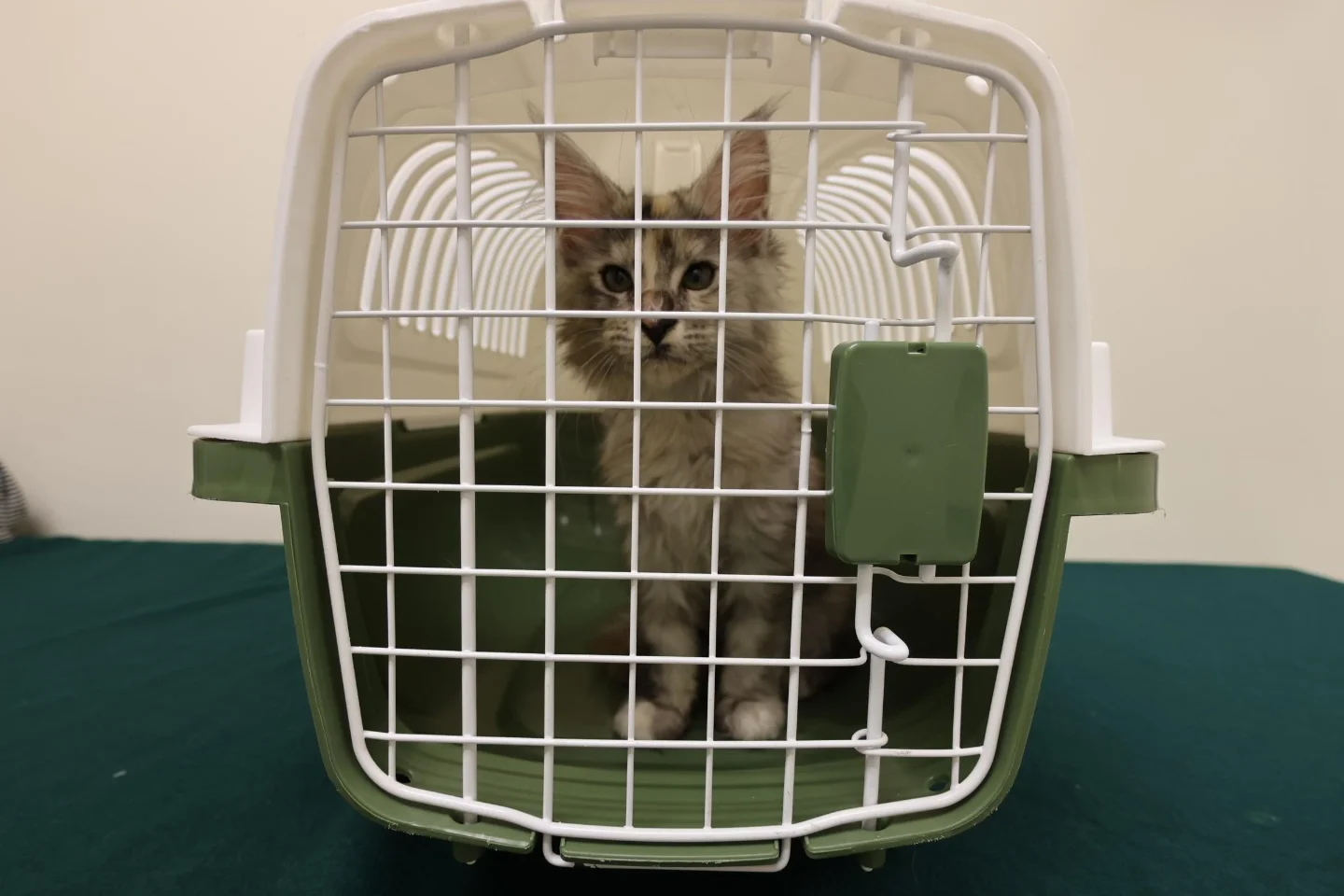
A cat in a backpack and three ways to hide gold
Monday's long-weekend edition covers four cases: a 66-year-old woman caught at Hong Kong's Lo Wu Control Point with a live HK$25,000 pedigree cat stuffed in her backpack; a Mumbai airport eatery staffer arrested using insider access to move ₹1.2 crore in gold dust out of the terminal; a joint Uzbek State Security Service and customs operation that found 1.923 kg of gold bars in a hidden suitcase compartment on a Tashkent–Dubai passenger; and 24 Tsarist-era gold coins (minted 1897–1911) pulled from undeclared hand luggage on a Tashkent–Baku flight, now classified as cultural property.

Monday's edition covers the long weekend window — Friday night through Sunday saw near-zero official releases, as has become the confirmed pattern. Four cases surfaced when the desks reopened: one live cat, and enough gold to establish a small theme.
1. A 66-year-old woman, one cat, one backpack — Lo Wu Control Point, Hong Kong
A woman walked into Hong Kong from Shenzhen. She was 66 years old, and her backpack was moving. 1
Hong Kong Customs officers stopped her at Lo Wu Control Point on May 21 — the busiest land border crossing between Hong Kong and the mainland, handling upwards of 200,000 passenger journeys on a normal day. Inside the backpack: a live cat, valued at approximately HK$25,000 (about US$3,200). 1
That price range — HK$25,000 — doesn't buy a rescue cat. In Shenzhen's pet market, it corresponds to popular pedigree breeds: British Shorthair, Scottish Fold, Ragdoll. Buying one in Shenzhen and bringing it across the border saves the import permit, mandatory quarantine, and whatever a licensed pet transport company would charge. Someone ran the numbers and decided the math worked. The math didn't.
Importing any animal into Hong Kong without a permit from the Agriculture, Fisheries and Conservation Department (AFCD) violates the Rabies Regulation (Cap. 421A of Hong Kong law) — maximum penalty HK$10,000 and six months in prison. The cat was handed over to AFCD. The woman's name was not published. 1
2. Airport eatery staffer, Mumbai — gold dust, ₹1.2 crore
At Chhatrapati Shivaji Maharaj International Airport in Mumbai on May 25, an employee of an airport food-and-beverage outlet was arrested trying to move ₹1.2 crore (approximately US$145,000) worth of gold out of the airport. 2
The gold was in dust form — not bars, not jewelry, not paste. Gold dust is harder to detect than a bar because it has no distinctive shape on an X-ray, and an airport worker carrying a small sealed container out of the building through a staff gate raises far fewer flags than a passenger doing the same through arrivals screening. Staff access, in other words, was the concealment method. 2
Official customs press release not yet published as of Monday evening. The arrest was confirmed by The Times of India. How the gold dust entered the airport, who the downstream recipient was, and the staffer's full role remain undisclosed.
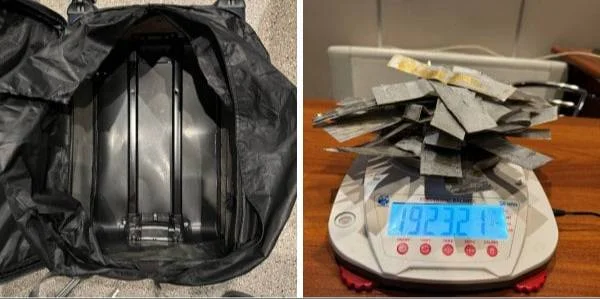
3. 1.923 kg of gold bars in a suitcase compartment — Tashkent, bound for Dubai
At Tashkent International Airport, officers from Uzbekistan's State Security Service (DXX) and the Tashkent-Aero specialized customs complex jointly inspected a piece of luggage belonging to a passenger boarding a Tashkent–Dubai flight. 3
They found 1 kilogram and 923 grams of gold bars hidden inside a concealed compartment of the suitcase. 3
Two men were detained. The first, born 1980, is from the Andijan region and lives in Tashkent. The second, born 1992, lives in the Tashkent region and had a prior criminal conviction under Article 182 of Uzbekistan's Criminal Code — the article covering customs smuggling offenses. A repeat offender, caught running the same corridor. 3
The announcement does not specify whether the compartment was a false bottom, sewn-in lining, or other construction; the article uses the phrase "hidden compartment." Number of bars, gold purity, and estimated market value were not disclosed. Pre-investigation checks are ongoing.
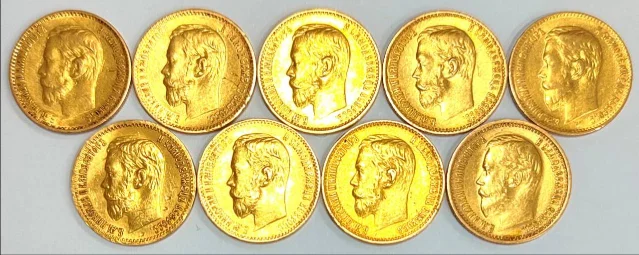
4. 24 Tsarist gold coins, hand luggage — Tashkent, bound for Baku
This one was intercepted on April 23, 2026 at the Islam Karimov Tashkent-Aero customs post; the announcement was published May 21. An Uzbek citizen departing on a Tashkent–Baku flight had 24 gold coins in his hand luggage — undeclared. 4
The coins were sent to the Art Expertise Department of Uzbekistan's Cultural Heritage Agency. Experts confirmed they were minted between 1897 and 1911 — spanning the final years of Nicholas II's reign, the last Tsar — and qualify as cultural valuables with historical significance. Estimated value: 219 million Uzbek soums (approximately US$17,000 at current rates, though numismatic value likely runs higher). 4
Exporting them is illegal under Article 8 of Uzbekistan's Law on Export and Import of Cultural Property. The physical evidence will be transferred to the Agency of Precious Metals at the Central Bank of the Republic of Uzbekistan. The passenger's name, age, and destination purpose were not published. 4
Cover image: official photo from HKSAR Government Information Services — Lo Wu Control Point live cat seizure
References
- 1HKSAR Government Press Release — Hong Kong Customs detects live cat at Lo Wu Control Point
- 2Mumbai airport eatery staffer tries to smuggle out Rs 1.2 crore gold dust, held — The Times of India
- 3An attempt to illegally export almost 2 kg of gold to Dubai was stopped at Tashkent airport — Yuz.uz
- 4An attempt to illegally export cultural property was stopped at the Tashkent-Aero customs post — Yuz.uz
Add more perspectives or context around this Drop.